Loading...
Done
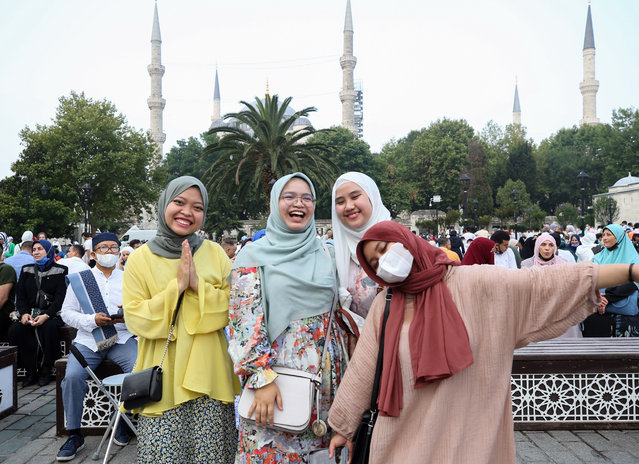
Muslims greet each other at Sultanahmet Square after performing Eid al-Adha prayer at Hagia Sophia Grand Mosque in Istanbul, Turkey on July 20, 2021. (Photo by Mehmet Murat Onel/Anadolu Agency via Getty Images)

Muslims greet each other at Sultanahmet Square after performing Eid al-Adha prayer at Hagia Sophia Grand Mosque in Istanbul, Turkey on July 20, 2021. (Photo by Mehmet Murat Onel/Anadolu Agency via Getty Images)
Details
24 Jul 2021 08:23:00
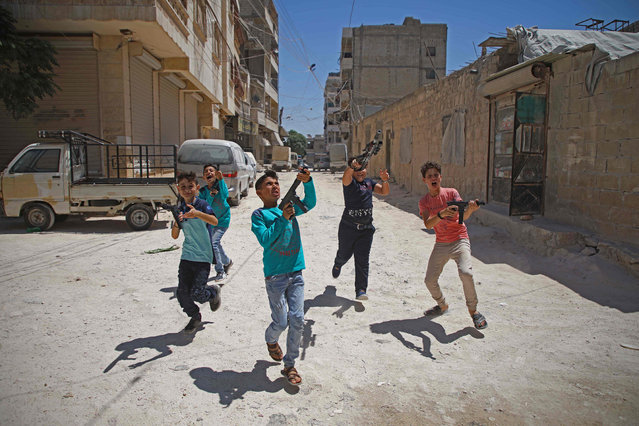
Syrian boys play with plastic guns on the first day of the Muslim religious festival of Eid al-Adha in al-Dana in Syria's rebel-controlled Idlib region, near the border with Turkey, on August 11, 2019. Muslims across the world are celebrating the first day of the Feast of Sacrifice, which marks the end of the hajj pilgrimage to Mecca and commemorates prophet Abraham's sacrifice of a lamb after God spared Ishmael, his son. (Photo by Aaref Watad/AFP Photo)

Syrian boys play with plastic guns on the first day of the Muslim religious festival of Eid al-Adha in al-Dana in Syria's rebel-controlled Idlib region, near the border with Turkey, on August 11, 2019. Muslims across the world are celebrating the first day of the Feast of Sacrifice, which marks the end of the hajj pilgrimage to Mecca and commemorates prophet Abraham's sacrifice of a lamb after God spared Ishmael, his son. (Photo by Aaref Watad/AFP Photo)
Details
13 Aug 2019 00:03:00
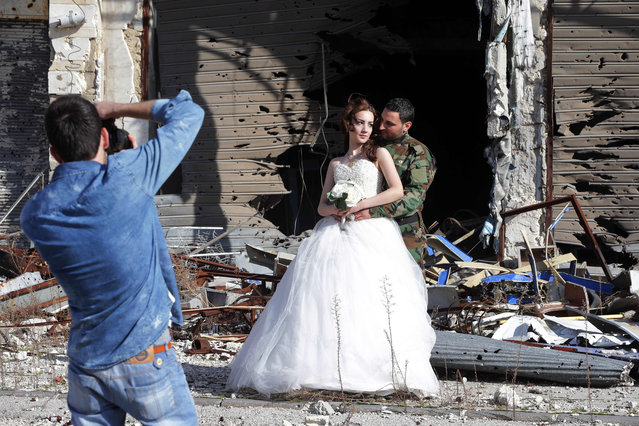
Newly-wed Syrian couple Nada Merhi, 18, and Hassan Youssef, 27, have their wedding pictures taken in front of a heavily damaged building in the war ravaged city of Homs on February 5, 2016. A Syrian photographer thought of using the destruction of Homs to take pictures of newly wed couples to show that life is stronger than death. (Photo by Joseph Eid/AFP Photo)

Newly-wed Syrian couple Nada Merhi, 18, and Hassan Youssef, 27, have their wedding pictures taken in front of a heavily damaged building in the war ravaged city of Homs on February 5, 2016. A Syrian photographer thought of using the destruction of Homs to take pictures of newly wed couples to show that life is stronger than death. (Photo by Joseph Eid/AFP Photo)
Details
07 Feb 2016 07:12:00
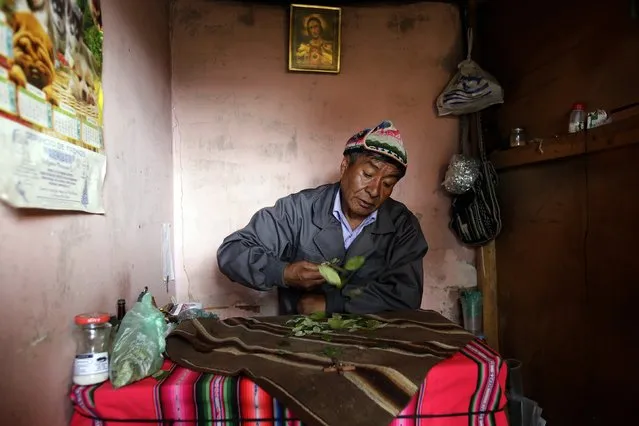
Aymara witchdoctor Ricardo Quispe, also called “Lord of the Lake”, throws coca leaves during a ritual to predict the future, at the witches market of El Alto, on the outskirts of La Paz, December 31, 2014. Dozens of witch doctors tend to a warren of stalls in El Alto, making offerings to give thanks, to promise luck at work or in love, or to call up spirits and banish curses at the end of the year. (Photo by David Mercado/Reuters)

Aymara witchdoctor Ricardo Quispe, also called “Lord of the Lake”, throws coca leaves during a ritual to predict the future, at the witches market of El Alto, on the outskirts of La Paz, December 31, 2014. Dozens of witch doctors tend to a warren of stalls in El Alto, making offerings to give thanks, to promise luck at work or in love, or to call up spirits and banish curses at the end of the year. (Photo by David Mercado/Reuters)
Details
01 Jan 2015 14:05:00
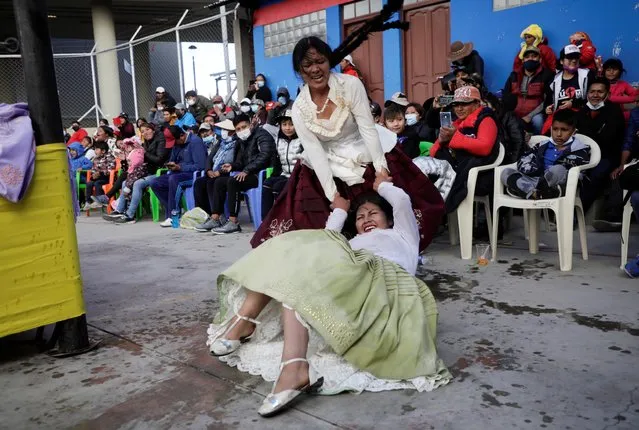
Barbara Quisbert and Susana La Bonita, cholitas wrestlers, fight during their return to the ring after the coronavirus disease (COVID-19) restrictions, in El Alto outskirts of La Paz, November 29, 2020. (Photo by David Mercado/Reuters)

The Fighting Cholitas are a group of female wrestlers who perform in El Alto, Bolivia. Tickets to the exhibitions cost $1. Like the general population of El Alto, which consists almost entirely of Aymara and Quechua residents, the Cholitas are indigenous. They wear braided hair, bowler hats and multilayered skirts in the ring. Here: Barbara Quisbert and Susana La Bonita, cholitas wrestlers, fight during their return to the ring after the coronavirus disease (COVID-19) restrictions, in El Alto outskirts of La Paz, November 29, 2020. (Photo by David Mercado/Reuters)
Details
12 Dec 2020 00:03:00
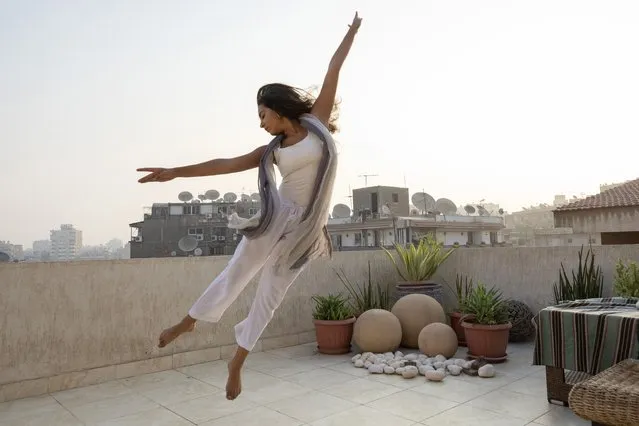
Egyptian 26-year-old dancer Nadine El Gharib, dances on the rooftop of her home in Cairo, Egypt, Monday, September 27, 2021. “Dance was crucial when COVID-19 started in terms of taking care of my well-being”, Gharib said. “When restrictions forced us to stop going to the Opera for classes I started online dance and it introduced me to a new world of dance. It was very inspiring”. (Photo by Nariman El-Mofty/AP Photo)

Egyptian 26-year-old dancer Nadine El Gharib, dances on the rooftop of her home in Cairo, Egypt, Monday, September 27, 2021. “Dance was crucial when COVID-19 started in terms of taking care of my well-being”, Gharib said. “When restrictions forced us to stop going to the Opera for classes I started online dance and it introduced me to a new world of dance. It was very inspiring”. (Photo by Nariman El-Mofty/AP Photo)
Details
03 Nov 2021 08:33:00
Mohammed El-Dahshan, 38-year-old “Mesaharati”, or dawn caller, accompanies his donkey wrapped with colored led lights to wake Muslims up for a meal before sunrise, during the Islamic holy month of Ramadan, in the Delta city of Dikernis, about 93 miles (150 km) North of Cairo, Egypt early Wednesday, April 12, 2023. Each night, El-Dahshan, sets out after midnight with his donkey banging his drum, chanting traditional religious phrases and calling out on residents by name to wake them in time for the vital pre-dawn meal known as “Suhour”. (Photo by Amr Nabil/AP Photo)

Mohammed El-Dahshan, 38-year-old “Mesaharati”, or dawn caller, accompanies his donkey wrapped with colored led lights to wake Muslims up for a meal before sunrise, during the Islamic holy month of Ramadan, in the Delta city of Dikernis, about 93 miles (150 km) North of Cairo, Egypt early Wednesday, April 12, 2023. Each night, El-Dahshan, sets out after midnight with his donkey banging his drum, chanting traditional religious phrases and calling out on residents by name to wake them in time for the vital pre-dawn meal known as “Suhour”. (Photo by Amr Nabil/AP Photo)
Details
15 May 2023 04:04:00
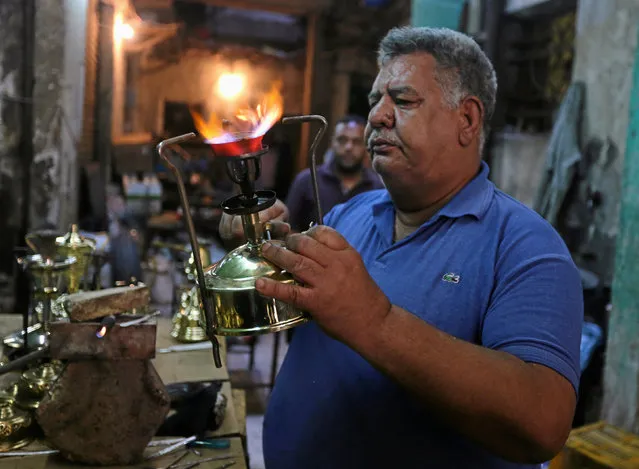
Mohamed Gamal Abdel Nasser, a workshop owner, tests primus stoves known as “Bagour” in Arabic, in Cairo, Egypt, May 11, 2016. (Photo by Mohamed Abd El Ghany/Reuters)

Mohamed Gamal Abdel Nasser, a workshop owner, tests primus stoves known as “Bagour” in Arabic, in Cairo, Egypt, May 11, 2016. (Photo by Mohamed Abd El Ghany/Reuters)
Details
18 May 2016 13:49:00