Loading...
Done
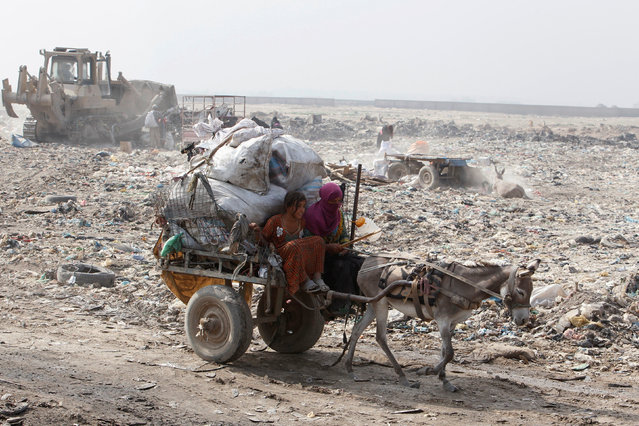
Garbage pickers collect ride on donkey cart while looking for recyclable materials at a rubbish dump in the outskirts of Baghdad, Iraq, August 23, 2016. Despite its huge untapped oil and gas reserves and steadily rising oil output and revenue, 23 percent of the population live below the poverty line, according to the Ministry of Planning. Eg, for 12-year-old Mohammed, life in Sadr City means long days during his school holidays scrabbling through the refuse in the scorching summer heat before selling his daily haul to a middleman. He sells each kilogram (2.2 lb) of plastic bottles or soda cans for 250 Iraqi dinars (around 20 U.S. cents), earning between 2,000 to 4,000 dinars ($1.50–$3) a day. A International Labor Organization report listing dangerous jobs in which children are engaged across the world mentioned collecting garbage as one of the activities in which minors risked suffering violence and injury. (Photo by Khalid al Mousily/Reuters)

Garbage pickers collect ride on donkey cart while looking for recyclable materials at a rubbish dump in the outskirts of Baghdad, Iraq, August 23, 2016. Despite its huge untapped oil and gas reserves and steadily rising oil output and revenue, 23 percent of the population live below the poverty line, according to the Ministry of Planning. (Photo by Khalid al Mousily/Reuters)
Details
24 Aug 2016 11:52:00
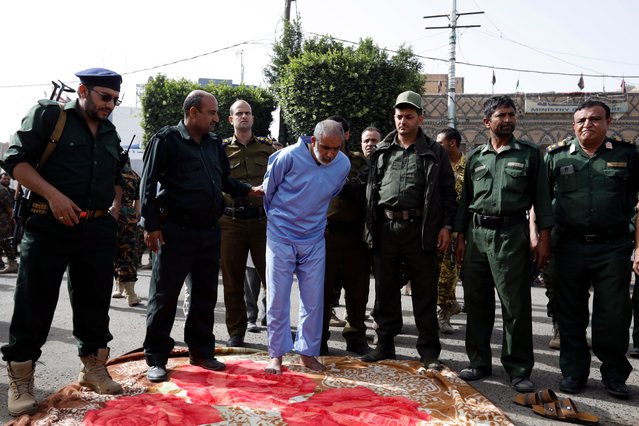
Ali al-Naami, convicted of murdering his three daughters, is placed on a carpet to be executed at a public square in Sana'a, Yemen, 16 June 2021. Defendant Ali al-Naami, 40, convicted of killing his daughters Rahaf, 7, Raghad, 12, and Malak, 14, in June 2019, was executed by an executioner in front of hundreds of spectators in a public square in Sana'a. He had admitted to strangling them and drowning them in a water tank after the mother left the house due to domestic disputes with him. (Photo by Yahya Arhab/EPA/EFE)

Ali al-Naami, convicted of murdering his three daughters, is placed on a carpet to be executed at a public square in Sana'a, Yemen, 16 June 2021. Defendant Ali al-Naami, 40, convicted of killing his daughters Rahaf, 7, Raghad, 12, and Malak, 14, in June 2019, was executed by an executioner in front of hundreds of spectators in a public square in Sana'a. He had admitted to strangling them and drowning them in a water tank after the mother left the house due to domestic disputes with him. (Photo by Yahya Arhab/EPA/EFE)
Details
20 Jun 2021 08:10:00
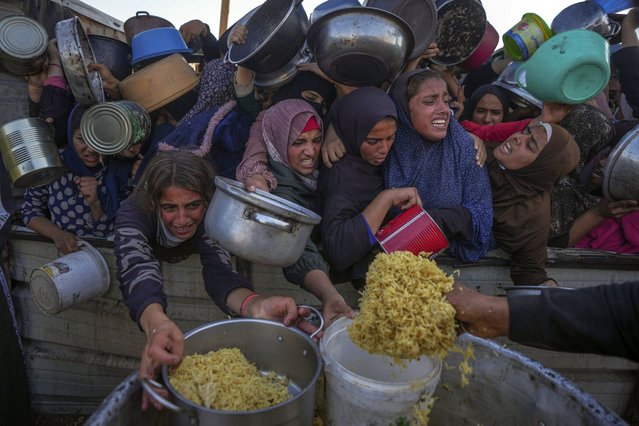
Palestinian girls struggle as they get donated food at a distribution center in Khan Younis, Gaza Strip, on Friday, December 6, 2024. (Photo by Abdel Kareem Hana/AP Photo)

Palestinian girls struggle as they get donated food at a distribution center in Khan Younis, Gaza Strip, on Friday, December 6, 2024. (Photo by Abdel Kareem Hana/AP Photo)
Details
13 Dec 2024 04:26:00
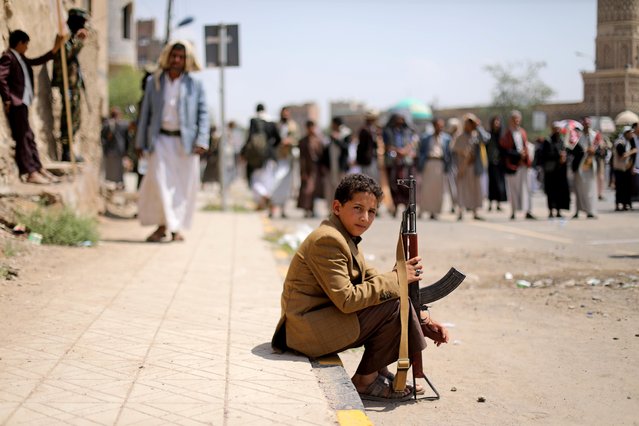
A boy holds a rifle as he sits at the site of a rally held by followers of the Shi'ite Houthi movement to commemorate the Ashura, the holiest day on the Shi'ite Muslim calendar, in Sanaa, Yemen on August 30, 2020. (Photo by Khaled Abdullah/Reuters)

A boy holds a rifle as he sits at the site of a rally held by followers of the Shi'ite Houthi movement to commemorate the Ashura, the holiest day on the Shi'ite Muslim calendar, in Sanaa, Yemen on August 30, 2020. (Photo by Khaled Abdullah/Reuters)
Details
07 Oct 2020 00:03:00
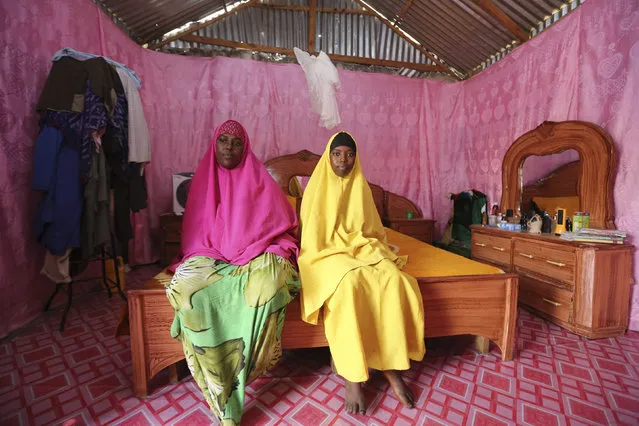
Saciido Sheik Yacquub, 34, poses for a picture with her daughter Faadumo Subeer Mohamed, 13, at their home in Hodan district IDP camp in Mogadishu February 11, 2014. Saciido, who runs a small business, wanted to be a business woman when she was a child. She studied until she was 20. She hopes that Faadumo will become a doctor. Faadumo will finish school in 2017 and hopes to be a doctor when she grows up. (Photo by Feisal Omar/Reuters)

“On March 8th activists celebrate International Women’s Day, which dates back to the early 20th century and has been observed by the United Nations since 1975. In the run-up to the event, Reuters photographers in countries around the globe took a series of portraits of women and their daughters. They asked each mother what her profession was, at what age she had finished education, and what she wanted her daughter to become when she grew up. They also asked each daughter at what age she would finish education and what she wanted to do in the future. The series of images offers an insight into the lives of women and girls around the world”. – Reuters. (Photo by Feisal Omar/Reuters)
Details
09 Mar 2014 04:33:00
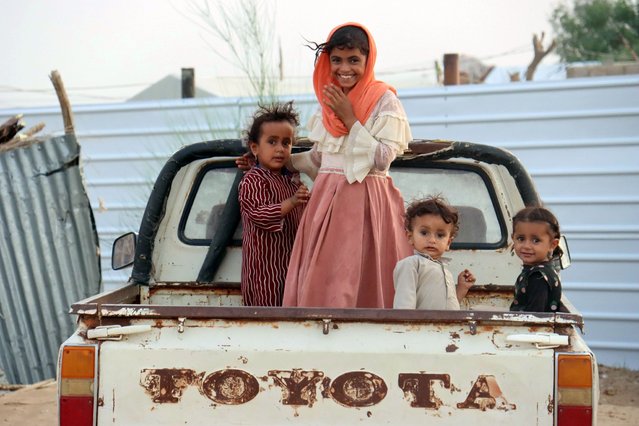
Children ride on the back of a truck at a camp for internally displaced people (IDPs) in Marib, Yemen on September 9, 2021. (Photo by Ali Owidha/Reuters)

Children ride on the back of a truck at a camp for internally displaced people (IDPs) in Marib, Yemen on September 9, 2021. (Photo by Ali Owidha/Reuters)
Details
13 Oct 2021 07:52:00
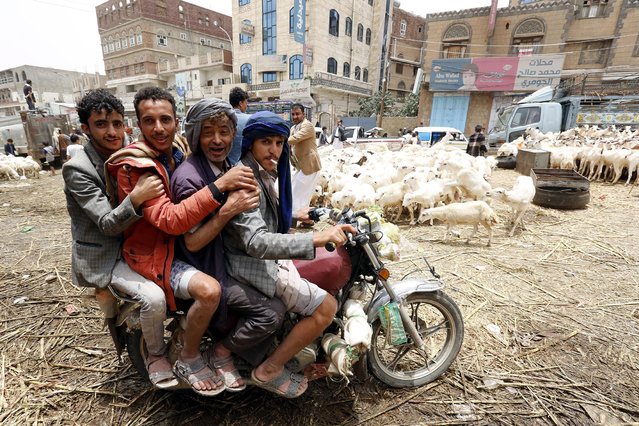
Four men ride a motorbike past sacrificial animals displayed for sale ahead of the Eid al-Adha festival at a livestock market in Sana'a, Yemen, 08 August 2019. Eid al-Adha is the holiest of the two Muslims holidays celebrated each year; it marks the yearly Muslim pilgrimage (Hajj) to visit Mecca, Islam's holiest place. Muslims slaughter a sacrificial animal and split the meat into three parts: one for family, one for friends and relatives, and one for the poor and needy. (Photo by Yahya Arhab/EPA/EFE)

Four men ride a motorbike past sacrificial animals displayed for sale ahead of the Eid al-Adha festival at a livestock market in Sana'a, Yemen, 08 August 2019. Eid al-Adha is the holiest of the two Muslims holidays celebrated each year; it marks the yearly Muslim pilgrimage (Hajj) to visit Mecca, Islam's holiest place. Muslims slaughter a sacrificial animal and split the meat into three parts: one for family, one for friends and relatives, and one for the poor and needy. (Photo by Yahya Arhab/EPA/EFE)
Details
29 Aug 2019 00:03:00
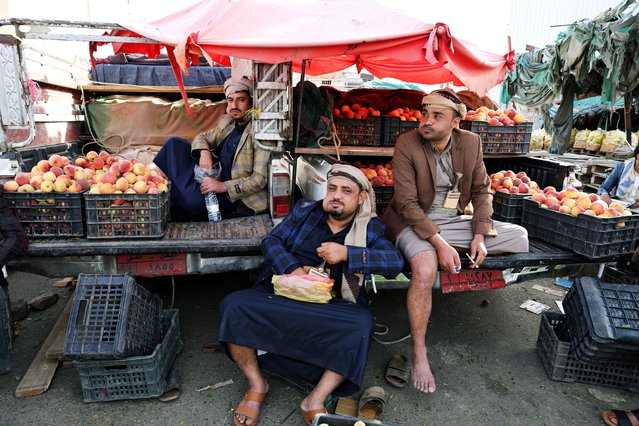
Fruit vendors chew qat, a mild stimulant, amid concerns of the spread of the coronavirus disease (COVID-19) at a fruit market in Sanaa, Yemen on June 1, 2020. (Photo by Khaled Abdullah/Reuters)

Fruit vendors chew qat, a mild stimulant, amid concerns of the spread of the coronavirus disease (COVID-19) at a fruit market in Sanaa, Yemen on June 1, 2020. (Photo by Khaled Abdullah/Reuters)
Details
07 Jul 2020 00:03:00