Loading...
Done
A Muslim boy prepares plates of food for an Iftar (breaking of fast) meal inside a mosque during the holy month of Ramadan in Ahmedabad, India, June 28, 2015. (Photo by Amit Dave/Reuters)

A Muslim boy prepares plates of food for an Iftar (breaking of fast) meal inside a mosque during the holy month of Ramadan in Ahmedabad, India, June 28, 2015. (Photo by Amit Dave/Reuters)
Details
29 Jun 2015 12:20:00
A Somali woman shows traditional items and food during an event to showcase traditional Somali culture in Hamarweyne district in the capital Mogadishu, December 3, 2015. (Photo by Feisal Omar/Reuters)

A Somali woman shows traditional items and food during an event to showcase traditional Somali culture in Hamarweyne district in the capital Mogadishu, December 3, 2015. (Photo by Feisal Omar/Reuters)
Details
05 Dec 2015 08:05:00
In this Tuesday, September 12, 2017 photo, Amornrat Simapsaisan, a local shop manager, watches before she ate watermelon salad with bamboo worms, at Inspects in the Backyard restaurant, Bangkok, Thailand. Tucking into insects is nothing new in Thailand, where street vendors pushing carts of fried crickets and buttery silkworms have long fed locals and adventurous tourists alike. But bugs are now fine-dining at the Bangkok bistro aiming to revolutionize views of nature’s least-loved creatures and what you can do with them. She tucked in quite happily to her watermelon and cricket salad on a recent evening.  “It’s tasty. It’s munchy”, she said. (Photo by Sakchai Lalit/AP Photo)

In this Tuesday, September 12, 2017 photo, Amornrat Simapsaisan, a local shop manager, watches before she ate watermelon salad with bamboo worms, at Inspects in the Backyard restaurant, Bangkok, Thailand. Tucking into insects is nothing new in Thailand, where street vendors pushing carts of fried crickets and buttery silkworms have long fed locals and adventurous tourists alike. But bugs are now fine-dining at the Bangkok bistro aiming to revolutionize views of nature’s least-loved creatures and what you can do with them. She tucked in quite happily to her watermelon and cricket salad on a recent evening. “It’s tasty. It’s munchy”, she said. (Photo by Sakchai Lalit/AP Photo)
Details
04 Oct 2017 06:54:00
Bloodthirsty by Thomas P Peschak, Germany/South Africa — winner, Behaviour: birds. When rations run short on Wolf Island, in the remote northern Galápagos, the sharp-beaked ground finches become vampires. Their sitting targets are Nazca boobies and other large birds. The finches rely on a scant diet of seeds and insects, which regularly dries up, so they drink blood to survive. ‘I’ve seen more than half a dozen finches drinking from a single Nazca booby,’ says Tom. Rather than leave their nests the boobies tolerate the vampires, and the blood loss doesn’t seem to cause permanent harm. (Photo by Thomas P Peschak/2018 Wildlife Photographer of the Year)

Bloodthirsty by Thomas P. Peschak, Germany/South Africa — winner, Behaviour: birds. When rations run short on Wolf Island, in the remote northern Galápagos, the sharp-beaked ground finches become vampires. Their sitting targets are Nazca boobies and other large birds. The finches rely on a scant diet of seeds and insects, which regularly dries up, so they drink blood to survive. ‘I’ve seen more than half a dozen finches drinking from a single Nazca booby,’ says Tom. Rather than leave their nests the boobies tolerate the vampires, and the blood loss doesn’t seem to cause permanent harm. (Photo by Thomas P. Peschak/2018 Wildlife Photographer of the Year)
Details
19 Oct 2018 00:05:00
Igor Gavrilov, the main taxidermist of the Zoological centre at Tel Aviv University, works on a taxidermied animal, part of a collection which will be housed at the Steinhardt Museum of Natural History, a new Israeli natural history museum set to open next year in Tel Aviv, Israel June 8, 2016. Legions of insects, sea creatures and ancient fossils are lining up in a new museum shaped liked a giant Noah's Ark, telling the story of a crucial evolutionary byway across Israel. Experts say all humans and other animals had to pass through Israel on their first journey out of Africa into Europe and Asia. (Photo by Nir Elias/Reuters)

Igor Gavrilov, the main taxidermist of the Zoological centre at Tel Aviv University, works on a taxidermied animal, part of a collection which will be housed at the Steinhardt Museum of Natural History, a new Israeli natural history museum set to open next year in Tel Aviv, Israel June 8, 2016. Legions of insects, sea creatures and ancient fossils are lining up in a new museum shaped liked a giant Noah's Ark, telling the story of a crucial evolutionary byway across Israel. (Photo by Nir Elias/Reuters)
Details
25 Aug 2016 09:42:00
Close Encounter of the Insect Kind: Check out the awesome face on this praying mantis. I can't get over the mouth, it's like something from a science fiction movie. Of all photographic styles macro is definitely my favorite. I am constantly amazed, in every photo that I take, by the intricate level of detail that exists on even the smallest of creatures. It's a stark reminder that a very complex and infinitely beautiful world exists just beyond our human-sized level of perception. Photo taken in Donnybrook, Queensland, Australia. (Photo by Andrew Young/National Geographic Photo Contest

Close Encounter of the Insect Kind: “Check out the awesome face on this praying mantis. I can't get over the mouth, it's like something from a science fiction movie. Of all photographic styles macro is definitely my favorite. I am constantly amazed, in every photo that I take, by the intricate level of detail that exists on even the smallest of creatures. It's a stark reminder that a very complex and infinitely beautiful world exists just beyond our human-sized level of perception. Photo taken in Donnybrook, Queensland, Australia” – Andrew Young. (Photo by Andrew Young/National Geographic Photo Contest via The Atlantic)
Details
24 Sep 2012 09:18:00
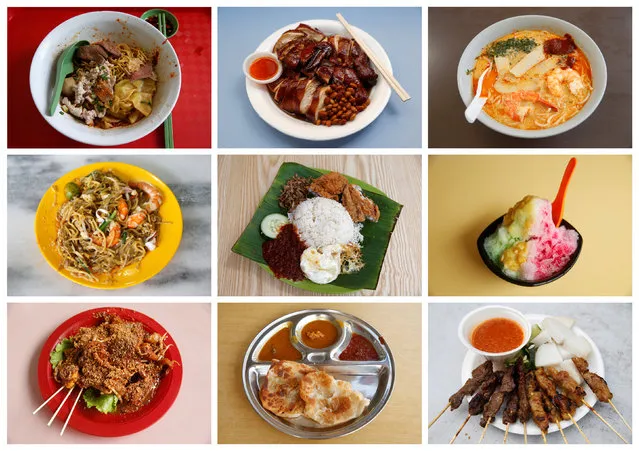
A combination photo shows various popular street foods under $6 from various hawker food stalls and eateries in Singapore, taken between July 28 to 31, 2016. Top row (L to R) bak chor mee, soya sauce chicken; Middle row (L to R) laksa, hokkien mee, nasi lemak, ice kachang; Bottom row (L to R) rojak, roti prata and satay. (Photo by Edgar Su/Reuters)

A combination photo shows various popular street foods under $6 from various hawker food stalls and eateries in Singapore, taken between July 28 to 31, 2016. Top row (L to R) bak chor mee, soya sauce chicken; Middle row (L to R) laksa, hokkien mee, nasi lemak, ice kachang; Bottom row (L to R) rojak, roti prata and satay. (Photo by Edgar Su/Reuters)
Details
27 Aug 2016 10:55:00
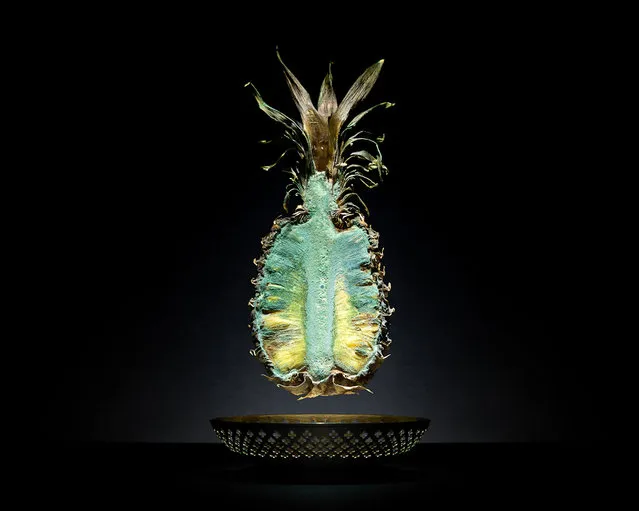
Pineapple

“One Third” – a project on food waste by an Austrian photography Klaus Pichler. According to a UN study one third of the world's food goes to waste – the largest part thereof in the industrialized nations of the global north. Equally, 925 million people around the world are threatened by starvation. The series “One Third” describes the connection between individual wastage of food and globalized food production.

Photo: Pineapple. Place of production: Guayaquil, Ecuador. Cultivation method: Outdoor plantation • Time of harvest: All- season. Transporting distance: 10.666 km (linear distance) • Means of transportation: Aircraft, truck. Carbon footprint (total) per kg: 11,94 kg • Water requirement (total) per kg: 360 l. Price: 2,10 € / kg. (Photo by Klaus Picher)
Details
02 May 2012 11:01:00