Loading...
Done
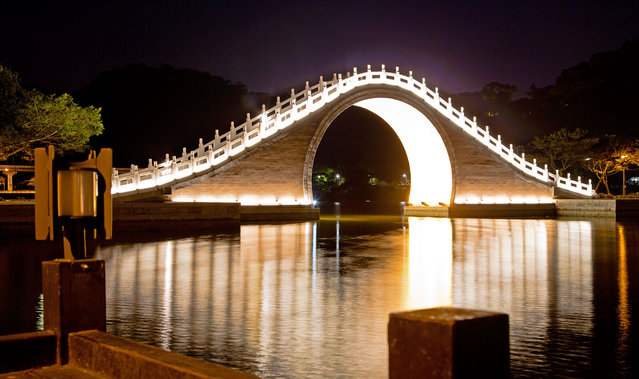
Jade Belt Bridge In Chine

The Jade Belt Bridge, also known as the Camel's Back Bridge, is an 18th-century pedestrian Moon bridge located on the grounds of the Summer Palace in Beijing, China. It is famous for its distinctive tall thin single arch.
Details
05 Sep 2014 09:46:00
New Zealand Penguins in Need of Sweaters

Penguin sweaters, also known as penguin jumpers, are sweaters which are knitted for penguins that have been caught in oil slicks. When an oil spill affects penguins, they are dressed in knitted sweaters to stop them preening their feathers and to keep them warm, since the spilled oil destroys their natural oils. This also prevents them from poisoning themselves by ingesting the oil. The sweaters are removed and discarded as soon as the penguins can be washed. The original project has been completed, but the knitting pattern is still available on-line, as subsequent oil spills make it necessary. The extra sweaters are kept on behalf of the Wildlife Rescue Team.
Details
31 Oct 2012 13:06:00
Offset and Cardi B are seen on July 17, 2019 in Los Angeles, California. (Photo by PG/Bauer-Griffin/GC Images)

Offset and Cardi B are seen on July 17, 2019 in Los Angeles, California. (Photo by PG/Bauer-Griffin/GC Images)
Details
21 Jul 2019 00:05:00
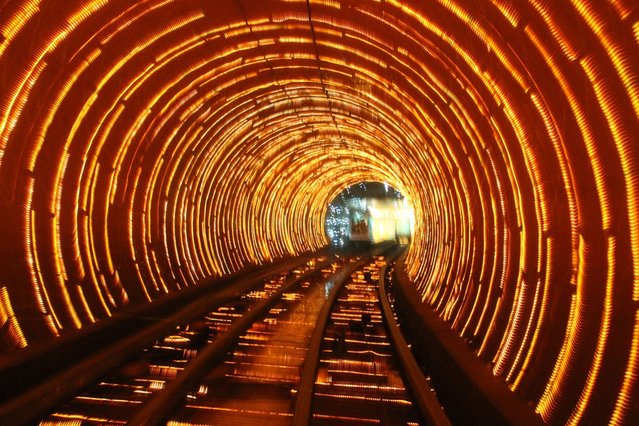
The Bund Sightseeing Tunnel In Shanghai

The Bund Sightseeing Tunnel is not an adventure for the light hearted. The trippy visuals and sound effects are rather bizarre and creepy. They look like something out of a nightmare or a psychedelic trip. Maybe the creators of this project did experiment with some illicit drugs to gain inspiration for this project. Moreover, it is more likely than not that some people tried going to this tourist attraction after “preparing” themselves beforehand. This trippy tunnel stretches from Pudong to Puxi in Shanghai, China, and is rated as one of the top five tourist attractions. We recommend visiting this place; just don’t take your kids along for the ride, since it might prove to be too scary for them.
Details
06 Feb 2015 12:27:00
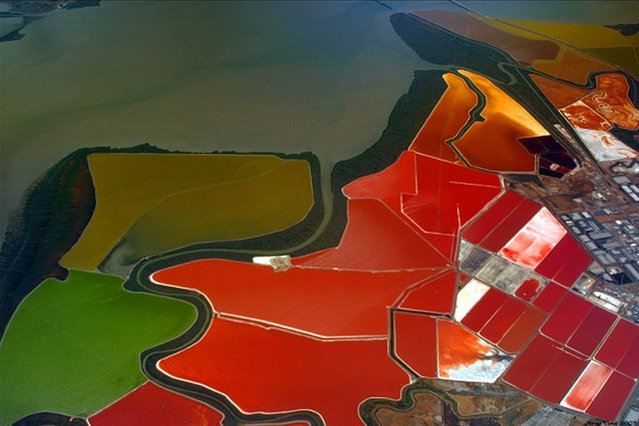
Salt ponds in San Francisco Bay

Salt evaporation ponds, also called salterns or salt pans, are shallow artificial ponds designed to produce salts from sea water or other brines. The seawater or brine is fed into large ponds and water is drawn out through natural evaporation which allows the salt to be subsequently harvested. The ponds also provide a productive resting and feeding ground for many species of waterbirds, which may include endangered species. The ponds are commonly separated by levees.
Details
11 Oct 2012 12:49:00
A woman reacts after identifying a relative among the bodies of tsunami victims in Carita, Indonesia, Sunday, December 23, 2018. The tsunami occurred after the eruption of a volcano around Indonesia's Sunda Strait during a busy holiday weekend, sending water crashing ashore and sweeping away hotels, hundreds of houses and people attending a beach concert. (Photo by Fauzy Chaniago/AP Photo)

A woman reacts after identifying a relative among the bodies of tsunami victims in Carita, Indonesia, Sunday, December 23, 2018. The tsunami occurred after the eruption of a volcano around Indonesia's Sunda Strait during a busy holiday weekend, sending water crashing ashore and sweeping away hotels, hundreds of houses and people attending a beach concert. (Photo by Fauzy Chaniago/AP Photo)
Details
24 Dec 2018 06:36:00
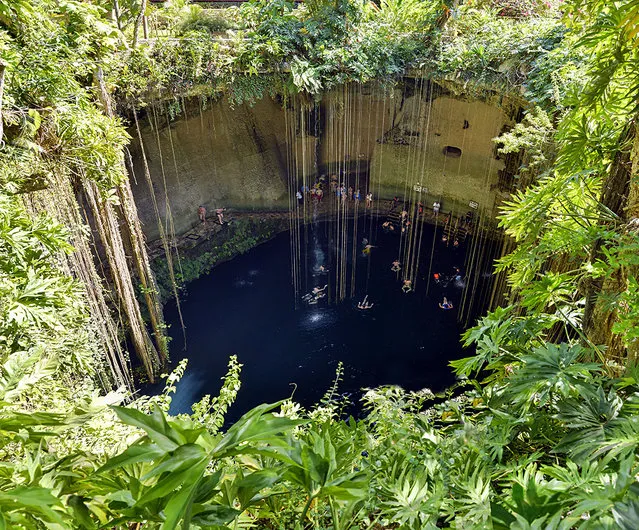
Cenote In Mexico

A cenote is a natural phenomenon, a sinkhole in the Earth’s surface. The Yucatan Peninsula in Mexico has an estimated 7,000 cenotes because it is primarily made up of porous limestone. For millions of years, rainfall slowly ate away at the limestone and a huge system of underground caves and caverns was formed. Many filled with water from rain or from the underground water table. When the roof of a water filled cave collapses, a cenote is born. The water found in a cenote may be fresh water, salt water, or both. Structurally it may be completely open, like a lake, almost completely closed with just a small opening at the top, or somewhere in between.
Details
06 Oct 2013 09:45:00
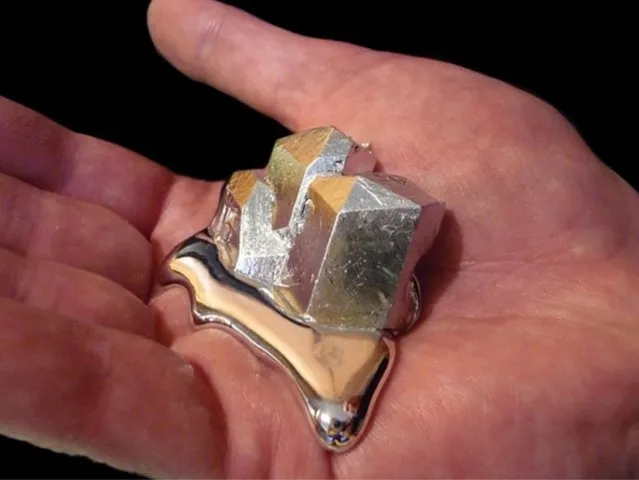
Rare Metal Gallium

Gallium is a chemical element with symbol Ga and atomic number 31. Elemental gallium does not occur in nature, but as the gallium(III) compounds in trace amounts in bauxite and zinc ores. A soft silvery metallic poor metal, elemental gallium is a brittle solid at low temperatures.
Details
25 Feb 2013 15:15:00