Loading...
Done
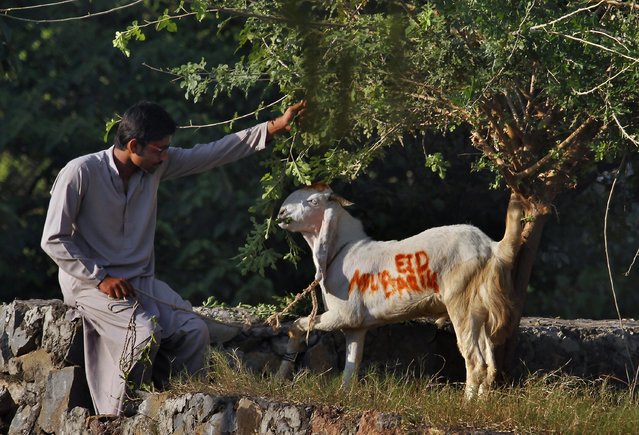
A Pakistani feeds his goat wearing the words “Eid Mubarak” or “Eid Greeting”, to be slaughtered on the Muslim holiday of Eid al-Adha, or “Feast of Sacrifice”, in Islamabad, Pakistan on Tuesday, October 15, 2013. Muslims all over the world are celebrating Eid al-Adha by sacrificing sheep, goats, cows and camels, to commemorate the Prophet Abraham's readiness to sacrifice his son, Ismail, on God's command. (Photo by Anjum Naveed/AP Photo)

A Pakistani feeds his goat wearing the words “Eid Mubarak” or “Eid Greeting”, to be slaughtered on the Muslim holiday of Eid al-Adha, or “Feast of Sacrifice”, in Islamabad, Pakistan on Tuesday, October 15, 2013. Muslims all over the world are celebrating Eid al-Adha by sacrificing sheep, goats, cows and camels, to commemorate the Prophet Abraham's readiness to sacrifice his son, Ismail, on God's command. (Photo by Anjum Naveed/AP Photo)
Details
17 Oct 2013 07:56:00
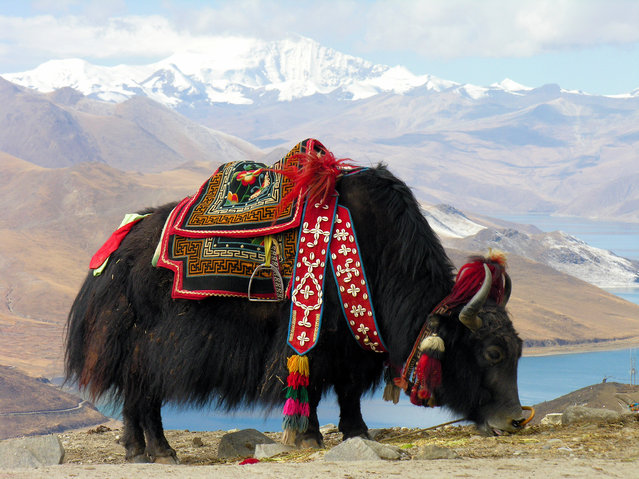
Yak near Yamdrok lake, Tibet. It is a long-haired bovinae found throughout the Himalayan region of south Central Asia, the Tibetan Plateau and as far north as Mongolia and Russia. The Tibetan economy is dominated by subsistence agriculture. Due to limited arable land, the primary occupation of the Tibetan Plateau is raising livestock, such as sheep, cattle, goats, camels, yaks, dzo, and horses. The Tibetan yak is an integral part of Tibetan life. (Photo by Dennis Jarvis)

Yak near Yamdrok lake, Tibet. It is a long-haired bovinae found throughout the Himalayan region of south Central Asia, the Tibetan Plateau and as far north as Mongolia and Russia. The Tibetan economy is dominated by subsistence agriculture. Due to limited arable land, the primary occupation of the Tibetan Plateau is raising livestock, such as sheep, cattle, goats, camels, yaks, dzo, and horses. The Tibetan yak is an integral part of Tibetan life. (Photo by Dennis Jarvis)
Details
10 Jun 2015 10:48:00
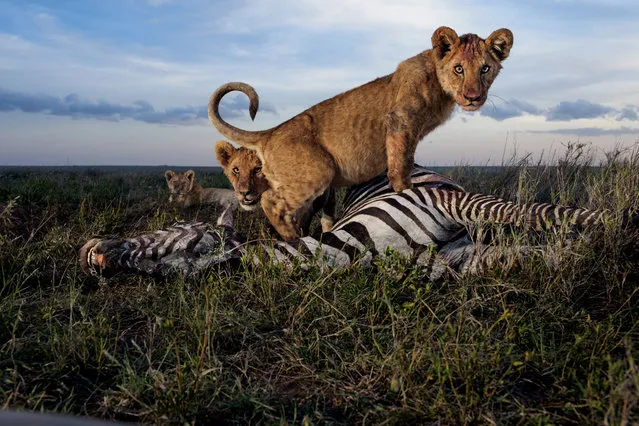
Cubs of the Simba East pride: too young to kill but old enough to crave meat. Adult females, and sometimes males, do the hunting. Zebras and wildebeests rank high as chosen prey in the rainy season. (Photo by Michael Nichols/National Geographic via The Atlantic)

“Serengeti National Park encompasses 5,700 square miles of grassy plains and woodlands near the northern border of Tanzania, and is home to more than 3,500 lions grouped into a couple dozen prides. Photographer Nick Nichols and videographer Nathan Williamson made several extended trips to the Serengeti between July 2011 and January 2013, determined to break new visual ground in their coverage of the Serengeti Lions”. Photo: Cubs of the Simba East pride: too young to kill but old enough to crave meat. Adult females, and sometimes males, do the hunting. Zebras and wildebeests rank high as chosen prey in the rainy season. (Photo by Michael Nichols/National Geographic via The Atlantic)
Details
09 Aug 2013 08:15:00
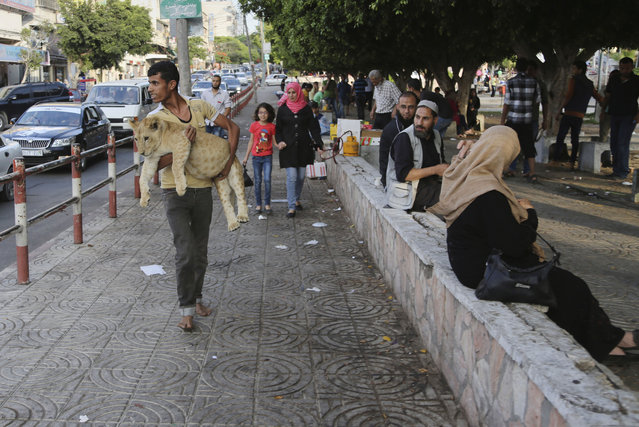
In this Monday, June 15, 2015 photo, Ahmad Abu Jereda, 16, carries Max, the male lion cub, as he passes by Palestinians at the main garden in Gaza City, in the northern Gaza Strip. (Photo by Adel Hana/AP Photo)

In this Monday, June 15, 2015 photo, Ahmad Abu Jereda, 16, carries Max, the male lion cub, as he passes by Palestinians at the main garden in Gaza City, in the northern Gaza Strip. A pair of lion cubs are stuck at a Gaza-Israel border crossing en route to a Jordan animal sanctuary, after being kept for a year by a family in crowded Gaza. Saduldin al-Jamal had bought the cubs from the Gaza zoo, hit during last summer's Israel-Hamas war. His family would take them to parks or the beach and children – those brave enough – would come up to pet them. (Photo by Adel Hana/AP Photo)
Details
04 Jul 2015 11:07:00
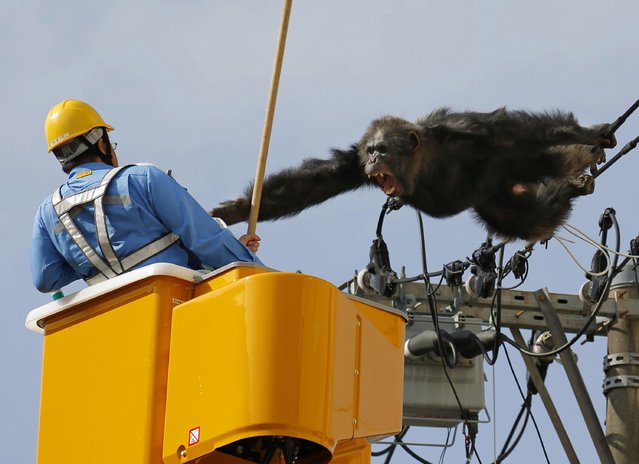
Chacha, the male chimp, screams at a worker in Sendai, northern Japan, Thursday, April 14, 2016 after fleeing from a zoo. The chimpangzee tried desperately to avoid being captured by climbing an electric pole. Chacha was on the loose nearly two hours Thursday after it disappeared from the Yagiyama Zoological Park in Sendai, the city that's hosting finance ministers from the Group of Seven industrialized nations in May. (Photo by Kyodo News via AP Photo)

Chacha, the male chimp, screams at a worker in Sendai, northern Japan, Thursday, April 14, 2016 after fleeing from a zoo. The chimpangzee tried desperately to avoid being captured by climbing an electric pole. Chacha was on the loose nearly two hours Thursday after it disappeared from the Yagiyama Zoological Park in Sendai, the city that's hosting finance ministers from the Group of Seven industrialized nations in May. (Photo by Kyodo News via AP Photo)
Details
15 Apr 2016 11:34:00
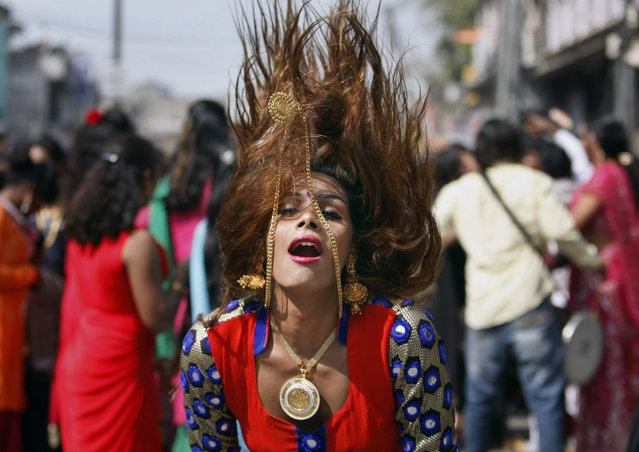
A eunuch dances during a rally to mark the congregation of thousands of eunuchs from different parts of India, in Jammu, India, Friday, March 13, 2015. The term eunuchs is used in India to describe transvestites, transsexuals and others who identify themselves as neither male nor female but as a member of a third gender. They traditionally survive by begging, dancing at weddings or blessing newborn babies and are frequently subjected to discrimination. (Photo by Channi Anand/AP Photo)

A eunuch dances during a rally to mark the congregation of thousands of eunuchs from different parts of India, in Jammu, India, Friday, March 13, 2015. The term eunuchs is used in India to describe transvestites, transsexuals and others who identify themselves as neither male nor female but as a member of a third gender. They traditionally survive by begging, dancing at weddings or blessing newborn babies and are frequently subjected to discrimination. (Photo by Channi Anand/AP Photo)
Details
21 Mar 2015 12:33:00
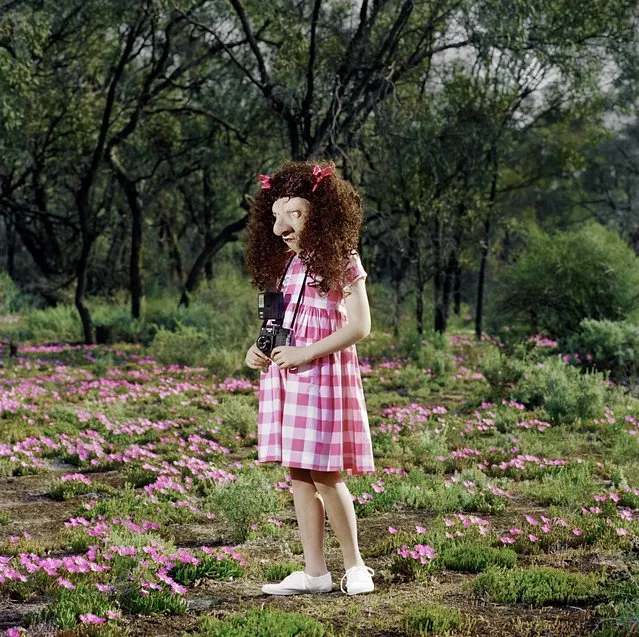
Photo by Polixeni Papapetrou

Australian artist Polixeni Papapetrou trends the line between fantasy/theatre, mythology/reality, archetype/play, male/female, child/adult and animal/human. As with all her work the series The Dreamkeepers tells a story that includes her autobiographical relationship with her children, but it also says a lot more about the condition of childhood - its place in our culture and how we react to images of children in photography.

Details
06 Aug 2012 08:09:00


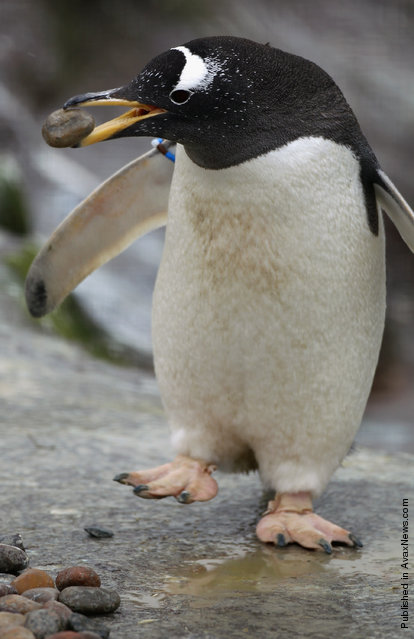
Gentoo penguins begin the breeding season at Edinburgh Zoo on March 1, 2011 in Edinburgh, Scotland. The zoo keepers have just installed the nest rings in the penguin enclosure. The male penguins will then collect pebbles and offer them to the females to fill nest rings with, this helps keep the eggs and chick up off the ground and is part of their courtship display. (Photo by Jeff J Mitchell/Getty Images)ю EDINBURGH, SCOTLAND – MARCH 01
Details
07 Mar 2011 13:54:00