Loading...
Done
Hooded demonstrators vandalise a shop window in Mexico City, during the commemoration of the 50th anniversary of the 1968 Tlatelolco student massacre, on October 2, 2018. Fifty years ago, Mexican troops opened fire on student demonstrators, killing hundreds just days before Mexico City hosted the 1968 Olympics – one of the darkest episodes in a year of global turbulence. (Photo by Ronaldo Schemidt/AFP Photo)

Hooded demonstrators vandalise a shop window in Mexico City, during the commemoration of the 50th anniversary of the 1968 Tlatelolco student massacre, on October 2, 2018. Fifty years ago, Mexican troops opened fire on student demonstrators, killing hundreds just days before Mexico City hosted the 1968 Olympics – one of the darkest episodes in a year of global turbulence. (Photo by Ronaldo Schemidt/AFP Photo)
Details
04 Oct 2018 08:20:00
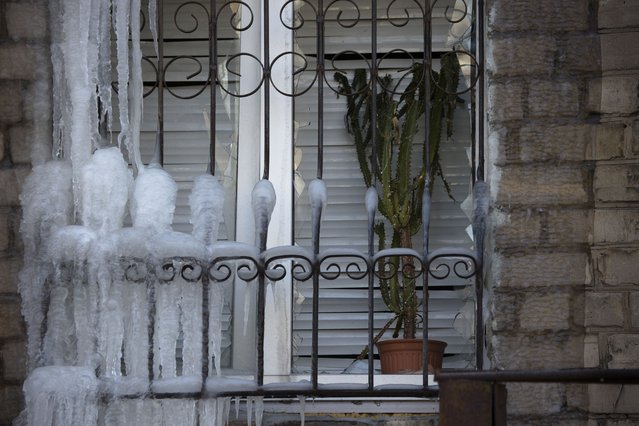
In this photo taken on Monday, October 27, 2014, a cactus stands at a broken window in a damaged house after shelling not far from Donetsk airport in the town of Donetsk, eastern Ukraine. (Photo by Dmitry Lovetsky/AP Photo)

In this photo taken on Monday, October 27, 2014, a cactus stands at a broken window in a damaged house after shelling not far from Donetsk airport in the town of Donetsk, eastern Ukraine. Donetsk, which has lost about 400,000 of its 1 million pre-war population, is bracing to a winter ahead. In a climate like eastern Ukraine's, where temperatures typically stay below zero all winter, the damage to the critical infrastructure and lack of effort to provide adequate shelter to people whose homes were destroyed could literally mean a death from the cold. (Photo by Dmitry Lovetsky/AP Photo)
Details
06 Nov 2014 09:06:00
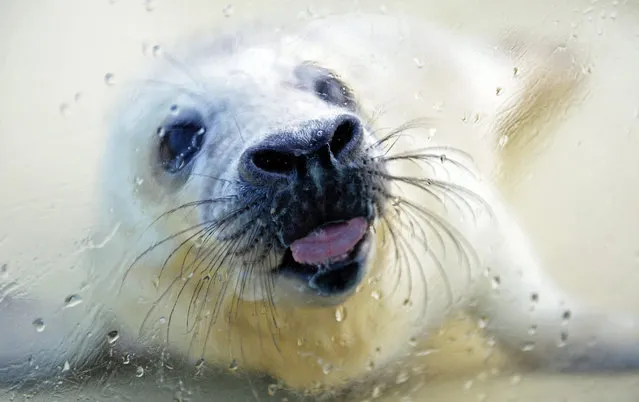
Grey seal pup “Nikolaus” licks a window at the seal enclosure in Friedrichskoog, Germany, 19 December 2014. The pup was abandoned by his mother and would not have a chance at survival without human help. Nikolaus will be fed at the enclosure for two to three months until he has reached the minimum weight of 45 kilograms for being released. (Photo by Daniel Reinhardt/EPA)

Grey seal pup “Nikolaus” licks a window at the seal enclosure in Friedrichskoog, Germany, 19 December 2014. The pup was abandoned by his mother and would not have a chance at survival without human help. Nikolaus will be fed at the enclosure for two to three months until he has reached the minimum weight of 45 kilograms for being released. (Photo by Daniel Reinhardt/EPA)
Details
20 Dec 2014 12:18:00
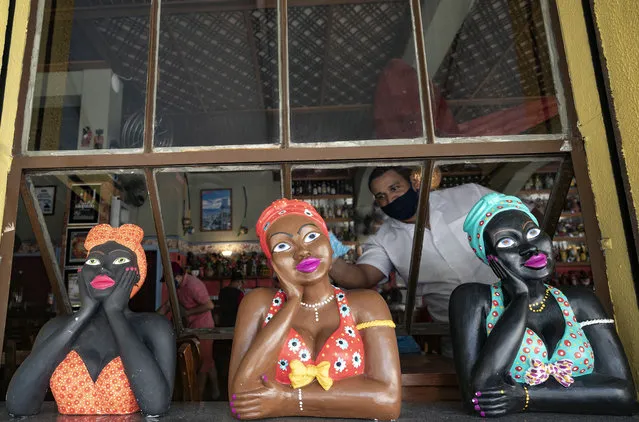
A restaurant worker wearing a mask cleans the windows as the restaurant reopens amid the COVID-19 pandemic in Sao Paulo, Brazil, Monday, July 6, 2020. Bars, restaurants and beauty salons were allowed to re-open Monday after over three months of quarantine, and are required to observe preventative measures and reduced operating hours only during the day. (Photo by Andre Penner/AP Photo)

A restaurant worker wearing a mask cleans the windows as the restaurant reopens amid the COVID-19 pandemic in Sao Paulo, Brazil, Monday, July 6, 2020. Bars, restaurants and beauty salons were allowed to re-open Monday after over three months of quarantine, and are required to observe preventative measures and reduced operating hours only during the day. (Photo by Andre Penner/AP Photo)
Details
26 Jan 2021 10:21:00
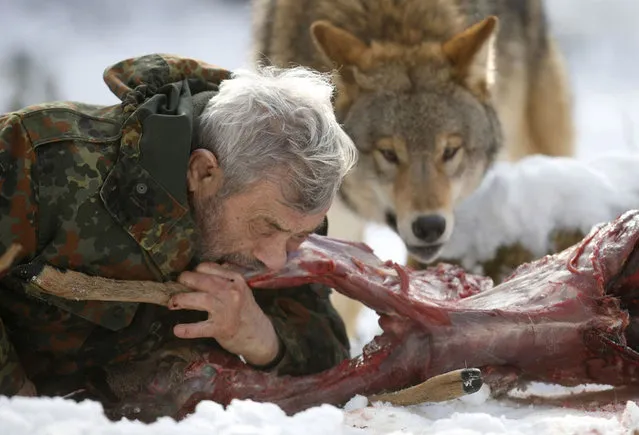
The Wolf Man

Wolfspark Werner Freund is a wolf sanctuary spread over 25 acres in western Germany. It is home to 29 wolves -- six distinct packs hailing from Europe, Siberia, Canada, the Arctic, and Mongolia. Researcher Werner Freund, 79, a former German paratrooper, established the sanctuary in 1972 and has raised more than 70 animals there over the last 40 years. He acquired the wolves as cubs from zoos or animal parks and has reared them mostly by hand. Werner has also taken to living closely with his wolves, behaving as an alpha male to earn their acceptance and respect. Reuters photographer Lisi Niesner recently spent some time with Freund and his wolves, capturing the interactions between these old friends.
Details
31 Jan 2013 15:50:00


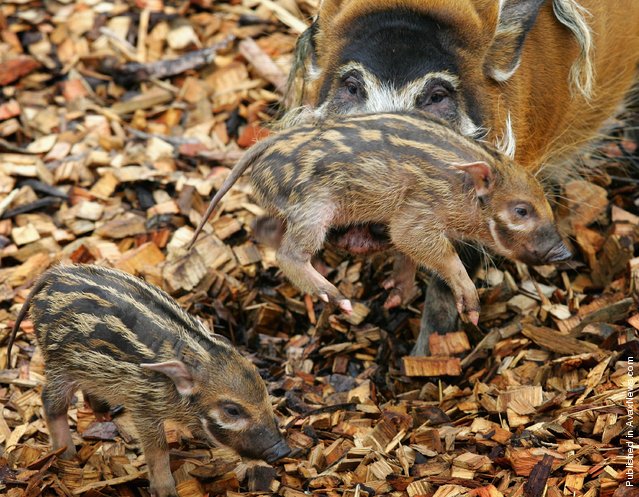
“The Red River Hog (Potamochoerus porcus), also known as the Bush Pig (but not to be confused with P. larvatus, common name “Bushpig”), is a wild member of the pig family living in Africa, with most of its distribution in the Guinean and Congolian forests. It is rarely seen away from rainforests, and generally prefers areas near rivers or swamps.

Red River Hogs eat grass, berries, roots, insects, molluscs, small vertebrates and carrion. They are capable of causing damage to plantations. Red River Hogs typically live in herds of 6-20 members led by a dominant boar. Sows rear 3-6 piglets at a time.”

Photo: Two 17 day old red river hoglet twins forage for food next to their mother Bahiti at London Zoo on August 23, 2007 in London, England. Red River hoglets inhabit the forests and swamps of West and Central Africa. The recent additions to the London Zoo pig pen have been eagerly awaited by zoo keepers. (Photo by Chris Jackson/Getty Images)

Details
18 Mar 2011 15:15:00


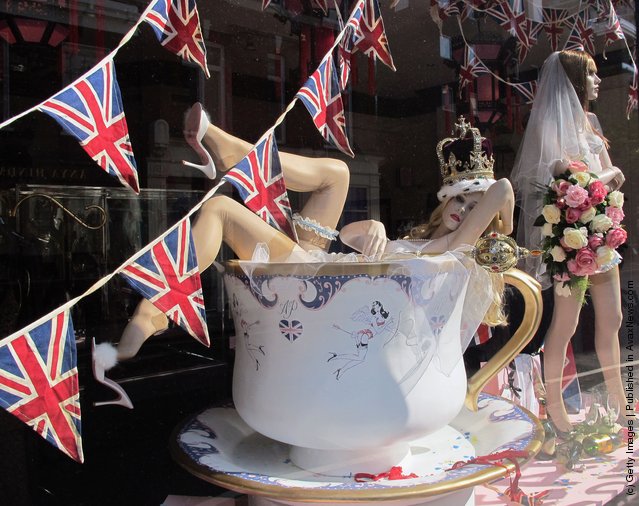
A general view of a royal wedding themed window display at Agent Provocateur in Pont Street, Chelsea on April 29, 2011 in London, England. The marriage of the second in line to the British throne is to be led by the Archbishop of Canterbury and will be attended by 1900 guests, including foreign Royal family members and heads of state. Thousands of well-wishers from around the world have also flocked to London to witness the spectacle and pageantry of the Royal Wedding. (Photo by Adrian Murrell/Getty Images)
Details
29 Apr 2011 09:08:00
Football Fans 1900–1940

Arsenal football supporters cheering from the train carriage window as they leave Euston Station, London, on their way to Birmingham for their team's match against Aston Villa which they lost 3-5. (Photo by Douglas Miller/Topical Press Agency/Getty Images). 19th November 1932
Details
28 Aug 2011 13:57:00