Loading...
Done
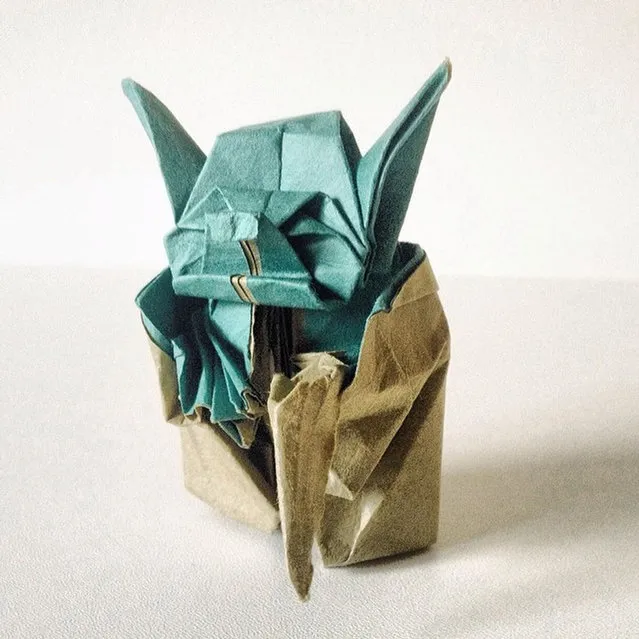
Origami By Ross Symons

As kids we have the natural desire to explore and to create. Whenever our parents would make for us a paper plane, we would become overjoyed seeing it fly across the room. However, planes are not the only thing that can be made from paper, and not only kids are fascinated by it. Some people master the art of origami and are able to create pretty much anything. You never know what’s going to come out when the artist twists and turns a piece of paper in meticulous ways. Finally, the figurine is complete, and you immediately see the striking resemblance of this piece of paper with an animal or some other creature. Ross Symons is one of those artists. He creates his figurines simply for the joy it brings him. Maybe, he uses this as a medium to enter his childhood, or maybe he has other motifs – we will never know. (Photo by Ross Symons)
Details
31 Oct 2014 12:12:00
Rangoli Folk Art From India

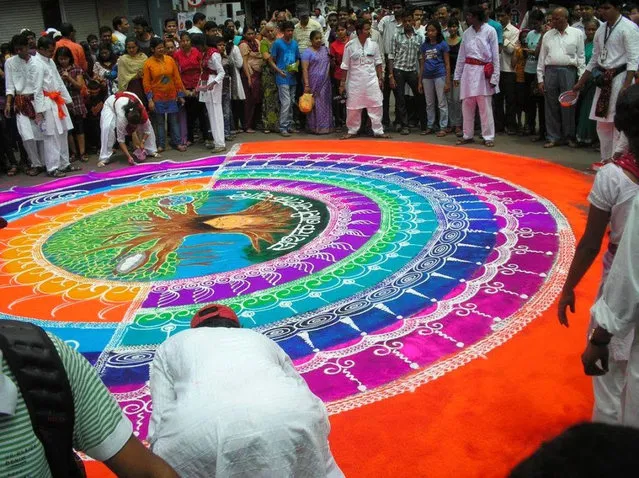
Rangoli, also known as kolam or Muggu, is a folk art from India in which patterns are created on the floor in living rooms or courtyards using materials such as colored rice, dry flour, colored sand or flower petals. It is usually made during Diwali, Onam, Pongal and other Indian festivals. They are meant to be sacred welcoming areas for the Hindu deities. The ancient symbols have been passed down through the ages, from each generation to the next, keeping both the art form and the tradition alive. Similar practices are followed in different Indian states: in Tamil Nadu, there is Kolam in Tamil Nadu; Mandana in Rajasthan; Chaookpurna in Chhattisgarh; Alpana in West Bengal; Aripana in Bihar; Chowk pujan in Uttar Pradesh; Muggu in Andhra Pradesh and others.
Details
16 Jun 2014 10:37:00
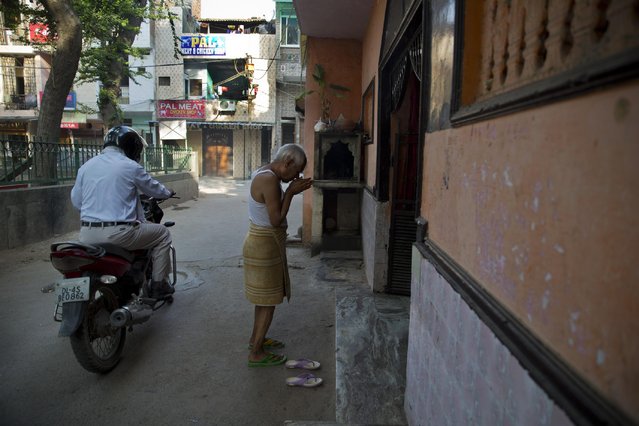
In this June 8, 2015 photo, Omkarnath, who goes by the name “Medicine Baba”, pays his reverence at a neighborhood temple as he begins his day in New Delhi, India. The chatty, 79-year-old retired blood-bank technician has been collecting unused prescription drugs from the affluent for the past eight years, and distributing whatever hasn't expired to patients who need medicines they cannot afford. (Photo by Saurabh Das/AP Photo)

In this June 8, 2015 photo, Omkarnath, who goes by the name “Medicine Baba”, pays his reverence at a neighborhood temple as he begins his day in New Delhi, India. The chatty, 79-year-old retired blood-bank technician has been collecting unused prescription drugs from the affluent for the past eight years, and distributing whatever hasn't expired to patients who need medicines they cannot afford. (Photo by Saurabh Das/AP Photo)
Details
25 Jul 2015 12:18:00


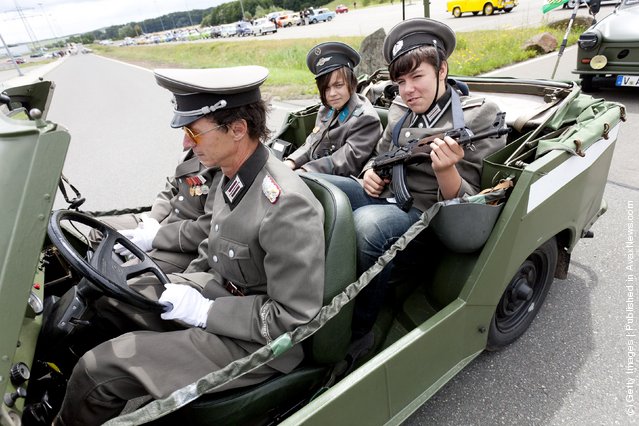
“The Trabant is a car that was produced by former East German auto maker VEB Sachsenring Automobilwerke Zwickau in Zwickau, Sachsen. It was the most common vehicle in East Germany, and was also exported to countries both inside and outside the communist bloc. The main selling points was that it had room for four adults and luggage in a compact, light and durable shell and that it was fast (when introduced) and durable. With its mediocre performance, smoky two-stroke engine, and production shortages, the Trabant is often cited as an example of the disadvantages of centralized planning; on the other hand, it is regarded with derisive affection as a symbol of the failed former East Germany and of the fall of communism (in former West Germany, as many East Germans streamed into West Berlin and West Germany in their Trabants after the opening of the Berlin Wall in 1989). It was in production without any significant changes for nearly 30 years with 3,096,099 Trabants produced in total”. – Wikipedia

Photo: Enthusiasts weared in uniforms of the former eastern german army trive in a military Trabant car as fans and owners of East German-era Trabant cars gather at the 2011 International Trabantfahrer Treffen (International Trabant Drivers Meeting) on June 26, 2011 in Zwickau, Germany. The Trabant, also known as the Trabi, was among the main cars produced in communist East Germany and built by VEB Sachsenring Automobilwerke in Zwickau for 30 years until 1989. Today the car has cult status for many followers and one company, IndiKar, is even seeking to revive the brand in a modern, electric version. (Photo by Carsten Koall/Getty Images)
Details
27 Jun 2011 12:21:00
Yang Juan, an employee at Goopal Group, takes a nap in her seat after lunch, in Beijing, China, April 21, 2016. (Photo by Jason Lee/Reuters)

Yang Juan, an employee at Goopal Group, takes a nap in her seat after lunch, in Beijing, China, April 21, 2016. Office workers sleeping on the job is a common sight in China, where a surplus of cheap labour can lead to downtime at work. But in China's technology sector, where business is growing faster than many start-up firms can hire new staff, workers burn the midnight oil to meet deadlines and compete with their rivals. Some companies provide sleeping areas and beds for workers to rest during late nights. (Photo by Jason Lee/Reuters)
Details
12 May 2016 14:53:00
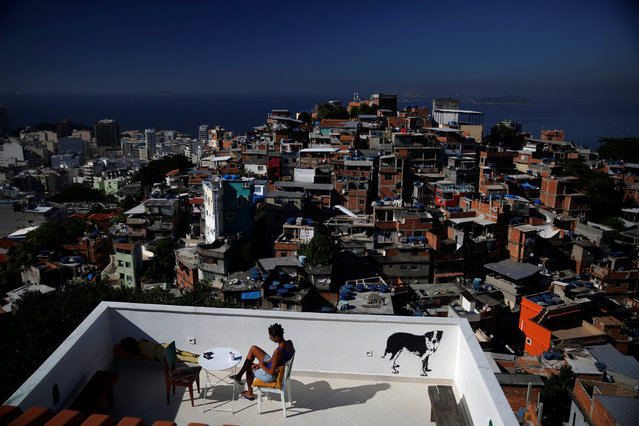
A woman sits on a terrace at Tiki hostel in Cantagalo favela, in Rio de Janeiro, Brazil, April 16, 2016. (Photo by Pilar Olivares/Reuters)

A woman sits on a terrace at Tiki hostel in Cantagalo favela, in Rio de Janeiro, Brazil, April 16, 2016. Hostels in a few of Rio's more than 1,000 slums serve not only as a cheap housing alternative for the more adventurous among the estimated 500,000 foreign tourists expected to arrive for the Olympics in August. The establishments also open up the rich culture of the city's shantytowns for travellers, giving them a glimpse into once “no-go” areas where about one-fifth of Rio's population lives. (Photo by Pilar Olivares/Reuters)
Details
04 May 2016 12:18:00
When it opened in 1955, the Grande Hotel in the Indian Ocean city of Beira was one of the most luxurious in Africa. Photojournalist Fellipe Abreu documents the lives of the 3,500 people who now fill this long-closed hotel to capacity. (Photo by Fellipe Abreu/The Guardian)

When it opened in 1955, the Grande Hotel in the Indian Ocean city of Beira was one of the most luxurious in Africa. Photojournalist Fellipe Abreu documents the lives of the 3,500 people who now fill this long-closed hotel to capacity. (Photo by Fellipe Abreu/The Guardian)
Details
06 May 2016 13:45:00
There has been a steady rise in young students and unemployed graduates who use s*x to earn cash. (Photo by Ton Koene/Exclusivepix Media)

Tens of thousands of HIV positive prostitutes in the slums of Lagos to ensure a rapid spread of the epidemic. “If you arrive by car, you can smell the HIV virus outside”, joked my driver as we are on track to Badia a criminal slums of Lagos. Badia is a corruption of “Bad Area”. Nigerians have a lack of everything, except black humor. The poor West African country Nigeria, with a population of 140 million people, after India and South Africa the highest number of people with HIV / AIDS. (Photo by Ton Koene/Exclusivepix Media)
Details
04 Feb 2017 01:01:00