Loading...
Done
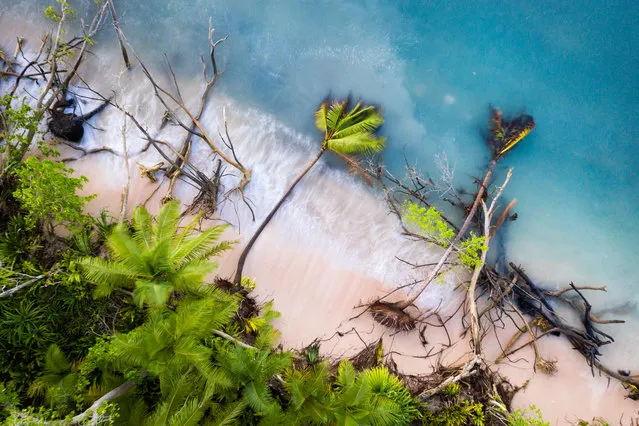
Tuvalu Beneath the Rising Tide by Sean Gallagher, Tuvalu. Changing environments prize: Fallen trees lie on a beach as the waves from the Funafuti lagoon in Tuvalu lap around them. Land erosion has always been a problem for the South Pacific country but problems are intensifying as sea levels rise. Rising seas are on the verge of completely submerging the tiny archipelago’s islands. (Photo by Sean Gallagher/CIWEM Environmental Photographer of the Year 2019)

Tuvalu Beneath the Rising Tide by Sean Gallagher, Tuvalu. Changing environments prize: Fallen trees lie on a beach as the waves from the Funafuti lagoon in Tuvalu lap around them. Land erosion has always been a problem for the South Pacific country but problems are intensifying as sea levels rise. Rising seas are on the verge of completely submerging the tiny archipelago’s islands. (Photo by Sean Gallagher/CIWEM Environmental Photographer of the Year 2019)
Details
26 Sep 2019 00:03:00
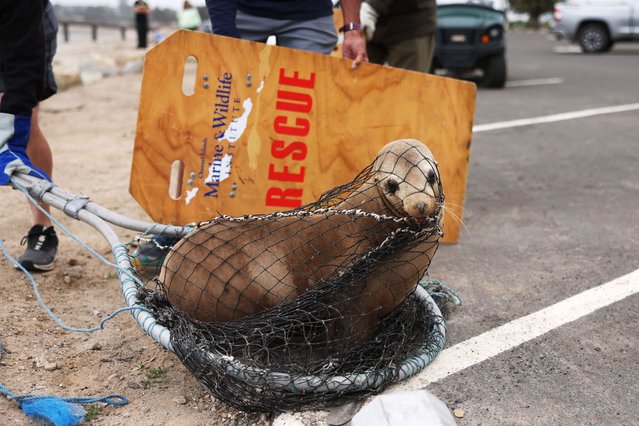
A sick California sea lion with possible domoic acid poisoning is rescued to be evaluated by volunteers from CIMWI (Channel Islands Marine & Wildlife Institute) in Santa Barbara, California, on March 25, 2025. Over a hundred sea lions, dolphins and other marine mammals, including birds, have been sickened by domoic acid poisoning from algal blooms in Southern California since February, US media reported. (Photo by David Swanson/AFP Photo)

A sick California sea lion with possible domoic acid poisoning is rescued to be evaluated by volunteers from CIMWI (Channel Islands Marine & Wildlife Institute) in Santa Barbara, California, on March 25, 2025. Over a hundred sea lions, dolphins and other marine mammals, including birds, have been sickened by domoic acid poisoning from algal blooms in Southern California since February, US media reported. (Photo by David Swanson/AFP Photo)
Details
02 Apr 2025 04:29:00
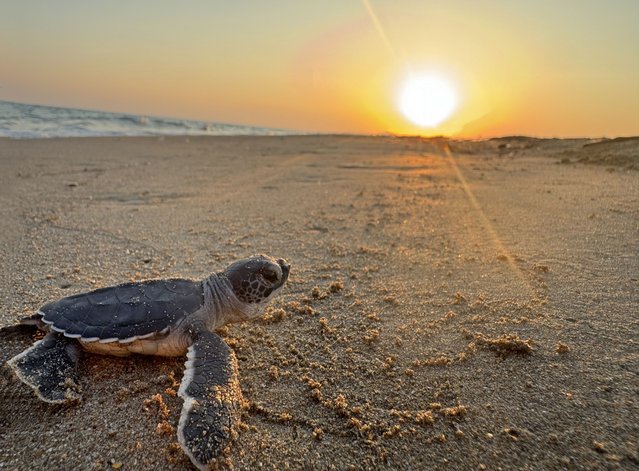
An endangered baby turtle hatched from its egg in its nest on the Belek coast, is trying to reach the open sea by walking along the beach in Antalya, Turkiye on August 05, 2025. In the Belek and Kizilot region, one of the largest nesting areas in the Mediterranean, many baby turtles continue to meet the sea. (Photo by Tahsin Ceylan/Anadolu via Getty Images)

An endangered baby turtle hatched from its egg in its nest on the Belek coast, is trying to reach the open sea by walking along the beach in Antalya, Turkiye on August 05, 2025. In the Belek and Kizilot region, one of the largest nesting areas in the Mediterranean, many baby turtles continue to meet the sea. (Photo by Tahsin Ceylan/Anadolu via Getty Images)
Details
25 Sep 2025 03:59:00
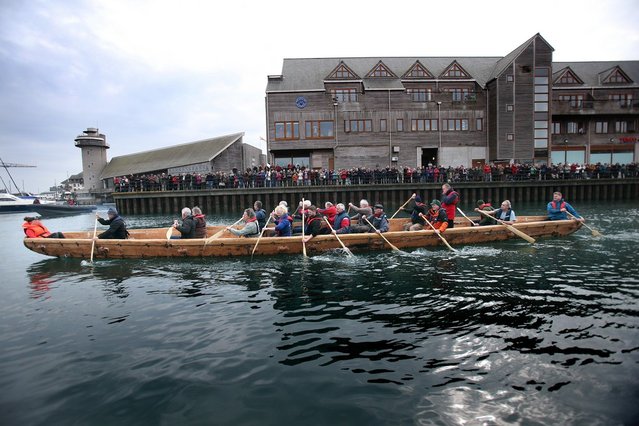
Crew in Britain's first ever full-size reconstructed sea-going Bronze Age boat, paddle out to sea near to the National Maritime Museum as it makes its maiden voyage on March 6, 2013 in Falmouth, England. With a crew of of 18, equipped with Bronze-Age-style wooden paddles, the 15 metre long experimental vessel – a replica of the sort of craft used for long-distance trade between Britain and the continent 4000 years ago – will be used to test prehistoric seafaring methods in a project in collaboration with the University of Exeter and the Falmouth-based National Maritime Museum Cornwall. (Photo by Matt Cardy)

Crew in Britain's first ever full-size reconstructed sea-going Bronze Age boat, paddle out to sea near to the National Maritime Museum as it makes its maiden voyage on March 6, 2013 in Falmouth, England. (Photo by Matt Cardy)
Details
07 Mar 2013 08:48:00
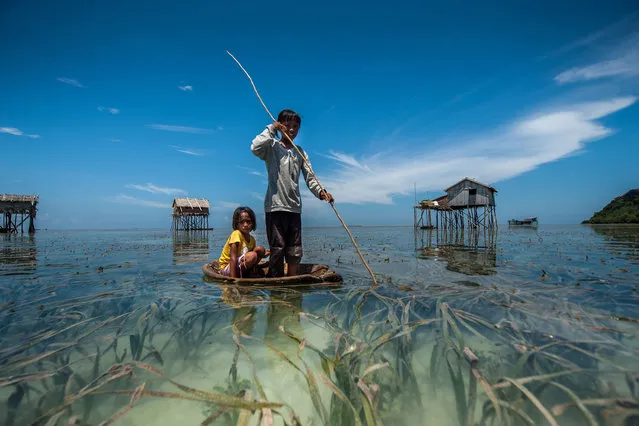
The Bajau people of Malaysia live their lives completely at sea, living in wooden huts and spending their days fishing. Sailing over crystal clear waters, the Bajau people of Malaysia live their lives almost entirely at sea. (Photo by Ng Choo Kia/Hotspot Media/SIPA Press)

The Bajau people of Malaysia live their lives completely at sea, living in wooden huts and spending their days fishing. Sailing over crystal clear waters, the Bajau people of Malaysia live their lives almost entirely at sea. Photographer Ng Choo Kia joined the Bajau people on their pirogues, which are long narrow canoes made from single tree trunks, and documented their daily life in a series of pictures. (Photo by Ng Choo Kia/Hotspot Media/SIPA Press)
Details
05 May 2015 10:49:00
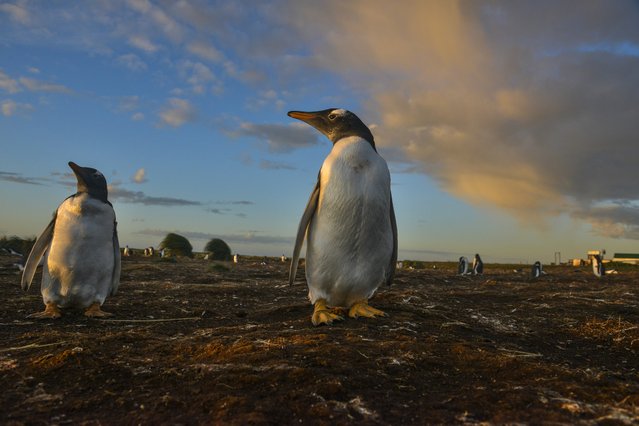
As the sun rises, Gentoo penguins start their day on Wednesday, February 17, 2016, on Sea Lion Island, Falkland Islands. Sea Lion Island, which lies about 10 miles to the south of mainland East Falkland, is the southern most human-inhabited island of the more than 750 islands and islets of the Falkland Islands. (Photo by Jahi Chikwendiu/The Washington Post)

As the sun rises, Gentoo penguins start their day on Wednesday, February 17, 2016, on Sea Lion Island, Falkland Islands. Sea Lion Island, which lies about 10 miles to the south of mainland East Falkland, is the southern most human-inhabited island of the more than 750 islands and islets of the Falkland Islands. (Photo by Jahi Chikwendiu/The Washington Post)
Details
02 Sep 2016 13:05:00
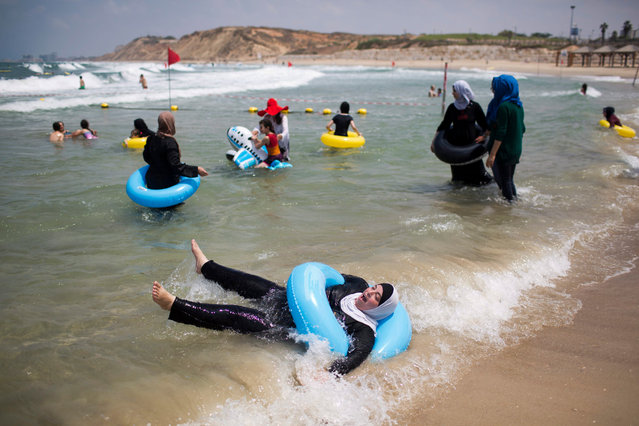
Palestinians kids from the West Bank Palestinian village Umm Al Rajaj cross the Meitar checkpoint into Israel on their way to the beach of Tel Aviv for the first time, Israel, 10 August 2016. A group of humanitarian Israeli women called in Arabic “Min Al Baher” (from the sea) voluntarily arranges authorizations and transportation for Palestinians families that live in the West Bank to cross into Israel in order to visit the sea for the first time. (Photo by Abir Sultan/EPA)

Palestinians kids from the West Bank Palestinian village Umm Al Rajaj cross the Meitar checkpoint into Israel on their way to the beach of Tel Aviv for the first time, Israel, 10 August 2016. A group of humanitarian Israeli women called in Arabic “Min Al Baher” (from the sea) voluntarily arranges authorizations and transportation for Palestinians families that live in the West Bank to cross into Israel in order to visit the sea for the first time. (Photo by Abir Sultan/EPA)
Details
02 Sep 2016 13:41:00
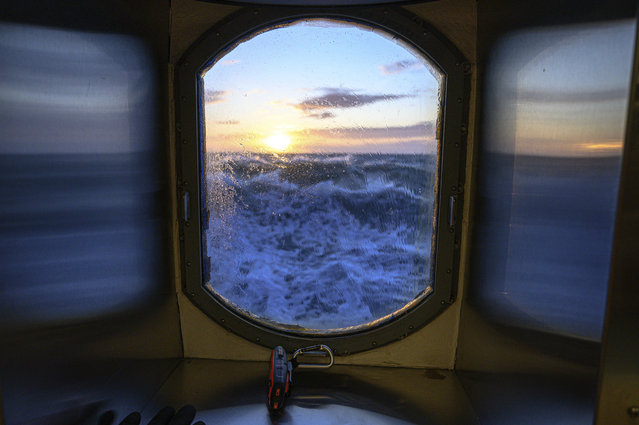
This November 8, 2019, photo provided by John Guillote shows a view from the main lab of the Sikuliaq in the Chukchi Sea. University of Washington scientists onboard the research vessel are studying the changes and how less sea ice will affect coastlines, which already are vulnerable to erosion because increased waves delivered by storms. More erosion would increase the chance of winter flooding in villages and danger to hunters in small boats. (Photo by John Guillote via AP Photo)

This November 8, 2019, photo provided by John Guillote shows a view from the main lab of the Sikuliaq in the Chukchi Sea. University of Washington scientists onboard the research vessel are studying the changes and how less sea ice will affect coastlines, which already are vulnerable to erosion because increased waves delivered by storms. More erosion would increase the chance of winter flooding in villages and danger to hunters in small boats. (Photo by John Guillote via AP Photo)
Details
26 Aug 2021 08:22:00