Loading...
Done
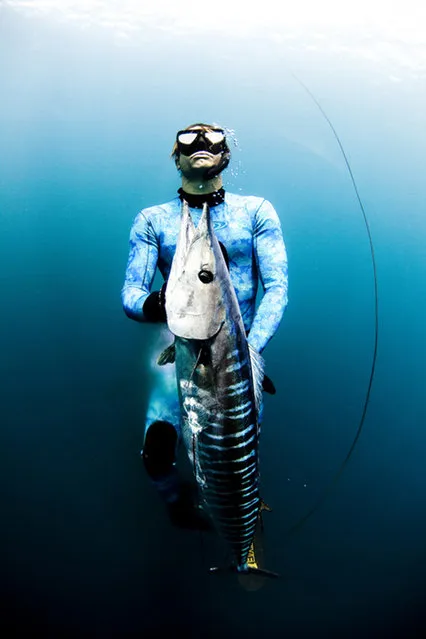
Free Dive Hunters

Without the use of any type of scuba equipment, divers descend to great depths armed with underwater guns, harpoons and strong line to stalk and hunt prey. Some of the best free-divers in the world can hold their breath for up to 5 minutes under water and go to depths greater than 100 feet.
(All photography © Eyeconic Images.)
Details
26 Jun 2013 14:17:00


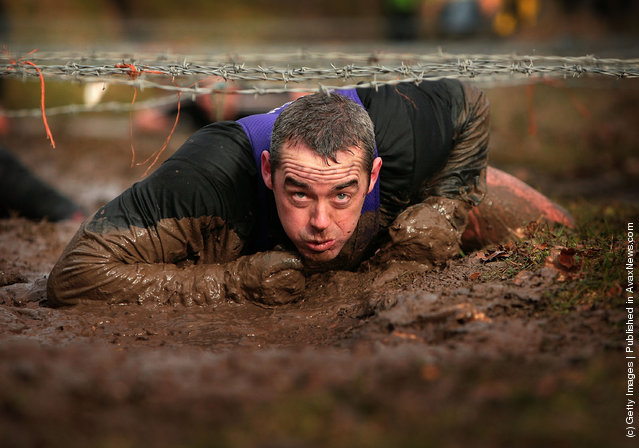
A competitor scrambles in the mud under barbed wire during the Tough Guy Challenge 2009 at South Perton Farm on February 1, 2009 in Wolverhampton, England. The biannual event to raise cash for charity challenges thousands of international competitors to run through a gruelling set of 21 obstacles including water, fire and tunnels after a lengthy run at the start. (Photo by Christopher Furlong/Getty Images)
Details
18 Nov 2011 14:02:00


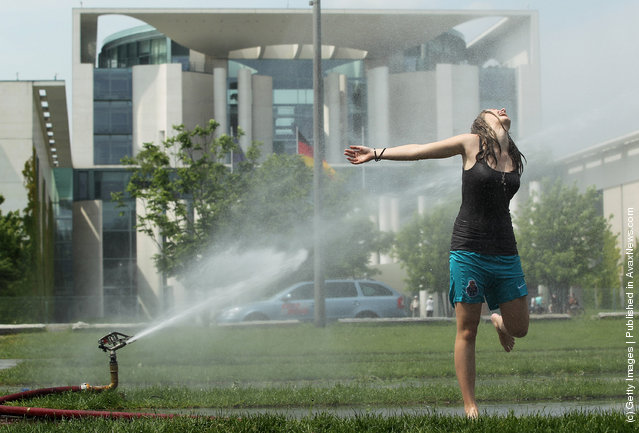
Finia, a visiting student from Hanover, cools off under a water sprinkler in front of the Chancellery on June 10, 2010 in Berlin, Germany. (Photo by Sean Gallup/Getty Images)
Details
13 Jul 2011 10:38:00
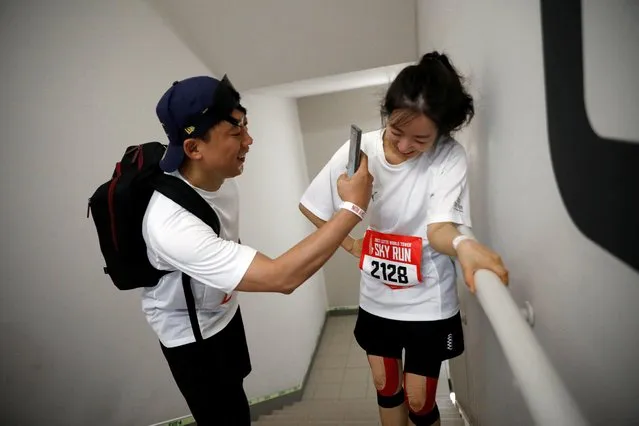
A participant takes photographs of his friend while climbing up the stairs during Sky Run, a vertical marathon event, held in the 123-story Lotte World Tower, in Seoul, South Korea on April 22, 2023. (Photo by Kim Soo-hyeon/Reuters)

A participant takes photographs of his friend while climbing up the stairs during Sky Run, a vertical marathon event, held in the 123-story Lotte World Tower, in Seoul, South Korea on April 22, 2023. (Photo by Kim Soo-hyeon/Reuters)
Details
12 May 2023 03:47:00
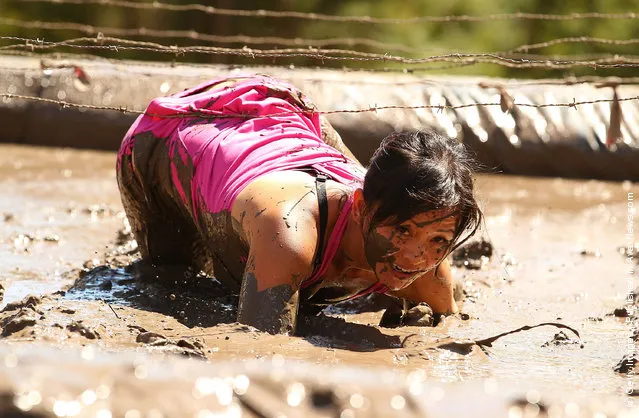
Lisa Yu crawls through a mud pit under low slung barbed wire as she competes in The Tough Bloke Challenge

Lisa Yu crawls through a mud pit under low slung barbed wire as she competes in The Tough Bloke Challenge on March 4, 2012 in Melbourne, Australia. The Tough Bloke Challenge is one of the most gruelling adventure runs in Australia consisting of 18 obstacles over a 6 km cross-country course laden with thick mud-pits and ice-cold water crossings. (Photo by Scott Barbour/Getty Images)
Details
04 Mar 2012 12:36:00
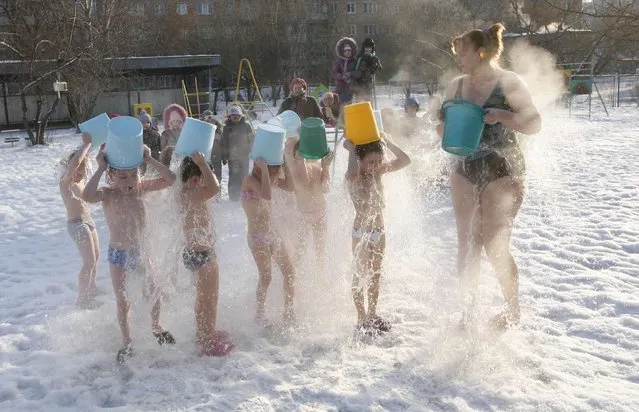
Children pour cold water on themselves under the control of fitness coach Margarita Filimonova (R) at local kindergarten number 317, with the air temperature at about minus 23 degrees Celsius (minus 9.4 degrees Fahrenheit), in Russia's Siberian city of Krasnoyarsk, February 5, 2013. (Photo by Ilya Naymushin/Reuters)

Children pour cold water on themselves under the control of fitness coach Margarita Filimonova (R) at local kindergarten number 317, with the air temperature at about minus 23 degrees Celsius (minus 9.4 degrees Fahrenheit), in Russia's Siberian city of Krasnoyarsk, February 5, 2013. (Photo by Ilya Naymushin/Reuters)

P.S. All pictures are presented in high resolution. To see Hi-Res images – just TWICE click on any picture. In other words, click small picture – opens the BIG picture. Click BIG picture – opens VERY BIG picture (if available; this principle works anywhere on the site AvaxNews).
Details
17 Feb 2013 15:40:00
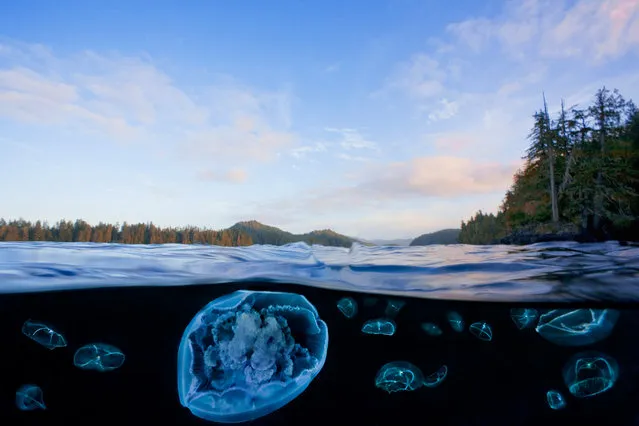
Moon jellyfish and cross jellies. (Photo by David Hall)

David Hall’s photographs of scenery and creatures off the coast of Canada in the Pacific Northwest portray serenity under the water, which belie the extreme challenges he faces to get his images. For each shoot, Hall wears a dry suit, a neoprene body suit that covers all of his body but his head and traps air inside to keep him warm. Water temperature in Canada’s British Columbia typically ranges between 45 and 50 degrees Fahrenheit. Photo: Moon jellyfish and cross jellies. (Photo by David Hall)
Details
16 Sep 2014 12:57:00
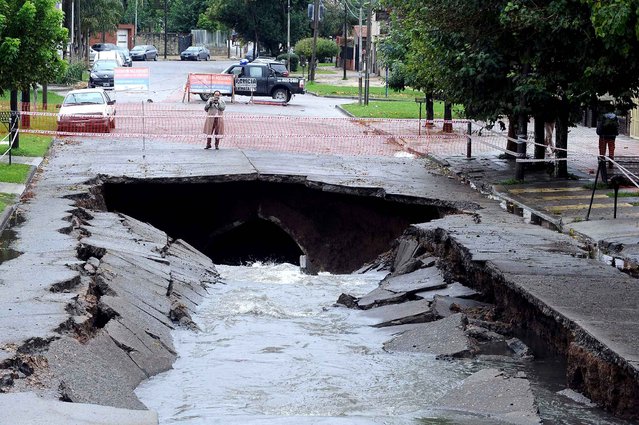
Handout picture released by Telam showing the tarmac of the Pedro Palacios Avenue in Ramos Mejia, province of Buenos Aires, Argentina, under which the channeled waters of the Maldonado stream flow, after it collapsed on April 8, 2014 leaving a 40-metre-long, 1.4-metre-deep hole. About 3000 people had to be evacuated in the Argentine provinces of Neuquen (soutwest), Catamarca (northwest), Santiago del estero (center) and Cordoba (center)due to the foods caused by heavy rain, official sources said. (Photo by Daniel Dabove/AFP Photo)

Handout picture released by Telam showing the tarmac of the Pedro Palacios Avenue in Ramos Mejia, province of Buenos Aires, Argentina, under which the channeled waters of the Maldonado stream flow, after it collapsed on April 8, 2014 leaving a 40-metre-long, 1.4-metre-deep hole. About 3000 people had to be evacuated in the Argentine provinces of Neuquen (soutwest), Catamarca (northwest), Santiago del estero (center) and Cordoba (center)due to the foods caused by heavy rain, official sources said. (Photo by Daniel Dabove/AFP Photo)
Details
12 Apr 2014 12:40:00