Loading...
Done
Body Painter By Emma Fay

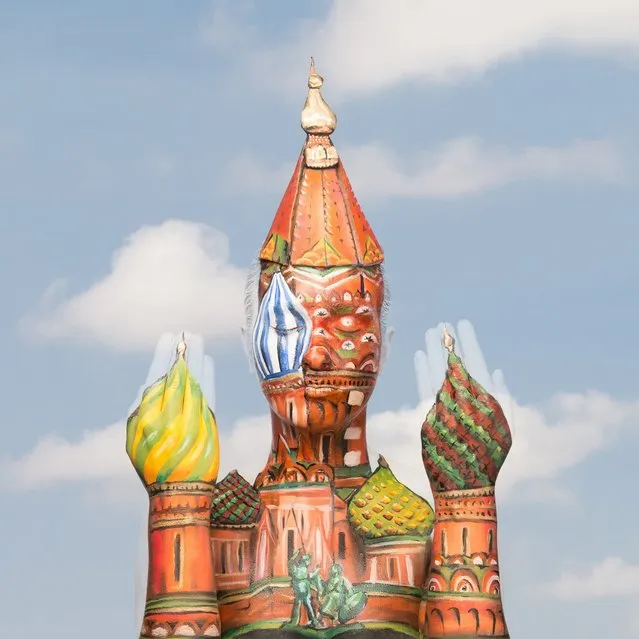
There is something frightening and at the same time appealing in the living sculptures of 27-year-old British artist Emma Fay. Body art in conjunction with the flexibility of acrobats and fantasy of the artist using water-based paints, a brush and sponge, is transformed into a beautiful work of art. It is not immediately possible to make out the human body in the picture. First you look at the landscape and suddenly begin to distinguish someone’s arm, or neck. Or you look into the eyes of an amazing bull, and it turns out that it is perfectly folded back. Lovely people, temples are and wonderful people-insects are.
Details
10 Jan 2016 08:02:00
A woman poses for a photograph with light sculptures depicting animals that make up the twelve animals of the zodiac during a photocall to promote the Magical Lantern Festival at Chiswick House Gardens in west London on January 29, 2016. (Photo by Justin Tallis/AFP Photo)

A woman poses for a photograph with light sculptures depicting animals that make up the twelve animals of the zodiac during a photocall to promote the Magical Lantern Festival at Chiswick House Gardens in west London on January 29, 2016. The festival, to celebrate Chinese New Year 2016 – the Year of the Monkey, uses more than 50 hand-sculpted lanterns and is set to run from Febuary 3 to March 6, 2016. (Photo by Justin Tallis/AFP Photo)
Details
30 Jan 2016 13:35:00
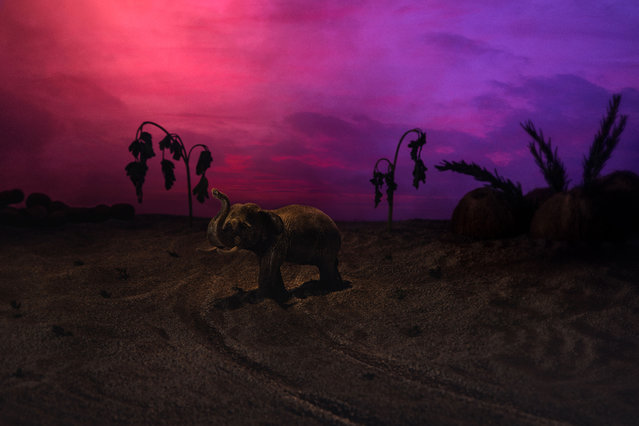
An elephant with plants of parsley, rosemary, tamarind and coconut boulders. (Photo by Julia Wimmerlin/Caters News)

If you think you are looking at stunning sunset safari photographs, think again. From a herd of elephants trailing the savanna at sunset to a crocodile hungrily engulfing a baby impala, amazingly these clever pictures are actually made using nothing but props, toy animals and vegetables. Julia Wimmerlin has always dreamed of going on safari and found a way to channel her dream in a seriously creative way. Here: An elephant with plants of parsley, rosemary, tamarind and coconut boulders. (Photo by Julia Wimmerlin/Caters News)
Details
29 Mar 2016 11:36:00
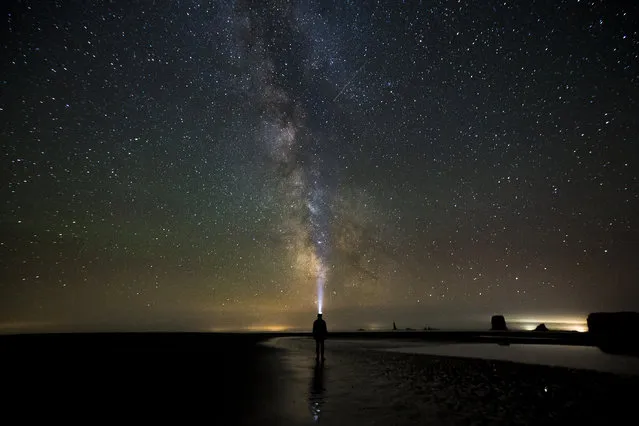
Second Beach, La Push, Washington, March, 2015. (Photo by Andrew Ling/Caters News)

Andrew Ling's inspiring photographs showcase the splendor of the natural world, using people to highlight the beauty and scale of these epic landscapes. Each image features a person photographed from hundreds of feet away, seemingly insignificant in comparison to the breathtaking landscape that surrounds them – whether beneath gushing waterfalls, under millions of glittering stars or atop of gigantic cliffs. Andrew, 22, said, “I hope these images will help remind people how beautiful the world we live in is”. Here: Second Beach, La Push, Washington, March, 2015. (Photo by Andrew Ling/Caters News)
Details
31 Mar 2016 11:12:00
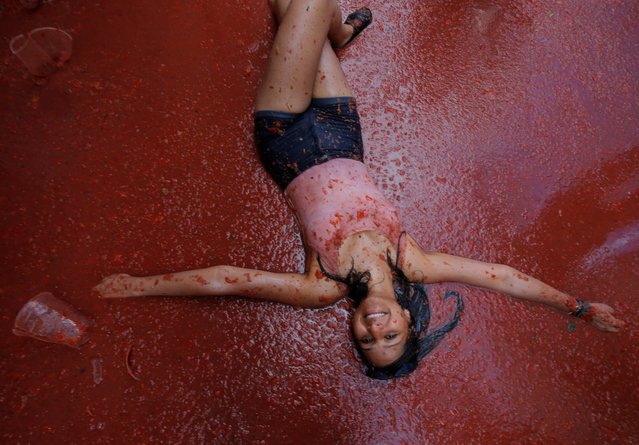
A reveller plays with tomato pulp during the annual Tomatina festival in Bunol, near Valencia, Spain on August 29, 2018. (Photo by Heino Kalis/Reuters)

A reveller plays with tomato pulp during the annual Tomatina festival in Bunol, near Valencia, Spain on August 29, 2018. As every year on the last Wednesday of August, thousands of people visit the small village of Bunol to attend the Tomatina, a battle in which tons of ripe tomatoes are used as weapons. This year, a total of 145 tons of ripe tomatoes will be thrown between more than 22,000 participants. (Photo by Heino Kalis/Reuters)
Details
05 Sep 2018 09:00:00
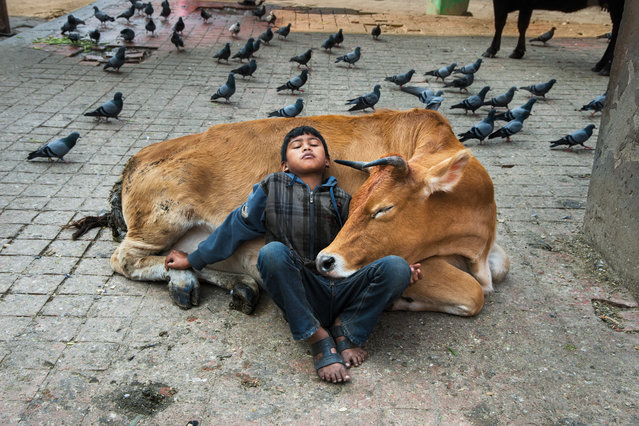
A boy rests against a cow, Kathmandu, Nepal, 2013. “Cows have been designated the national animal in Nepal. They roam freely, and are considered sacred by the 80% of Nepalis who are Hindu”. (Photo by Steve McCurry/The Guardian)

The legendary US photographer’s favourite shots of creatures and how they interact with humans feature in “Animals”, his latest book. Here: A boy rests against a cow, Kathmandu, Nepal, 2013. “Cows have been designated the national animal in Nepal. They roam freely, and are considered sacred by the 80% of Nepalis who are Hindu”. (Photo by Steve McCurry/The Guardian)
Details
07 Nov 2019 00:01:00
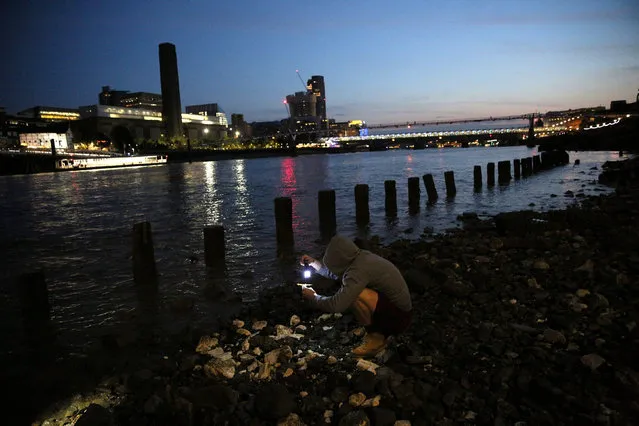
A mudlark uses a torch to look for items on the bank of the River Thames in London, Britain June 06, 2016. Mudlarking is believed to trace its origins to the 18th and 19th century, when scavengers searched the Thames' shores for items to sell. These days, history and archaeology fans are the ones hoping to find old relics such as coins, ceramics, artifacts or everyday items from across centuries. They wait for the low tide and then scour specific areas of exposed shores. "If you're in a field you could be out all day long, with the river you're restricted to about two or three hours," mudlark Nick Stevens said. While many just use the naked eye for their searches, others rely on metal detectors for which a permit from the Port of London Authority is needed. Digging also requires consent. (Photo by Neil Hall/Reuters)

A mudlark uses a torch to look for items on the bank of the River Thames in London, Britain June 06, 2016. Mudlarking is believed to trace its origins to the 18th and 19th century, when scavengers searched the Thames' shores for items to sell. These days, history and archaeology fans are the ones hoping to find old relics such as coins, ceramics, artifacts or everyday items from across centuries. their finds with the Portable Antiquities Scheme. Any item over 300 years old must be recorded. (Photo by Neil Hall/Reuters)
Details
27 Aug 2016 10:43:00
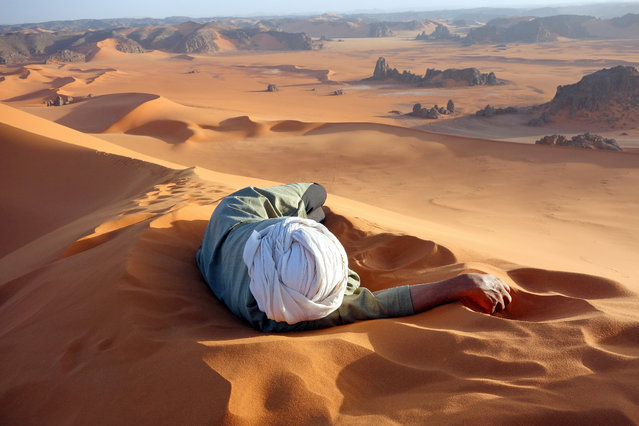
“A Well Earned Rest in the Sahara”. This photo of Moussa Macher, our Tuareg guide, was taken at the summit of Tin-Merzouga, the largest dune (or erg) in the Tadrat region of the Sahara desert in southern Algeria. Moussa rested while waiting for us to finish our 45-minute struggle to the top. Photo location: Summit of Tin-Merzouga, Tadrat, Tassili N'Ajjer National Park, Algeria. (Photo and caption by Evan Cole/National Geographic Photo Contest)

Merit Prize Winner: “A Well Earned Rest in the Sahara”. This photo of Moussa Macher, our Tuareg guide, was taken at the summit of Tin-Merzouga, the largest dune (or erg) in the Tadrat region of the Sahara desert in southern Algeria. Moussa rested while waiting for us to finish our 45-minute struggle to the top. It only took ten minutes of rolling, running, and jumping to get back down. The Tadrat is part of the Tassili N'Ajjer National Park World Heritage area, famous for its red sand and engravings and rock paintings of cattle, elephants, giraffes, and rhinos that lived there when the climate was milder. Photo location: Summit of Tin-Merzouga, Tadrat, Tassili N'Ajjer National Park, Algeria. (Photo and caption by Evan Cole/National Geographic Photo Contest)
Details
01 Aug 2014 11:38:00