Loading...
Done
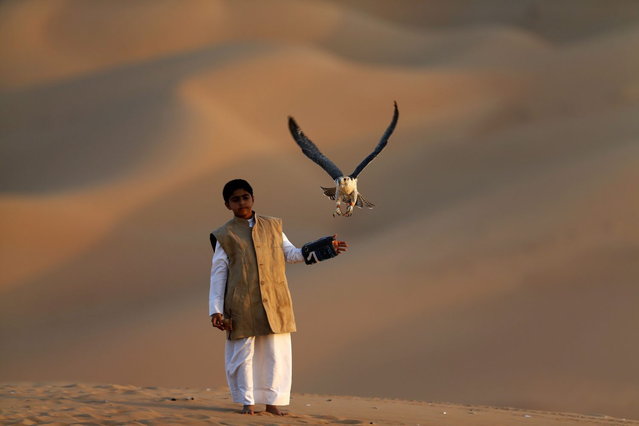
A young Emirati boy looks on as his falcon flies at the Liwa desert, 220 kms west of Abu Dhabi, on the sidelines of the Mazayin Dhafra Camel Festival on December 21, 2013. (Photo by Karim Sahib/AFP Photo)

A young Emirati boy looks on as his falcon flies at the Liwa desert, 220 kms west of Abu Dhabi, on the sidelines of the Mazayin Dhafra Camel Festival on December 21, 2013. The festival, which attracts participants from around the Gulf region, includes a camel beauty contest, a display of UAE handcrafts and other activities aimed at promoting the country's folklore. (Photo by Karim Sahib/AFP Photo)
Details
27 Dec 2013 10:55:00
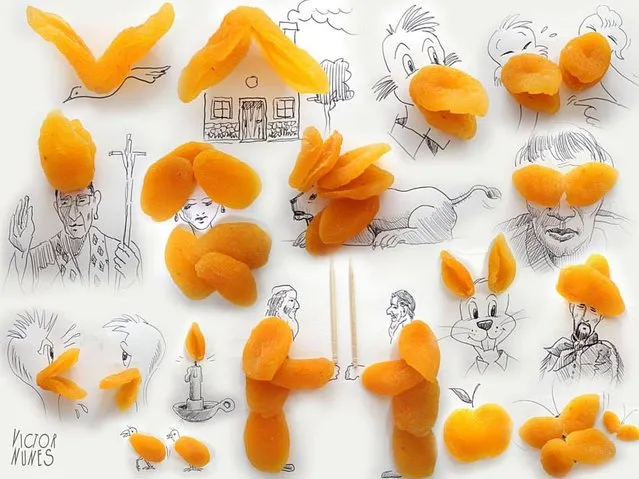
Food In Faces By Victor Nunes

Artist Victor Nunes combines every-day objects with simple illustrations to turn them into pictures of faces, animals and other playful scenes. His images invite us to look at the world differently and find creative images in our surroundings. Nunes’ art is a great example of pareidolia, which is our propensity to give meaning to random objects (like in this post about seeing faces in random objects). It’s the reason why we associate a smiley face with a human face and why some of Nunes’ pieces of popcorn or bread resemble faces to us.
Details
02 Feb 2014 11:58:00
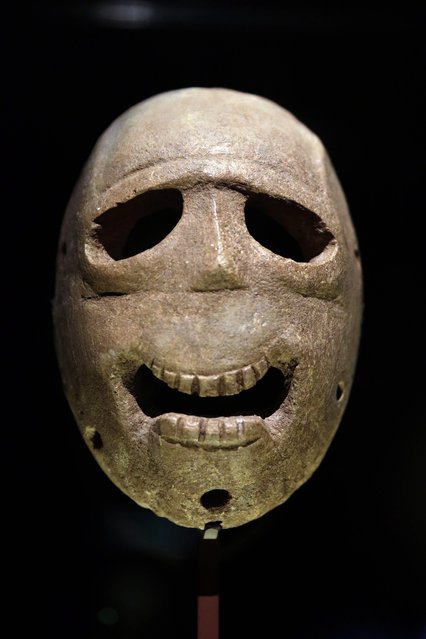
In this  Monday, March 10, 2014 photo, a 9,000 year-old mask is on display at the Israel Museum in Jerusalem.  (Photo by Tsafrir Abayov/AP Photo)

In this Monday, March 10, 2014 photo, a 9,000 year-old mask is on display at the Israel Museum in Jerusalem. The exhibition called “Face To Face” shows eleven stone masks, said to have been discovered in the Judean desert and hills near Jerusalem, which date back 9,000 years and offer a rare glimpse at some of civilization's first communal rituals. (Photo by Tsafrir Abayov/AP Photo)
Details
14 Mar 2014 08:25:00
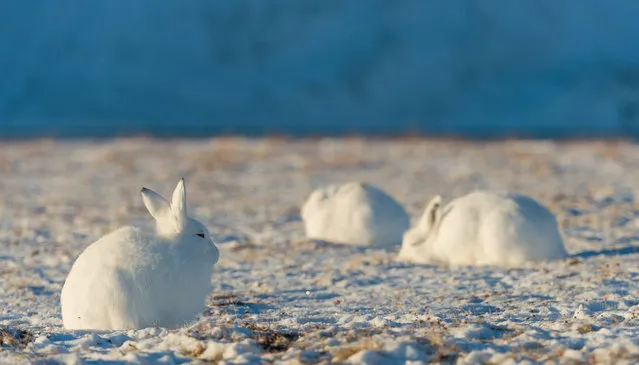
Arctic Hare

The arctic hare, or polar rabbit, is a species of hare which is adapted largely to polar and mountainous habitats. The arctic hare survives with a thick coat of fur and usually digs holes in the ground or under snow to keep warm and sleep. Arctic hares look like rabbits but have shorter ears, are taller when standing, and, unlike rabbits, can thrive in cold climates. They can travel together with many other hares, sometimes huddling with dozens or more, but are usually found alone, taking, in some cases, more than one partner. The arctic hare can run up to 60 kilometres per hour (40 mph). Its predators include the arctic wolf, arctic fox, and ermine.
Details
17 Mar 2014 13:56:00
St. Boniface Church, Philadelphia Pa. (Photo by Matthew Christopher/Caters News)

“These are the stunning images of some of Americas most breathtaking churches – all of which are abandoned. Matthew Christopher travels around the United States taking shots of its most beautiful decaying wonders. He shot those in his churches series in Philadelphia, Pennsylvania, where he works as a photographer and lecturer. Matthew’s fascination with such abandoned spaces started when he was a child when he enjoyed looking at artwork set in buildings that have since decayed”. – Caters News. Photo: St. Boniface Church, Philadelphia Pa. (Photo by Matthew Christopher/Caters News)
Details
10 Aug 2014 10:23:00
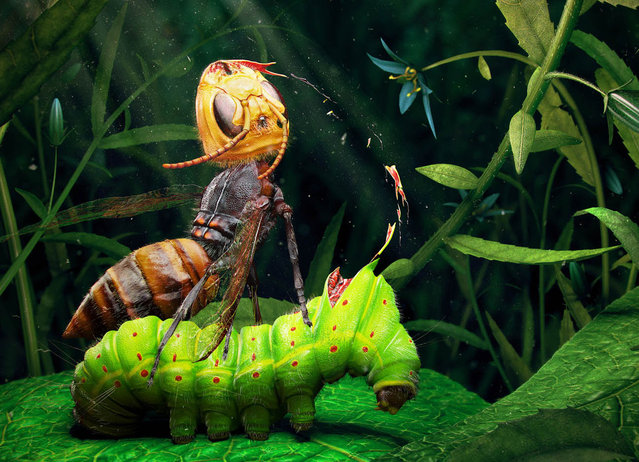
Deadly Insects Hornet

Hornets are insects that are the largest eusocial wasps. Some species can reach up to 5.5 cm (2.2 in) in length. The true hornets make up the genus Vespa and are distinguished from other vespines by the width of the vertex (part of the head behind the eyes), which is proportionally larger in Vespa and by the anteriorly rounded gasters (the section of the abdomen behind the wasp waist). The best known species is the European hornet (Vespa crabro), about 2–3.5 cm in length, widely distributed throughout Europe, Russia, North America and Northeast Asia.
Details
13 Oct 2014 10:17:00
All In By Graham MacIndoe

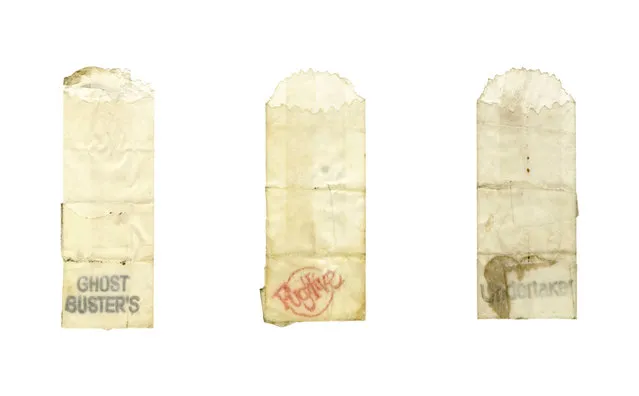
In order to get a glimpse into the visual culture of drug trade in New York City, a British photographer Graham MacIndoe collected more than one hundred bags, which were used to sell heroin. These bags feature references to various movies, fast-food restaurants, and luxury brands. This could be a way to mark various purities of heroin, or maybe different drug dealers use different markers to distinguish between each other. We can only wonder where Graham has acquired all these heroin bags. Hopefully, he picked them up after their contents were emptied. (Photo by Graham MacIndoe)
Details
01 Dec 2014 14:15:00
Goodfellow's Tree-Kangaroo

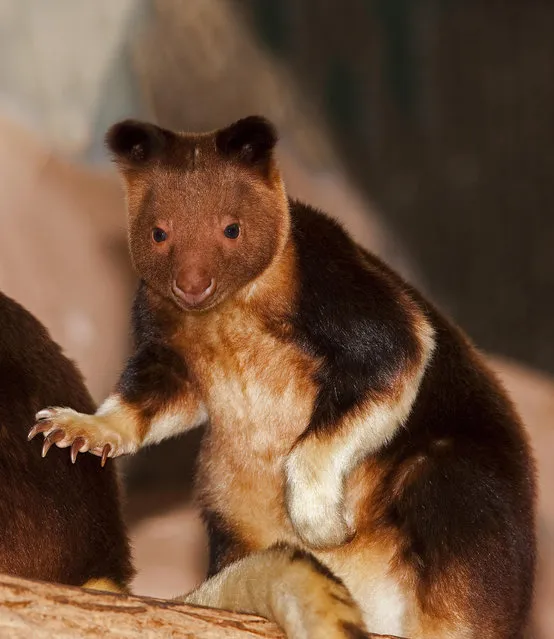
For some reason, everything that comes from Australia is either very cute or very poisonous; sometimes cute and poisonous at the same time. For example, Slow Loris, which you probably have seen eating a ball of rice on YouTube, is actually a very poisonous creature, despite its extreme cuteness. Goodfellow’s tree-kangaroos, on the other hand, are all cuteness and no poison. Just look at its cute little snout and furry paws, as it gingerly scratches its stomach, while sitting on its hind legs! If you don’t find this creature adorable, nothing will be able to thaw your stone-cold heart.
Details
30 Nov 2014 13:38:00