Loading...
Done
Rangoli Folk Art From India

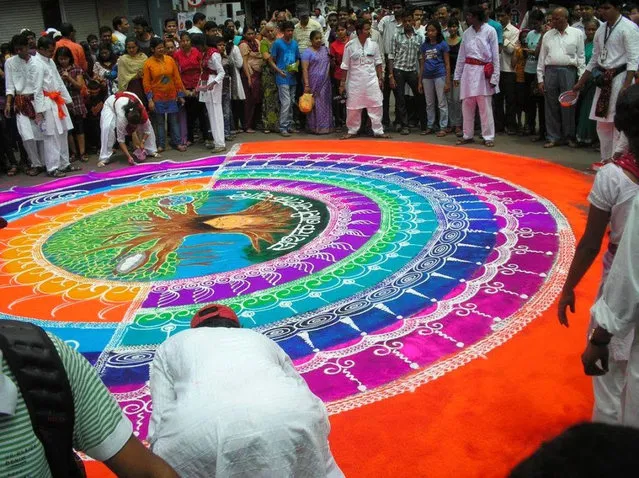
Rangoli, also known as kolam or Muggu, is a folk art from India in which patterns are created on the floor in living rooms or courtyards using materials such as colored rice, dry flour, colored sand or flower petals. It is usually made during Diwali, Onam, Pongal and other Indian festivals. They are meant to be sacred welcoming areas for the Hindu deities. The ancient symbols have been passed down through the ages, from each generation to the next, keeping both the art form and the tradition alive. Similar practices are followed in different Indian states: in Tamil Nadu, there is Kolam in Tamil Nadu; Mandana in Rajasthan; Chaookpurna in Chhattisgarh; Alpana in West Bengal; Aripana in Bihar; Chowk pujan in Uttar Pradesh; Muggu in Andhra Pradesh and others.
Details
16 Jun 2014 10:37:00
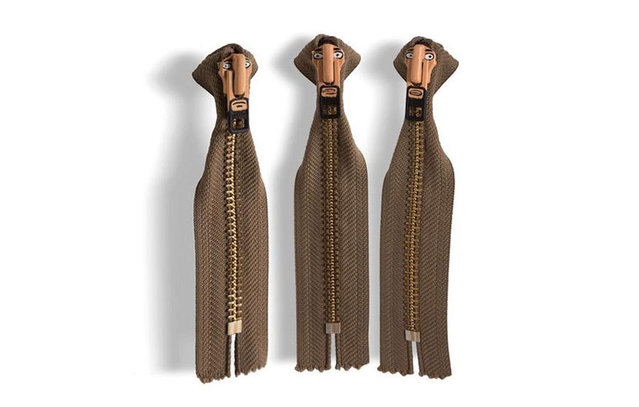
Everyday Objects Into Cute Characters By Gilbert Legrand Part 1

French artist Gilbert Legrand’s new series takes everyday objects like corkscrews, tape measures, and more and turns them into hilariously cute characters that almost make you forget their original purpose. Skillfully using each object’s natural shape, he crafts a character full of whimsy and personality. Each is painted to detail, with even the tiniest of characters bearing an expression which leaves no doubt as to their feelings about the situation. It truly takes a talented hand and imagination to turn paint brushes and zippers into humorous characters with surprisingly huge personalities.


See Also: Psrt 2 _ Part 3
Details
08 Jul 2014 10:29:00
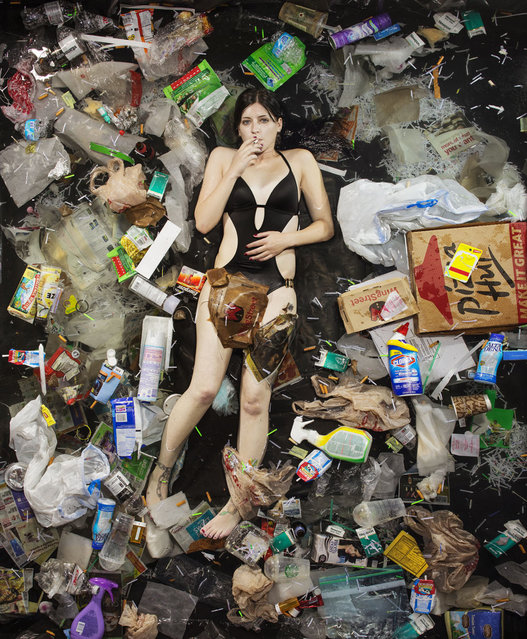
Dan surrounded by seven days of her own rubbish in Pasadena, California. (Photo by Gregg Segal/Barcroft Media)

Dan surrounded by seven days of her own rubbish in Pasadena, California. If you've never thought about how much rubbish you throw away an honest photographic series will open your eyes. Men, women, couples and families with young children have been photographed lying on their backs surrounded by a week's worth of their own rubbish – from old cartons of milk, used nappies and even tampons. The startling series “Seven Days of Garbage” by Californian photographer Gregg Segal is an unforgettable reminder of the amount of waste a human collects in just seven days. (Photo by Gregg Segal/Barcroft Media)
Details
16 Jul 2014 14:41:00
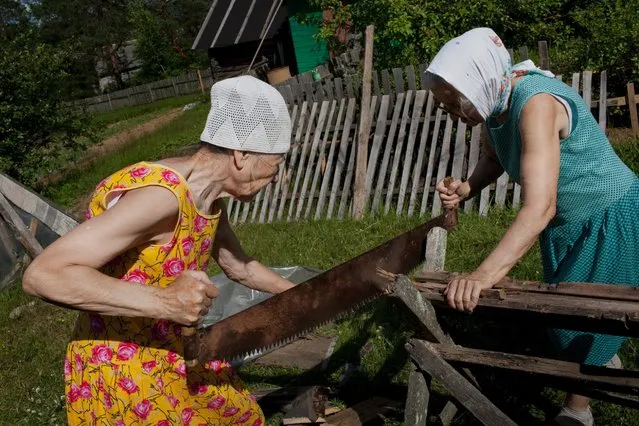
“Two-Handed Saw, 2014”. “Most of the neighbors have switched to power tools to run their households, the buzz of chain saws and weed-whackers overpowering the quieter sounds of country life, but my aunts hold on to the two-handed saw that's decades old, the sickle and scythe that need to be sharpened and polished after each use, the old axe that's becoming heavier each year. Each of these objects is familiar, holding memories of their brother, who succumbed to cancer a few years ago, of days before my grandfather lost his vision in the 50's, of busier days and longer futures”, Sablin told. (Photo by Nadia Sablin)

In northwest Russia, in a small village called Alekhovshchina, Nadia Sablin's aunts spend the warmer months together in the family home and live as the family has always lived, chopping wood to heat the house and making their own clothes. Sablin's book of photographs, “Aunties: The Seven Summers of Alevtina and Ludmila”, is published by Duke University Press. Here: “Two-Handed Saw, 2014”. (Photo by Nadia Sablin)
Details
25 Feb 2016 12:12:00
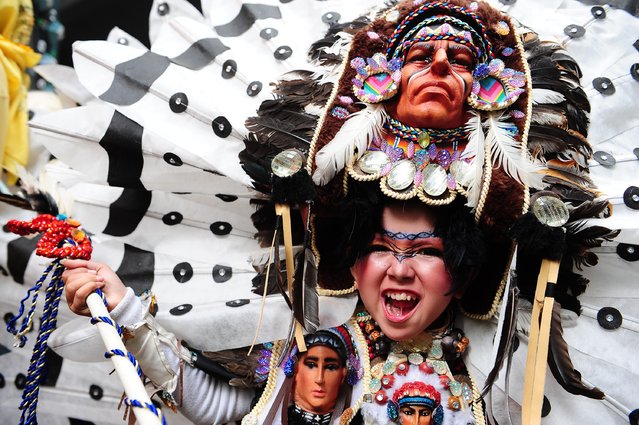
A model wears an Apache costume in the kids carnival during The 13th Jember Fashion Carnival 2014 on August 21, 2014 in Jember, Indonesia. (Photo by Robertus Pudyanto/Getty Images)

A model wears an Apache costume in the kids carnival during The 13th Jember Fashion Carnival 2014 on August 21, 2014 in Jember, Indonesia. The 13th Jember Fashion Carnival (JFC) 2014 theme is “Triangle, Dynamic in Harmony” and consists of ten parades which include Mahabharata, Tambora, Phoenix, Pine Forest, Apache, Borobudur, Flying Kite, Wild Deers, Stalagmite, and Chemistry. This street carnival is claimed to be one of the biggest in the world and comprises more than 850 performers parading along 3.6 km road used as the catwalk. (Photo by Robertus Pudyanto/Getty Images)
Details
24 Aug 2014 09:09:00
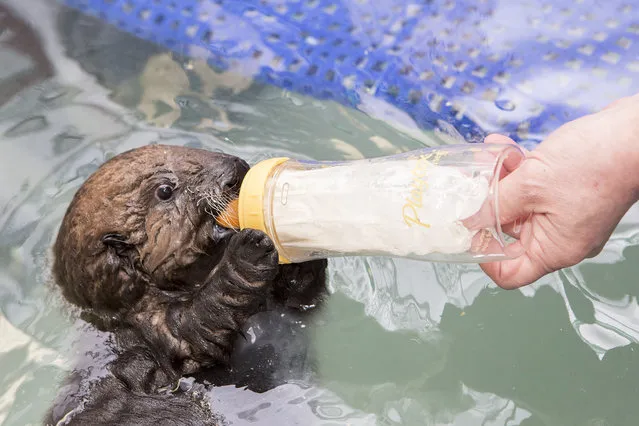
Weighing in at just under 6 pounds and at 22.6 inches long, the female pup arrived at Shedd in late October from Monterey Bay Aquarium in California, where she spent the first four weeks of her life being stabilized. (Photo by Brenna Hernandez/AP Photo)

Weighing in at just under 6 pounds and at 22.6 inches long, the female pup arrived at Shedd in late October from Monterey Bay Aquarium in California, where she spent the first four weeks of her life being stabilized. The pup has been doing well since her arrival, receiving continual care behind the scenes of Shedd’s Abbott Oceanarium. Currently referred to as “Pup 681”, Shedd’s animal care and veterinarian teams are providing the continual, round-the-clock care she needs to thrive. Photos used with permisson from Shedd Aquarium. (Photo by Brenna Hernandez/AP Photo)
Details
09 Nov 2014 09:35:00
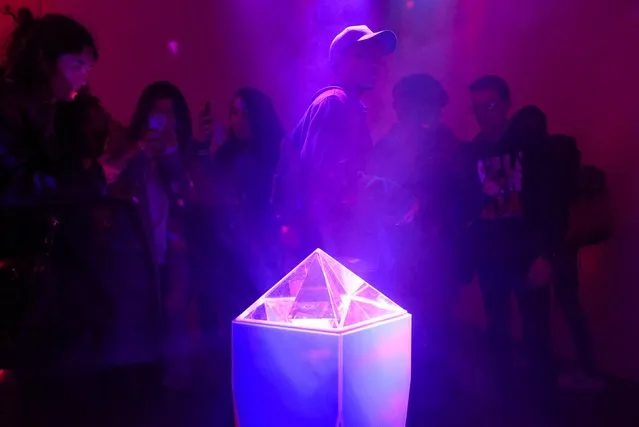
The Museum of Feelings doesn't really have “exhibits" in the conventional sense; rather, visitors move from one themed alcove to another, five in total, each with its own distinctive aroma.  (Photo by Stephanie Keith/Reuters)

The Museum of Feelings doesn't really have “exhibits" in the conventional sense; rather, visitors move from one themed alcove to another, five in total, each with its own distinctive aroma. The “Optimistic Room," bathed in vivid pink and purple light, is little more than a lightshow, with patrons using small reflective panels to bounce light around the room. Here: People interact in the “optimistic” room at the Museum of Feelings, a pop-up installation in New York, December 15, 2015. (Photo by Stephanie Keith/Reuters)
Details
19 Dec 2015 08:00:00
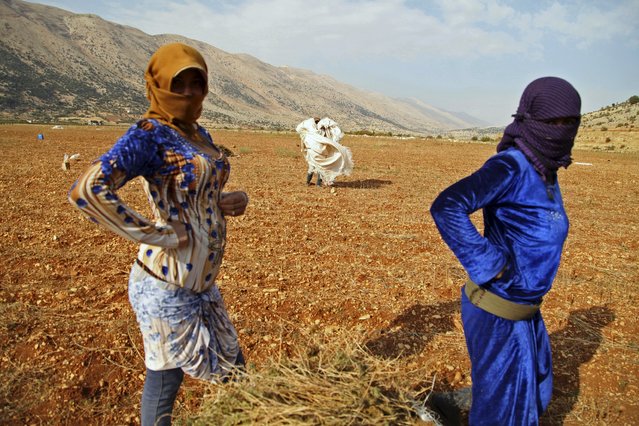
Aisha, 15, (L) (who asked to withhold her last name), a Syrian refugee from Raqqa, waits with a fellow refugee while harvesting cannabis in the Bekaa valley, Lebanon October 19, 2015. Syrian refugees work to harvest and process spiky-leafed cannabis plants in neighbouring Lebanon’s Bekaa Valley. (Photo by Alia Haju/Reuters)

Aisha, 15, (L) (who asked to withhold her last name), a Syrian refugee from Raqqa, waits with a fellow refugee while harvesting cannabis in the Bekaa valley, Lebanon October 19, 2015. Syrian refugees work to harvest and process spiky-leafed cannabis plants in neighbouring Lebanon’s Bekaa Valley. Often farmers of cotton and wheat back home in Raqqa province – now the de facto capital of Islamic State – the conflict in Syria drove them to seek safety in a region where Syrian migrant workers used to spend a few months a year before returning home. (Photo by Alia Haju/Reuters)
Details
24 Dec 2015 08:03:00