Loading...
Done
The Lun-class Ekranoplane was used by the Soviet Navy starting in 1987, and wasn't retired until the late 1990s, after the Soviet Union's fall. (Igor113)

“The Lun-class ekranoplan (NATO reporting name Duck) was a ground effect vehicle (GEV) designed by Rostislav Evgenievich Alexeev and used by the Soviet and Russian navies from 1987 until sometime in the late 1990s. It “flew” using the lift generated by the ground effect of its large wings when close to the surface of the water – about four metres or less. Although they might look similar and/or have related technical characteristics, ekranoplans like the Lun are not aircraft, seaplanes, hovercraft, or hydrofoils – ground effect is a separate technology altogether. The International Maritime Organization classifies these vehicles as maritime ships. The name Lun comes from the Russian for harrier”. – Wikipedia (Photo by Igor113)
Details
08 Aug 2014 10:51:00
Trip to Xi'an 西安. (Photo by Grant)

“Mount Hua, or Hua Shan, or Xiyue located near the city of Huayin in Shaanxi province, about 120 kilometres (75 mi) east of Xi'an. It is one of China's Five Great Mountains, and has a long history of religious significance. Originally classified as having three peaks, in modern times the mountain is classified as five main peaks, of which the highest is the South Peak at 2,154.9 metres (7,070 ft)”. – Wikipedia

Photo: Trip to Xi'an 西安. (Photo by Grant Robinson)
Details
11 Nov 2012 11:39:00
A girl flashes a victory sign as she poses near a helicopter that belongs to forces loyal to Syria's President Bashar Al-Assad after it crashed in Jabal al-Zawiya in the southern countryside of Idlib  March 22, 2015. (Photo by Abed Kontar/Reuters)

A girl flashes a victory sign as she poses near a helicopter that belongs to forces loyal to Syria's President Bashar Al-Assad after it crashed in Jabal al-Zawiya in the southern countryside of Idlib March 22, 2015. The Syrian military helicopter crashed in northwestern Syria on Sunday and at least four of its crew were captured by rebels, according to a monitoring group. (Photo by Abed Kontar/Reuters)
Details
28 Mar 2015 11:34:00
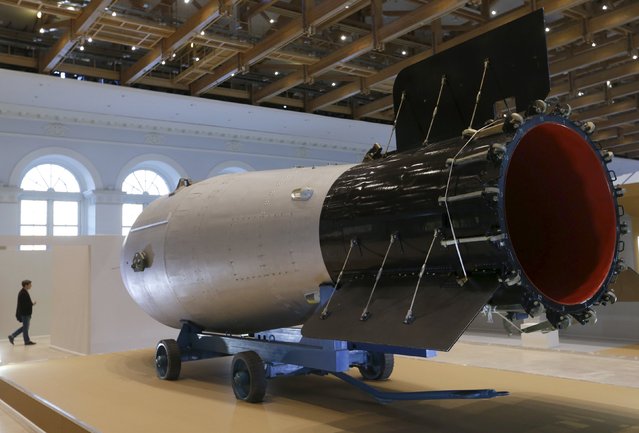
Shell, which is the replica of the biggest detonated Soviet nuclear bomb AN-602 (Tsar-Bomb), is on display in Moscow, Russia, August 31, 2015. (Photo by Maxim Zmeyev/Reuters)

Shell, which is the replica of the biggest detonated Soviet nuclear bomb AN-602 (Tsar-Bomb), is on display in Moscow, Russia, August 31, 2015. The shell is part of an exhibition organized by the state nuclear corporation Rosatom. (Photo by Maxim Zmeyev/Reuters)
Details
01 Sep 2015 13:24:00
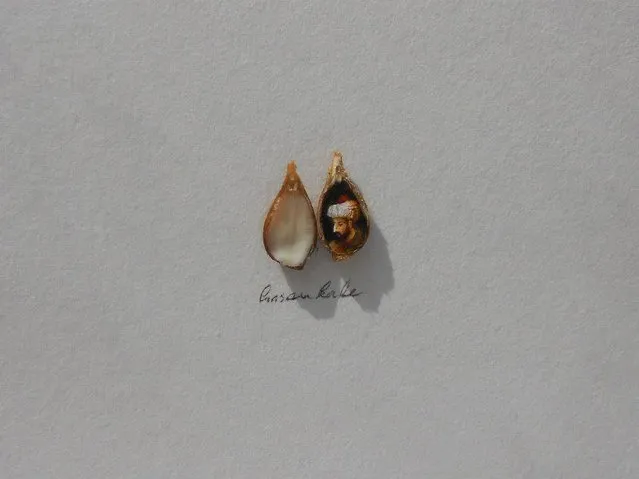
Miniature Paintings By Hasan Kale

Born in 1959 in Bursa. He's interested in painting since his childhood, his career began by drawing a miniature of Istanbul, then he became involved in many art projects in other areas, as design. He produced many jewelry (special collections) to a famous company.
Details
18 Jan 2014 13:21:00
Water War in Tel-Aviv 2012

“The 8th annual Water War on Friday in the center of Tel-Aviv, Israel turned into a battlefield, quite literally. As two thousand people were having fun in the square, some water-fighters took to more radical behavior, targeting passing cars, motorcycles and public buses”. – iReport.cnn.com (Photo by Sergey Demyanchuk)
Details
08 Jul 2012 08:46:00
Homemade Porsche 911

Making use of ULC (ultra light construction,) an Austrian car enthusiast Hannes Langeder managed to build the lightest and slowest Porsche in the world. ...
Details
15 Oct 2012 10:37:00
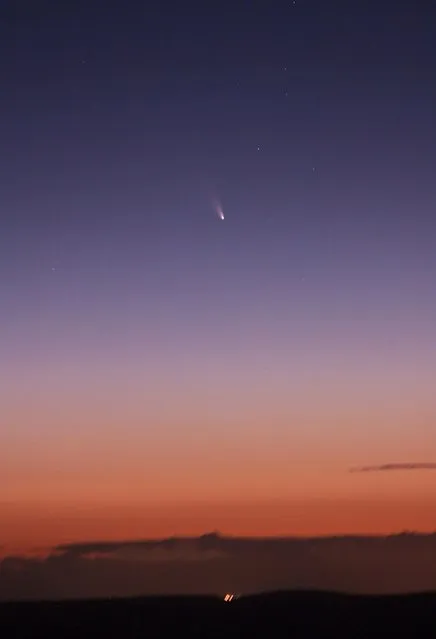
This image provided by NASA shoaws the comet PANSTARRS as seen from Mount Dale, Western Australia on March 5, 2013. According to NASA on March 10, it will make its closest approach to the sun about 28 million miles (45 million kilometers) away. As it continues its nightly trek across the sky, the comet may get lost in the sun's glare but should return and be visible to the naked eye by March 12. (Photo by AP Photo/NASA)

It’s time to start watching for Comet PANSTARRS, one of two comets to get excited about in 2013. Photo: This image provided by NASA shoaws the comet PANSTARRS as seen from Mount Dale, Western Australia on March 5, 2013. According to NASA on March 10, it will make its closest approach to the sun about 28 million miles (45 million kilometers) away. As it continues its nightly trek across the sky, the comet may get lost in the sun's glare but should return and be visible to the naked eye by March 12. (Photo by AP Photo/NASA)
Details
13 Mar 2013 08:03:00