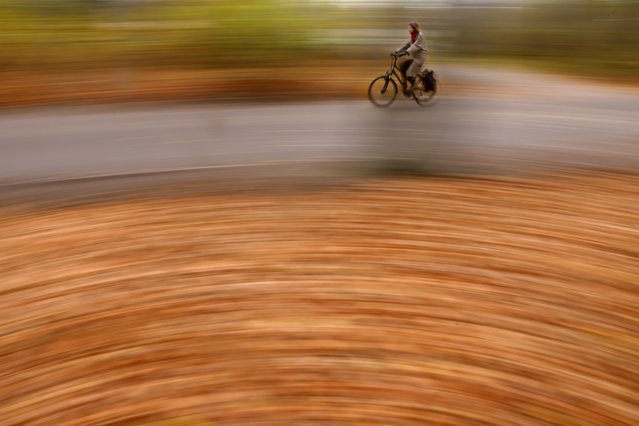
Fallen leaves cover the undergrowth as a commuter on a bicycle makes her way through the Tiergarten park in central Berlin on December 7, 2020. (Photo by Odd Andersen/AFP Photo)
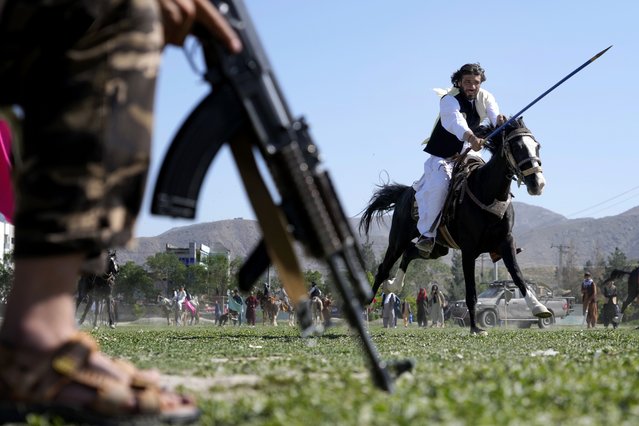
An Afghan man rushes to the target with his horse as a Taliban fighter stands guard during a spear racing in the sprawling Chaman-e-Huzori park in downtown Kabul, Afghanistan, Friday, May 6, 2022. (Photo by Ebrahim Noroozi/AP Photo)
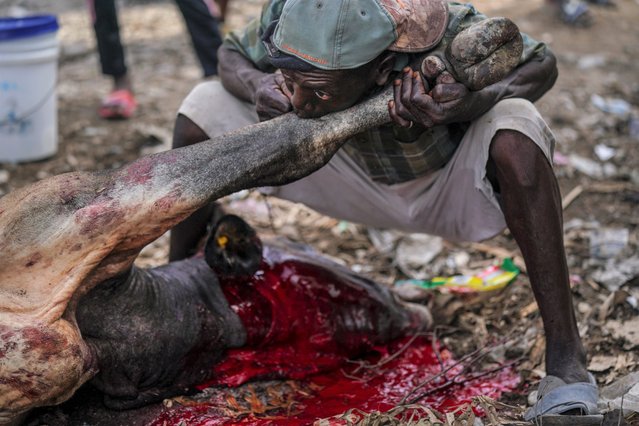
A butcher blows into the skin of a cow's leg in order to peel it off, on the first market day since the earthquake in Camp Perrin, Haiti, Friday, August 20, 2021, six days after a 7.2 magnitude quake. (Photo by Fernando Llano/AP Photo)
President Donald Trump is reflected in a mirror as he and Saudi Crown Prince Mohammed bin Salman walk along the White House Colonnade on Tuesday, November 18, 2025. The crown prince was welcomed to the White House with all the trappings of a state visit, including a black-tie dinner in the East Room. (Photo by Haiyun Jiang/The New York Times)
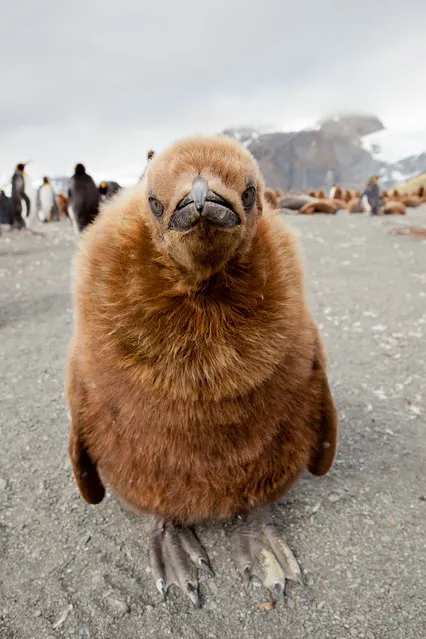
“Cub”. In the colony of penguins in South Georgia. (Photo and caption by Ondrej Zaruba/National Geographic Traveler Photo Contest)
ATTENTION! All pictures are presented in high resolution. To see Hi-Res images – just TWICE click on any picture. In other words, click small picture – opens the BIG picture. Click BIG picture – opens VERY BIG picture.
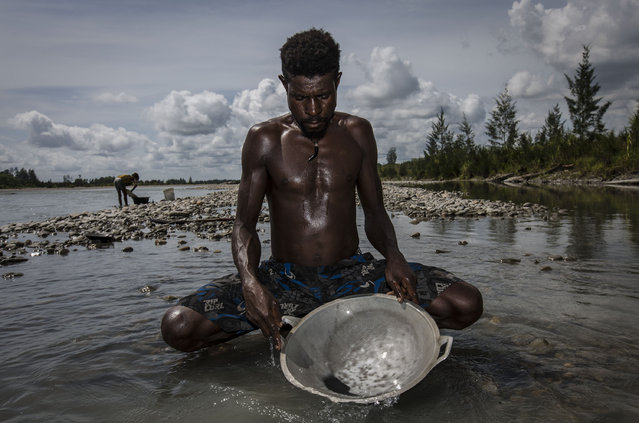
A illegal gold miner of Kamoro people, Tinus, pan for gold on February 4, 2017 in Timika, Papua Province, Indonesia. Indonesia produces over 70 billion dollars in gold a year and is home to the largest gold mine and the third largest copper mine in the world, the Grasberg mine, which is located at West Papua. (Photo by Ulet Ifansasti/Getty Images)
Tip turkey, dumpster chook, rubbish raptor – the Australian white ibis goes by many unflattering names. But it is a true urban success story, scavenging to survive in cities across Australia as wetlands have been lost. Wildlife photographer Rick Stevens captured them in Sydney. Here: Of all the species affected by river regulation in Australia, the ibis is one of the few that has changed its behaviour and moved to coastal cities. (Photo by Rick Stevens/The Guardian)