Loading...
Done
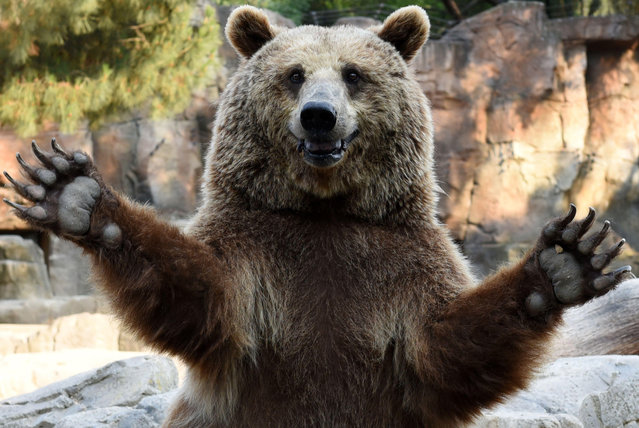
A brown bear waits for food at the zoo in Madrid, Spain on July 30, 2016. (Photo by Jorge Sanz/Pacific Press/SIPA Press/Rex Features/Shutterstock)

A brown bear waits for food at the zoo in Madrid, Spain on July 30, 2016. (Photo by Jorge Sanz/Pacific Press/SIPA Press/Rex Features/Shutterstock)
Details
31 Jul 2016 10:57:00
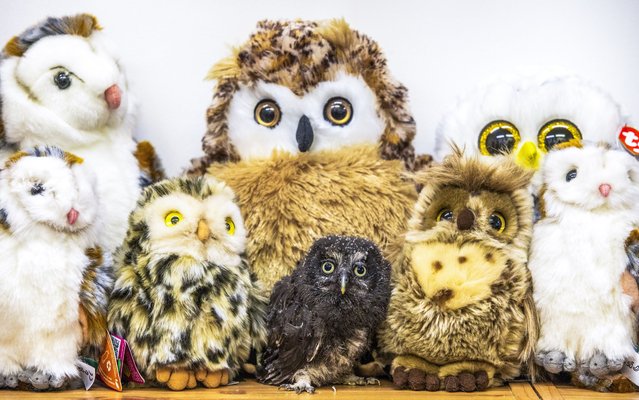
A month-old Tengmalm’s owl chick blends in with soft toys on August 8, 2024 at the Scottish Owl Centre in Whitburn, West Lothian. The chick is being raised by Trystan Williams, the centre’s head keeper, after losing its father and being abandoned by its mother. (Photo by Katielee Arrowsmith/South West News Service)

A month-old Tengmalm’s owl chick blends in with soft toys on August 8, 2024 at the Scottish Owl Centre in Whitburn, West Lothian. The chick is being raised by Trystan Williams, the centre’s head keeper, after losing its father and being abandoned by its mother. (Photo by Katielee Arrowsmith/South West News Service)
Details
18 Aug 2024 04:13:00
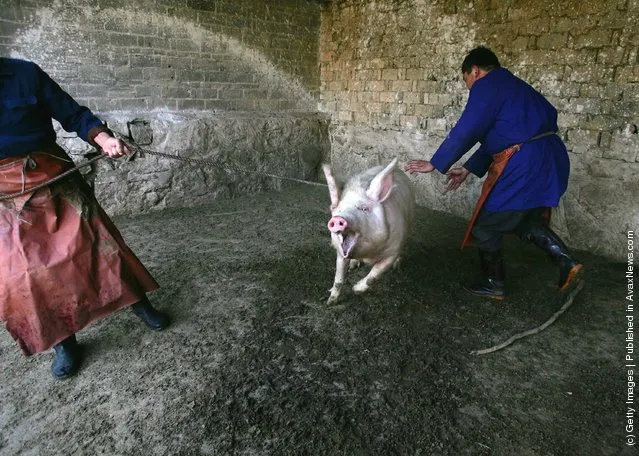
Pig

Chinese butchers catch a pig to slaughter on January 31, 2005 in Jinzhai County, Anhui Province, China. (Photo by Cancan Chu/GettyImages)
Details
20 Aug 2011 12:17:00
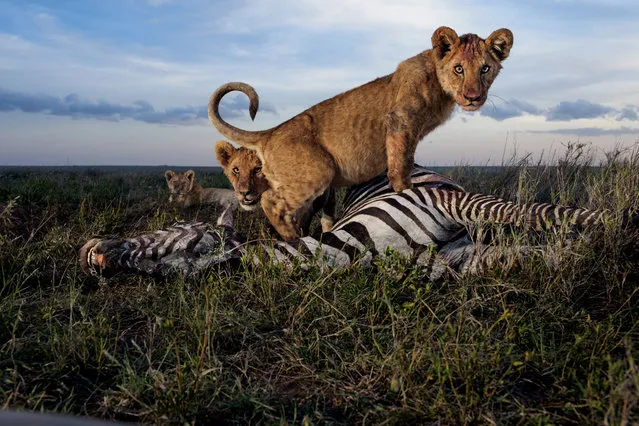
Cubs of the Simba East pride: too young to kill but old enough to crave meat. Adult females, and sometimes males, do the hunting. Zebras and wildebeests rank high as chosen prey in the rainy season. (Photo by Michael Nichols/National Geographic via The Atlantic)

“Serengeti National Park encompasses 5,700 square miles of grassy plains and woodlands near the northern border of Tanzania, and is home to more than 3,500 lions grouped into a couple dozen prides. Photographer Nick Nichols and videographer Nathan Williamson made several extended trips to the Serengeti between July 2011 and January 2013, determined to break new visual ground in their coverage of the Serengeti Lions”. Photo: Cubs of the Simba East pride: too young to kill but old enough to crave meat. Adult females, and sometimes males, do the hunting. Zebras and wildebeests rank high as chosen prey in the rainy season. (Photo by Michael Nichols/National Geographic via The Atlantic)
Details
09 Aug 2013 08:15:00
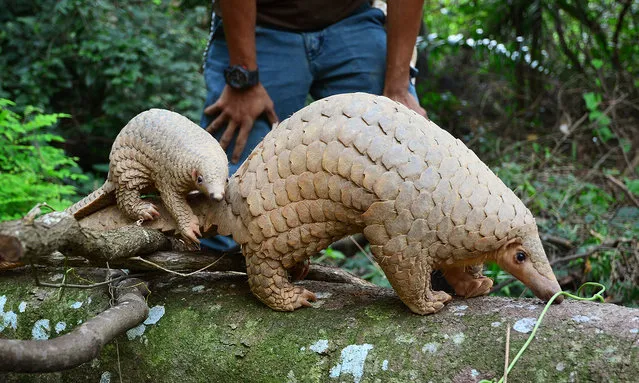
Radin the Sunda pangolin hitches a ride on Nita as their keeper looks on. The elusive and nocturnal Sunda pangolin produces only one or two offspring a year and Radin is the third pangolin baby born in Night Safari since 2011. (Photo by Wildlife Reserves Singapore)

Radin the Sunda pangolin hitches a ride on Nita as their keeper looks on. The elusive and nocturnal Sunda pangolin produces only one or two offspring a year and Radin is the third pangolin baby born in Night Safari since 2011. (Photo by Wildlife Reserves Singapore)
Details
07 Oct 2014 11:42:00
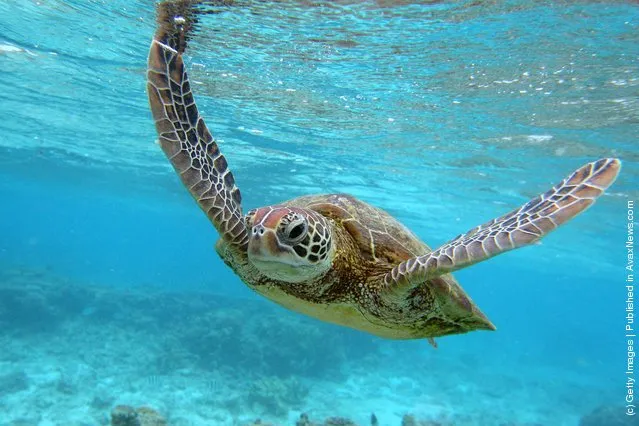
A Hawksbill sea turtle is seen swimming in Lady Elliot Island, Australia

“The Great Barrier Reef is one of the most important sea turtle habitats in the world, with Lady Elliot Island being a key part of that habitat. Every year between November and March the green and loggerhead turtles lumber up the same beach on which they were born more than 50 years ago. These turtles nest on Lady Elliot Island up to nine times in a season, laying between 80 and 120 eggs per clutch. About eight weeks later, young hatchlings leave their nests and head towards the ocean (January to April)”. – Wikipedia

Photo: A Hawksbill sea turtle is seen swimming on January 15, 2012 in Lady Elliot Island, Australia. (Photo by Mark Kolbe/Getty Images)
Details
02 Feb 2012 11:28:00
Members of Brighton Swimming Club brave the early morning temperature to take a dip in the sea east of the pier on January 5, 2022. The club, founded in 1860, is the oldest in England. (Photo by Simon Dack/Alamy Live News)

Members of Brighton Swimming Club brave the early morning temperature to take a dip in the sea east of the pier on January 5, 2022. The club, founded in 1860, is the oldest in England. (Photo by Simon Dack/Alamy Live News)
Details
29 Jan 2022 06:56:00
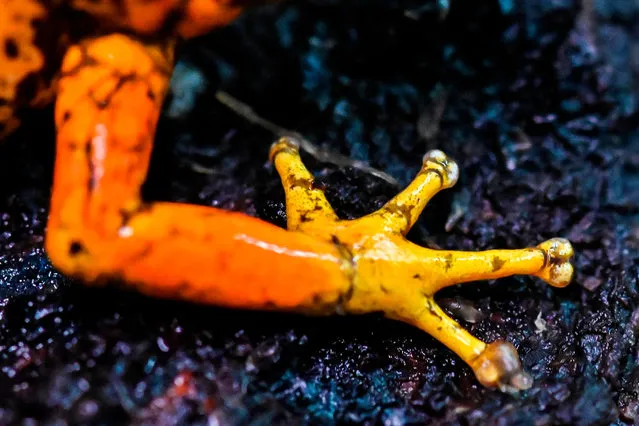
A leg of a “diablito” frog (Oophaga sylvatica) is photographed in a laboratory at a laboratory in the zoo of Cali, Colombia, on July 19, 2019. Colombia is the second country with the largest number of amphibians in the world after Brazil. More than 40% of amphibian species worldwide are in danger of extinction. (Photo by Luis Robayo/AFP Photo)

A leg of a “diablito” frog (Oophaga sylvatica) is photographed in a laboratory at a laboratory in the zoo of Cali, Colombia, on July 19, 2019. Colombia is the second country with the largest number of amphibians in the world after Brazil. More than 40% of amphibian species worldwide are in danger of extinction. (Photo by Luis Robayo/AFP Photo)
Details
28 Nov 2020 00:03:00