Loading...
Done
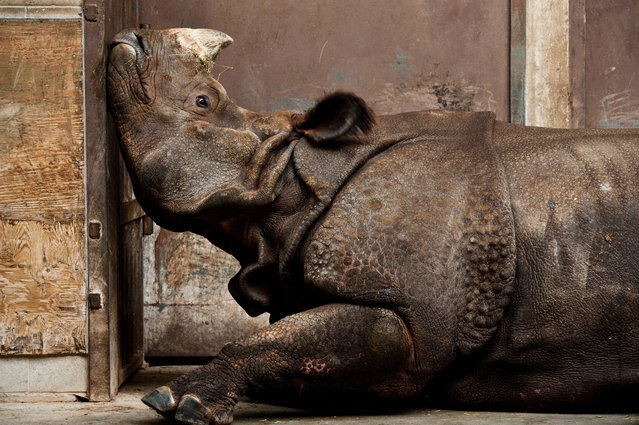
“Honorable Mention”. An Indian rhinoceros, far from home and stuck inside with late-winter blues at the Toronto zoo. Photo location: Toronto, Ontario, Canada. (Photo and caption by Stephen De Lisle/National Geographic Photo Contest)

“Honorable Mention”. An Indian rhinoceros, far from home and stuck inside with late-winter blues at the Toronto zoo. Photo location: Toronto, Ontario, Canada. (Photo and caption by Stephen De Lisle/National Geographic Photo Contest)
Details
20 Dec 2013 10:04:00
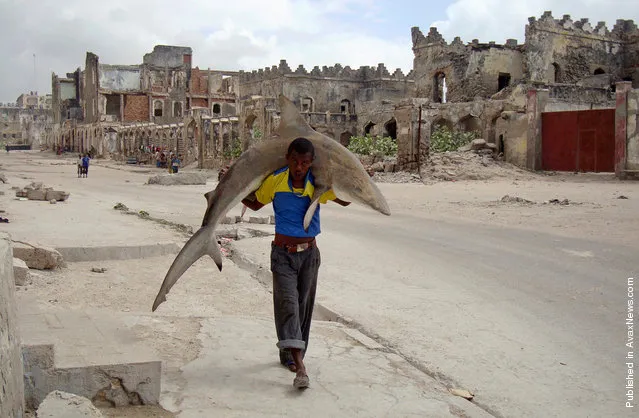
In this photo provided by World Press Photo, the 1st Prize Daily Life Single of the 2011 World Press Photo Contest by Omar Feisal, Somalia, Reuters, shows a man carrying a shark through the streets of Mogadishu, Somalia, Sept. 23, 2010

In this photo provided by World Press Photo, the 1st Prize Daily Life Single of the 2011 World Press Photo Contest by Omar Feisal, Somalia, Reuters, shows a man carrying a shark through the streets of Mogadishu, Somalia, September 23, 2010. (AP Photo/Omar Feisal/Reuters)
Details
08 Apr 2012 14:15:00
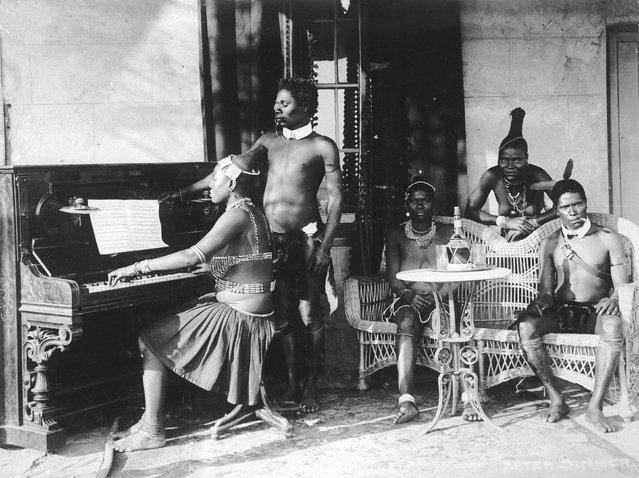
circa 1925:  A Zulu woman playing the piano while a group of others sit and listen.  (Photo by General Photographic Agency/Getty Images)

“The Zulu are the largest South African ethnic group, with an estimated 10–11 million people living mainly in the province of KwaZulu-Natal. Small numbers also live in Zimbabwe, Zambia, and Mozambique. Their language, Zulu, is a Bantu language; more specifically, part of the Nguni subgroup. The Zulu Kingdom played a major role in South African history during the 19th and 20th centuries. Under apartheid, Zulu people were classed as third-class citizens and suffered from state-sanctioned discrimination. They remain today the most numerous ethnic group in South Africa, and now have equal rights along with all other citizens”. – Wikipedia.

Photo: A Zulu woman playing the piano while a group of others sit and listen (to put it briefly, Englishmen scoff over Zulu). South Africa, circa 1925. (Photo by General Photographic Agency)

Details
03 Feb 2014 09:40:00
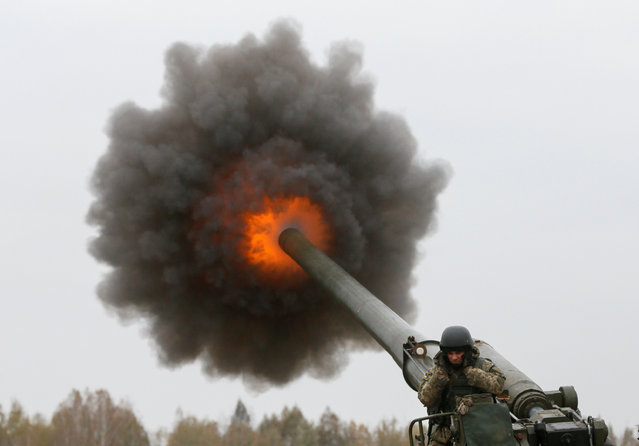
A Ukrainian serviceman fires a 2S7 Pion self-propelled gun during military exercises near the village of Divychky in Kiev region, Ukraine, October 21, 2016. (Photo by Valentyn Ogirenko/Reuters)

A Ukrainian serviceman fires a 2S7 Pion self-propelled gun during military exercises near the village of Divychky in Kiev region, Ukraine, October 21, 2016. (Photo by Valentyn Ogirenko/Reuters)
Details
14 Dec 2016 07:50:00
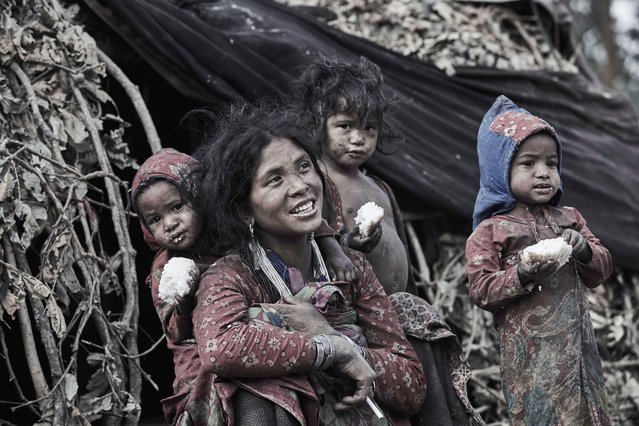
Only 156 people remained in the tribe when Jan visited in Accham District, Nepal, January 2016. (Photo by Jan Moller Hansen/Barcroft Images)

Only 156 people remained in the tribe when Jan visited in Accham District, Nepal, January 2016. Hidden deep in the Himalayan forest is one of the world’s last enduring nomadic tribes who are resisting attempts to move them into permanent settlements. (Photo by Jan Moller Hansen/Barcroft Images)
Details
14 Jan 2017 12:35:00
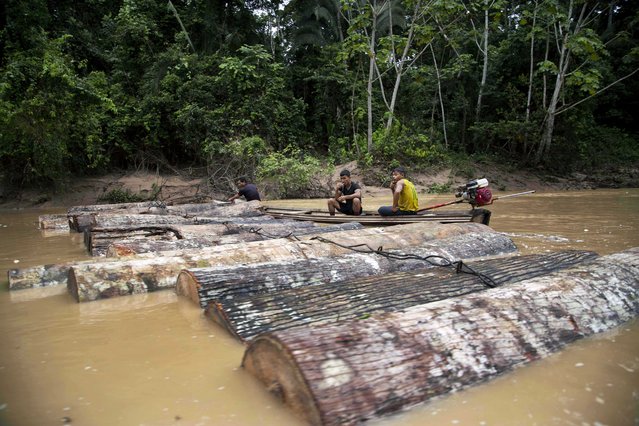
In this March 17, 2015 photo, Ashaninka Indian men, identified by locals as illegal loggers, tie tree trunks together to move them along the Putaya River near the hamlet of Saweto, Peru. Illegal logging persists unabated in this remote Amazon community where four indigenous leaders who resisted it were slain in September. The Putaya River is the waterway that transports felled trees, cut both legally and illegally, to the city of Pucallpa. (Photo by Martin Mejia/AP Photo)

In this March 17, 2015 photo, Ashaninka Indian men, identified by locals as illegal loggers, tie tree trunks together to move them along the Putaya River near the hamlet of Saweto, Peru. Illegal logging persists unabated in this remote Amazon community where four indigenous leaders who resisted it were slain in September. The Putaya River is the waterway that transports felled trees, cut both legally and illegally, to the city of Pucallpa. (Photo by Martin Mejia/AP Photo)
Details
27 Mar 2015 12:40:00
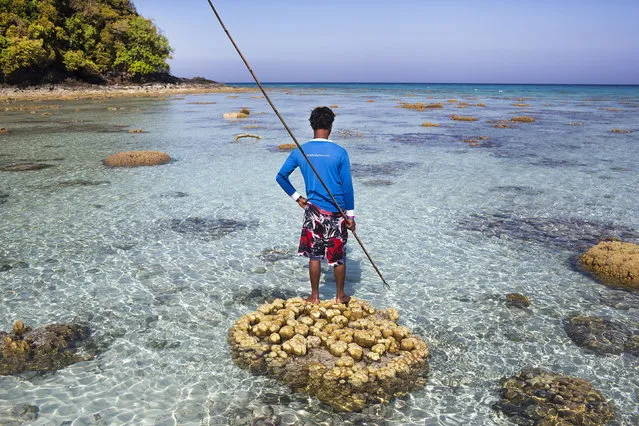
Hook, an indigenous Moken man, holds a three-pronged throwing spear and searches for fish in the waters of Ko Surin National Park. March 1, 2013 – Ko Surin, Thailand. (Photo by Taylor Weidman/zReportage via ZUMA Press)

“For centuries, the Moken sea nomads have traveled the islands between Thailand and Myanmar fishing and foraging for food on the sea floor. Throughout the Mergui Archipelago, Moken migrate in flotillas of Kabangs (traditional boat of the Moken people), stopping at different islands and beaches. Expert freedivers, the Moken have adapted physically to an aquatic life, developing unique characteristics that let them see better and hold their breath longer while underwater”. – Taylor Weidman. Photo: Hook, an indigenous Moken man, holds a three-pronged throwing spear and searches for fish in the waters of Ko Surin National Park. March 1, 2013 – Ko Surin, Thailand. (Photo by Taylor Weidman/zReportage via ZUMA Press)
Details
24 Mar 2014 06:45:00
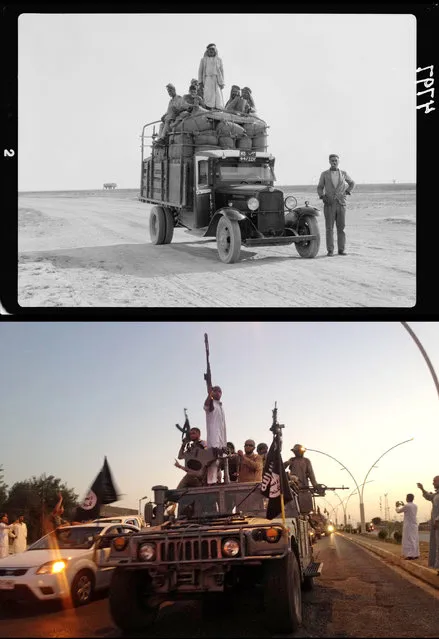
This combination of two photographs shows a 1932 image of men on a lorry on the road to Mosul, northern Iraq, from the Library of Congress, top, and fighters from the Islamic State group parading in a commandeered Iraqi security forces armored vehicle down a main road in Mosul on Monday, June 23, 2014. (Photo by AP Photo)


Iraq's second largest city, Mosul, is locked under the rule of extremists from the Islamic State group trying to purge it of everything they see as contradicting their stark vision of Islam. A trove of photographs now housed at the Library of Congress offers a glimpse of a different Mosul – before wars, insurgency, sectarian strife and now radicals' rule. The scenes were taken in the autumn of 1932 by staff from the American Colony Photo Department during a visit to Iraq at the end of the British mandate. (Photo by AP Photo)
Details
21 Sep 2014 11:13:00