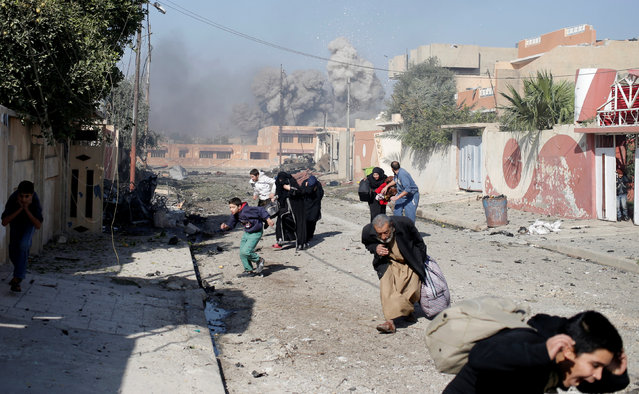
People run in panic after a coalition airstrike hit Islamic State fighters positions in Tahrir neighbourhood of Mosul, Iraq, November 17, 2016. (Photo by Goran Tomasevic/Reuters)
Eleven-year-old Kelen loves to dance in the half-built rooms of the centre in Kabanga Refuge Centre, Tanzania, 2012. The rescue centres protect albino people from the vicious hunters who sell their body parts to witch doctors. Photojournalist Ana Palacios, 43, visited the centre in Tanzania three times between 2012 and 2016 to find out more about the plight of albino people. (Photo by Ana Palacios/Barcroft Images)
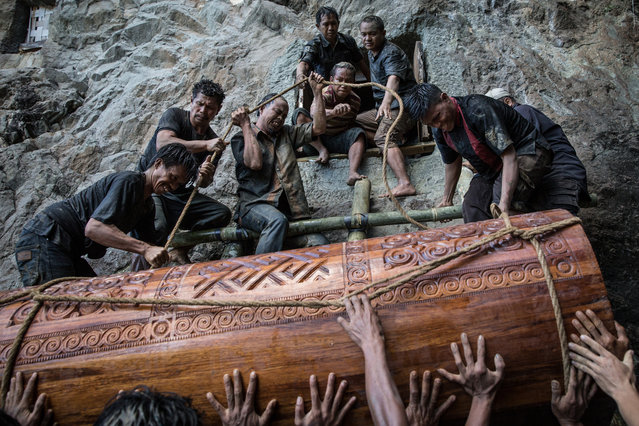
It is said that Torajans are people who “live to die”. For this Indonesian ethnic group, funerals are such extravagant events that they sometimes attract tourists. Families can postpone burials years (and the deceased are considered sick and hosted at home until the funeral) until the family can raise enough money and gather as many relatives as possible. And then it’s a jubilant multiday social event with a parade, dances and animal sacrifices. Agung Parameswara photographed these funerary practices when he traveled to South Sulawesi province, where the Torajans live. (Photo by Agung Parameswara/The Washington Post)
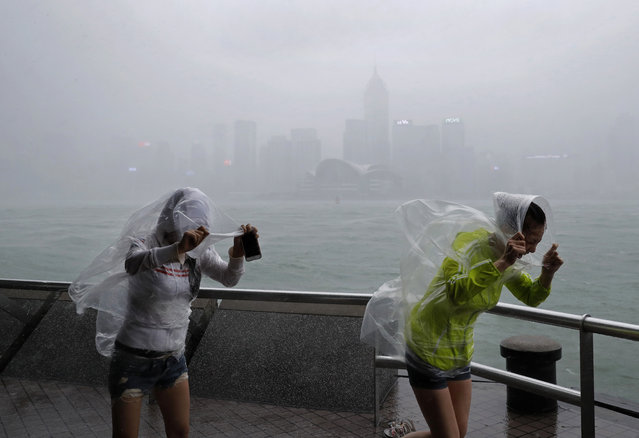
People brave the wind on the waterfront of Victoria Habour as Typhoon Haima approaches Hong Kong, Friday, October 21, 2016. Typhoon Haima churned toward southern China on Friday after smashing into the northern Philippines with ferocious wind and rain, triggering flooding, landslides and power outages. (Photo by Vincent Yu/AP Photo)
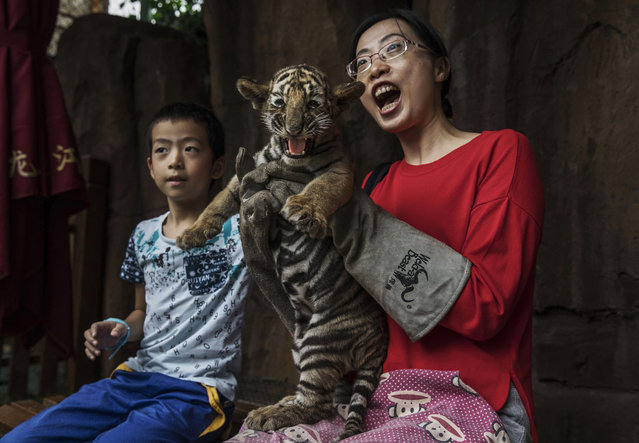
A Chinese tourist wears protective gloves as she holds a baby Siberian tiger as they pose for pictures at the Heilongjiang Siberian Tiger Park on August 16, 2017 in Harbin, northern China. The center is one of two Siberian tiger parks in the Chinese province of Heilongjiang, about 500 kilometers (300 miles) from the border with Russia. It is considered the world's largest for breeding the Siberian, or Amur, tiger which is listed as endangered by the World Wildlife Federation. (Photo by Kevin Frayer/Getty Images)
A section of multi-vehicle accident on Interstate 75 is shown in Detroit, Thursday, January 31, 2013. Snow squalls and slippery roads led to a series of accidents that left at least three people dead and 20 injured on a mile-long stretch of southbound I-75. More than two dozen vehicles, including tractor-trailers, were involved in the pileups. (Photo by Paul Sancya/AP Photo)
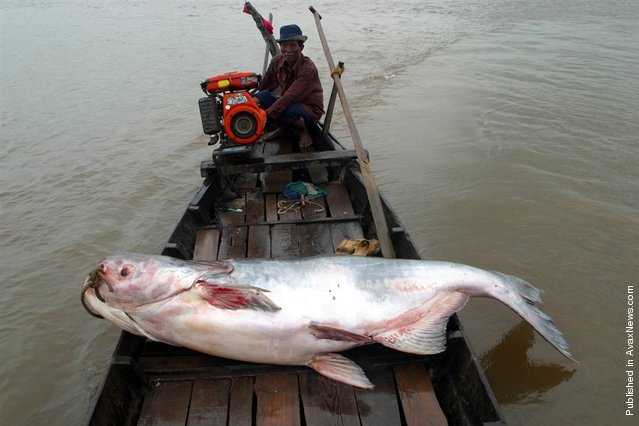
Among the fish populations that could be harmed by the Xayaburi dam in Laos is the critically endangered Mekong giant catfish, considered by the Guinness Book of World Records to be the world’s largest freshwater fish. The fish, which grows to 650 pounds and about 10 feet long, is only found in the Mekong River. It is migratory, moving between downstream habitats in Cambodia upstream to northern Thailand and Laos each year to spawn. Some experts fear the Xayaburi dam could block the migration and drive the giant catfish to extinction. (Photo by Courtesy of Zeb Hogan/University of Nevada, Reno)