Loading...
Done
Indian Students of Rabindra Bharati University at the BT Road Campuses Celebrates the Holi, Color Festival on March 09, 2017 in Kolkata.Holi, the popular Hindu spring festival of colours is observed in India at the end of the winter season on the last full moon of the lunar month, and will be celebrated on March 13 this year. (Photo by Debajyoti Chakraborty/NurPhoto)

Indian Students of Rabindra Bharati University at the BT Road Campuses Celebrates the Holi, Color Festival on March 09, 2017 in Kolkata.Holi, the popular Hindu spring festival of colours is observed in India at the end of the winter season on the last full moon of the lunar month, and will be celebrated on March 13 this year. (Photo by Debajyoti Chakraborty/NurPhoto)
Details
13 Mar 2017 00:06:00
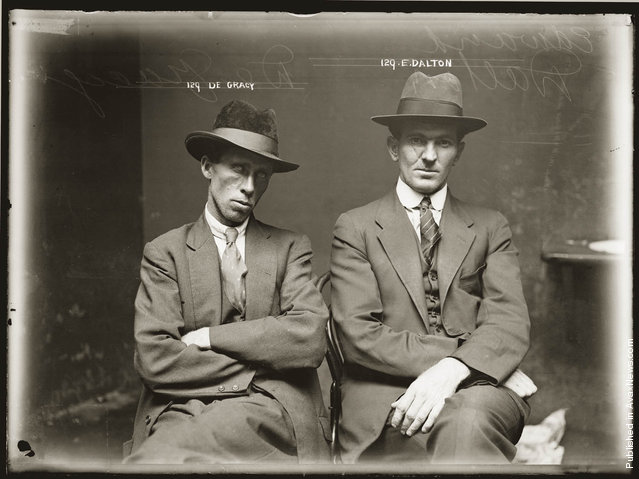
Mug shot of De Gracy (sic) and Edward Dalton. Details unknown. Central Police Station, Sydney, around 1920

Mug shot of De Gracy (sic) and Edward Dalton. Details unknown. Central Police Station, Sydney, around 1920. (Photo by NSW Police Forensic Photography Archive, Justice & Police Museum, Histiric Houses Trust of NSW)
Details
21 Apr 2012 12:24:00
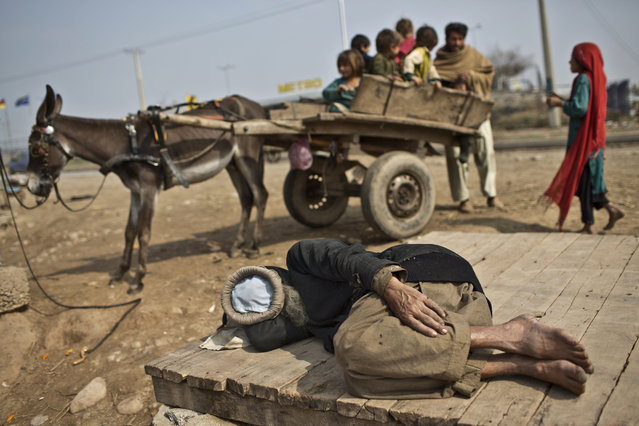
Children play on a donkey cart belonging to an elderly Afghan refugee sleeping on a roadside on the outskirts of Islamabad, Pakistan, Wednesday, February 18, 2015. (Photo by Muhammed Muheisen/AP Photo)

Children play on a donkey cart belonging to an elderly Afghan refugee sleeping on a roadside on the outskirts of Islamabad, Pakistan, Wednesday, February 18, 2015. (Photo by Muhammed Muheisen/AP Photo)
Details
06 Apr 2015 08:57:00
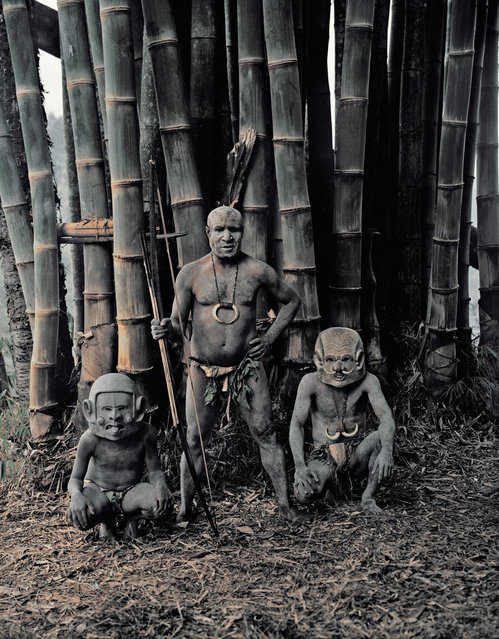
“Asaro from the Eastern Highlands”. The mudmen could not cover their faces with mud because the people of Papua New Guinea thought that the mud from the Asaro river was poisonous. So instead of covering their faces with this alleged poison, they made masks from pebbles that they heated and water from the waterfall, with unusual designs such as long or very short ears either going down to the chin or sticking up at the top, long joined eyebrows attached to the top of the ears, horns and sideways mouths. (Jimmy Nelson)

“Asaro from the Eastern Highlands”. The mudmen could not cover their faces with mud because the people of Papua New Guinea thought that the mud from the Asaro river was poisonous. So instead of covering their faces with this alleged poison, they made masks from pebbles that they heated and water from the waterfall, with unusual designs such as long or very short ears either going down to the chin or sticking up at the top, long joined eyebrows attached to the top of the ears, horns and sideways mouths. (Photo and caption by Jimmy Nelson)
Details
20 Oct 2013 08:54:00
“iPad minini”. (Photo by John Wilhelm)

“iPad minini”. (Photo by John Wilhelm)

Details
15 Jan 2013 15:10:00
The sun rises this morning behind the 173ft spire of St Mary's church in the market town of Whittlesey in Cambridgeshire, UK on February 17, 2024. The church dates from the 13th century with the Ashlar faced tower added in the 15th century. (Photo by Andrew McCaren/London News Pictures)

The sun rises this morning behind the 173ft spire of St Mary's church in the market town of Whittlesey in Cambridgeshire, UK on February 17, 2024. The church dates from the 13th century with the Ashlar faced tower added in the 15th century. (Photo by Andrew McCaren/London News Pictures)
Details
01 Jun 2024 05:02:00
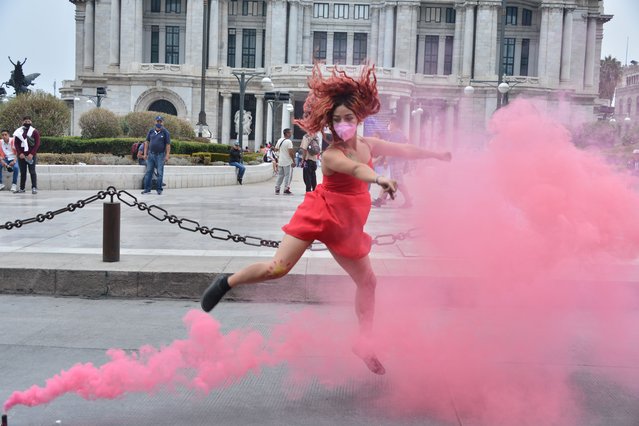
A participant takes part at performance of Mexican dance academy to protest against authorities due not allow freedom of labor union during the celebration of International Dance Day at Palace of Fine Arts (Palacio de Bellas Artes) on April 29, 2021 in Mexico City, Mexico. (Photo by Eyepix/NurPhoto/Rex Features/Shutterstock)

A participant takes part at performance of Mexican dance academy to protest against authorities due not allow freedom of labor union during the celebration of International Dance Day at Palace of Fine Arts (Palacio de Bellas Artes) on April 29, 2021 in Mexico City, Mexico. (Photo by Eyepix/NurPhoto/Rex Features/Shutterstock)
Details
28 Jan 2022 07:40:00
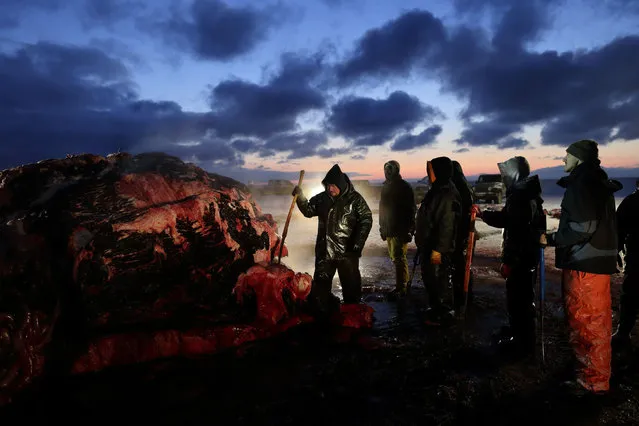
In this October 7, 2014, photo, Fredrick Brower, center, helps cut up a bowhead whale caught by Inupiat subsistence hunters on a field near Barrow, Alaska. Drawing on tradition, and keeping within the closely monitored Aboriginal subsistence whaling guidelines, a bowhead whale is carved and divided by a crew armed with knives and hooks, and then shared according to custom. (Photo by Gregory Bull/AP Photo)

In this October 7, 2014, photo, Fredrick Brower, center, helps cut up a bowhead whale caught by Inupiat subsistence hunters on a field near Barrow, Alaska. Drawing on tradition, and keeping within the closely monitored Aboriginal subsistence whaling guidelines, a bowhead whale is carved and divided by a crew armed with knives and hooks, and then shared according to custom. (Photo by Gregory Bull/AP Photo)
Details
07 Nov 2014 12:58:00