Loading...
Done
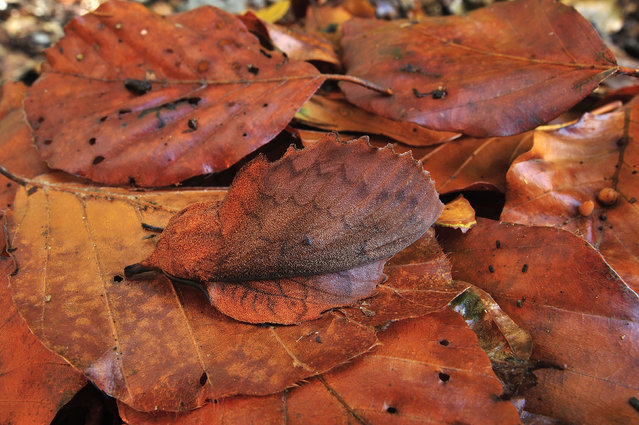
The camouflage mappet moth looks like a fall lead in Switzerland. (Photo by Thomas Marent/Caters News/Ardea)

Whether they are the hunter or the hunted, these camouflage animals show natures incredible ability to blend in with its surroundings. Pictured perfectly concealed against their natural environment, the stunning pictures show the amazing lengths some animals will go to to stay out of sight. Here: The camouflage mappet moth looks like a fall lead in Switzerland. (Photo by Thomas Marent/Caters News/Ardea)
Details
09 Oct 2014 12:58:00
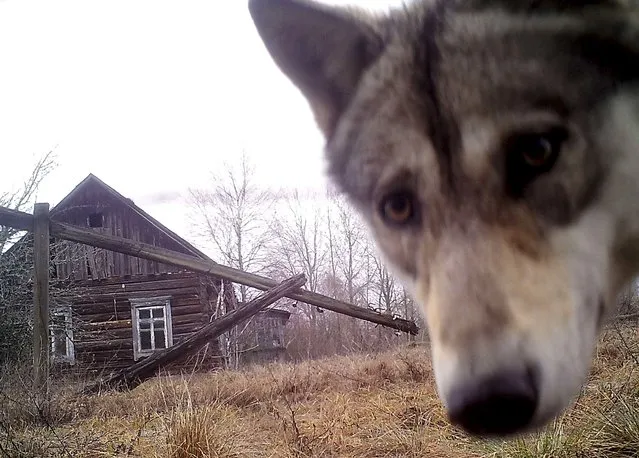
A wolf looks into the camera at the 30 km (19 miles) exclusion zone around the Chernobyl nuclear reactor in the abandoned village of Orevichi, Belarus, March 2, 2016. (Photo by Vasily Fedosenko/Reuters)

A wolf looks into the camera at the 30 km (19 miles) exclusion zone around the Chernobyl nuclear reactor in the abandoned village of Orevichi, Belarus, March 2, 2016. What happens to the environment when humans disappear? Thirty years after the Chernobyl nuclear disaster, booming populations of wolf, elk and other wildlife in the vast contaminated zone in Belarus and Ukraine provide a clue. (Photo by Vasily Fedosenko/Reuters)
Details
08 Apr 2016 15:13:00
Beachgoers are hit by a wave in La Libertad May 3, 2015. (Photo by Jose Cabezas/Reuters)

Beachgoers are hit by a wave in La Libertad May 3, 2015. El Salvador emergency authorities declared a green alert along the pacific coats due to a large swell that affected the Salvadoran coast and originated from the extra-tropical storms that formed in New Zealand and the Southern hemisphere, according to El Salvador's ministry of environment and natural resources. (Photo by Jose Cabezas/Reuters)
Details
05 May 2015 10:32:00
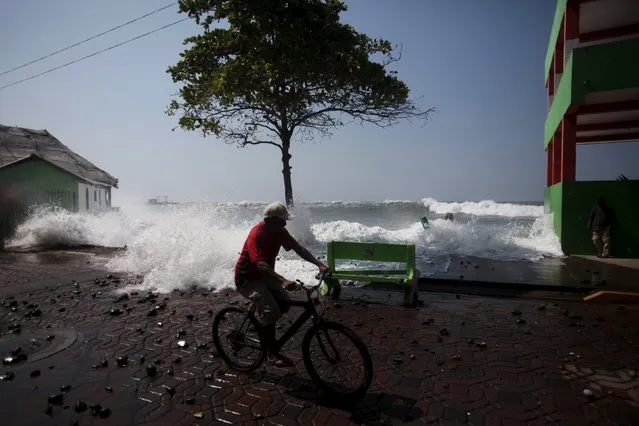
A man rides his bicycle as a wave crashes at La Libertad malecon on May 13, 2015. (Photo by Jose Cabezas/Reuters)

A man rides his bicycle as a wave crashes at La Libertad malecon on May 13, 2015. El Salvador emergency authorities has declared an orange alert along the Pacific coast due to a large swell that affected the Salvadoran coast. The swell originated from the extra-tropical storms that formed in New Zealand and the Southern hemisphere, according to El Salvador's Ministry of Environment and Natural Resources. (Photo by Jose Cabezas/Reuters)
Details
15 May 2015 10:34:00
Pentaport Rock Festival

“Incheon Pentaport Rock Festival is a rock festival, which is held annually in Incheon, South Korea for three days at the end of July. It is considered as one of the biggest live music events in South Korea. The festival covers various genres of music, but mainly rock music and electronic music. The name came from five main themes of the festival; music, passion, environment friendly, DIY, and friendship”. – Wikipedia

Photo: Festival-goers enjoy a performance during day two of the Pentaport Rock Festival at Dream Park on August 6, 2011 in Incheon, South Korea. (Photo by Chung Sung-Jun/Getty Images)
Details
07 Aug 2011 12:29:00
Vinyl Clock By Pavel Sidorenko Part 2

Pavel Sidorenko is an award winning Estonian designer who was born in 1980 in Tallinn and studied product design at Estonian Academy of Arts and Graduated in 2006. Not only does he incorporate pragmatic necessity, but also transmits an emotional qualities within the everyday environment. His fantastic collection of Re Vinyl designs are a result of upcycling a product fashioned from old vinyl records. Beautifully crafted and working with a range of themes from scenography to animal creatures, there is sure to be something for everyone with these stylish selection of recycled vinyl clocks!


See also: Part 1
Details
01 Mar 2014 11:09:00
Baby Fennec Fox

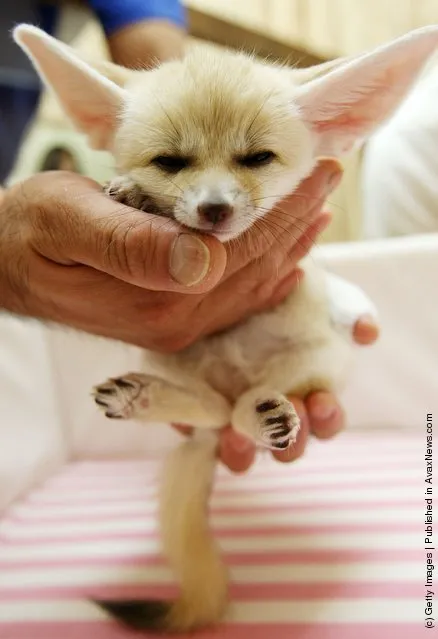
“The fennec fox is a small nocturnal fox found in the Sahara of North Africa. Its most distinctive feature is unusually large ears. The name “fennec” comes from the Arabic word for fox, and the species name zerda has a Greek origin that refers to its habitat. The fennec is the smallest species of canid in the world; coat, ears and kidney functions have adapted to a high-temperature, low-water, desert environment. In addition, its hearing is sensitive enough to hear prey moving underground”. – Wikipedia

Photo: A Baby Fennec is seen at Sunshine International Aquarium on June 24, 2009 in Tokyo, Japan. The small nocturnal fox babies were born on May 17 2009. (Photo by Junko Kimura/Getty Images)
Details
16 Sep 2011 12:02:00
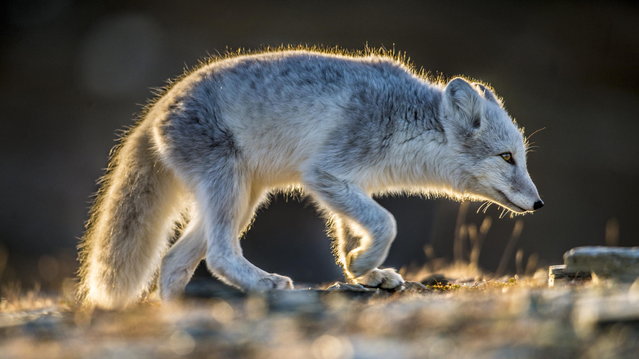
Arctic Fox. (Photo by Trond Eriksen)

“The arctic fox (Vulpes lagopus), also known as the white fox, polar fox, or snow fox, is a small fox native to the Arctic regions of the Northern Hemisphere and is common throughout the Arctic tundra biome. It is well adapted to living in cold environments. It has a deep thick fur which is brown in summer and white in winter. It averages in size at about 85.3 cm (33.6 in) in body length, with a generally rounded body shape to minimize the escape of body heat. – Wikipedia. (Photo by Trond Eriksen)
Details
26 May 2014 14:09:00