Loading...
Done
Competitors prepare backstage before the 2015 Brazil Miss and Mister Fitness contest in Sao Paulo, Brazil, June 18, 2015. (Photo by Paulo Whitaker/Reuters)

Competitors prepare backstage before the 2015 Brazil Miss and Mister Fitness contest in Sao Paulo, Brazil, June 18, 2015. Some 96 men and women from all across the country competed in the event. (Photo by Paulo Whitaker/Reuters)
Details
20 Jul 2015 10:18:00
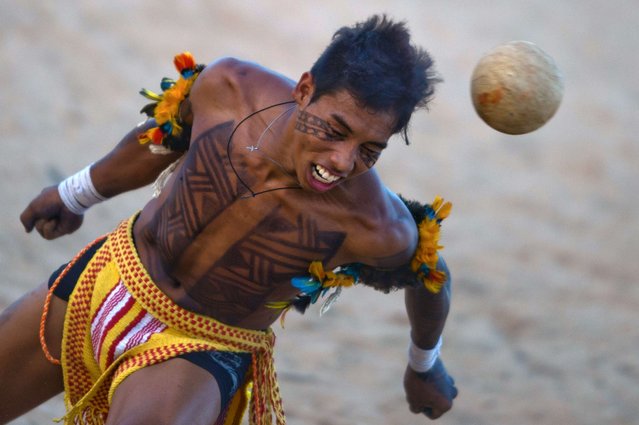
Brazilian natives of the Pareci tribe play head football with a hand-made ball for a demonstration, during the first day of the International Games of Indigenous Peoples, in Cuiaba, state of Mato Grosso, on November 10, 2013. 1500 natives from 49 Brazilian ethnic groups and from another 17 countries are gathering in Cuiaba until November 16 to compete in some 30 athletic disciplines, many of their own. (Photo by Christophe Simon/AFP Photo)

Brazilian natives of the Pareci tribe play head football with a hand-made ball for a demonstration, during the first day of the International Games of Indigenous Peoples, in Cuiaba, state of Mato Grosso, on November 10, 2013. 1500 natives from 49 Brazilian ethnic groups and from another 17 countries are gathering in Cuiaba until November 16 to compete in some 30 athletic disciplines, many of their own. (Photo by Christophe Simon/AFP Photo)
Details
13 Nov 2013 11:50:00
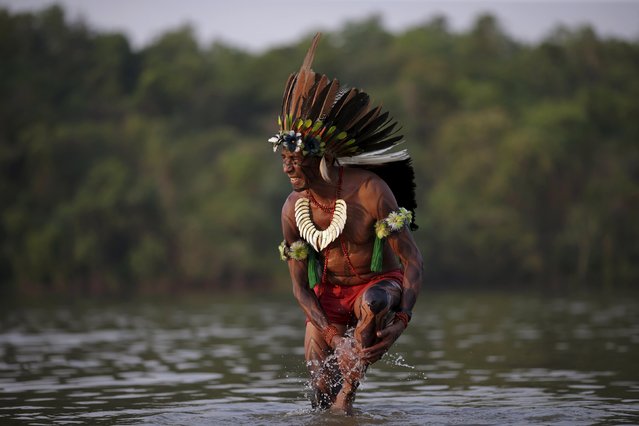
A indigenous man from the Tabajara tribe is seen in Tocantins river before the I World Games for Indigenous People in Palmas, Brazil, October 21, 2015. (Photo by Ueslei Marcelino/Reuters)

A indigenous man from the Tabajara tribe is seen in Tocantins river before the I World Games for Indigenous People in Palmas, Brazil, October 21, 2015. (Photo by Ueslei Marcelino/Reuters)
Details
25 Oct 2015 08:01:00
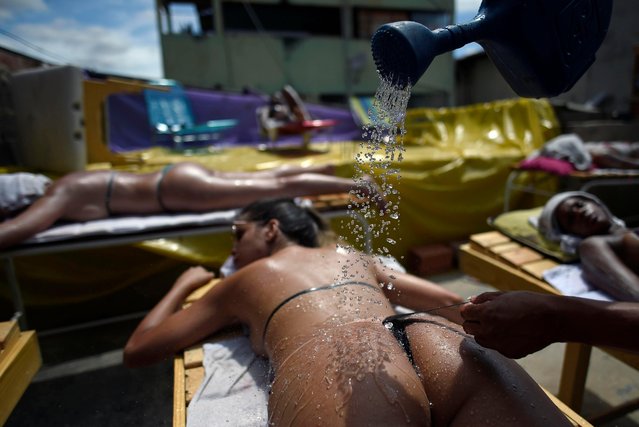
A woman is cooled down with a watering can as she sunbathes using insulating tape, at a beauty center in Belo Horizonte, Brazil, on December 21, 2017. (Photo by Douglas Magno/AFP Photo)

A woman is cooled down with a watering can as she sunbathes using insulating tape, at a beauty center in Belo Horizonte, Brazil, on December 21, 2017. Brazilian women take advantage of the beginning of the summer to sunbathe using the new national trend: natural tanning with insulating tape. Instead of using tiny bikinis on the beach, women avoid being bothered or stalked by getting taped in the shape of them, and lay in the sun over rooftops to enjoy the morning sun and get the perfect “marquinha” tan lines. (Photo by Douglas Magno/AFP Photo)
Details
25 Dec 2017 06:07:00
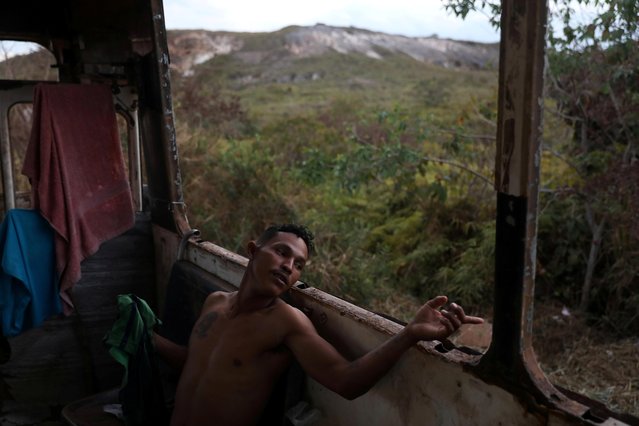
Venezuelan Hildemaro Ortiz relaxes inside of an abandoned bus in the border city of Pacaraima, Brazil on April 13, 2019. Ten destitute Venezuelan migrants who fled their country's crisis did not get far when they crossed into Brazil: they have been living for three months on an abandoned bus just across the border. (Photo by Pilar Olivares/Reuters)

Venezuelan Hildemaro Ortiz relaxes inside of an abandoned bus in the border city of Pacaraima, Brazil on April 13, 2019. Ten destitute Venezuelan migrants who fled their country's crisis did not get far when they crossed into Brazil: they have been living for three months on an abandoned bus just across the border. (Photo by Pilar Olivares/Reuters)
Details
17 Apr 2019 00:01:00
Despite the amazing sight, Netal said that seeing the pools came with a downside. “The smell was horrible, and it was difficult to breath”. (Photo by Neta Dekel/Caters News Agency)

These stunning images show the beauty and drama of Mother Nature at work. Captured deep in heart of the Danakil Desert in East Africa, the images show the acid pools near the Erta Ale volcano. Pools of brightly colored acid can be seen amid the dramatic blast of volcanic ash. The photos were taken by Neta Dekel, an Israeli photographer. He the acid pools were one of the most extraordinary sights he had ever seen. (Photo by Neta Dekel/Caters News Agency)
Details
27 Jun 2018 00:03:00
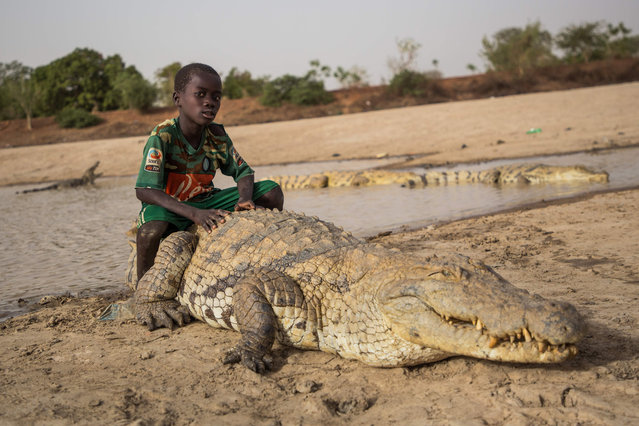
A boy sits on the back of a crocodile on May 19, 2018 at a pond in Bazoule in Burkina Faso, a village which happily shares its local pond with “sacred” crocodiles. Crocodiles may be one of the deadliest hunters in the animal kingdom, but in a small village in Burkina Faso it is not unusual to see someone sitting atop one of the fearsome reptiles. According to local legend, the startling relationship with the predators dates back to at least the 15 th century. The village was in the grip of an agonising drought until the crocodiles led women to a hidden pond where the population could slake their thirst. (Photo by Olympia de Maismont/AFP Photo)

A boy sits on the back of a crocodile on May 19, 2018 at a pond in Bazoule in Burkina Faso, a village which happily shares its local pond with “sacred” crocodiles. Crocodiles may be one of the deadliest hunters in the animal kingdom, but in a small village in Burkina Faso it is not unusual to see someone sitting atop one of the fearsome reptiles. According to local legend, the startling relationship with the predators dates back to at least the 15 th century. The village was in the grip of an agonising drought until the crocodiles led women to a hidden pond where the population could slake their thirst. (Photo by Olympia de Maismont/AFP Photo)
Details
17 Jul 2018 00:01:00
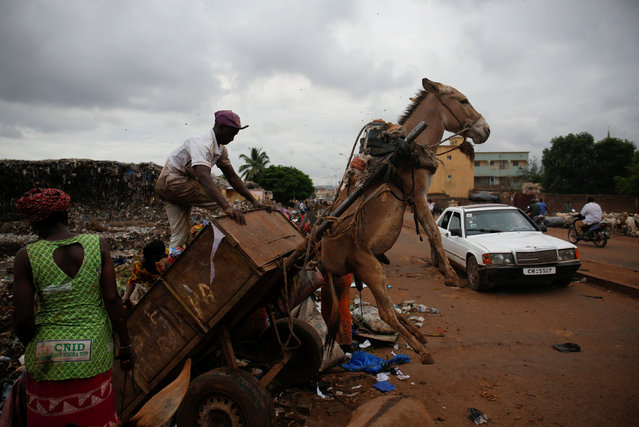
A waste picker unloads garbage at a waste transfer station in Bamako, Mali, August 19, 2018. In the Malian capital of Bamako, donkey carts driven by young men like 19-year-old Arouna Diabate play a vital role battling the fast-growing city's waste problem. Every morning before dawn, Diabate hitches his donkey to a cart and sets off on his rounds, going door-to-door to collect household garbage which he delivers to a local waste transfer station for a monthly salary of around $35. “I won't be picking up trash with a donkey cart for the rest of my life, but for now people appreciate us because we help clean up the homes of Bamako”, Diabate said. (Photo by Luc Gnago/Reuters)


A waste picker unloads garbage at a waste transfer station in Bamako, Mali, August 19, 2018. In the Malian capital of Bamako, donkey carts driven by young men like 19-year-old Arouna Diabate play a vital role battling the fast-growing city's waste problem. Every morning before dawn, Diabate hitches his donkey to a cart and sets off on his rounds, going door-to-door to collect household garbage which he delivers to a local waste transfer station for a monthly salary of around $35. “I won't be picking up trash with a donkey cart for the rest of my life, but for now people appreciate us because we help clean up the homes of Bamako”, Diabate said. (Photo by Luc Gnago/Reuters)
Details
18 Sep 2018 00:01:00