Loading...
Done
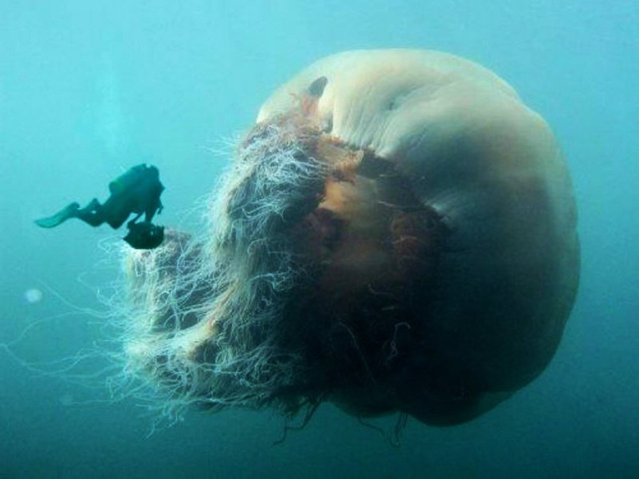
Giant Jellyfish Cyanea capillata

Cyanea capillata is the largest known species of jellyfish. Its range is confined to cold, boreal waters of the Arctic, northern Atlantic, and northern Pacific Oceans, seldom found farther south than 42°N latitude. Similar jellyfish, which may be the same species, are known to inhabit seas near Australia and New Zealand. The largest recorded specimen found, washed up on the shore of Massachusetts Bay in 1870, had a bell (body) with a diameter of 7 feet 6 inches (2.29 m) and tentacles 120 feet (37 m) long.Lion's mane jellyfish have been observed below 42°N latitude for some time—specifically in the larger bays of the east coast of the United States.
Details
24 Jul 2012 12:00:00
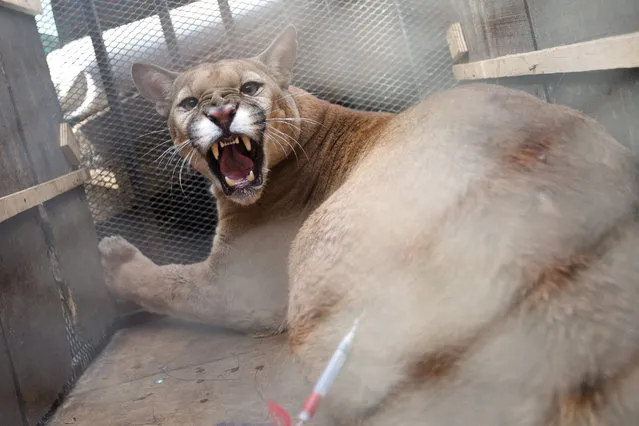
A male puma, named Bordo arrives for an examination and tests at a veterinary in Brasilia, Brazil, 31 October 2017 (issued 01 November 2017). Bordo, a young male puma, captured when he was a cub, will become the first animal of his species to be released in a sanctuary in the Brazilian savannah in Goias State close to Brasilia. The sanctuary, a preserve for wild cats,  is in the first phase and is located on private lands but state funded. (Photo by Joedson Alves/EPA/EFE)

A male puma, named Bordo arrives for an examination and tests at a veterinary in Brasilia, Brazil, 31 October 2017 (issued 01 November 2017). Bordo, a young male puma, captured when he was a cub, will become the first animal of his species to be released in a sanctuary in the Brazilian savannah in Goias State close to Brasilia. The sanctuary, a preserve for wild cats, is in the first phase and is located on private lands but state funded. (Photo by Joedson Alves/EPA/EFE)
Details
05 Nov 2017 08:13:00
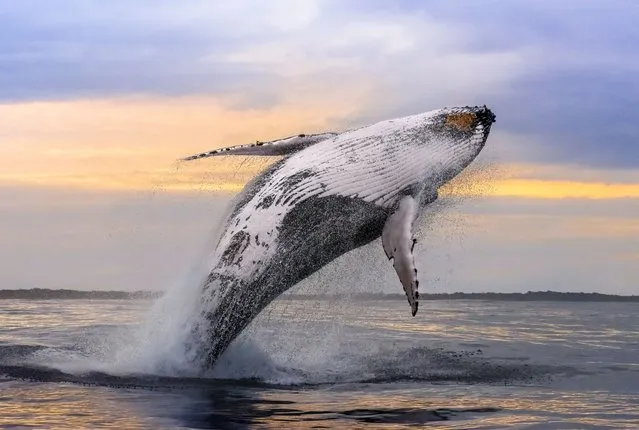
A 40-tonne humpback launching out of the water in an incredible breach in New South Wales, Australia on October 2022 in front of a sunset. The humpback whale can grow up to 56 feet long and typically covers 9,900 miles a year as it travels through the oceans of the world. Humpback whales are a species of Baleen whale, meaning they don't have teeth. Instead, they have baleen which helps them to filter feed. Their main source of food is krill or tiny bait fish. (Photo by Jodie Lowe/Media Drum Images)

A 40-tonne humpback launching out of the water in an incredible breach in New South Wales, Australia on October 2022 in front of a sunset. The humpback whale can grow up to 56 feet long and typically covers 9,900 miles a year as it travels through the oceans of the world. Humpback whales are a species of Baleen whale, meaning they don't have teeth. Instead, they have baleen which helps them to filter feed. Their main source of food is krill or tiny bait fish. (Photo by Jodie Lowe/Media Drum Images)
Details
30 Oct 2022 04:28:00
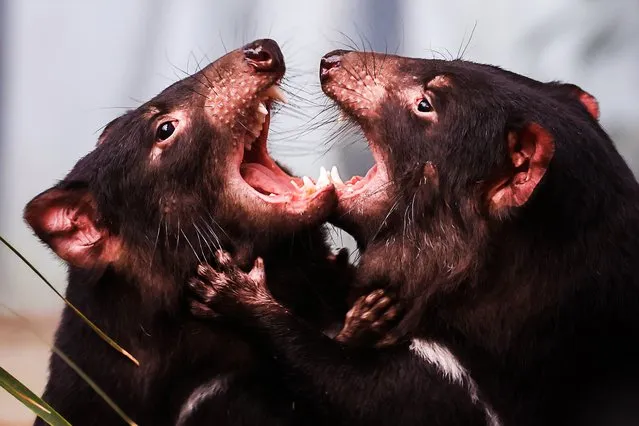
Tasmanian devils play on May 31, 2023 in Sydney, Australia. Creatures living at the zoo welcomed the arrival of winter with snow and an array of treats. Many of the zoo's species would naturally experience seasonal changes within their wild ranges. With the support of the SEA LIFE Sydney Aquarium's sub-Antarctic penguin team, snow is predicted to hit the Darling Harbour-based attraction on Wednesday morning. (Photo by Jenny Evans/Getty Images)

Tasmanian devils play on May 31, 2023 in Sydney, Australia. Creatures living at the zoo welcomed the arrival of winter with snow and an array of treats. Many of the zoo's species would naturally experience seasonal changes within their wild ranges. With the support of the SEA LIFE Sydney Aquarium's sub-Antarctic penguin team, snow is predicted to hit the Darling Harbour-based attraction on Wednesday morning. (Photo by Jenny Evans/Getty Images)
Details
11 Jun 2023 05:14:00


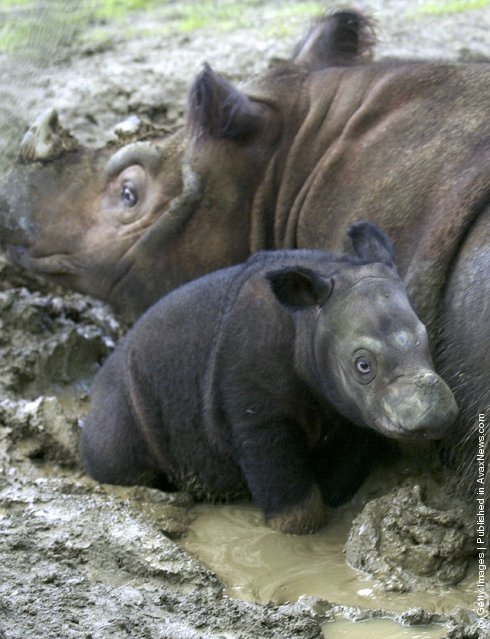
“The Sumatran Rhinoceros (Dicerorhinus sumatrensis) is a member of the family Rhinocerotidae and one of five extant rhinoceroses. It is the only extant species of the genus Dicerorhinus. It is the smallest rhinoceros, standing about 120–145 centimetres (3.9–4.76 ft) high at the shoulder, with a body length of 250 centimetres (8.2 ft) and weight of 500–800 kilograms (1,100–1,800 lb). Like the African species, it has two horns; the larger is the nasal horn, typically 15–25 centimetres (5.9–9.8 in), while the other horn is typically a stub. A coat of reddish-brown hair covers most of the Sumatran Rhino's body”. – Wikipedia

Photo: Emi, a Sumatran rhinoceros lies in the mud with her three-week-old female calf at the Cincinnati Zoo and Botanical Garden August 19, 2004 in Cincinnati, Ohio. Emi made history by becoming the first Sumatran rhino to produce two calves in captivity. (Photo by Mike Simons/Getty Images)
Details
22 Jun 2011 12:37:00
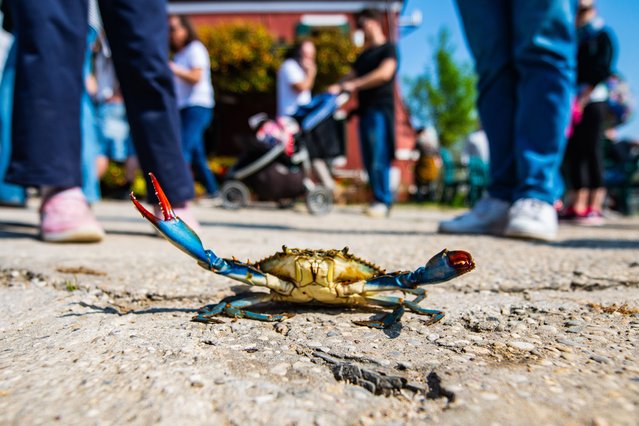
A blue crab, a highly invasive alien species, is seen at Lio Piccolo during the reforestation day on April 05, 2025 in Venice, Italy. The island of Lio Piccolo in the northern lagoon of Venice is being replanted with 16,000 new trees that will protect the salt marsh ecosystem that is fundamental to the natural health of Venice and the lagoon by WOWnature project, an Etifor initiative. (Photo by Simone Padovani/Getty Images)

A blue crab, a highly invasive alien species, is seen at Lio Piccolo during the reforestation day on April 05, 2025 in Venice, Italy. The island of Lio Piccolo in the northern lagoon of Venice is being replanted with 16,000 new trees that will protect the salt marsh ecosystem that is fundamental to the natural health of Venice and the lagoon by WOWnature project, an Etifor initiative. (Photo by Simone Padovani/Getty Images)
Details
20 Apr 2025 02:43:00
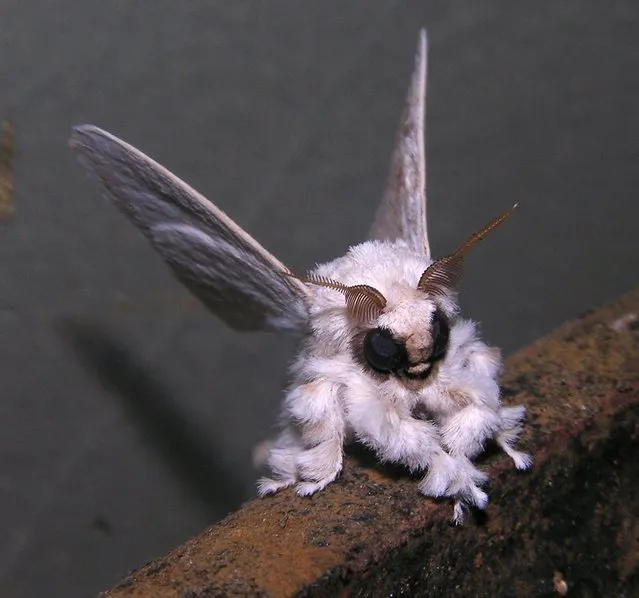
Venezuelan Poodle Moth

The Venezuelan Poodle Moth is a possible new species of moth discovered in 2009 by Dr. Arthur Anker of Bishkek, Kyrgyzstan, in the Gran Sabana region of Venezuela. It bears similarities to the Diaphora mendica, the Muslin Moth, but most likely belongs to the lepidopteran family Artace.
Details
13 Jan 2013 12:48:00
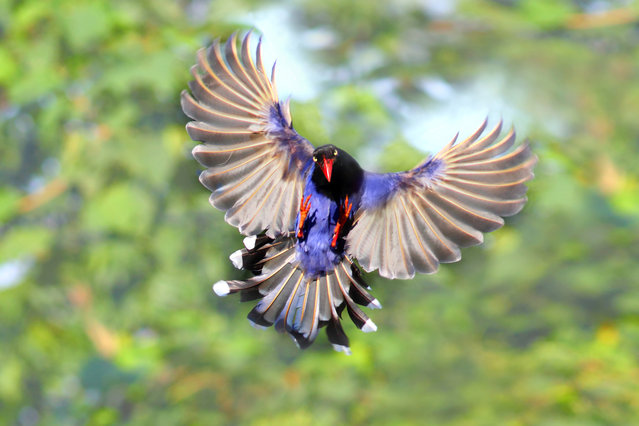
Taiwan Blue Magpie

The Taiwan Blue Magpie (Urocissa caerulea), also called the Taiwan Magpie or Formosan Blue Magpie, is a member of the Crow family. It is an endemic species living in the mountains of Taiwan at elevations of 300 to 1200m.
Details
19 Jun 2013 10:08:00