Loading...
Done
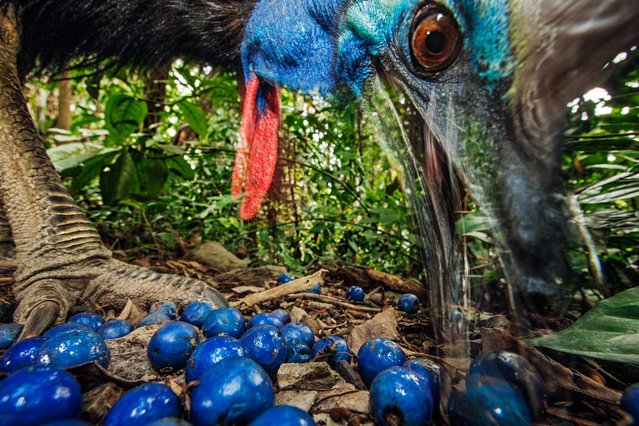
“Cassowaries are large, flightless birds related to emus and (more distantly) to ostriches, rheas, and kiwis”, writes Olivia Judson in the September issue of National Geographic magazine. (Photo by Christian Ziegler/National Geographic)

“Cassowaries are large, flightless birds related to emus and (more distantly) to ostriches, rheas, and kiwis”, writes Olivia Judson in the September issue of National Geographic magazine. How large? People-size: Adult males stand well over five foot five and top 110 pounds. Females are even taller, and can weigh more than 160 pounds. Dangerous when roused, they’re shy and peaceable when left alone. But even birds this big and tough are prey to habitat loss. The dense New Guinea and Australia rain forests where they live have dwindled. Today cassowaries might number 1,500 to 2,000. And because they help shape those same forests – by moving seeds from one place to another – “if they vanish”, Judson writes, “the structure of the forest would gradually change” too. (Photo by Christian Ziegler/National Geographic)
Details
06 Jan 2014 12:21:00
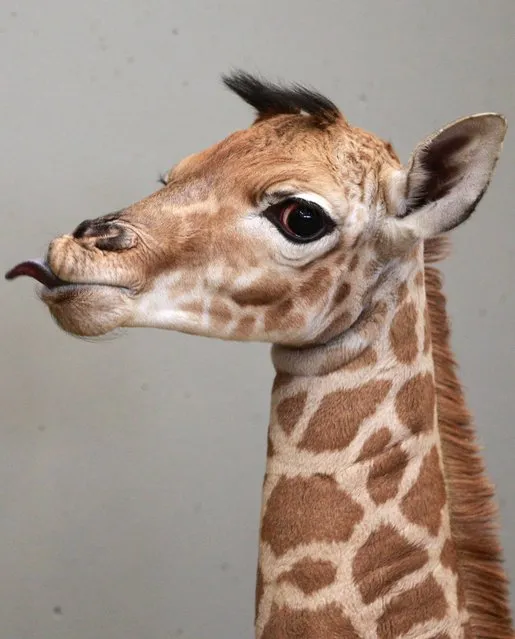
A newborn baby giraffe shows its tongue at the Planckendael zoo in Mechelen, 25 kilometers North of Brussels, Tuesday, February 18, 2014. The calf was born on Valentines day, February 14, and has a heart shaped spot on the hip. (Photo by Yves Logghe/AP Photo)

A newborn baby giraffe shows its tongue at the Planckendael zoo in Mechelen, 25 kilometers North of Brussels, Tuesday, February 18, 2014. The calf was born on Valentines day, February 14, and has a heart shaped spot on the hip. (Photo by Yves Logghe/AP Photo)
Details
22 Feb 2014 13:36:00
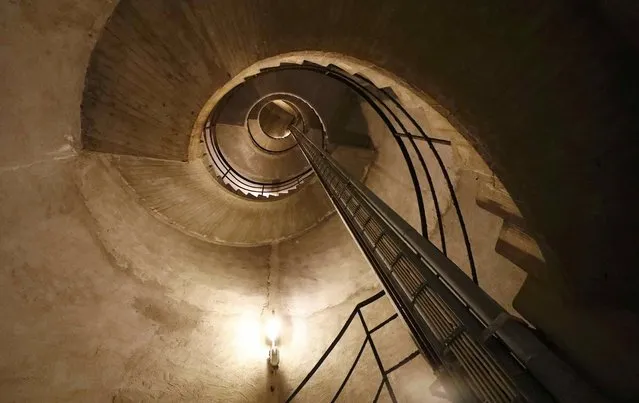
A 20 metre high spiral staircase in a tower used as an emergency exit, is seen inside a Federal Reserve bank (Bundesbank) bunker, prior to the bunker's official opening to the public in Cochem, Germany, March 18, 2016. (Photo by Kai Pfaffenbach/Reuters)

A 20 metre high spiral staircase in a tower used as an emergency exit, is seen inside a Federal Reserve bank (Bundesbank) bunker, prior to the bunker's official opening to the public in Cochem, Germany, March 18, 2016. West Germany's Central Bank (Deutsche Bundesbank) stored some 20 billion German marks of emergency notes in two underground bunkers, one in Frankfurt the other in Cochem, between 1964-1988 during the cold war. (Photo by Kai Pfaffenbach/Reuters)
Details
19 Mar 2016 12:36:00
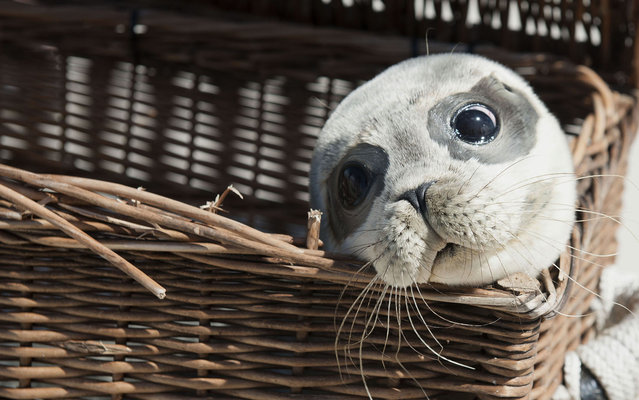
Seehund “Bruno” looks out of his transport box before making his way to the water on the beach of the island of Juist, Germany on August 14, 2013. Four young seals were released after six weeks of recovery at a rescue station in Norden-Norddeich. (Photo by Carmen Jaspersen/AFP Photo/DPA)

Seehund “Bruno” looks out of his transport box before making his way to the water on the beach of the island of Juist, Germany on August 14, 2013. Four young seals were released after six weeks of recovery at a rescue station in Norden-Norddeich. (Photo by Carmen Jaspersen/AFP Photo/DPA)
Details
31 Aug 2013 14:16:00
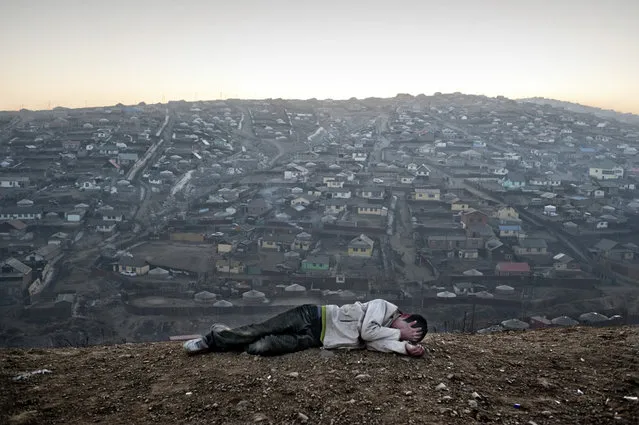
Asia, Mongolia, March 27, 2011. A view of Ulaan Baator over the shoulder of a slumbering drunk. Alcoholism is a huge problem in the city, home to almost half of Mongolia's people. The capital's population has doubled in the past two years, expanding outward in a haphazard sprawl, and many inhabitants live in slums known as the “Gher District”. (Photo by Alessandro Grassani)

“Environmental Migrants: The Last Illusion” by photographer Alessandro Grassani, documents the life of people in Kenya, Mongolia and Bangladesh who migrate to escape environmental stresses to the city of their own countries in hopes for a better life. Here: Asia, Mongolia, March 27, 2011. A view of Ulaan Baator over the shoulder of a slumbering drunk. Alcoholism is a huge problem in the city, home to almost half of Mongolia's people. The capital's population has doubled in the past two years. High levels of unemployment and poverty await herders who abandon rural areas and arrive in the city, illiterate and untrained in any skills necessary for urban jobs. (Photo by Alessandro Grassani)
Details
21 Jul 2015 10:10:00
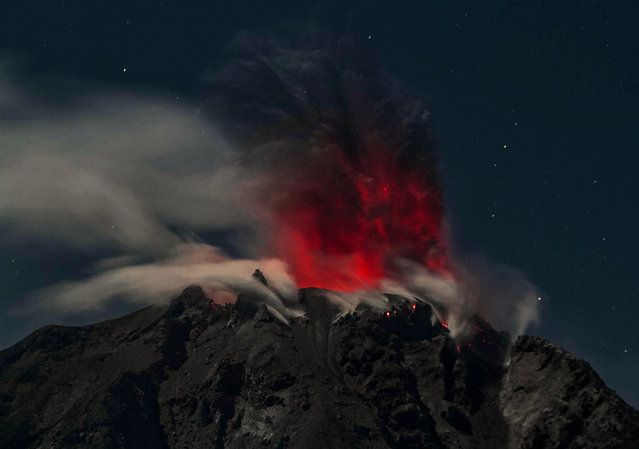
In this timed-exposure night photo taken early on February 12, 2017, Mount Sinabung volcano spews reddish smoke and ash, as seen from the Karo district in North Sumatra province. Activity levels have increased in the past week, with Sinabung shooting hot ash clouds into the sky dozens of times, according to the local volcano monitoring agency. (Photo by AFP Photo/Stringer)

In this timed-exposure night photo taken early on February 12, 2017, Mount Sinabung volcano spews reddish smoke and ash, as seen from the Karo district in North Sumatra province. Activity levels have increased in the past week, with Sinabung shooting hot ash clouds into the sky dozens of times, according to the local volcano monitoring agency. (Photo by AFP Photo/Stringer)
Details
13 Feb 2017 10:02:00
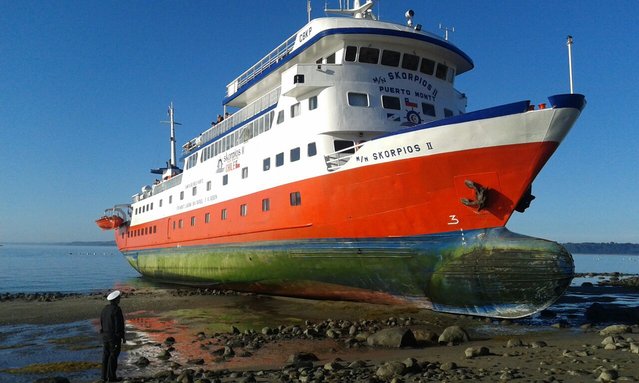
The Chilean ship “Skorpios II” is seen after it ran aground in “Maillen” island, near Puerto Montt, south of Santiago, in this handout picture from the Chilean Navy, February 5, 2015. According to the Chilean Navy, the ship's 89 passengers and 31 crew members were all evacuated and no oil spills or casualties were reported. (Photo by Reuters/Chilean Navy)

The Chilean ship “Skorpios II” is seen after it ran aground in “Maillen” island, near Puerto Montt, south of Santiago, in this handout picture from the Chilean Navy, February 5, 2015. According to the Chilean Navy, the ship's 89 passengers and 31 crew members were all evacuated and no oil spills or casualties were reported. (Photo by Reuters/Chilean Navy)
Details
07 Feb 2015 14:22:00
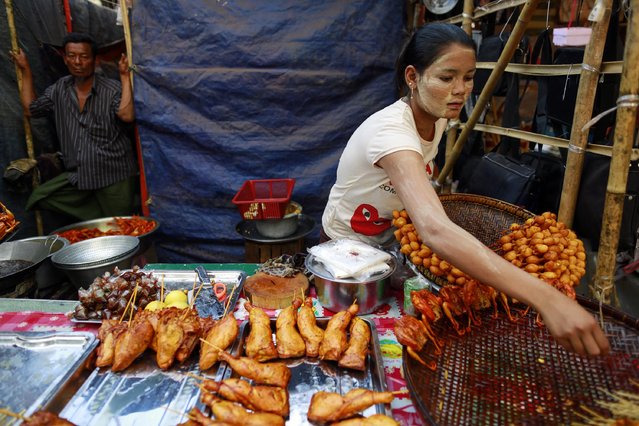
A woman sells fried chicken at the Kyaik-Khauk pagoda festival in the Tanlyin township outside Yangon February 4, 2015. (Photo by Soe Zeya Tun/Reuters)

A woman sells fried chicken at the Kyaik-Khauk pagoda festival in the Tanlyin township outside Yangon February 4, 2015. (Photo by Soe Zeya Tun/Reuters)
Details
17 Feb 2015 11:30:00