Loading...
Done
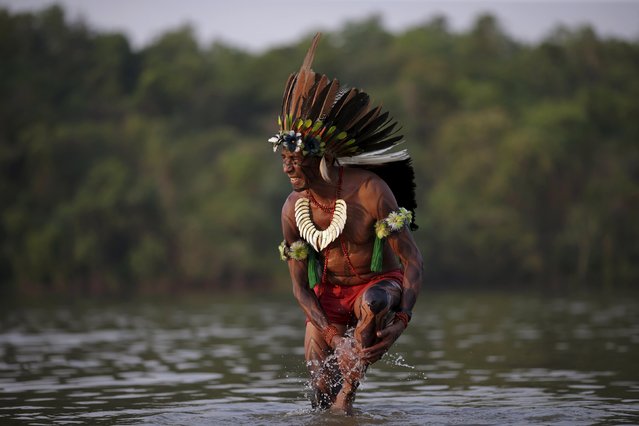
A indigenous man from the Tabajara tribe is seen in Tocantins river before the I World Games for Indigenous People in Palmas, Brazil, October 21, 2015. (Photo by Ueslei Marcelino/Reuters)

A indigenous man from the Tabajara tribe is seen in Tocantins river before the I World Games for Indigenous People in Palmas, Brazil, October 21, 2015. (Photo by Ueslei Marcelino/Reuters)
Details
25 Oct 2015 08:01:00
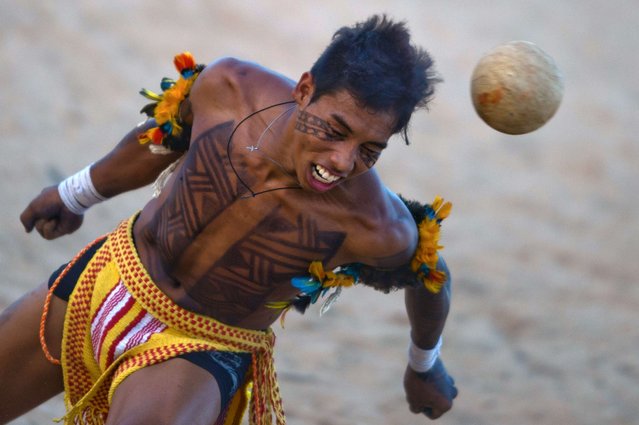
Brazilian natives of the Pareci tribe play head football with a hand-made ball for a demonstration, during the first day of the International Games of Indigenous Peoples, in Cuiaba, state of Mato Grosso, on November 10, 2013. 1500 natives from 49 Brazilian ethnic groups and from another 17 countries are gathering in Cuiaba until November 16 to compete in some 30 athletic disciplines, many of their own. (Photo by Christophe Simon/AFP Photo)

Brazilian natives of the Pareci tribe play head football with a hand-made ball for a demonstration, during the first day of the International Games of Indigenous Peoples, in Cuiaba, state of Mato Grosso, on November 10, 2013. 1500 natives from 49 Brazilian ethnic groups and from another 17 countries are gathering in Cuiaba until November 16 to compete in some 30 athletic disciplines, many of their own. (Photo by Christophe Simon/AFP Photo)
Details
13 Nov 2013 11:50:00
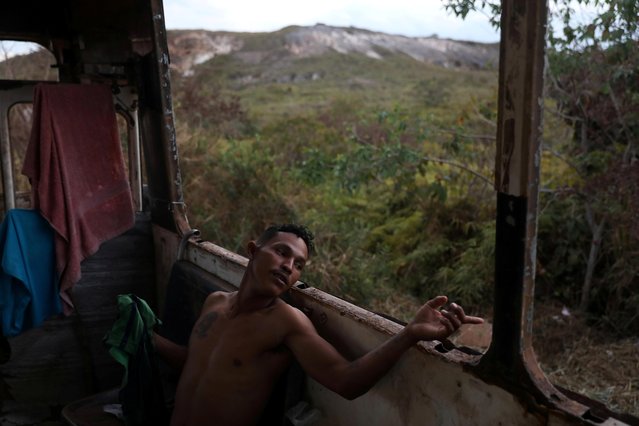
Venezuelan Hildemaro Ortiz relaxes inside of an abandoned bus in the border city of Pacaraima, Brazil on April 13, 2019. Ten destitute Venezuelan migrants who fled their country's crisis did not get far when they crossed into Brazil: they have been living for three months on an abandoned bus just across the border. (Photo by Pilar Olivares/Reuters)

Venezuelan Hildemaro Ortiz relaxes inside of an abandoned bus in the border city of Pacaraima, Brazil on April 13, 2019. Ten destitute Venezuelan migrants who fled their country's crisis did not get far when they crossed into Brazil: they have been living for three months on an abandoned bus just across the border. (Photo by Pilar Olivares/Reuters)
Details
17 Apr 2019 00:01:00
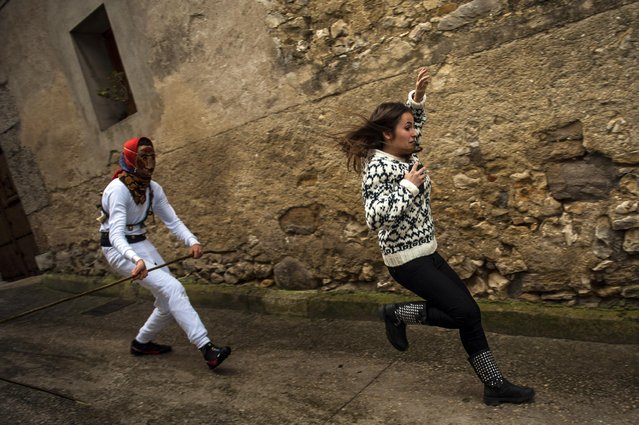
In this photo taken on Sunday, February 15, 2015 a girl runs away from a “Mamuxarro” during the carnival, in the small town of Unanu, northern Spain. While Rio de Janeiro may boast the world’s most famous carnival, the festive period of masquerades and wild and colorful costumes that precedes the Christian religious season of Lent is also a permanent and popular fixture for celebration in Spain and Portugal, with each country having its own strange and unique way of doing it. (Photo by Alvaro Barrientos/AP Photo)

In this photo taken on Sunday, February 15, 2015 a girl runs away from a “Mamuxarro” during the carnival, in the small town of Unanu, northern Spain. In the northern Spanish ancient village of Unamu, people dress up as “Mamuxarro”, folkloric figures in white with a red sash and a metal mask to cover their faces as they pursue townsfolk with sticks. According to custom, their “victims” (usually young women) must kneel and kiss the mamuxarro’s knee after he makes the sign of the cross on their forehead. (Photo by Alvaro Barrientos/AP Photo)
Details
22 Feb 2015 10:51:00
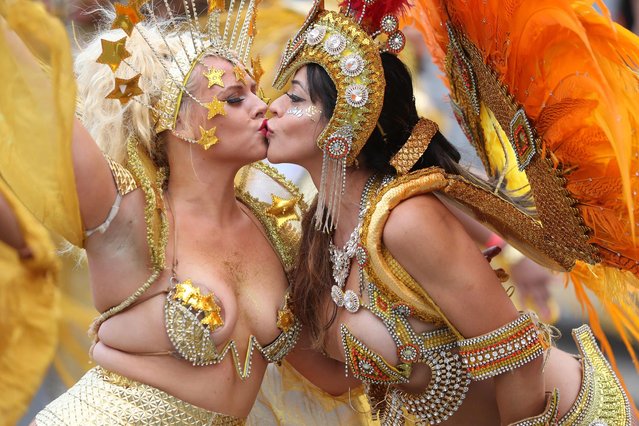
Performers in costume kiss as they take part in the carnival on the main Parade day of the Notting Hill Carnival in west London on August 27, 2018. Nearly one million people are expected by the organizers Sunday and Monday in the streets of west London' s Notting Hill to celebrate Caribbean culture at a carnival considered the largest street demonstration in Europe. (Photo by Daniel Leal-Olivas/AFP Photo)

Performers in costume kiss as they take part in the carnival on the main Parade day of the Notting Hill Carnival in west London on August 27, 2018. Nearly one million people are expected by the organizers Sunday and Monday in the streets of west London' s Notting Hill to celebrate Caribbean culture at a carnival considered the largest street demonstration in Europe. (Photo by Daniel Leal-Olivas/AFP Photo)
Details
29 Aug 2018 00:01:00
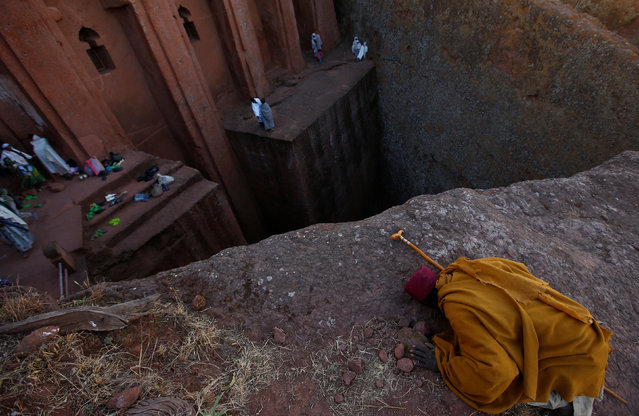
An Ethiopian Orthodox monk prays within a rock hewn church ahead of Ethiopian Christmas in Lalibela, January 6, 2017, which is celebrated on January 7. (Photo by Tiksa Negeri/Reuters)

An Ethiopian Orthodox monk prays within a rock hewn church ahead of Ethiopian Christmas in Lalibela, January 6, 2017, which is celebrated on January 7. (Photo by Tiksa Negeri/Reuters)
Details
08 Jan 2017 14:20:00
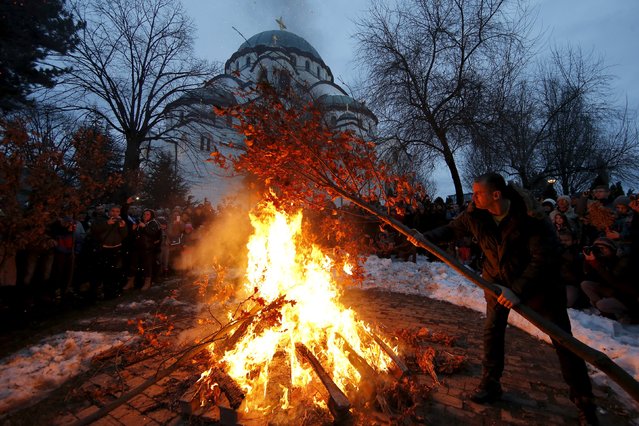
Believers burn dried oak branches, which symbolizes the Yule log, on Orthodox Christmas Eve in front of the St. Sava temple in Belgrade, Serbia, January 6, 2016. (Photo by Marko Djurica/Reuters)

Believers burn dried oak branches, which symbolizes the Yule log, on Orthodox Christmas Eve in front of the St. Sava temple in Belgrade, Serbia, January 6, 2016. Serbian Orthodox believers celebrate Christmas on January 7, according to the Julian calendar. (Photo by Marko Djurica/Reuters)
Details
08 Jan 2016 08:00:00
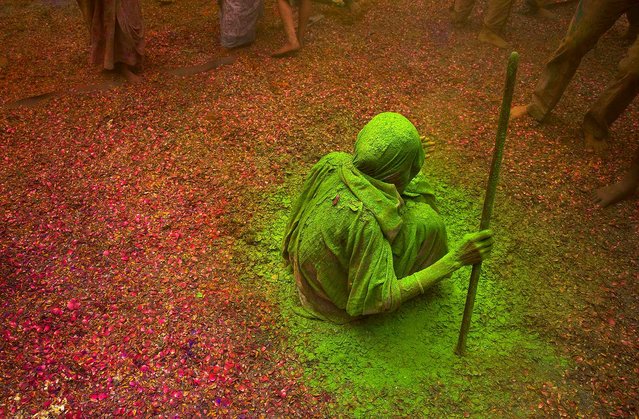
An Indian Hindu widow smeared with colors sits and watches others playing during Holi celebrations at the Gopinath temple, 180 kilometres (112 miles) south-east of New Delhi, India Monday, March 21, 2016. (Photo by Manish Swarup/AP Photo)

An Indian Hindu widow smeared with colors sits and watches others playing during Holi celebrations at the Gopinath temple, 180 kilometres (112 miles) south-east of New Delhi, India Monday, March 21, 2016. A few years ago this joyful celebration was forbidden for Hindu widows. Like hundreds of thousands of observant Hindu women they would have been expected to live out their days in quiet worship, dressed only in white, their very presence being considered inauspicious for all religious festivities. (Photo by Manish Swarup/AP Photo)
Details
22 Mar 2016 11:24:00