Loading...
Done
“Theyyam”. Preparation for the Theyyam performance in the surroundings of Kasaragod city. Theyyam is a popular ritual dance form of North Kerala, particularly in Kannur and Kasargod districts. The Theyyam represents a mythological, divine or heroic character. Make up of Theyyams is done by specialist. There are different types of face painting for which primarily and secondary colours are used. Photo location:  Kasaragod, India. (Photo and caption by Rafal Ziejewski/National Geographic Photo Contest)

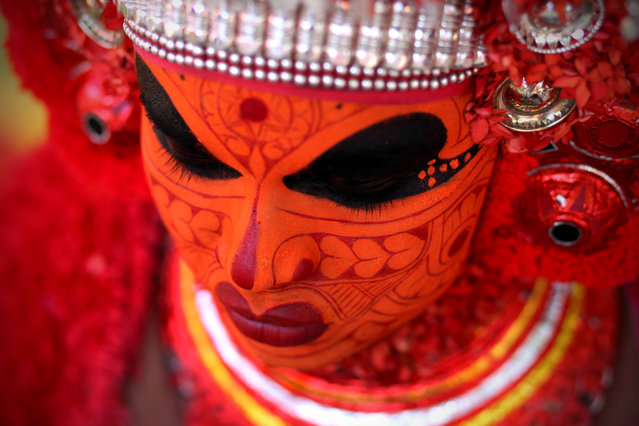
“Theyyam”. Preparation for the Theyyam performance in the surroundings of Kasaragod city. Theyyam is a popular ritual dance form of North Kerala, particularly in Kannur and Kasargod districts. The Theyyam represents a mythological, divine or heroic character. Make up of Theyyams is done by specialist. There are different types of face painting for which primarily and secondary colours are used. Therefore it is essential that the makeup man should have perfect knowledge of primary and secondary colour combinations. Sometimes, it takes several hours to paint each face. Photo location: Kasaragod, India. (Photo and caption by Rafal Ziejewski/National Geographic Photo Contest)
Details
02 Jul 2014 10:42:00
Merit: A Night at Deadvlei. The night before returning to Windhoek, we spent several hours at Deadveli. The moon was bright enough to illuminate the sand dunes in the distance, but the skies were still dark enough to clearly see the milky way and magellanic clouds. Deadveli means “dead marsh. (Photo and caption by Beth McCarley/National Geographic Traveler Photo Contest)

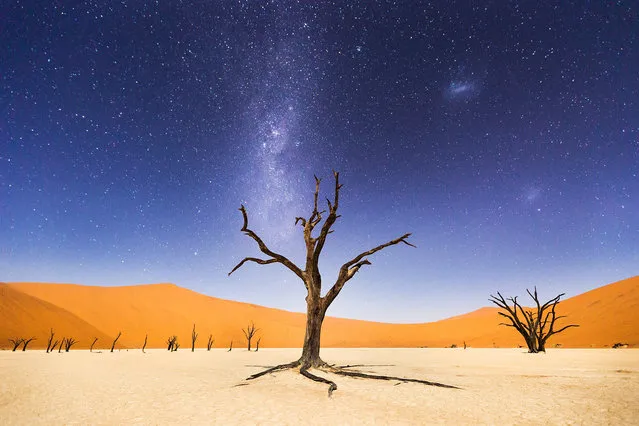
Merit: A Night at Deadvlei. The night before returning to Windhoek, we spent several hours at Deadveli. The moon was bright enough to illuminate the sand dunes in the distance, but the skies were still dark enough to clearly see the milky way and magellanic clouds. Deadveli means “dead marsh. The camelthorn trees are believed to be about 900 years old, but have not decomposed because the environment is so dry. (Photo and caption by Beth McCarley/National Geographic Traveler Photo Contest)
Details
04 Aug 2015 11:50:00
Takeoka Chisaka, Hiroshima, Japan. “One morning in August 1945, I was walking home from the night shift at a factory in Hiroshima. As I reached my door, there was a huge explosion. When I came to, my head was bleeding and I had been blasted 30m away”. (Photo and caption by Sasha Maslov)

Takeoka Chisaka, Hiroshima, Japan. “One morning in August 1945, I was walking home from the night shift at a factory in Hiroshima. As I reached my door, there was a huge explosion. When I came to, my head was bleeding and I had been blasted 30m away. The atomic bomb had detonated. When I found my mother, her eyes were badly burned. A doctor said they had to come out, but he didn’t have the proper tools so used a knife instead. It was hellish. I became a peace-worker after the war. In the 1960s, at a meeting at the UN, I met one of the people who created the atomic bomb. He apologised”. (Photo and caption by Sasha Maslov)
Details
11 May 2015 11:56:00
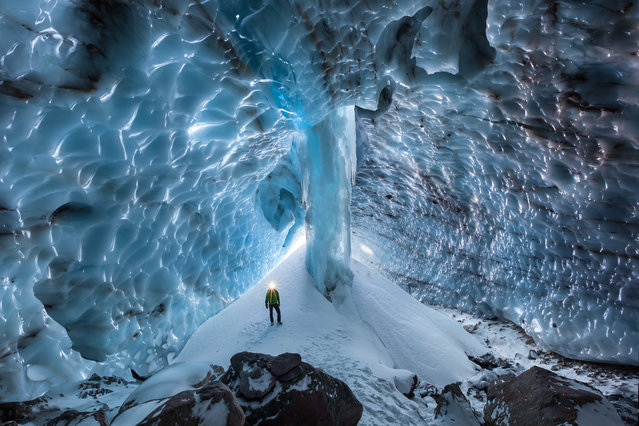
On the western side of Mount Hood lies the longest glacier cave system in the contiguous United States. In 2012, these caves were mapped to a combined length of 7,166.8 feet by cave explorers Brent McGregor and Eddy Cartaya. Currently, the total passage length is hundreds of feet less. Glaciers are frozen rivers; they are always moving and changing. In the past five years, we have seen the caves melt, shrink and collapse in a dramatic way. The caves are formed by water carving away at the ice. (Photo and caption by Josh Hydeman)

On the western side of Mount Hood lies the longest glacier cave system in the contiguous United States. In 2012, these caves were mapped to a combined length of 7,166.8 feet by cave explorers Brent McGregor and Eddy Cartaya. Currently, the total passage length is hundreds of feet less. Glaciers are frozen rivers; they are always moving and changing... (Photo and caption by Josh Hydeman)
Details
22 Mar 2015 11:05:00
“Great White Shark of Guadalupe Island”. A great white shark very quiet under the boat and a lot of fish. The sun ray lighting the head of the shark. Location: Guadalupe Island, Mexico. (Photo and caption by Marc Henauer/National Geographic Traveler Photo Contest)

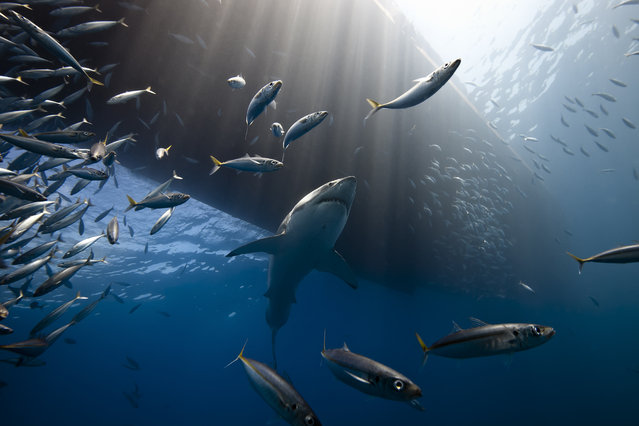
“Great White Shark of Guadalupe Island”. A great white shark very quiet under the boat and a lot of fish. The sun ray lighting the head of the shark. Location: Guadalupe Island, Mexico. (Photo and caption by Marc Henauer/National Geographic Traveler Photo Contest)

ATTENTION! All pictures are presented in high resolution. To see Hi-Res images – just TWICE click on any picture. In other words, click small picture – opens the BIG picture. Click BIG picture – opens VERY BIG picture.
Details
04 Jul 2013 09:49:00
Xiren Wang, Lili Wat, and Sitong Chen join the pageant’s opening routine, dancing to “The Boys”, a song by K-Pop group «Girls’ Generation». While the women come from a range of professional backgrounds – including economics, nursing, and acting – every contestant is looking for her big break into the entertainment industry. (Photo and caption by John Brecher/Sahra Vang Nguyen/NBC News)

Xiren Wang, Lili Wat, and Sitong Chen join the pageant’s opening routine, dancing to “The Boys”, a song by K-Pop group «Girls’ Generation». While the women come from a range of professional backgrounds – including economics, nursing, and acting – every contestant is looking for her big break into the entertainment industry. Most contestants said they would prefer to have a career in the U.S. but would go wherever the opportunity lies. (Photo and caption by John Brecher/Sahra Vang Nguyen/NBC News)
Details
03 Sep 2014 10:50:00
“Hippo Chase”. As we approached the camp the Selinda Reserve of northern Botswana our boat passed by a hippo resting in the water. I turned around to look back at the boat's wake and saw the hippo charging after us! The hippo must've been tired from an all-nighter because he was angry. (Photo and caption by Curtis Simmons/National Geographic Photo Contest)

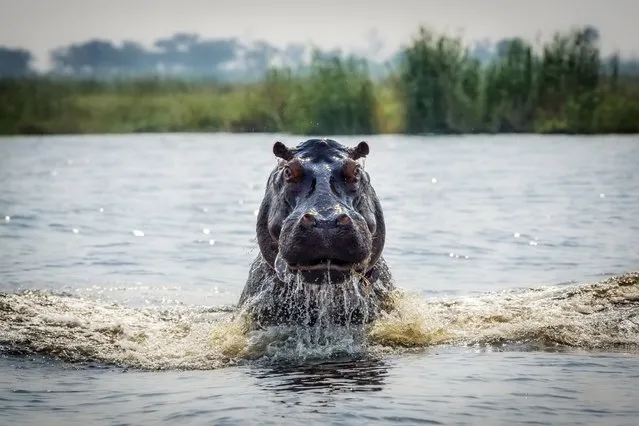
“Hippo Chase”. As we approached the camp the Selinda Reserve of northern Botswana our boat passed by a hippo resting in the water. I turned around to look back at the boat's wake and saw the hippo charging after us! The hippo must've been tired from an all-nighter because he was angry. He rose way up out of the water three times trying to chase our boat! He was coming at us with such force that he created a wake of his own. Photo location: Selinda Reserve of northern Botswana. (Photo and caption by Curtis Simmons/National Geographic Photo Contest)
Details
06 Nov 2014 08:59:00
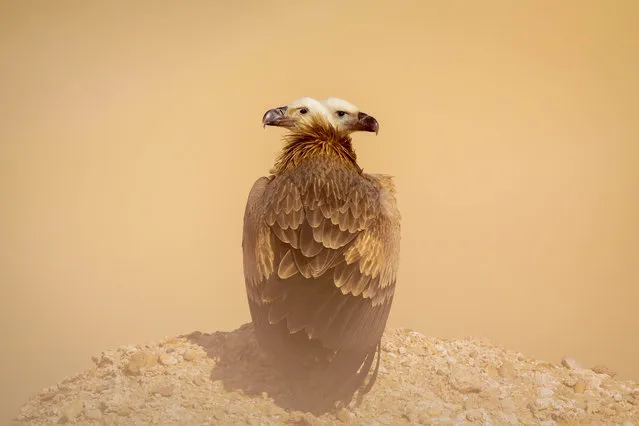
“Double head vulture”. On the day of windy days during raptors migration some people in my country start to catch these tired raptors, so in this day we go to photograph some raptors and we saw these tow tired vultures, so we start to drag them away from the hunters until they reach a good hidden place, to make them safe until they start a new journey. Photo location: Kuwait. (Photo and caption by Mohd Khorshed/National Geographic Photo Contest)

“Double head vulture”. On the day of windy days during raptors migration some people in my country start to catch these tired raptors, so in this day we go to photograph some raptors and we saw these tow tired vultures, so we start to drag them away from the hunters until they reach a good hidden place, to make them safe until they start a new journey. Photo location: Kuwait. (Photo and caption by Mohd Khorshed/National Geographic Photo Contest)
Details
06 Nov 2014 09:40:00