Loading...
Done
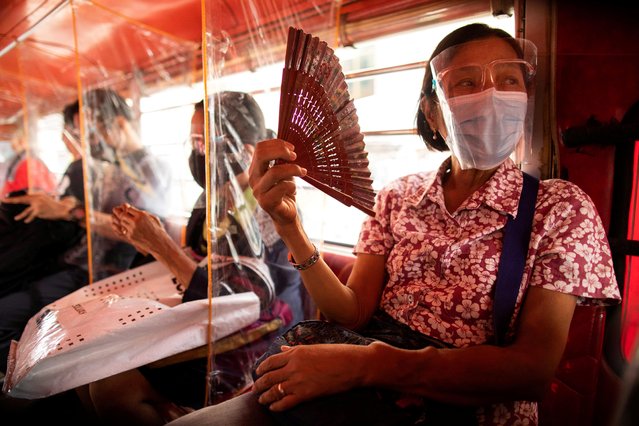
Jeepney passengers are seated in between plastic barriers, wearing face masks and face shields mandatory in public transportation, in Quezon City, Metro Manila, Philippines, August 19, 2020. (Photo by Eloisa Lopez/Reuters)

Jeepney passengers are seated in between plastic barriers, wearing face masks and face shields mandatory in public transportation, in Quezon City, Metro Manila, Philippines, August 19, 2020. (Photo by Eloisa Lopez/Reuters)
Details
02 Oct 2020 00:05:00
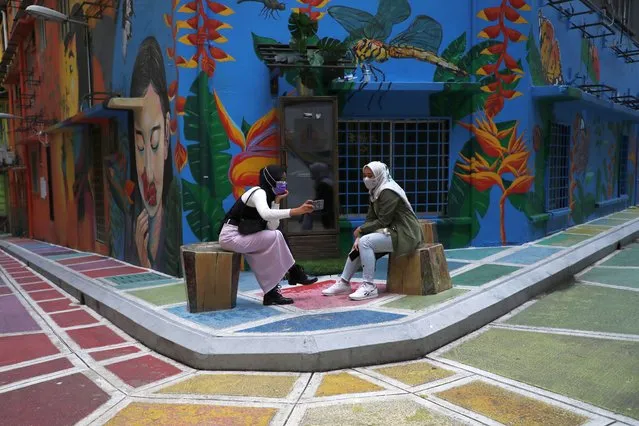
Women wearing protective masks talk to each other on a street, amid the coronavirus disease (COVID-19) outbreak in Kuala Lumpur, Malaysia on December 17, 2020. (Photo by Lim Huey Teng/Reuters)

Women wearing protective masks talk to each other on a street, amid the coronavirus disease (COVID-19) outbreak in Kuala Lumpur, Malaysia on December 17, 2020. (Photo by Lim Huey Teng/Reuters)
Details
23 Jan 2021 09:40:00
University students wearing Guy Fawkes masks pose for a photoshoot of a graduation ceremony to support anti-government protests at the Hong Kong Polytechnic University, in Hong Kong, China on October 30, 2019. (Photo by Tyrone Siu/Reuters)

University students wearing Guy Fawkes masks pose for a photoshoot of a graduation ceremony to support anti-government protests at the Hong Kong Polytechnic University, in Hong Kong, China on October 30, 2019. (Photo by Tyrone Siu/Reuters)
Details
01 Nov 2019 00:07:00
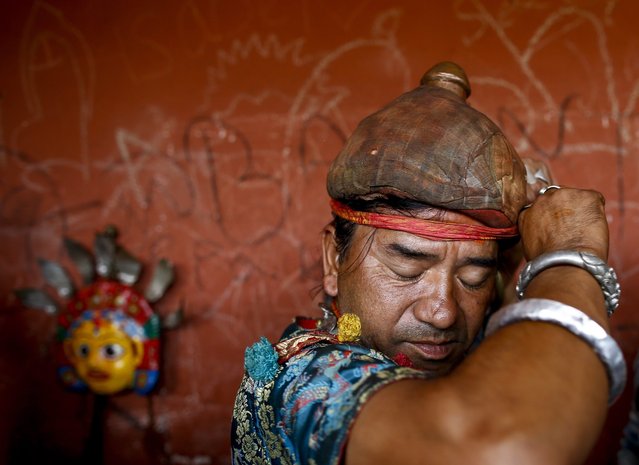
A Nepalese devotee prepares for a religious mask performance during the Seekaali Festival in Khokna village, near Kathmandu, Nepal, 07 October 2016. During the 300-year-old Seekali festival, elderly ethnic Newari devotees wear masks of 14 various goddesses including Lord Ganesha, Lord Shiva, Lord Laxmi, Lord Brahma and Lord Bishnu. The Khokna people celebrate the Seekaali festival as an alternative of the Dashain festival which is biggest festival of Nepalese Hindus that celebrates the victory of the gods over demons. (Photo by Narendra Shrestha/EPA)

A Nepalese devotee prepares for a religious mask performance during the Seekaali Festival in Khokna village, near Kathmandu, Nepal, 07 October 2016. During the 300-year-old Seekali festival, elderly ethnic Newari devotees wear masks of 14 various goddesses including Lord Ganesha, Lord Shiva, Lord Laxmi, Lord Brahma and Lord Bishnu. The Khokna people celebrate the Seekaali festival as an alternative of the Dashain festival which is biggest festival of Nepalese Hindus that celebrates the victory of the gods over demons. (Photo by Narendra Shrestha/EPA)
Details
09 Oct 2016 07:14:00
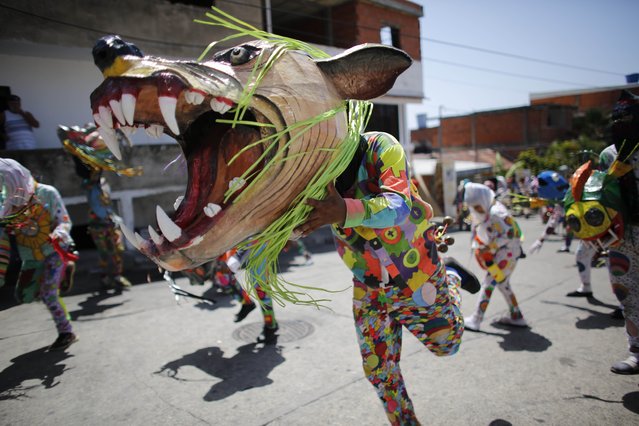
People dressed as a dancing devils with giant mask dance on a street, during a traditional celebration in Naiguata, Venezuela, Thursday, May 31, 2018. Carrying in their hands striking masks mostly animals and sea monsters, hundreds of men, women and children went out to dance frantically as possessed by evil spirits in an ancient ritual known as Dancing Devils of Naiguata, the unorthodox way of the coastal towns of Venezuela to venerate God during the celebrations of Corpus Christi. (Photo by Ariana Cubillos/AP Photo)

People dressed as a dancing devils with giant mask dance on a street, during a traditional celebration in Naiguata, Venezuela, Thursday, May 31, 2018. Carrying in their hands striking masks mostly animals and sea monsters, hundreds of men, women and children went out to dance frantically as possessed by evil spirits in an ancient ritual known as Dancing Devils of Naiguata, the unorthodox way of the coastal towns of Venezuela to venerate God during the celebrations of Corpus Christi. (Photo by Ariana Cubillos/AP Photo)
Details
02 Jun 2018 07:20:00
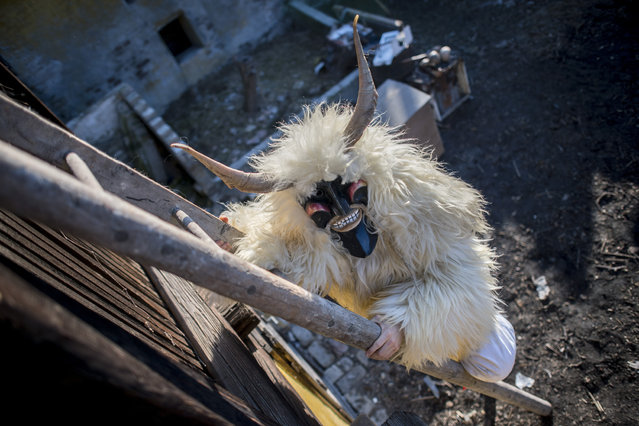
A man wears a busho mask and a costume made of sheep pelt while climbing up a ladder outside a barn in Mohacs, Hungary, 20 February 2020, on the first day of carnival. The traditional Busho carnival, which marks the end of winter, dates back to the 16th century. According to local legend, members of an ethnic South Slavic group living in Mohacs at the time dressed up in similar costumes and wore wooden masks to scare away Ottoman invaders, who mistook them for demons. (Photo by Tamas Soki/EPA/EFE)

A man wears a busho mask and a costume made of sheep pelt while climbing up a ladder outside a barn in Mohacs, Hungary, 20 February 2020, on the first day of carnival. The traditional Busho carnival, which marks the end of winter, dates back to the 16th century. According to local legend, members of an ethnic South Slavic group living in Mohacs at the time dressed up in similar costumes and wore wooden masks to scare away Ottoman invaders, who mistook them for demons. (Photo by Tamas Soki/EPA/EFE)
Details
23 Feb 2020 00:07:00
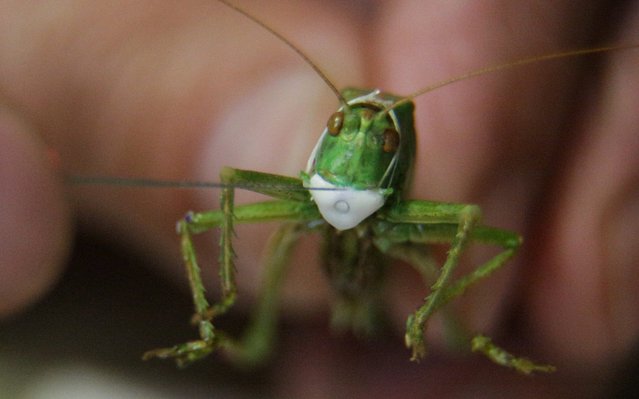
A grasshopper in a protective mask created by microminiaturist Anatoly Konenko in Omsk, Russia on May 21, 2020. Mini-masks about the size of a rice grain are made of a special high-density medical fabric with a built-in air filter. Anatoly Konenko is one of Russia's most famous microminiaturists; his works include a grasshopper playing a violin, a shod flea, a miniature bass guitar, a camel train in a needle's eye, and over 200 miniature books. (Photo by Yevgeny Sofiychuk/TASS)

A grasshopper in a protective mask created by microminiaturist Anatoly Konenko in Omsk, Russia on May 21, 2020. Mini-masks about the size of a rice grain are made of a special high-density medical fabric with a built-in air filter. Anatoly Konenko is one of Russia's most famous microminiaturists; his works include a grasshopper playing a violin, a shod flea, a miniature bass guitar, a camel train in a needle's eye, and over 200 miniature books. (Photo by Yevgeny Sofiychuk/TASS)
Details
23 May 2020 00:07:00
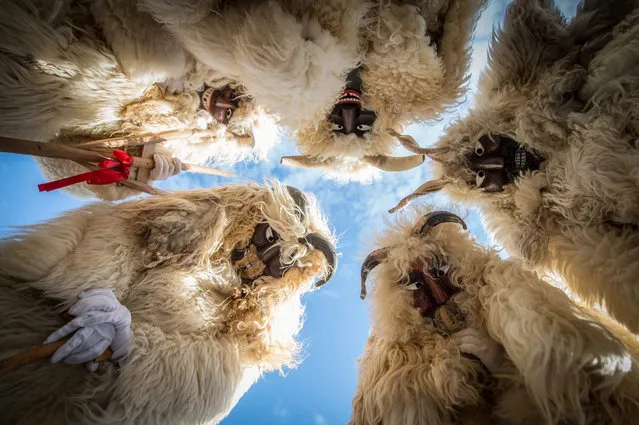
Participants wearing costumes and masks take part in the first day of the traditional carnival parade in Mohacs, Hungary, 23 February 2017. The carnival parade of so-called busos, dressed in costumes with frightening wooden masks and using various noisy wooden rattlers, is traditionally held on the seventh weekend before Easter to drive away winter. (Photo by Sandor Ujvari/EPA)

Participants wearing costumes and masks take part in the first day of the traditional carnival parade in Mohacs, Hungary, 23 February 2017. The carnival parade of so-called busos, dressed in costumes with frightening wooden masks and using various noisy wooden rattlers, is traditionally held on the seventh weekend before Easter to drive away winter. (Photo by Sandor Ujvari/EPA)
Details
25 Feb 2017 10:35:00