Loading...
Done
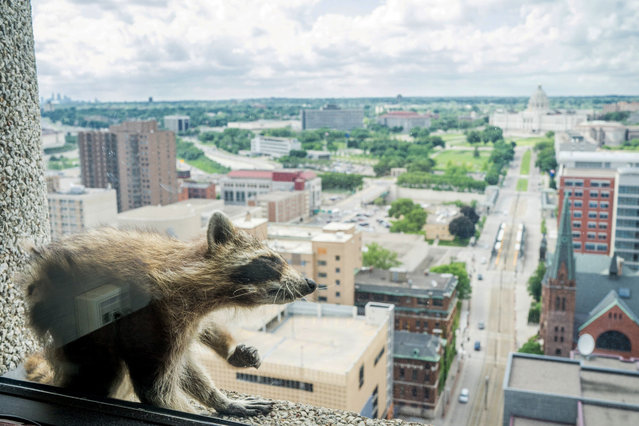
A raccoon scratches herself on the window sill of the Paige Donnelly Law Firm on the 23rd floor of the UBS Plaza building in St. Paul, Minnesota, U.S., June 12, 2018, in this image obtained from social media. (Photo by Evan Frost/MPR News via Reuters)

A raccoon scratches herself on the window sill of the Paige Donnelly Law Firm on the 23rd floor of the UBS Plaza building in St. Paul, Minnesota, U.S., June 12, 2018, in this image obtained from social media. (Photo by Evan Frost/MPR News via Reuters)
Details
16 Jun 2018 07:14:00
A picture shows the blood stained floor of a kindergarten following reported shelling in the rebel-held area of Harasta, on the northeastern outskirts of the capital Damascus, on November 6, 2016. At least four children were killed and 19 people injured in the government strike in Harasta, according to the Syrian Observatory for Human Rights. (Photo by Sameer Al-Doumy/AFP Photo)

A picture shows the blood stained floor of a kindergarten following reported shelling in the rebel-held area of Harasta, on the northeastern outskirts of the capital Damascus, on November 6, 2016. At least four children were killed and 19 people injured in the government strike in Harasta, according to the Syrian Observatory for Human Rights. (Photo by Sameer Al-Doumy/AFP Photo)
Details
07 Nov 2016 11:53:00
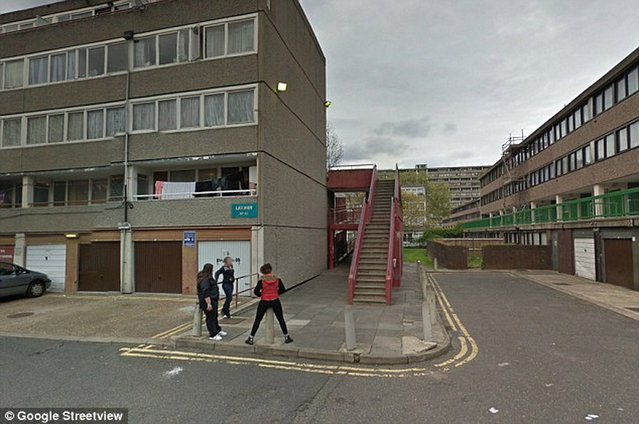
Bad Part of Town By Google Street View

Take a walk on the wild side around some of the most down right dangerous places in the world - and all without leaving your desk, courtesy of Google Street View. Since 2007, Google's amazing technology has given people the chance to visit the Eiffel Tower, peer out over San Francisco's Golden Gate Bridge or walk along a beach in the Bahamas. But as well as mapping the tourist-friendly hotspots, Google also ventured into places you really wouldn't want to find yourself. Here is a collection of some the most notorious areas captured by the infamous roaming camera cars from around the UK and the world.
Details
03 Oct 2013 11:05:00
Wedges of an orange generate enough current and electrical juice – 3.5 volts – to power an LED. The fruit’s citric acid helps electrons flow from galvanized nails to copper wire in this 14-hour exposure. This image was published in September’s Visions of Earth, a trio of photos that appear in each issue of National Geographic. (Photo by Caleb Charland/National Geographic)

Wedges of an orange generate enough current and electrical juice – 3.5 volts – to power an LED. The fruit’s citric acid helps electrons flow from galvanized nails to copper wire in this 14-hour exposure. This image was published in September’s Visions of Earth, a trio of photos that appear in each issue of National Geographic. (Photo by Caleb Charland/National Geographic)
Details
06 Jan 2014 12:09:00
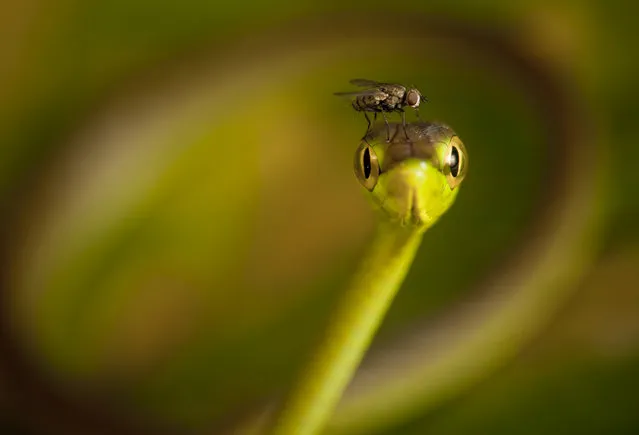
“Fly cap for a vine snake”. A fly lands on the head of a vine snake in the Choco of Colombia. (Photo and caption by Robin Moore/National Geographic Traveler Photo Contest)

“Fly cap for a vine snake”. A fly lands on the head of a vine snake in the Choco of Colombia. (Photo and caption by Robin Moore/National Geographic Traveler Photo Contest)

ATTENTION! All pictures are presented in high resolution. To see Hi-Res images – just TWICE click on any picture. In other words, click small picture – opens the BIG picture. Click BIG picture – opens VERY BIG picture.
Details
24 Jun 2013 11:36:00
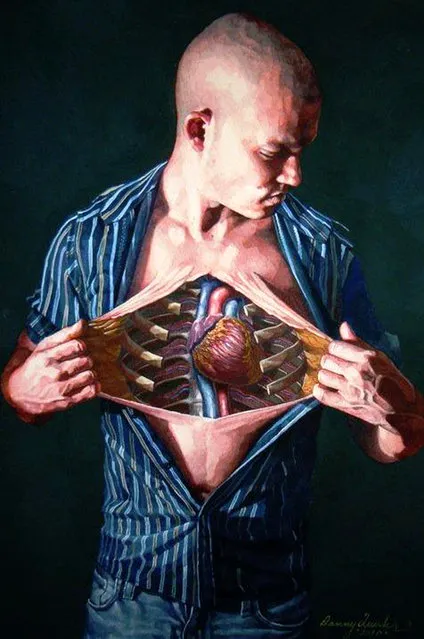
Anatomical Self Dissections By Danny Quirk

"I'm an artist, recent graduate, specializing in photo realistic watercolors, painting what the camera can't capture. My work is perceivably on the darker side, but the actually is, it's about exploration.
My anatomical works combine classic poses, in dramatic chiaroscuro lighting, with a very contemporary twist... illustrating what's underneath the skin, and the portrayed figure dissects a region of their body to show the structures that lay beneath."

Danny Quirk
Details
25 Jun 2013 10:56:00
A bear that wandered into a University of Colorado Boulder dorm complex falls from a tree after being tranquilized by Colorado wildlife officials on April 26

A bear that wandered into a University of Colorado Boulder dorm complex falls from a tree after being tranquilized by Colorado wildlife officials on April 26, 2012. Colorado wildlife official Jennifer Churchill said that the 200-pound male bear was tagged and relocated to a remote Rocky Mountain area. The bear was hit by two cars on May 3 and died. (Photo by Andy Duann)
Details
08 May 2012 12:20:00
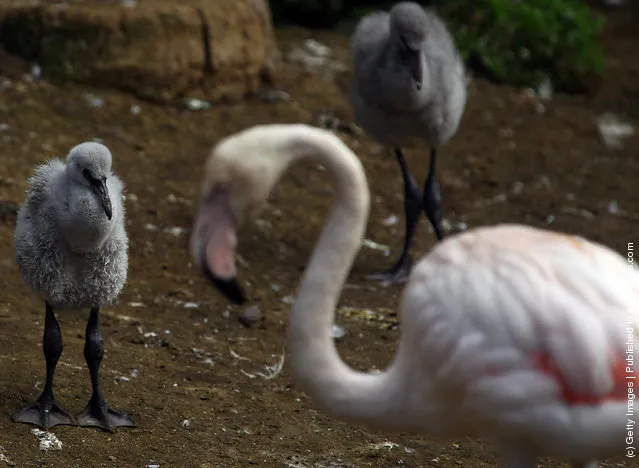
Baby Flamingoes

One of the nine baby flamingos born at Bristol Zoo stands with the adults as they feed together on August 19, 2011 in Bristol, England. Nine flamingo chicks have hatched at Bristol Zoo Gardens in the last three months – the biggest number the Zoo has ever had. The chicks, which are Greater Flamingoes from Africa and southern Europe and range in age from four weeks to three months old, take the Zoo's total flock to 38 birds. (Photo by Matt Cardy/Getty Images)
Details
21 Aug 2011 11:09:00