Loading...
Done
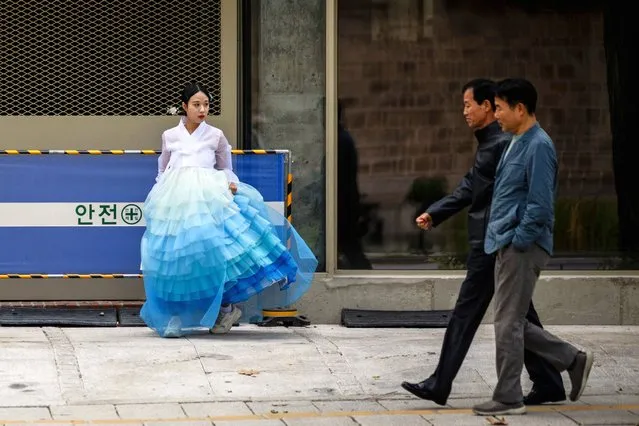
A woman wearing a traditional Hanbok dress visits the Gyeongbokgung Palace grounds in Seoul on October 23, 2023. A woldae terrace for public rituals and ceremonies in front of Gyeongbok Palace’s Gwanghwamun gate was restored and opened to the public earlier this month, after being removed in 1923, during the 1910-45 Japanese colonial period. (Photo by Anthony Wallace/AFP Photo)

A woman wearing a traditional Hanbok dress visits the Gyeongbokgung Palace grounds in Seoul on October 23, 2023. A woldae terrace for public rituals and ceremonies in front of Gyeongbok Palace’s Gwanghwamun gate was restored and opened to the public earlier this month, after being removed in 1923, during the 1910-45 Japanese colonial period. (Photo by Anthony Wallace/AFP Photo)
Details
06 Nov 2023 05:01:00
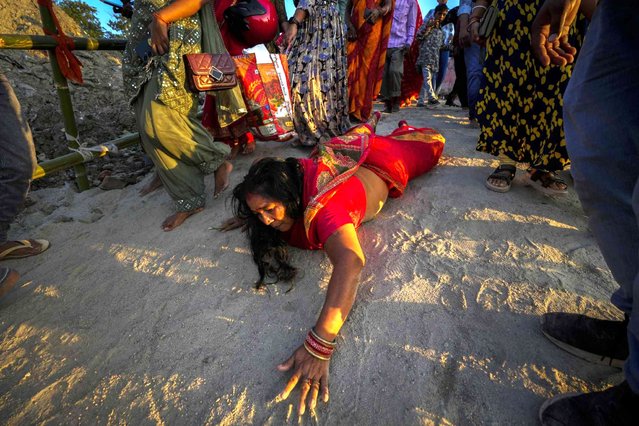
A Hindu devotee moves toward the river Brahmaputra in a prostrate manner to perform rituals during Chhath Puja festival in Guwahati, in the northeastern Indian state of Assam, India, Thursday, November 7, 2024. (Photo by Anupam Nath/AP Photo)

A Hindu devotee moves toward the river Brahmaputra in a prostrate manner to perform rituals during Chhath Puja festival in Guwahati, in the northeastern Indian state of Assam, India, Thursday, November 7, 2024. (Photo by Anupam Nath/AP Photo)
Details
03 Dec 2024 06:08:00
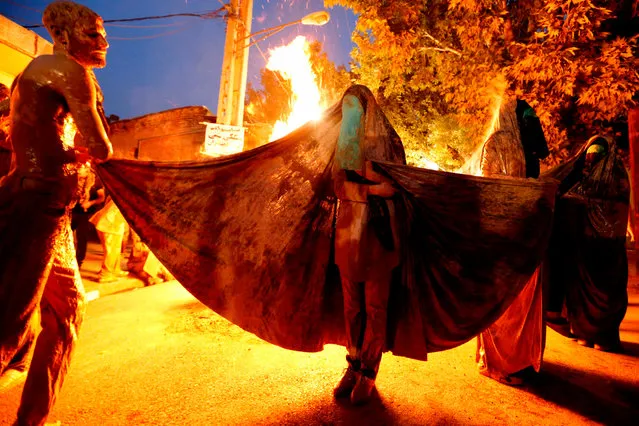
Iranian Shiite Muslim women gather around a bonfire after rubbing mud on their body during the “Kharrah Mali” (Mud Rubbing) ritual to mark the Ashura religious ceremony in the city of Khorramabad, some 470 kms southwest of Tehran, early in the morning on October 1, 2017. “Khrreh Mali” or “Mud Rubbing” is a ritual that is held in the city of Khorramabad every year to commemorate the seventh century slaying of Prophet Mohammed' s grandson Imam Hussein, in which Iranian men roll over in mud and dry themselves by gathering around the bonfires before flagellating themselves. (Photo by Atta Kenare/AFP Photo)

Iranian Shiite Muslim women gather around a bonfire after rubbing mud on their body during the “Kharrah Mali” (Mud Rubbing) ritual to mark the Ashura religious ceremony in the city of Khorramabad, some 470 kms southwest of Tehran, early in the morning on October 1, 2017. “Khrreh Mali” or “Mud Rubbing” is a ritual that is held in the city of Khorramabad every year to commemorate the seventh century slaying of Prophet Mohammed' s grandson Imam Hussein, in which Iranian men roll over in mud and dry themselves by gathering around the bonfires before flagellating themselves. (Photo by Atta Kenare/AFP Photo)
Details
02 Oct 2017 08:38:00
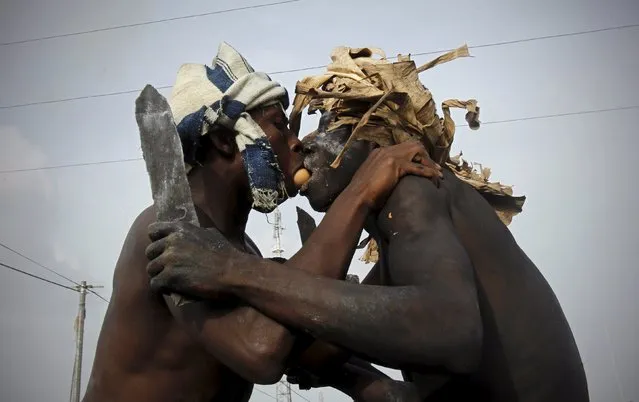
Participants pass an egg using their mouths during a religious ritual as they play the role of traditional fighters in a parade during the Popo (Mask) Carnival of Bonoua, in the east of Abidjan, April 18, 2015. The carnival has its origins in the changes that Aboure youths in Bonoua introduced to the annual festival of yams. (Photo by Luc Gnago/Reuters)

Participants pass an egg using their mouths during a religious ritual as they play the role of traditional fighters in a parade during the Popo (Mask) Carnival of Bonoua, in the east of Abidjan, April 18, 2015. The carnival has its origins in the changes that Aboure youths in Bonoua introduced to the annual festival of yams. (Photo by Luc Gnago/Reuters)
Details
20 Apr 2015 13:36:00
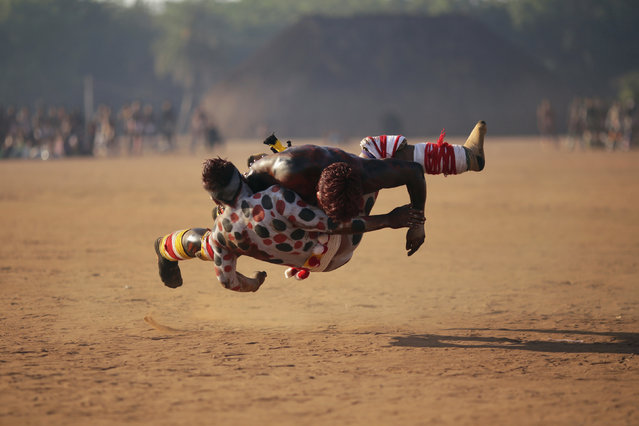
Waura Indians wrestle during this year's “quarup”, a ritual held over several days to honour in death a person of great importance to them, in Xingu National Park, Mato Grosso State, Brazil August 25, 2013. (Photo by Ueslei Marcelino/Reuters)

Waura Indians wrestle during this year's “quarup”, a ritual held over several days to honour in death a person of great importance to them, in Xingu National Park, Mato Grosso State, Brazil August 25, 2013. (Photo by Ueslei Marcelino/Reuters)
Details
09 Aug 2015 10:26:00
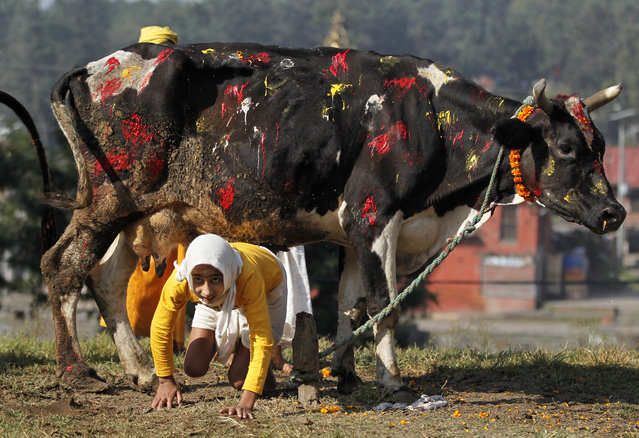
A young Hindu priest crawls under a cow as part of worship rituals during Tihar festival in Kathmandu, Nepal, Sunday, October 30, 2016. Cows are considered sacred to Hindus and are worshipped during Tihar festival, one of the most important Hindu festivals dedicated to the Goddess of wealth Laxmi. (Photo by Niranjan Shrestha/AP Photo)

A young Hindu priest crawls under a cow as part of worship rituals during Tihar festival in Kathmandu, Nepal, Sunday, October 30, 2016. Cows are considered sacred to Hindus and are worshipped during Tihar festival, one of the most important Hindu festivals dedicated to the Goddess of wealth Laxmi. (Photo by Niranjan Shrestha/AP Photo)
Details
31 Oct 2016 11:25:00
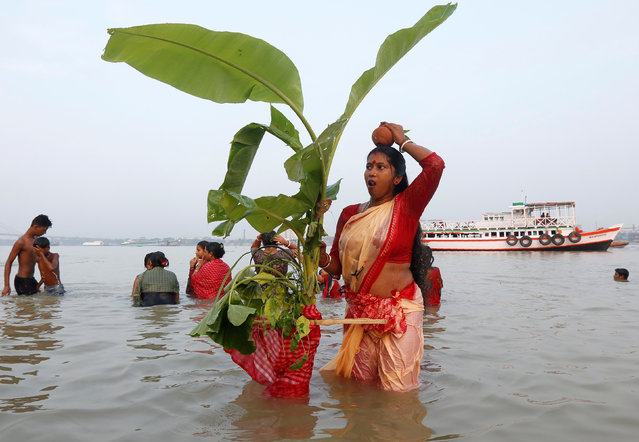
A Hindu devotee ululates as she holds a banana tree trunk after taking a dip in the waters of the Ganges river during a ritual as part of the Durga Puja festival in Kolkata, India, September 27, 2017. (Photo by Rupak De Chowdhuri/Reuters)

A Hindu devotee ululates as she holds a banana tree trunk after taking a dip in the waters of the Ganges river during a ritual as part of the Durga Puja festival in Kolkata, India, September 27, 2017. (Photo by Rupak De Chowdhuri/Reuters)
Details
05 Oct 2017 07:14:00
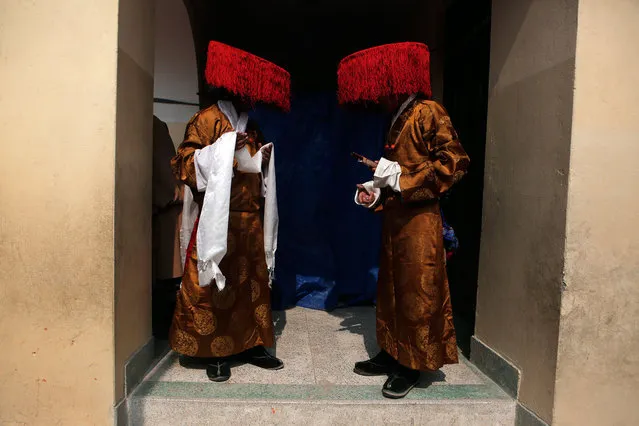
Tibetan men get ready to perform a traditional dance during a special prayer ceremony on the third day of the Tibetan New Year celebrations in Kathmandu, Nepal, Wednesday, March 1, 2017. Tibetans follow this ritual called “sangtsol” to ask for good luck in the new year. (Photo by Niranjan Shrestha/AP Photo)

Tibetan men get ready to perform a traditional dance during a special prayer ceremony on the third day of the Tibetan New Year celebrations in Kathmandu, Nepal, Wednesday, March 1, 2017. Tibetans follow this ritual called “sangtsol” to ask for good luck in the new year. (Photo by Niranjan Shrestha/AP Photo)
Details
03 Mar 2017 00:01:00