Loading...
Done
This picture taken on February 23, 2014 shows participants wearing dresses running half-naked in the annual 3.5 km Undie Run held in the Olympic Forest Park smog-covered Beijing. Some 200 participants took part in this event, many of them with gas masks,  as dangerous smog blighted swathes of northern China in recent days. (Photo by AFP Photo/STR)

This picture taken on February 23, 2014 shows participants wearing dresses running half-naked in the annual 3.5 km Undie Run held in the Olympic Forest Park smog-covered Beijing. Some 200 participants took part in this event, many of them with gas masks, as dangerous smog blighted swathes of northern China in recent days. (Photo by AFP Photo/STR)
Details
26 Feb 2014 10:26:00


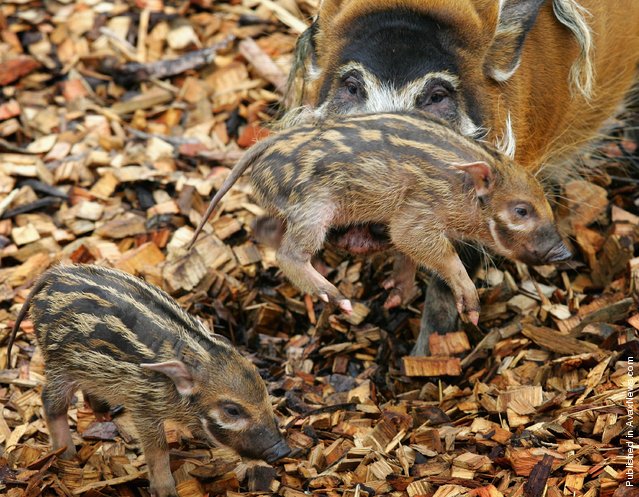
“The Red River Hog (Potamochoerus porcus), also known as the Bush Pig (but not to be confused with P. larvatus, common name “Bushpig”), is a wild member of the pig family living in Africa, with most of its distribution in the Guinean and Congolian forests. It is rarely seen away from rainforests, and generally prefers areas near rivers or swamps.

Red River Hogs eat grass, berries, roots, insects, molluscs, small vertebrates and carrion. They are capable of causing damage to plantations. Red River Hogs typically live in herds of 6-20 members led by a dominant boar. Sows rear 3-6 piglets at a time.”

Photo: Two 17 day old red river hoglet twins forage for food next to their mother Bahiti at London Zoo on August 23, 2007 in London, England. Red River hoglets inhabit the forests and swamps of West and Central Africa. The recent additions to the London Zoo pig pen have been eagerly awaited by zoo keepers. (Photo by Chris Jackson/Getty Images)

Details
18 Mar 2011 15:15:00
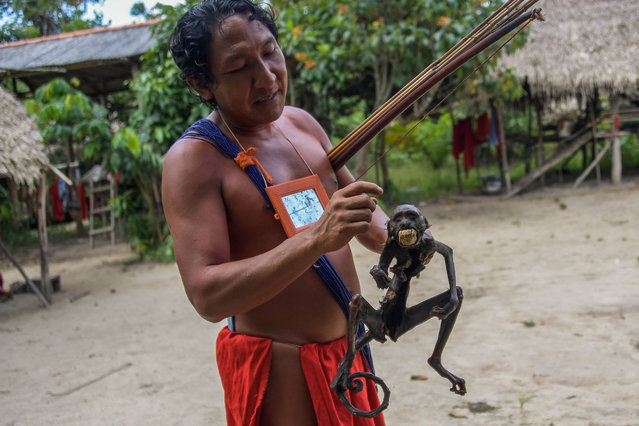
Chieftain Japarupi Waiapi shows a roasted monkey -part of Waiapi's diet, also based in Manioc and fruits- at the reserve in Amapa state in Brazil on October 13, 2017. When Waiapis walks into the Amazon forest surrounding their village, they do not see trees, but a kind of shopping mall providing medicine, food, shelter, tools and weapons  all under the eye of multiple spirits. (Photo by Apu Gomes/AFP Photo)

Chieftain Japarupi Waiapi shows a roasted monkey -part of Waiapi's diet, also based in Manioc and fruits- at the reserve in Amapa state in Brazil on October 13, 2017. When Waiapis walks into the Amazon forest surrounding their village, they do not see trees, but a kind of shopping mall providing medicine, food, shelter, tools and weapons all under the eye of multiple spirits. (Photo by Apu Gomes/AFP Photo)
Details
27 Oct 2017 08:39:00
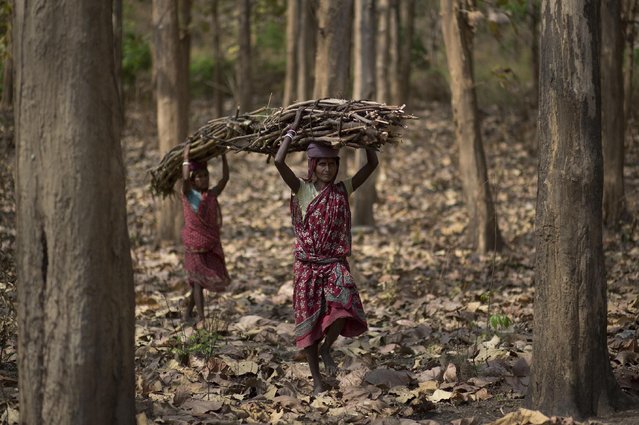
In this Tuesday, March 31, 2015 photo, Indian women walk carrying firewood they collected from a forest at Gobhali village on the outskirts of Gauhati, India. Every evening, hundreds of millions of Indian women hover over crude stoves making dinner for their families. They feed the flames with polluting fuels like kerosene or cow dung, and breathe the acrid smoke wafting from the fires. (Photo by Anupam Nath/AP Photo)

In this Tuesday, March 31, 2015 photo, Indian women walk carrying firewood they collected from a forest at Gobhali village on the outskirts of Gauhati, India. Every evening, hundreds of millions of Indian women hover over crude stoves making dinner for their families. They feed the flames with polluting fuels like kerosene or cow dung, and breathe the acrid smoke wafting from the fires. (Photo by Anupam Nath/AP Photo)
Details
16 Apr 2015 12:29:00
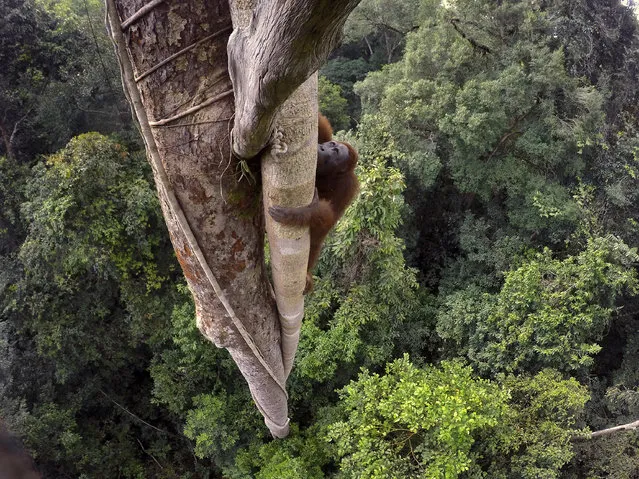
“Tough Times for Orangutans”. Nature, first prize stories. Tim Laman, USA. Location: West Kalimantan, Indonesia. A Bornean orangutan climbs over 30 meters up a tree in the rain forest of Gunung Palung National Park, West Kalimantan, Indonesia, August 12, 2015. The lives of wild orangutans are brought to light. Threats to these orangutans from fires, the illegal animal trade and loss of habitat due to deforestation have resulted in many orphan orangutans ending up at rehabilitation centers. (Photo by Tim Laman/World Press Photo Contest)

“Tough Times for Orangutans”. Nature, first prize stories. Tim Laman, USA. Location: West Kalimantan, Indonesia. A Bornean orangutan climbs over 30 meters up a tree in the rain forest of Gunung Palung National Park, West Kalimantan, Indonesia, August 12, 2015. The lives of wild orangutans are brought to light. Threats to these orangutans from fires, the illegal animal trade and loss of habitat due to deforestation have resulted in many orphan orangutans ending up at rehabilitation centers. (Photo by Tim Laman/World Press Photo Contest)
Details
19 Feb 2016 13:06:00
“A Snail's Life”. Photographer Vyacheslav Mischenko captures gorgeous macro photographs of snails near his hometown of Berdichev, Ukraine. After being taught to hunt for mushrooms as a child, Vyacheslav has grown up with a keen eye for spotting critters on the forest floor. Here, a snail takes shelter while perching on a leaf. (Photo by Vyacheslav Mischenko/Caters News)

“A Snail's Life”. Photographer Vyacheslav Mischenko captures gorgeous macro photographs of snails near his hometown of Berdichev, Ukraine. After being taught to hunt for mushrooms as a child, Vyacheslav has grown up with a keen eye for spotting critters on the forest floor. Here, a snail takes shelter while perching on a leaf. (Photo by Vyacheslav Mischenko/Caters News)
Details
21 Apr 2014 09:53:00
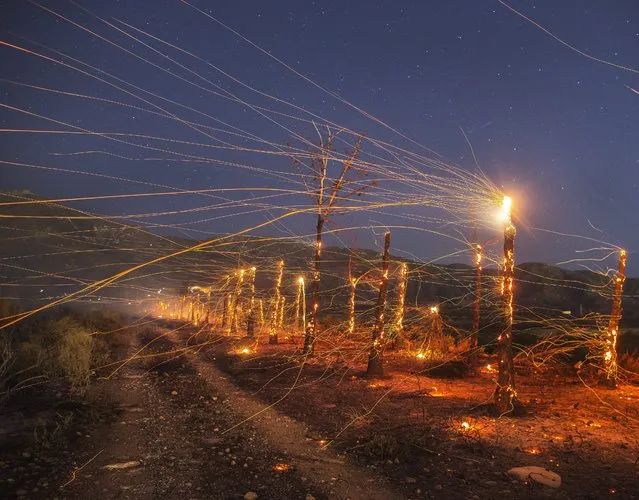
A long exposure image of embers flying off burnt out  trees following the wind driven wildfire ranging in the mountain area near Rancho Cucamonga late 30 April 2014.  Earlier in the day more than 1,500 homes were evacuated as the Etiwanda fire charred around 1,000 acres in San Barnardino National Forest. (Photo by Stuart Palley/EPA)

A long exposure image of embers flying off burnt out trees following the wind driven wildfire ranging in the mountain area near Rancho Cucamonga late 30 April 2014. Earlier in the day more than 1,500 homes were evacuated as the Etiwanda fire charred around 1,000 acres in San Barnardino National Forest. (Photo by Stuart Palley/EPA)
Details
22 Jun 2014 10:19:00
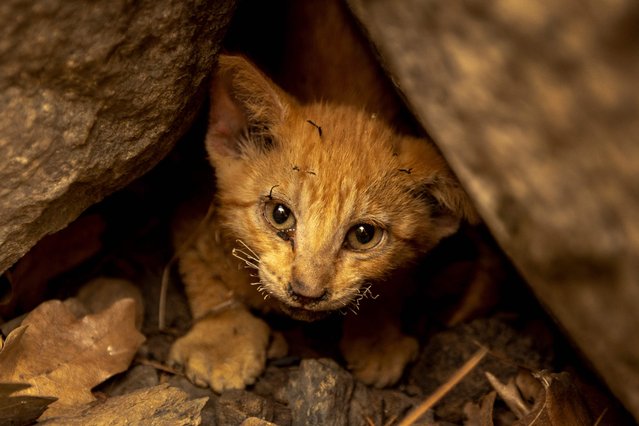
A kitten singed whiskers that survived the McKinney Fire hides in  rocks in the Klamath National Forest northwest of Yreka, California, on July 31, 2022. The largest fire in California this year is forcing thousands of people to evacuate as it destroys homes and rips through the state's dry terrain, whipped up by strong winds and lightning storms. The McKinney Fire was zero percent contained, CalFire said, spreading more than 51,000 acres near the city of Yreka. (Photo by David McNew/AFP Photo)

A kitten singed whiskers that survived the McKinney Fire hides in rocks in the Klamath National Forest northwest of Yreka, California, on July 31, 2022. The largest fire in California this year is forcing thousands of people to evacuate as it destroys homes and rips through the state's dry terrain, whipped up by strong winds and lightning storms. The McKinney Fire was zero percent contained, CalFire said, spreading more than 51,000 acres near the city of Yreka. (Photo by David McNew/AFP Photo)
Details
08 Aug 2022 06:18:00