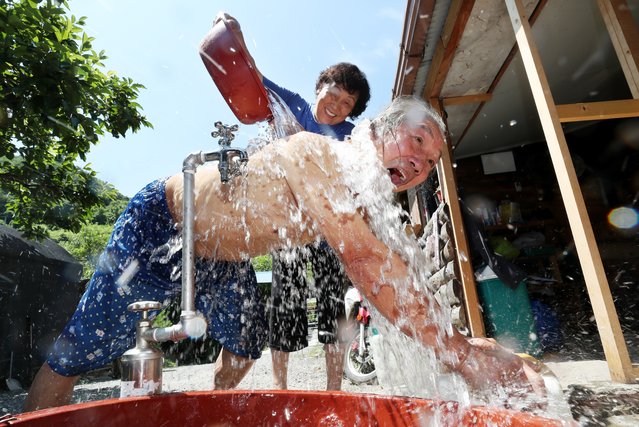
On the July 10, 2025, an elderly couple in Eonam-dong, Jung-gu, Daejeon, who finished their field work, cooled off by sitting on a bench in the yard near the water tap. (Photo by Shin Hyeon-jong)
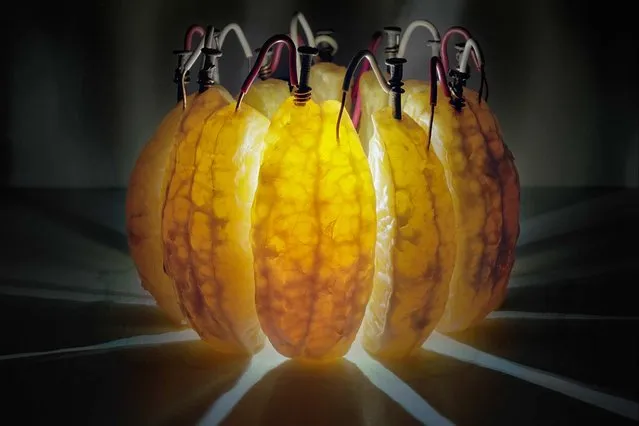
Wedges of an orange generate enough current and electrical juice – 3.5 volts – to power an LED. The fruit’s citric acid helps electrons flow from galvanized nails to copper wire in this 14-hour exposure. This image was published in September’s Visions of Earth, a trio of photos that appear in each issue of National Geographic. (Photo by Caleb Charland/National Geographic)
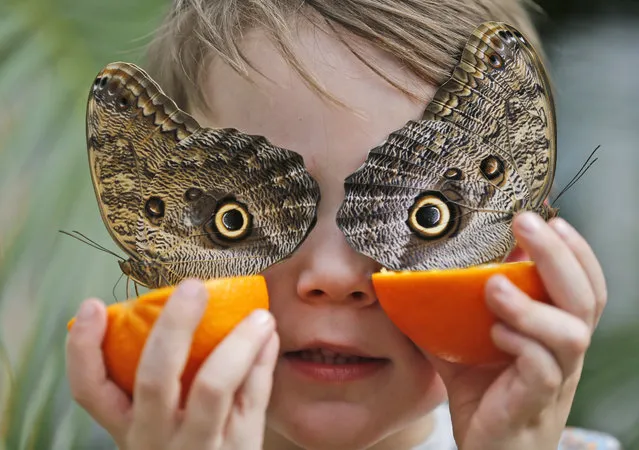
Five year old George holds an orange to feed the Owl butterflies at the Natural History Museum in London, Thursday, March 30, 2017. Hundreds of tropical butterflies were released to launch the Natural History Museum's Sensational Butterflies exhibition, starting for the public on March 31, 2017. (Photo by Frank Augstein/AP Photo)
Promotional models use their smartphones during their break at the Global Mobile Internet Conference in Beijing May 6, 2014. Mobile Internet industry executives, developers and investors from more than 30 countries took part in the Global Mobile Internet Conference in Beijing, the organiser said. (Photo by Kim Kyung-Hoon/Reuters)
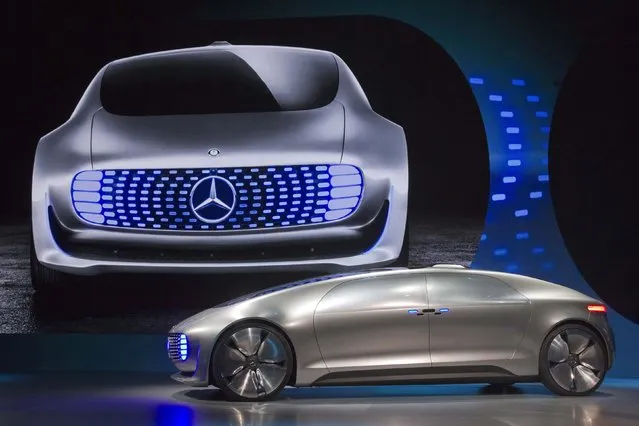
The Mercedes-Benz F015 Luxury in Motion autonomous concept car is shown on stage during the 2015 International Consumer Electronics Show (CES) in Las Vegas, Nevada January 5, 2015. (Photo by Steve Marcus/Reuters)
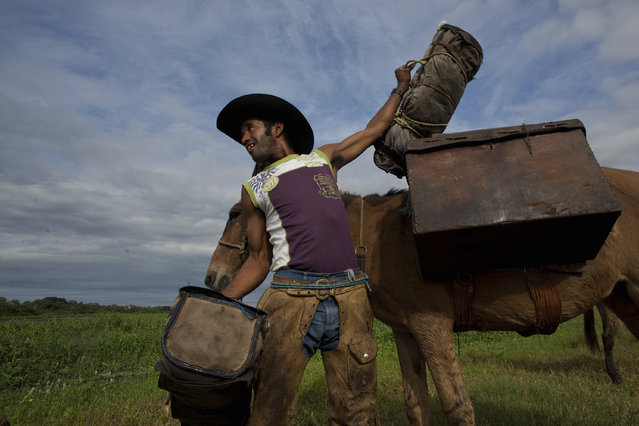
In this May 17, 2017 photo, cowboy cook Odair Batista carries a case with food in Corumba, the Pantanal wetlands of Mato Grosso do Sul state, Brazil. Dressed with leather chaps on top of their jeans, stetson hats and a machete attached to their waists, before setting off, the men finish their breakfast with Terere, an herbal “mate” beverage served ice cold in an ox drinking horn. (Photo by Eraldo Peres/AP Photo)
Beatriz Hatz of the United States competes in the women's T62 long jump final during the 2020 Paralympics at the National Stadium in Tokyo, Saturday, August 28, 2021. (Photo by Kiichiro Sato/AP Photo)
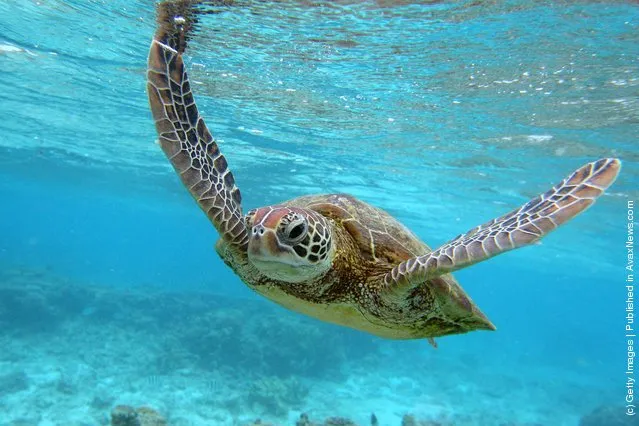
“The Great Barrier Reef is one of the most important sea turtle habitats in the world, with Lady Elliot Island being a key part of that habitat. Every year between November and March the green and loggerhead turtles lumber up the same beach on which they were born more than 50 years ago. These turtles nest on Lady Elliot Island up to nine times in a season, laying between 80 and 120 eggs per clutch. About eight weeks later, young hatchlings leave their nests and head towards the ocean (January to April)”. – Wikipedia
Photo: A Hawksbill sea turtle is seen swimming on January 15, 2012 in Lady Elliot Island, Australia. (Photo by Mark Kolbe/Getty Images)