Loading...
Done
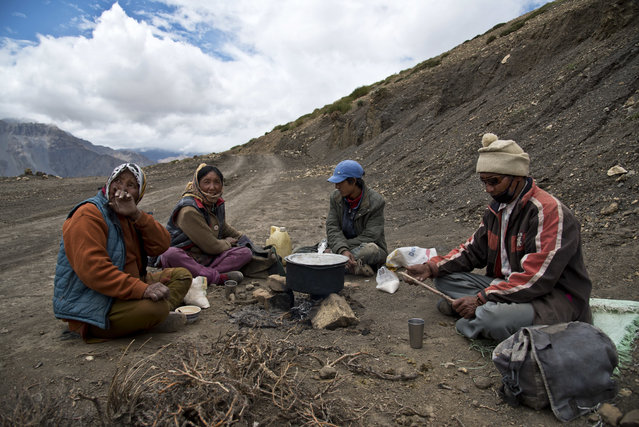
In this August 17, 2016, photo, from left to right, Chhering Chodom, 60, Tashi Yangzom, 50, Lobsang Chhering, 27, and Dorje Tandup, 58, drink milk tea on the side of the road. For centuries, the sleepy valley nestled in the Indian Himalayas remained a hidden Buddhist enclave forbidden to outsiders. Enduring the harsh year-round conditions of the high mountain desert, the people of Spiti Valley lived by a simple communal code – share the Earth's bounty, be hospitable to neighbors, and eschew greed and temptation at all turns. That's all starting to change, for better or worse. Since India began allowing its own citizens as well as outsiders to visit the valley in the early 1990s, tourism and trade have boomed. And the marks of modernization, such as solar panels, asphalt roads and concrete buildings, have begun to appear around some of the villages that dot the remote landscape at altitudes above 4,000 meters (13,000 feet). (Photo by Thomas Cytrynowicz/AP Photo)

In this August 17, 2016, photo, from left to right, Chhering Chodom, 60, Tashi Yangzom, 50, Lobsang Chhering, 27, and Dorje Tandup, 58, drink milk tea on the side of the road. For centuries, the sleepy valley nestled in the Indian Himalayas remained a hidden Buddhist enclave forbidden to outsiders. Enduring the harsh year-round conditions of the high mountain desert, the people of Spiti Valley lived by a simple communal code – share the Earth's bounty, be hospitable to neighbors, and eschew greed and temptation at all turns. That's all starting to change, for better or worse. (Photo by Thomas Cytrynowicz/AP Photo)
Details
15 Sep 2016 09:22:00
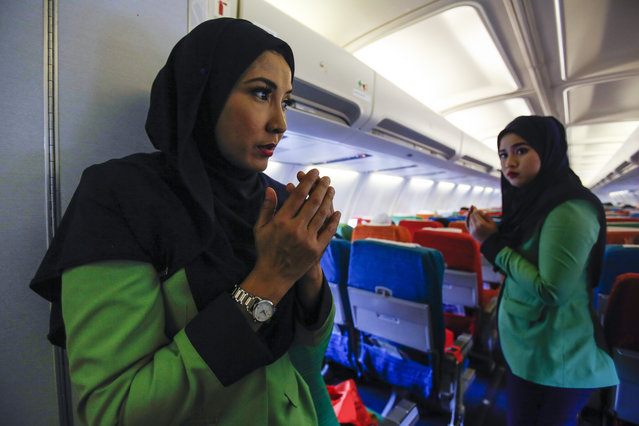
In this December 22, 2015, photo, Rayani Air flight crews prays before departure at Kuala Lumpur International Airport 2 in Sepang, Malaysia. The short domestic flight from Kuala Lumpur, Malaysia's biggest city, begins with a recital of Prophet Muhammad's supplication before his travel. (Photo by Joshua Paul/AP Photo)

In this December 22, 2015, photo, Rayani Air flight crews prays before departure at Kuala Lumpur International Airport 2 in Sepang, Malaysia. Malaysia's Rayani Air took to the skies over the weekend with a clear bailiwick. It is the country's first Islamic airline, offering flights that adhere to Islamic rules including prayers, no-alcohol, no-pork meals, and a strict dress code for Muslim female flight attendants. (Photo by Joshua Paul/AP Photo)
Details
25 Dec 2015 08:02:00
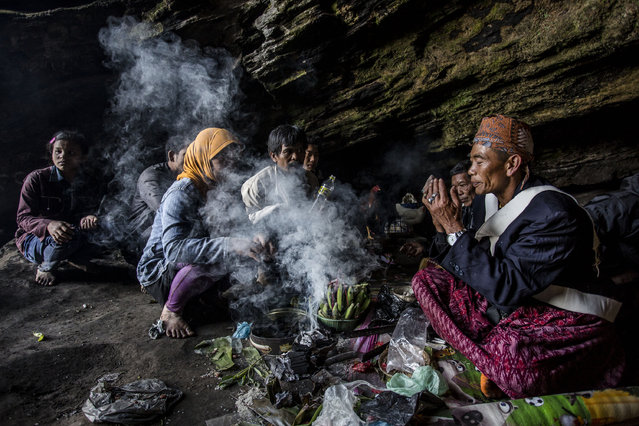
A Tenggerese shaman praying for worshippers at Widodaren cave during the Tenggerese Hindu Yadnya Kasada festival on July 31, 2015 in Probolinggo, East Java, Indonesia. The festival is the main festival of the Tenggerese people and lasts about a month. On the fourteenth day, the Tenggerese make the journey to Mount Bromo to make offerings of rice, fruits, vegetables, flowers and livestock to the mountain gods by throwing them into the volcano's caldera. (Photo by Ulet Ifansasti/Getty Images)

A Tenggerese shaman praying for worshippers at Widodaren cave during the Tenggerese Hindu Yadnya Kasada festival on July 31, 2015 in Probolinggo, East Java, Indonesia. The festival is the main festival of the Tenggerese people and lasts about a month. On the fourteenth day, the Tenggerese make the journey to Mount Bromo to make offerings of rice, fruits, vegetables, flowers and livestock to the mountain gods by throwing them into the volcano's caldera. The origin of the festival lies in the 15th century when a princess named Roro Anteng started the principality of Tengger with her husband Joko Seger, and the childless couple asked the mountain Gods for help in bearing children. The legend says the Gods granted them 24 children but on the provision that the 25th must be tossed into the volcano in sacrifice. The 25th child, Kesuma, was finally sacrificed in this way after initial refusal, and the tradition of throwing sacrifices into the caldera to appease the mountain Gods continues today. (Photo by Ulet Ifansasti/Getty Images)
Details
01 Aug 2015 12:07:00
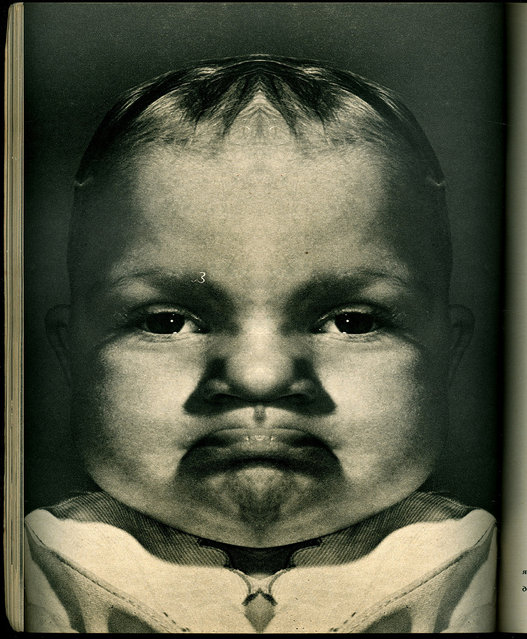
Strange Children by John Seven

«My God! My Shoulder!», “Re-Gruntled”, 2011. (Photo by John Seven)
Details
07 Jul 2012 10:57:00
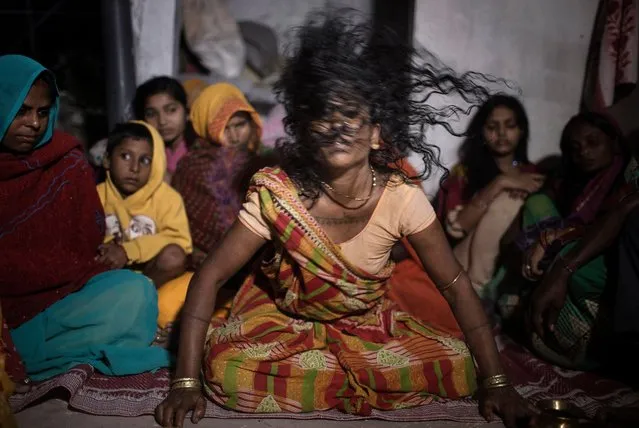
Marani Devi Chaudhary (C), aged 40, performs a ritual in front of shaman Paltan Yadav (unseen) at her home in Rajaur village in Dhanusha district, Nepal, 02 November 2017. The shaman identified Marani Devi to be possessed by their lineage god who was dissatisfied by their worship is thought by the family to have caused them misfortune and is even feared lead to their death. Therefore Marani Devi spent 1,500 USD to perform a healing ritual at the Ghost Festival held at the banks of Kamala River in Dhanusha district two days later. Every family or community has their own sacred god, called 'Kuldevta' in Nepali which means family deity or lineage god. Only family members or people within communities of the same caste can worship to the deity. They have their own rules and regulations of worship which varies from one family and community to another. Being unable to follow the rules and regulations or carry out worship is believed to cause misfortune. (Photo by Narendra Shrestha/EPA/EFE)

Marani Devi Chaudhary (C), aged 40, performs a ritual in front of shaman Paltan Yadav (unseen) at her home in Rajaur village in Dhanusha district, Nepal, 02 November 2017. The shaman identified Marani Devi to be possessed by their lineage god who was dissatisfied by their worship is thought by the family to have caused them misfortune and is even feared lead to their death. (Photo by Narendra Shrestha/EPA/EFE)
Details
17 Nov 2017 06:53:00
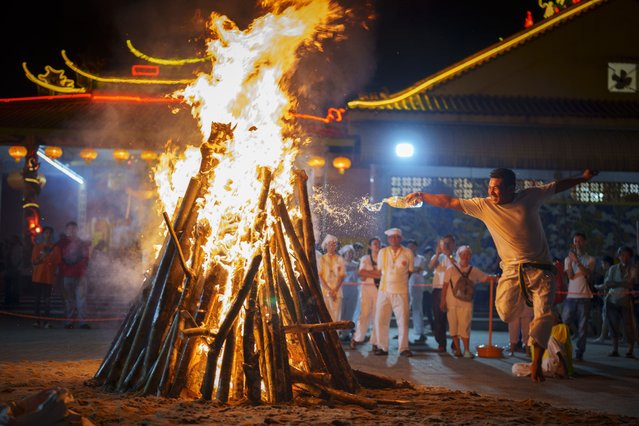
A man set wood on fire to prepare for worshippers to walk barefoot over burning coals during the Nine Emperor Gods festival at a temple in Kuala Lumpur, Malaysia, Monday, October 7, 2024. (Photo by Vincent Thian/AP Photo)

A man set wood on fire to prepare for worshippers to walk barefoot over burning coals during the Nine Emperor Gods festival at a temple in Kuala Lumpur, Malaysia, Monday, October 7, 2024. (Photo by Vincent Thian/AP Photo)
Details
23 Oct 2024 02:39:00
Myanmar national award second-place winner: Kyaw Win Hlaing. “Mount Bromo is an active volcano in East Java, Indonesia. The name Bromo derives from the Javanese pronunciation of Brahma, the Hindu creator god”. (Photo by Kyaw Win Hlaing/Sony World Photography Awards 2018)

Myanmar national award second-place winner: Kyaw Win Hlaing. “Mount Bromo is an active volcano in East Java, Indonesia. The name Bromo derives from the Javanese pronunciation of Brahma, the Hindu creator god”. (Photo by Kyaw Win Hlaing/Sony World Photography Awards 2018)
Details
22 Mar 2018 00:03:00
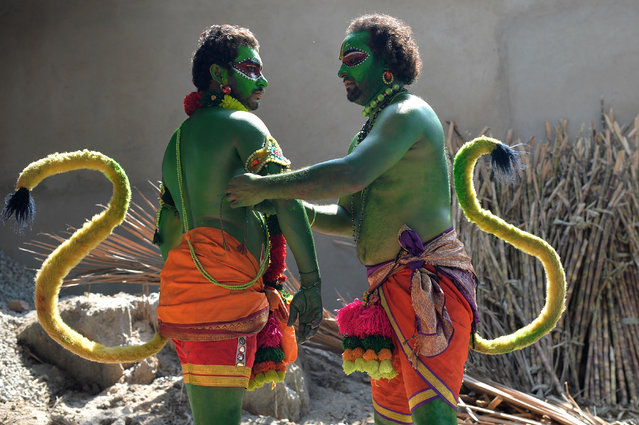
Indian artists dress up as the Hindu deity “Hanuman” – the monkey God in Hindu mythology – to mark the Rama Navami festival in Bangalore on March 25, 2018. Rama Navami is a spring Hindu festival that celebrates the birthday of the deity Rama. He is particularly important to the Vaishnavism tradition of Hinduism, as the seventh avatar of Vishnu. (Photo by Manjunath Kiran/AFP Photo)

Indian artists dress up as the Hindu deity “Hanuman” – the monkey God in Hindu mythology – to mark the Rama Navami festival in Bangalore on March 25, 2018. Rama Navami is a spring Hindu festival that celebrates the birthday of the deity Rama. He is particularly important to the Vaishnavism tradition of Hinduism, as the seventh avatar of Vishnu. (Photo by Manjunath Kiran/AFP Photo)
Details
27 Mar 2018 00:03:00