Loading...
Done
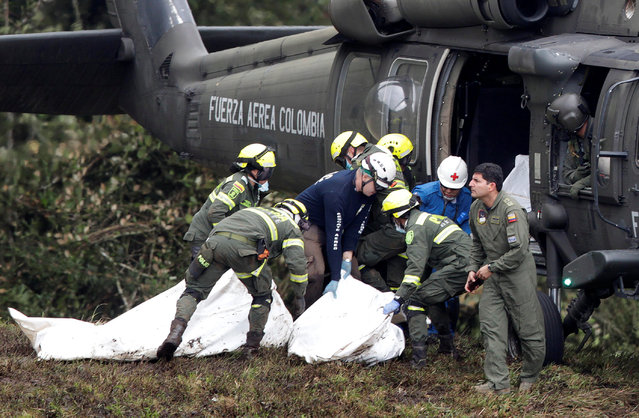
A Colombian air force helicopter retrieves the bodies of victims from the wreckage of a plane that crashed into the Colombian jungle with Brazilian soccer team Chapecoense onboard near Medellin, Colombia, November 29, 2016. (Photo by Jaime Saldarriaga/Reuters)

A Colombian air force helicopter retrieves the bodies of victims from the wreckage of a plane that crashed into the Colombian jungle with Brazilian soccer team Chapecoense onboard near Medellin, Colombia, November 29, 2016. The chartered plane was carrying a Brazilian soccer team to the biggest match of its history when it crashed into a Colombian hillside and broke into pieces, killing 75 people and leaving six survivors, Colombian officials said Tuesday. (Photo by Jaime Saldarriaga/Reuters)
Details
30 Nov 2016 13:38:00
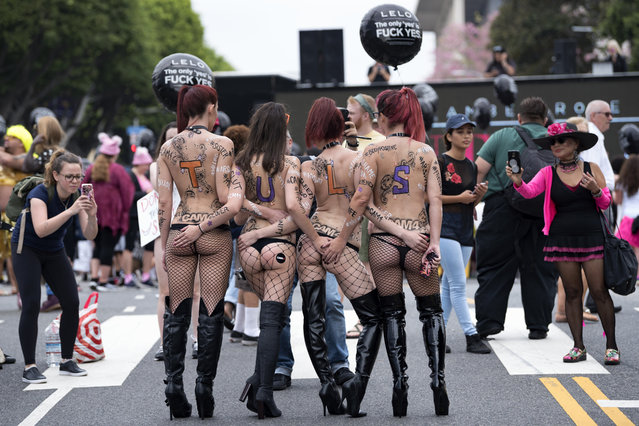
Participants in the 3rd Annual Amber Rose SlutWalk in Los Angeles, California. October 1, 2017. The event seeks to highlight issues such as: gender equality, ending rape culture, victim blaming and body shaming. (Photo by Ronen Tivony/NurPhoto via Getty Images)

Participants in the 3rd Annual Amber Rose SlutWalk in Los Angeles, California. October 1, 2017. The event seeks to highlight issues such as: gender equality, ending rape culture, victim blaming and body shaming. (Photo by Ronen Tivony/NurPhoto via Getty Images)
Details
03 Oct 2017 07:08:00
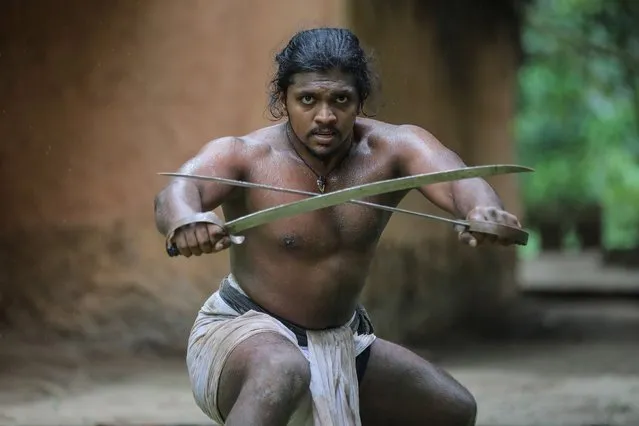
A student of the Sri Lankan ancient martial art “Angampora” performs during a practice session at the angam maduwa or fighting field, in Korathota, a suburb of Colombo, Sri Lanka, 07 September 2022. Sri Lanka's ancient martial art, Angampora, is thought to be thousands of years old. Anga translates to “body parts” and Angampora is a fighting art that uses body parts. Martial arts practitioners in Angampora were mostly in the king's service, and they were tasked with protecting the king and his kingdom. Angampora was practiced in secret for most centuries because the British, who colonized Sri Lanka, banned it in 1818 after seeing it as a threat. (Photo by Chamila Karunarathne/EPA/EFE)

A student of the Sri Lankan ancient martial art “Angampora” performs during a practice session at the angam maduwa or fighting field, in Korathota, a suburb of Colombo, Sri Lanka, 07 September 2022. Sri Lanka's ancient martial art, Angampora, is thought to be thousands of years old. Anga translates to “body parts” and Angampora is a fighting art that uses body parts. Martial arts practitioners in Angampora were mostly in the king's service, and they were tasked with protecting the king and his kingdom. Angampora was practiced in secret for most centuries because the British, who colonized Sri Lanka, banned it in 1818 after seeing it as a threat. (Photo by Chamila Karunarathne/EPA/EFE)
Details
14 Oct 2022 04:47:00


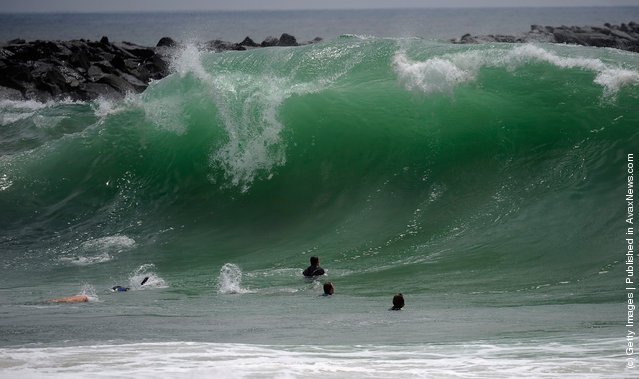
Body surfers ride a large wave at the Wedge in Newport Beach of the Southland coast on May 20, 2011 in Newport, California. Surfers have been lured to the south facing beaches for the biggest swells of the season. (Photo by Kevork Djansezian/Getty Images)
Details
21 May 2011 07:24:00
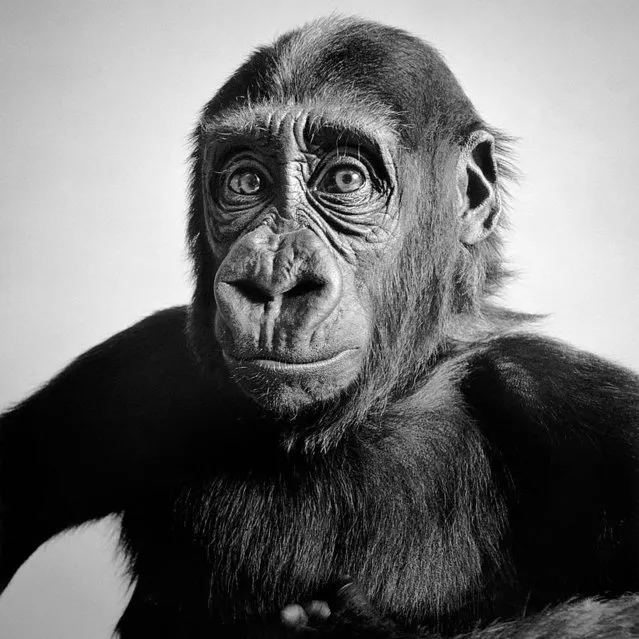
Animal Photographers By Alexander Von Reiswitz

Spanish born photographer and architect, Alexander von Reiswitz, lives in Berlin and has many bodies of wonderful work.
Details
19 Feb 2013 10:34:00
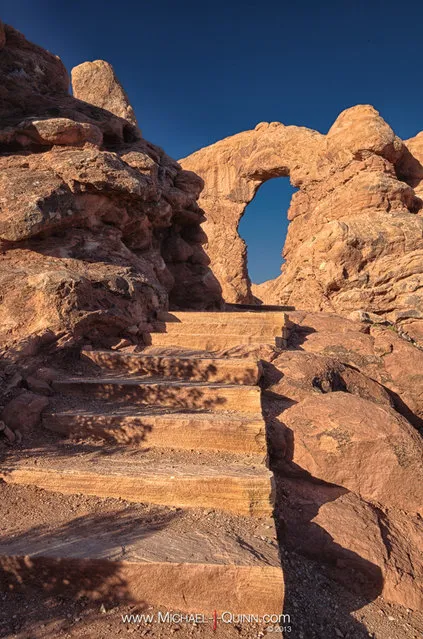
Michael Quinn By Pathways in Arches

Images from my travels with John Paul Caponigro in the spring of 2011. During that week JP inspired me to create this body of work. This is my path, my pathways in arches.

Michael Quinn
Details
18 Dec 2013 14:11:00

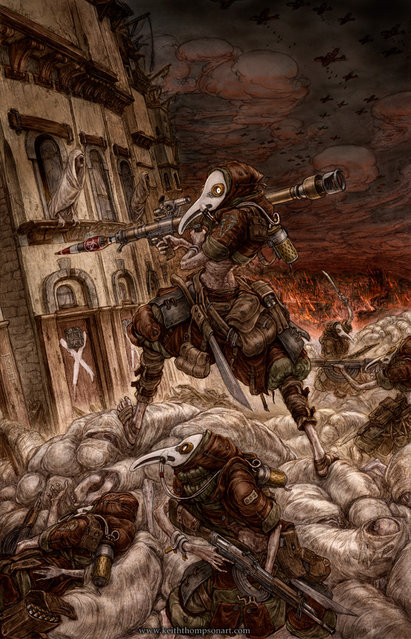
VIRAEMIA

The civilised world lies on its knees, a sickness wracking its body. The affliction causes a necrotising of tissues so perfectly uniform in distribution that victims take on the appearance of corpses long before death occurs due to organ failure or secondary infections. ...
Details
03 May 2012 22:54:00
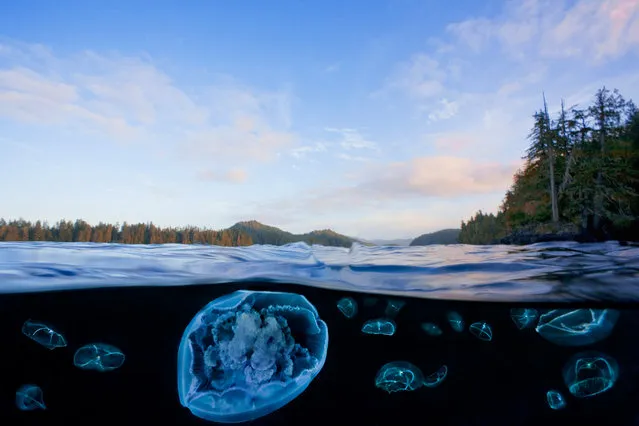
Moon jellyfish and cross jellies. (Photo by David Hall)

David Hall’s photographs of scenery and creatures off the coast of Canada in the Pacific Northwest portray serenity under the water, which belie the extreme challenges he faces to get his images. For each shoot, Hall wears a dry suit, a neoprene body suit that covers all of his body but his head and traps air inside to keep him warm. Water temperature in Canada’s British Columbia typically ranges between 45 and 50 degrees Fahrenheit. Photo: Moon jellyfish and cross jellies. (Photo by David Hall)
Details
16 Sep 2014 12:57:00