Loading...
Done
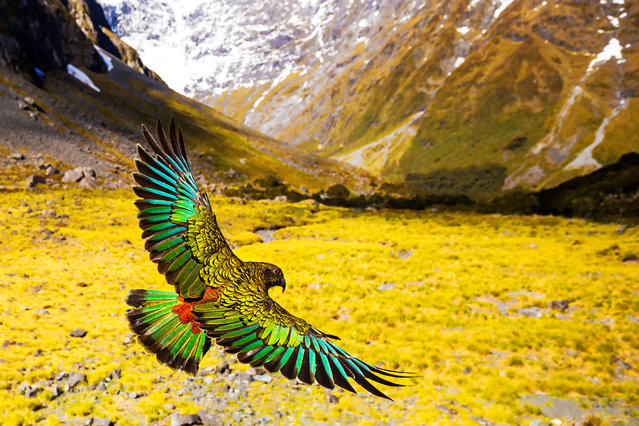
Kea are the only true alpine parrots in the world and thrive as cunning opportunists in the freezing conditions of the Southern Alps. Kea are thought to have developed their wide array of food-finding strategies during the last great ice age, where they learned to adapt using their unusual powers of curiosity. (Photo by Tom Walker/BBC Pictures/The Guardian)

Kea are the only true alpine parrots in the world and thrive as cunning opportunists in the freezing conditions of the Southern Alps. Kea are thought to have developed their wide array of food-finding strategies during the last great ice age, where they learned to adapt using their unusual powers of curiosity. (Photo by Tom Walker/BBC Pictures/The Guardian)
Details
19 Jul 2016 13:03:00
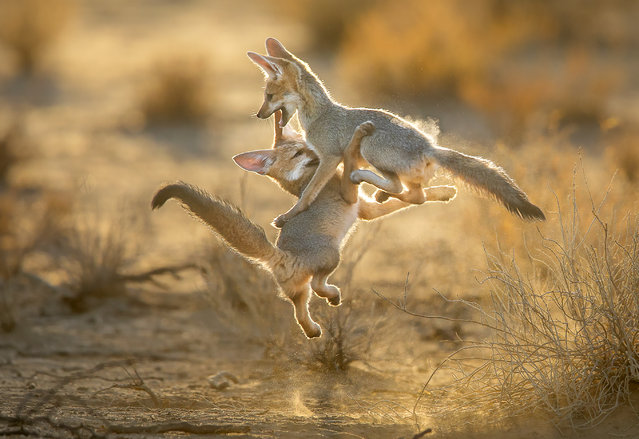
Cape fox cubs play fight in the last decade of May 2025 in the Kalahari Desert, South Africa, their silver and yellow fur camouflaging them in the desert. (Photo by John Mullineux/Solent News & Photo Agency)

Cape fox cubs play fight in the last decade of May 2025 in the Kalahari Desert, South Africa, their silver and yellow fur camouflaging them in the desert. (Photo by John Mullineux/Solent News & Photo Agency)
Details
08 Jun 2025 03:30:00
A Nepalese Gurung community woman, wearing traditional attire, prepares to participate in a parade to mark their New Year known as “Tamu Loshar” in Kathmandu, Nepal, Friday, December 30, 2016. The indigenous Gurungs, also known as Tamu, are celebrating the advent of the year of the bird. (Photo by Niranjan Shrestha/AP Photo)

A Nepalese Gurung community woman, wearing traditional attire, prepares to participate in a parade to mark their New Year known as “Tamu Loshar” in Kathmandu, Nepal, Friday, December 30, 2016. The indigenous Gurungs, also known as Tamu, are celebrating the advent of the year of the bird. (Photo by Niranjan Shrestha/AP Photo)
Details
31 Dec 2016 10:44:00
“Cassowaries are large, flightless birds related to emus and (more distantly) to ostriches, rheas, and kiwis”, writes Olivia Judson in the September issue of National Geographic magazine. (Photo by Christian Ziegler/National Geographic)

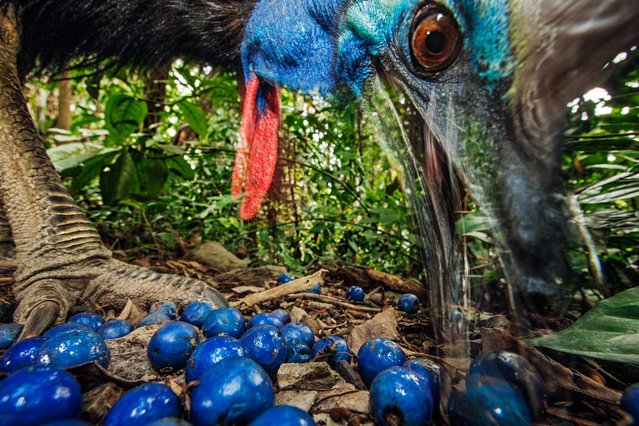
“Cassowaries are large, flightless birds related to emus and (more distantly) to ostriches, rheas, and kiwis”, writes Olivia Judson in the September issue of National Geographic magazine. How large? People-size: Adult males stand well over five foot five and top 110 pounds. Females are even taller, and can weigh more than 160 pounds. Dangerous when roused, they’re shy and peaceable when left alone. But even birds this big and tough are prey to habitat loss. The dense New Guinea and Australia rain forests where they live have dwindled. Today cassowaries might number 1,500 to 2,000. And because they help shape those same forests – by moving seeds from one place to another – “if they vanish”, Judson writes, “the structure of the forest would gradually change” too. (Photo by Christian Ziegler/National Geographic)

Details
06 Jan 2014 12:21:00
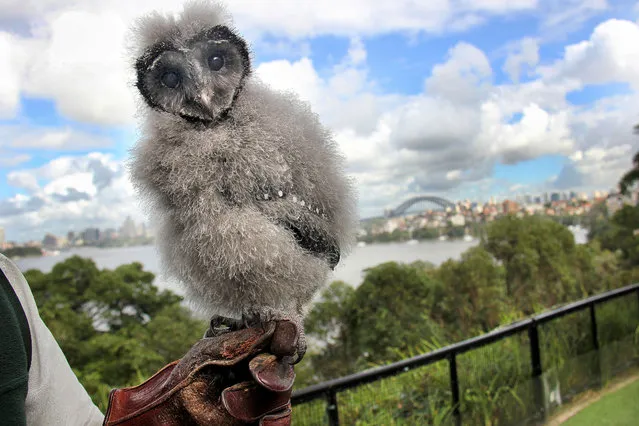
An adorable baby owl has proved to be a real heart-breaker thanks to its heart-shaped head. Although Griffin the Lesser Sooty Owl might look like a feather duster, the tiny eight-week old chick will soon be ready to fly. And the heart outline that surrounds his giant eyes and beak means he is set to be the star of the bird show at Taronga Zoo, Sydney. (Photo by Caters News Agency)

An adorable baby owl has proved to be a real heart-breaker thanks to its heart-shaped head. Although Griffin the Lesser Sooty Owl might look like a feather duster, the tiny eight-week old chick will soon be ready to fly. And the heart outline that surrounds his giant eyes and beak means he is set to be the star of the bird show at Taronga Zoo, Sydney. (Photo by Caters News Agency)
Details
16 May 2015 13:51:00
Photo taken on September 19, 2015 shows a baby Brazilian opossum at the “Parque Estoril” zoo in Sao Bernardo do Campo of Sao Paulo, Brazil. According to local press, the “Parque Estoril” zoo houses currently 23 orphan cubs of wild animals rescued in the south region of Sao Paulo, victims of illegal wildlife trade or problems caused by urban growth. (Photo by Rahel Patrasso/Xinhua via ZUMA Wire)

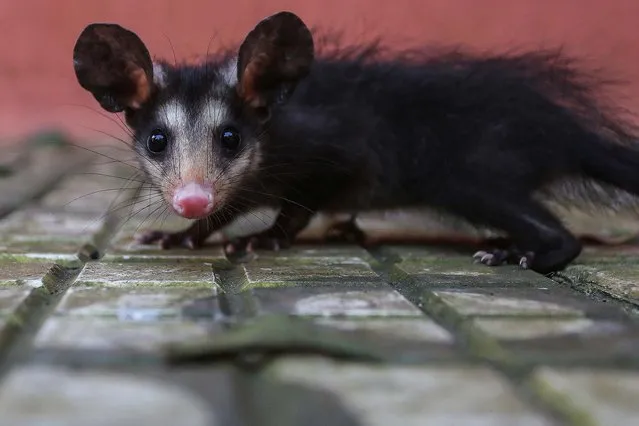
Photo taken on September 19, 2015 shows a baby Brazilian opossum at the “Parque Estoril” zoo in Sao Bernardo do Campo of Sao Paulo, Brazil. According to local press, the “Parque Estoril” zoo houses currently 23 orphan cubs of wild animals rescued in the south region of Sao Paulo, victims of illegal wildlife trade or problems caused by urban growth. According to the zoo, all the animals arrived in the last three months, and many of them, not being able to be reintroduced to their natural habitat, will be used as examples in environmental education classes. (Photo by Rahel Patrasso/Xinhua via ZUMA Wire)
Details
26 Sep 2015 08:00:00
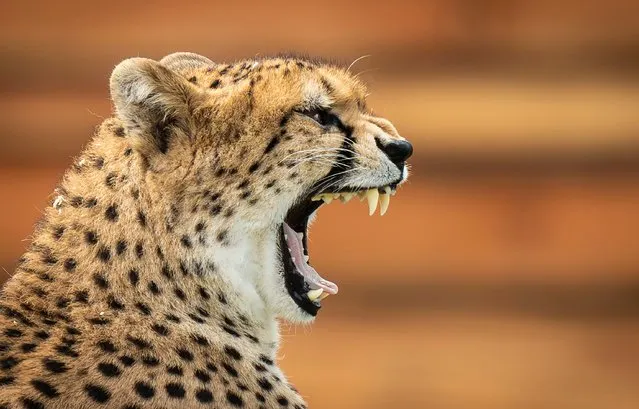
Cheetah Darcy enjoys her newly-developed Cheetah Territory that covers 10,000 square at Yorkshire Wildlife Park, near Doncaster, UK on Wednesday, August 16, 2023. Darcy, who is four-years-old, travelled from Ireland's Fota Wildlife Park to YWP last week where she will be joined by 13-year-old male Brooke who is on his way from the Bristol Zoo Project as a recommendation by the European Endangered Species Programme. (Photo by Danny Lawson/PA Images via Getty Images)

Cheetah Darcy enjoys her newly-developed Cheetah Territory that covers 10,000 square at Yorkshire Wildlife Park, near Doncaster, UK on Wednesday, August 16, 2023. Darcy, who is four-years-old, travelled from Ireland's Fota Wildlife Park to YWP last week where she will be joined by 13-year-old male Brooke who is on his way from the Bristol Zoo Project as a recommendation by the European Endangered Species Programme. (Photo by Danny Lawson/PA Images via Getty Images)
Details
27 Aug 2023 03:23:00
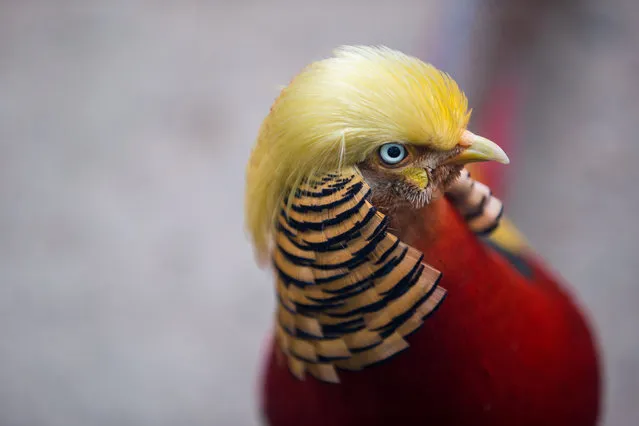
A golden pheasant is seen at Hangzhou Safari Park in Hangzhou, Zhejiang Province, China, November 13, 2016. According to local media, the pheasant gains popularity as its golden feathers resemble the hairstyle of U.S. President-elect Donald Trump. (Photo by Reuters/Stringer)

A golden pheasant is seen at Hangzhou Safari Park in Hangzhou, Zhejiang Province, China, November 13, 2016. According to local media, the pheasant gains popularity as its golden feathers resemble the hairstyle of U.S. President-elect Donald Trump. (Photo by Reuters/Stringer)
Details
20 Nov 2016 10:54:00