Loading...
Done
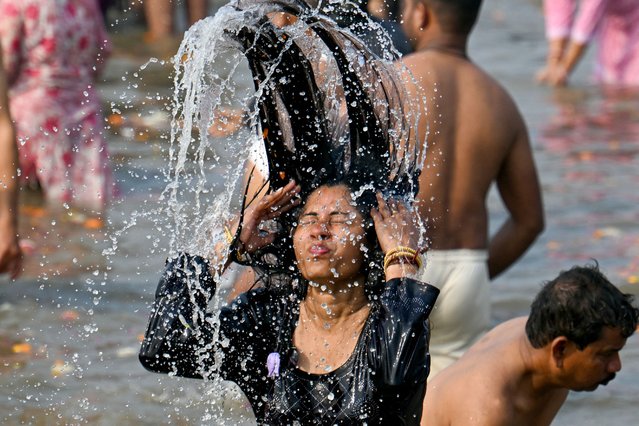
A Hindu pilgrim takes a holy dip at Sangam, the confluence of Ganges, Yamuna and mythical Saraswati rivers during the Maha Kumbh Mela festival in Prayagraj on February 5, 2025. (Photo by Idrees Mohammed/AFP Photo)

A Hindu pilgrim takes a holy dip at Sangam, the confluence of Ganges, Yamuna and mythical Saraswati rivers during the Maha Kumbh Mela festival in Prayagraj on February 5, 2025. (Photo by Idrees Mohammed/AFP Photo)
Details
22 Feb 2025 03:50:00
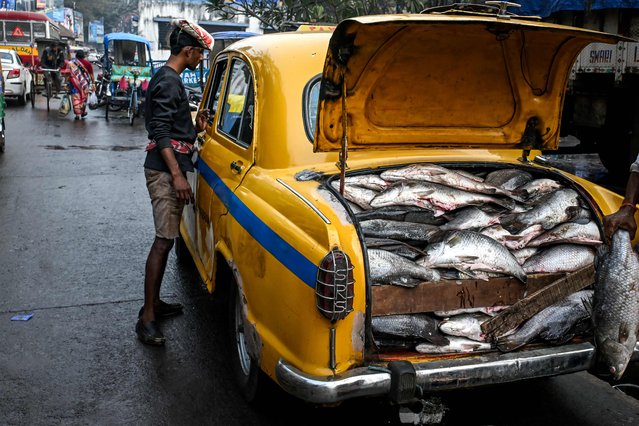
This photograph taken on January 30, 2025 shows a labourer looking into a Hindustan Ambassador yellow taxi, transporting fish at a wholesale market in Kolkata. Kolkata cherishes its past, which is why the one-time Indian capital is mourning a vanishing emblem of its faded grandeur: a hulking and noisy fleet of stately yellow taxis. (Photo by Dibyangshu Sarkar/AFP Photo)

This photograph taken on January 30, 2025 shows a labourer looking into a Hindustan Ambassador yellow taxi, transporting fish at a wholesale market in Kolkata. Kolkata cherishes its past, which is why the one-time Indian capital is mourning a vanishing emblem of its faded grandeur: a hulking and noisy fleet of stately yellow taxis. (Photo by Dibyangshu Sarkar/AFP Photo)
Details
06 Mar 2025 03:12:00
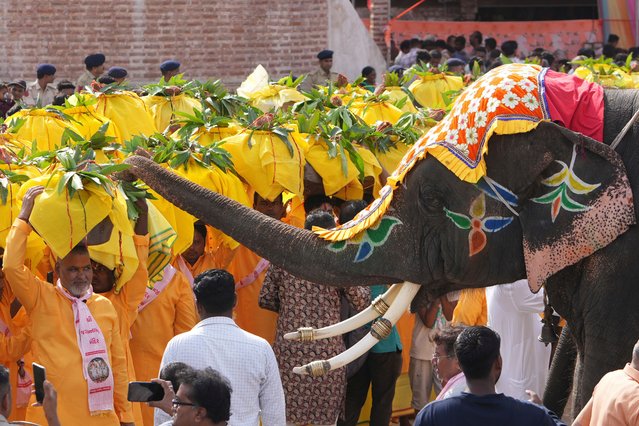
An elephant tries to eat leaves during a religious procession called Jal Yatra, ahead of the annual Rath Yatra, or chariot procession of Hindu god Lord Jagannath, in Ahmedabad, India, Wednesday, June 11, 2025. (Photo by Ajit Solanki/AP Photo)

An elephant tries to eat leaves during a religious procession called Jal Yatra, ahead of the annual Rath Yatra, or chariot procession of Hindu god Lord Jagannath, in Ahmedabad, India, Wednesday, June 11, 2025. (Photo by Ajit Solanki/AP Photo)
Details
17 Jul 2025 03:09:00
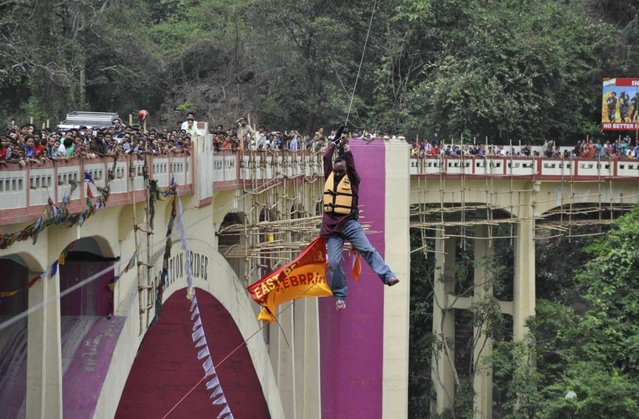
In this Sunday, April 28, 2013 photograph, people watch as Indian Sailendra Nath Roy attempts to cross Teesta river suspended from a zip wire attached to his ponytail moments before his death in Siliguri, West Bengal state, India. Roy who was named a Guinness World Record holder in 2011 for travelling the farthest distance on a zip wire using hair died during the stunt Sunday when he suffered a heart attack. (Photo by AP Photo)

In this Sunday, April 28, 2013 photograph, people watch as Indian Sailendra Nath Roy attempts to cross Teesta river suspended from a zip wire attached to his ponytail moments before his death in Siliguri, West Bengal state, India. Roy who was named a Guinness World Record holder in 2011 for travelling the farthest distance on a zip wire using hair died during the stunt Sunday when he suffered a heart attack. (Photo by AP Photo)
Details
30 Apr 2013 08:21:00
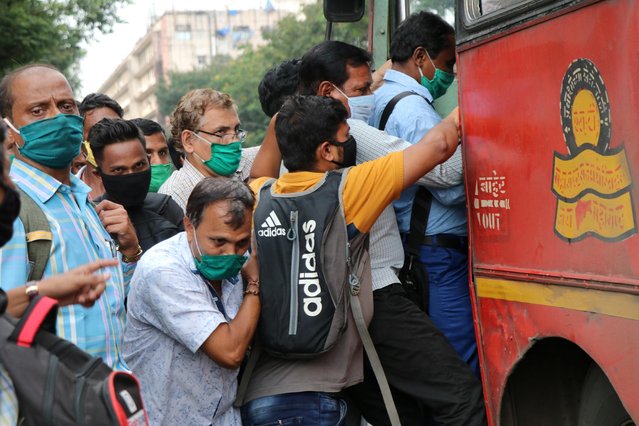
People board a passenger bus during rush hour at a bus terminal, amidst the coronavirus disease (COVID-19) outbreak, in Mumbai, India, September 9, 2020. (Photo by Niharika Kulkarni/Reuters)

People board a passenger bus during rush hour at a bus terminal, amidst the coronavirus disease (COVID-19) outbreak, in Mumbai, India, September 9, 2020. (Photo by Niharika Kulkarni/Reuters)
Details
15 Sep 2020 00:05:00
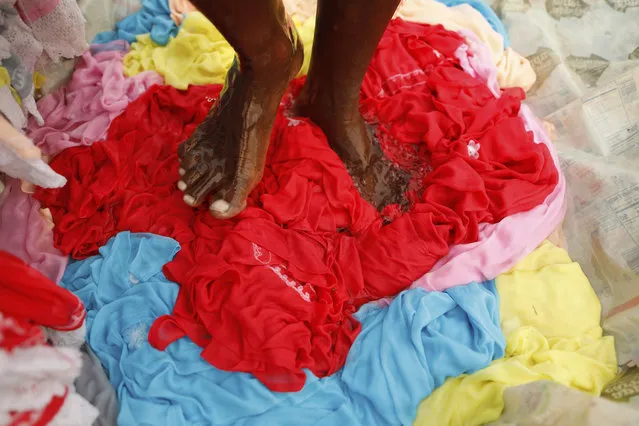
A dhobi, or a washerman washes cloths on the banks of the River Gomti in Lucknow, India, Saturday, September 12, 2020. Dhobis are traditional laundry workers who wash clothes by hand and dry them in the sun, an occupation which has been in existence for generations. Most cities in India have a Dhobi Ghat, or washermen's area, where the city's pile of clothes is laundered. This practice is still popular in India, despite of modern technology. Around 1,000 families work in Lucknow's Dhobi Ghat. However, in light of the novel coronavirus, their wages have decreased drastically. With each family earning around US$100-200 per month. (Photo by Rajesh Kumar Singh/AP Photo)

A dhobi, or a washerman washes cloths on the banks of the River Gomti in Lucknow, India, Saturday, September 12, 2020. Dhobis are traditional laundry workers who wash clothes by hand and dry them in the sun, an occupation which has been in existence for generations. Most cities in India have a Dhobi Ghat, or washermen's area, where the city's pile of clothes is laundered. This practice is still popular in India, despite of modern technology. Around 1,000 families work in Lucknow's Dhobi Ghat. However, in light of the novel coronavirus, their wages have decreased drastically. With each family earning around US$100-200 per month. (Photo by Rajesh Kumar Singh/AP Photo)
Details
25 Sep 2020 00:03:00
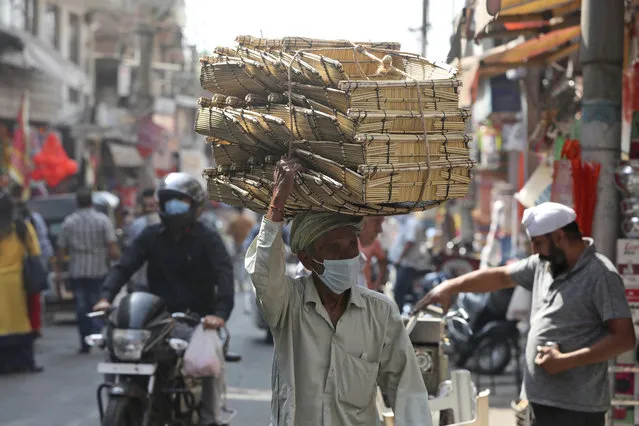
An Indian villager wearing a face mask as a precaution against the coronavirus sells his ware at market in Jammu, India, Friday, October 9, 2020. (Photo by Channi Anand/AP Photo)

An Indian villager wearing a face mask as a precaution against the coronavirus sells his ware at market in Jammu, India, Friday, October 9, 2020. (Photo by Channi Anand/AP Photo)
Details
14 Oct 2020 00:05:00
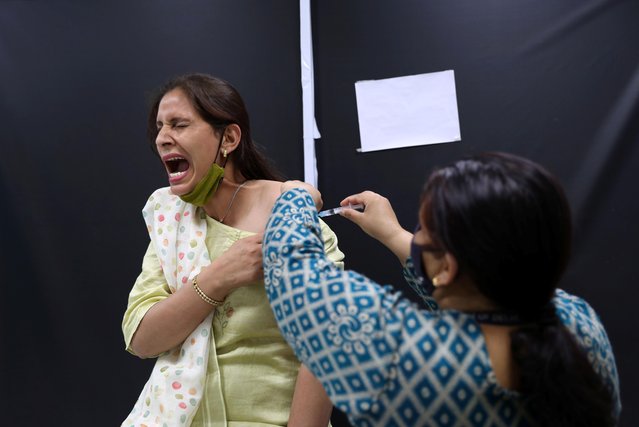
A frontline worker reacts as she receives a dose of AstraZeneca's COVISHIELD vaccine, produced by the Serum Institute of India, during the coronavirus disease (COVID-19) vaccination campaign at a medical centre in New Delhi, India, February 24, 2021. (Photo by Anushree Fadnavis/Reuters)

A frontline worker reacts as she receives a dose of AstraZeneca's COVISHIELD vaccine, produced by the Serum Institute of India, during the coronavirus disease (COVID-19) vaccination campaign at a medical centre in New Delhi, India, February 24, 2021. (Photo by Anushree Fadnavis/Reuters)
Details
04 Mar 2021 08:30:00