People dance as they play with colored powder during celebrations marking Holi, the Hindu festival of colors, in Guwahati, India, Monday, March 25, 2024. (Photo by Anupam Nath/AP Photo)
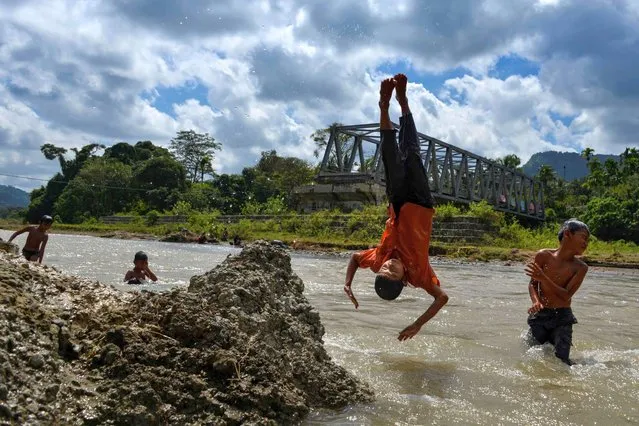
Students on their way home from school play in a river which has risen due to recent seasonal rains, in a remote village in Panca, Aceh province on January 22, 2021. (Photo by Chaideer Mahyuddin/AFP Photo)
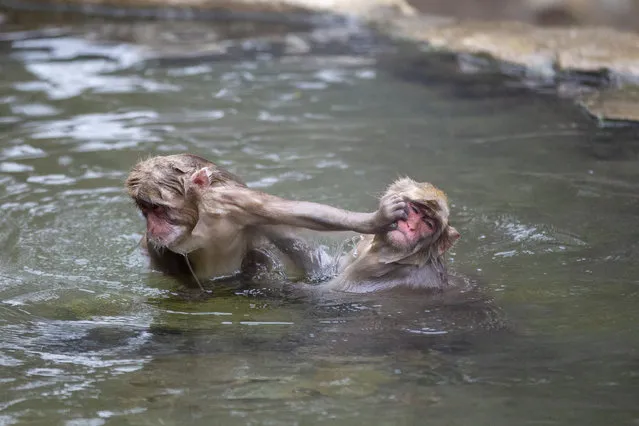
Japanese macaques, also known as snow monkeys, play as they soak in a hot spring in Jigokudani valley in Nagano Prefecture, northwest of Tokyo Saturday, March 6, 2021. (Photo by Kiichiro Sato/AP Photo)
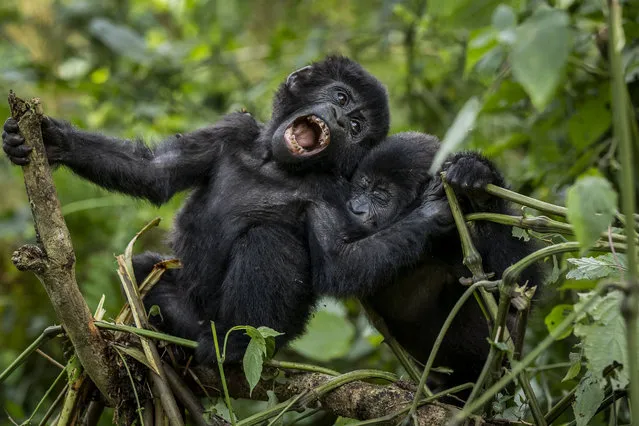
Two one-year old baby mountain gorillas play together in the forest of Bwindi Impenetrable National Park in southwestern Uganda on Saturday, April 3, 2021. (Photo by AP Photo/Stringer)
Andreyka, a 10-month-old female bear cub, plays with Rommi, an Alaskan malamute, at the Siberian Zoo in the settlement of Listvyanka, Irkutsk Region, Russia on December 9, 2020. The bear cub, which was found in a weak condition earlier this year, now play-fights with the Alaskan malamute, who adopted her and has seen three generations of bear cubs brought up in the Siberian zoo and released back into the wild. (Photo by Yuri Novikov/Reuters)
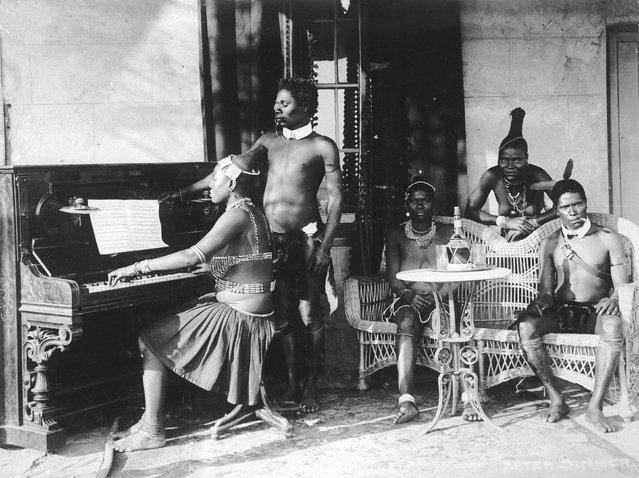
“The Zulu are the largest South African ethnic group, with an estimated 10–11 million people living mainly in the province of KwaZulu-Natal. Small numbers also live in Zimbabwe, Zambia, and Mozambique. Their language, Zulu, is a Bantu language; more specifically, part of the Nguni subgroup. The Zulu Kingdom played a major role in South African history during the 19th and 20th centuries. Under apartheid, Zulu people were classed as third-class citizens and suffered from state-sanctioned discrimination. They remain today the most numerous ethnic group in South Africa, and now have equal rights along with all other citizens”. – Wikipedia.
Photo: A Zulu woman playing the piano while a group of others sit and listen (to put it briefly, Englishmen scoff over Zulu). South Africa, circa 1925. (Photo by General Photographic Agency)
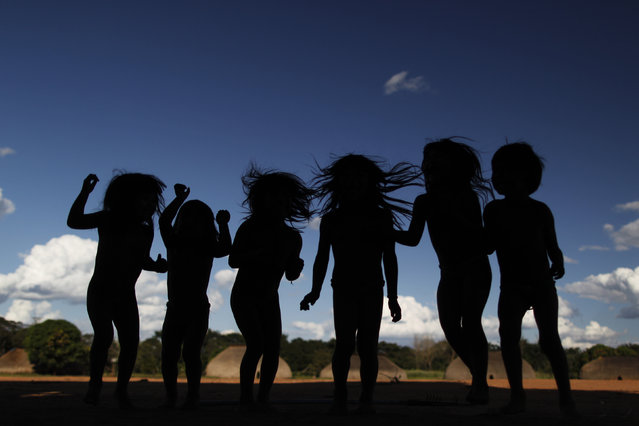
Yawalapiti children play during the preparations for the celebration of “quarup”, a ritual held to honor in death a person of great importance to them, in the Xingu National Park, Mato Grosso State, May 7, 2012. (Photo by Ueslei Marcelino/Reuters)
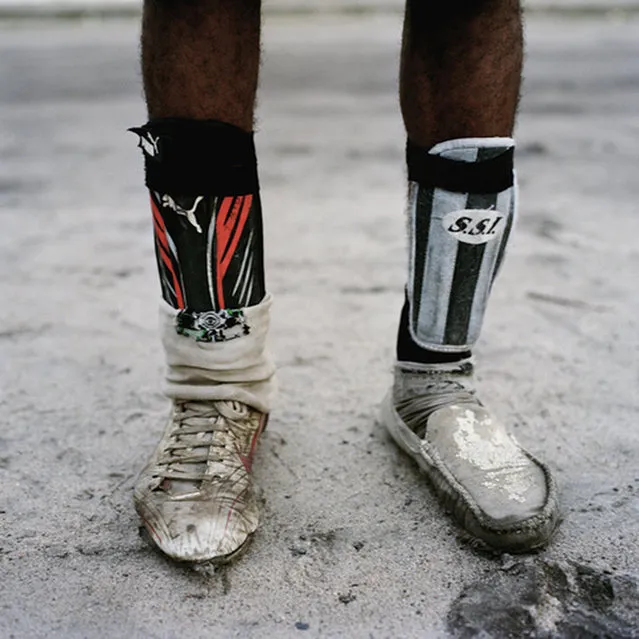
The images in Jessica Hilltout‘s Amen tell a gripping story of the joy soccer provides for Africa’s less fortunate. Inspired by her father, Hilltout set off to photograph soccer in Africa in all its shapes and sizes, coming to the conclusion that “the beautiful game exists in its purest form in what I saw — people playing for the joy of playing.”