Loading...
Done
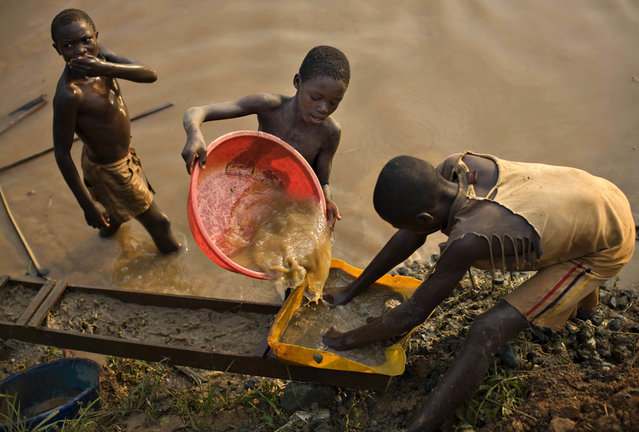
Boys pan for gold on a riverside at Iga Barriere, 25 km (15 miles) from Bunia, in the resource-rich Ituri region of eastern Congo February 16, 2009. Ituri is one of many areas of the country to have experienced bitter ethnic conflict between rival tribes in recent years. Massacres have left tens of thousands dead. It is this fighting that led U.S. authorities to take the unprecedented step of naming Congo in section 1502 of the Dodd-Frank financial regulation act, which says U.S.-listed companies that source gold, tungsten, tantalum and tin from Congo or its neighbours must assure the U.S. stock exchange regulator that their business is not helping fund conflict. (Photo by Finbarr O'Reilly/Reuters)

Boys pan for gold on a riverside at Iga Barriere, 25 km (15 miles) from Bunia, in the resource-rich Ituri region of eastern Congo February 16, 2009. Ituri is one of many areas of the country to have experienced bitter ethnic conflict between rival tribes in recent years. Massacres have left tens of thousands dead. It is this fighting that led U.S. authorities to take the unprecedented step of naming Congo in section 1502 of the Dodd-Frank financial regulation act, which says U.S.-listed companies that source gold, tungsten, tantalum and tin from Congo or its neighbours must assure the U.S. stock exchange regulator that their business is not helping fund conflict. (Photo by Finbarr O'Reilly/Reuters)
Details
12 Nov 2016 10:24:00


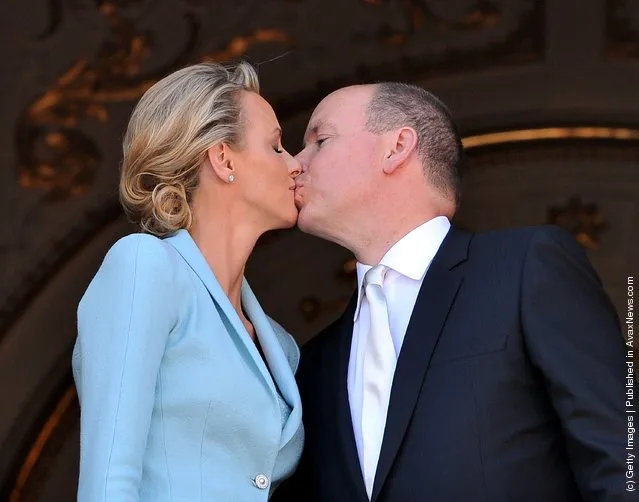
Princess Charlene of Monaco and Prince Albert II of Monaco kiss on the balcony after the civil ceremony of the Royal Wedding of Prince Albert II of Monaco to Charlene Wittstock at the Prince's Palace on July 1, 2011 in Monaco. The ceremony took place in the Throne Room of the Prince's Palace of Monaco, followed by a religious ceremony to be conducted in the main courtyard of the Palace on July 2. With her marriage to the head of state of Principality of Monaco, Charlene Wittstock has/will become Princess consort of Monaco and gain the title, Princess Charlene of Monaco. Celebrations including concerts and firework displays are being held across several days, attended by a guest list of global celebrities and heads of state. (Photo by Pascal Le Segretain/Getty Images)
Details
02 Jul 2011 13:41:00
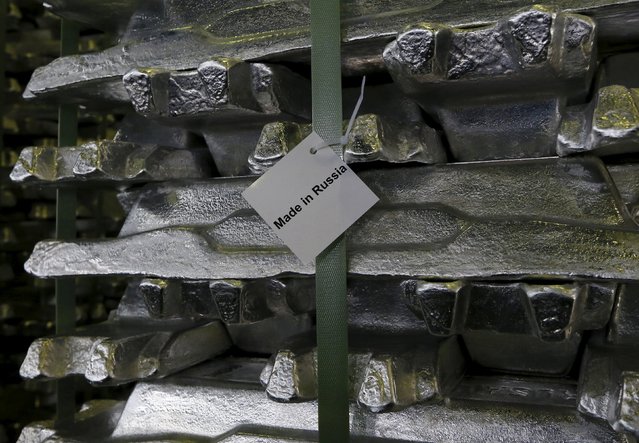
Aluminium ingots are stored at a foundry shop of the Rusal Khakassia aluminium smelter outside the town of Sayanogorsk, Russia, September 3, 2015. (Photo by Ilya Naymushin/Reuters)

Aluminium ingots are stored at a foundry shop of the Rusal Khakassia aluminium smelter outside the town of Sayanogorsk, Russia, September 3, 2015. Russia's Rusal has decided to delay a decision on its possible first dividend since listing five years ago though its second-quarter core profit more than doubled thanks to cost cuts and a weaker rouble. (Photo by Ilya Naymushin/Reuters)
Details
04 Sep 2015 12:39:00
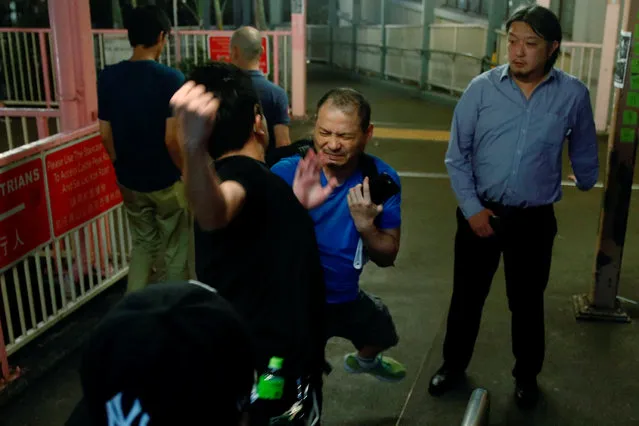
A pro-government supporter scuffles with an anti-extradition supporter outside the office of pro-China lawmaker Junius Ho in Tsuen Wan in Hong Kong, China on July 22, 2019. (Photo by Edgar Su/Reuters)

A pro-government supporter scuffles with an anti-extradition supporter outside the office of pro-China lawmaker Junius Ho in Tsuen Wan in Hong Kong, China on July 22, 2019. Hong Kong demonstrators gathered for another weekend of protests against the controversial extradition bill and with a growing list of grievances, maintaining pressure on Chief Executive Carrie Lam. (Photo by Edgar Su/Reuters)
Details
24 Jul 2019 00:05:00
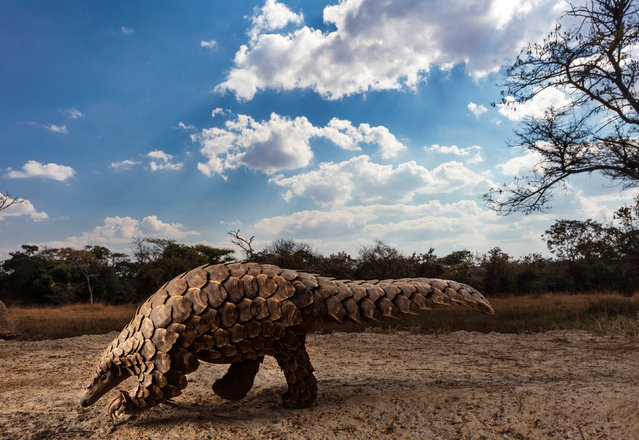
Pangolins in Crisis: Brent Stirton, South Africa; 1st place, Natural world and wildlife. “Pangolins are the world’s most illegally trafficked mammals, with an estimated one million trafficked to Asia in the last 10 years. Their scales are used in traditional Chinese and Vietnamese medicine, and their meat is sold as a high-priced delicacy. As a result, pangolins are listed as critically endangered and anyone who trades or consumes them is breaking the law. This body of work exposes the trade, while exploring aspects of illegality and celebrating the people who are trying to save these animals”. (Photo by Brent Stirton/Sony World Photography Awards 2020)

Pangolins in Crisis: Brent Stirton, South Africa; 1st place, Natural world and wildlife. “Pangolins are the world’s most illegally trafficked mammals, with an estimated one million trafficked to Asia in the last 10 years. Their scales are used in traditional Chinese and Vietnamese medicine, and their meat is sold as a high-priced delicacy. As a result, pangolins are listed as critically endangered and anyone who trades or consumes them is breaking the law. This body of work exposes the trade, while exploring aspects of illegality and celebrating the people who are trying to save these animals”. (Photo by Brent Stirton/Sony World Photography Awards 2020)
Details
11 Jun 2020 00:05:00


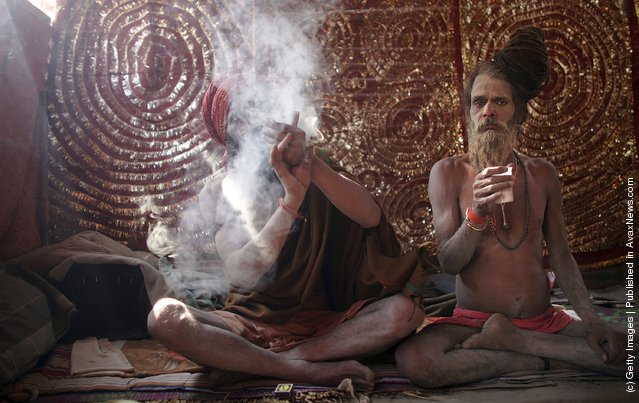
“Kumbh Mela is a mass Hindu pilgrimage in which Hindus gather at the Ganges river. The normal Kumbh Mela is celebrated every 3 years, the Ardh (half) Kumbh Mela is celebrated every six years at Haridwar and Prayag, the Purna (complete) Kumbh takes place every twelve years, at four places (Prayag (Allahabad), Haridwar, Ujjain, and Nashik). The Maha (great) Kumbh Mela which comes after 12 “Purna Kumbh Melas”, or 144 years, is held at Allahabad.

The last Ardh Kumbh Mela was held over a period of 45 days beginning in January 2007, more than 70 million Hindu pilgrims took part in the Ardh Kumbh Mela at Prayag, and on January 15, the most auspicious day of the festival of Makar Sankranti, more than 5 million participated. The previous Maha Kumbh Mela, held in 2001, was attended by around 60 million people, making it at the time the largest gathering anywhere in the world in recorded history”. – Wikipedia

Photo: Sadhus (holy men) smoke at their camp near the ritual site at Sangam, the confluence of the Ganges, Yamuna and mythical Saraswati rivers during the Ardh Kumbh Mela festival (Half Pitcher festival) January 18, 2007 in Allahabad, India. Millions of Hindu pilgrims have flocked to the largest religious gathering in the world which lasts for 45 days in northern India. The festival commemorates the mythical conflict between gods and demons over a pitcher filled with the “nectar of immortality”. Devotees believe that taking a holy dip in the Ganges at this time washes away their sins and paves the path to salvation. (Photo by Mario Tama/Getty Images)

Details
30 Jun 2011 10:27:00


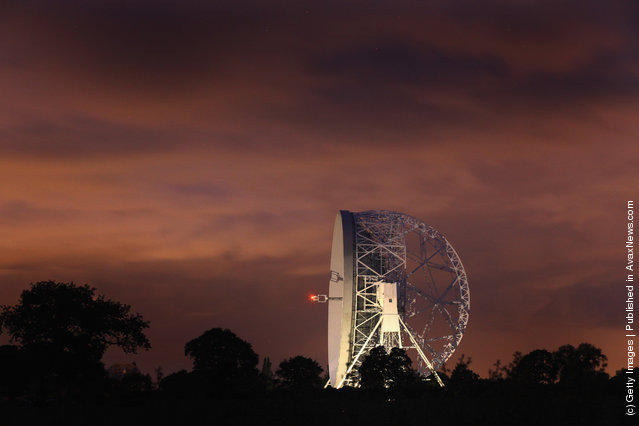
“The Lovell Telescope is a radio telescope at Jodrell Bank Observatory, near Goostrey, Cheshire in the north-west of England. When it was constructed in 1955, the telescope was the largest steerable dish radio telescope in the world at 76.2 m (250 ft) in diameter; it is now the third largest, after the Green Bank telescope in West Virginia, USA, and the Effelsberg telescope in Germany. It was originally known as the 250 ft (76 m) telescope or the Radio Telescope at Jodrell Bank, before becoming the Mark I telescope around 1961 when future telescopes (the Mark II, III, and IV) were being discussed. It was renamed to the Lovell Telescope in 1987 after Bernard Lovell, and became a Grade I listed building in 1988. The telescope forms part of the MERLIN and European VLBI Network arrays of radio telescopes”. – Wikipedia

Photo: The Lovell Telescope listens to the night sky for radio signals from space at Jodrell Bank on June 22, 2011 in Holmes Chapel, England. Jodrell Bank Centre for Astrophysics and it's world famous Lovell Telescope is on the shortlist of Britain's submission for Unesco World Heritage Site status. (Photo by Christopher Furlong/Getty Images)
Details
24 Jun 2011 09:34:00
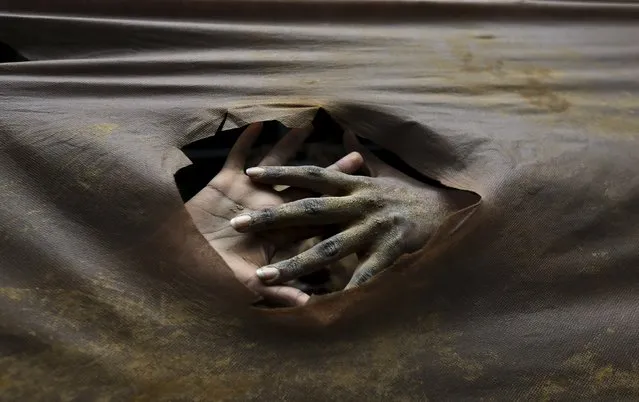
An environmental activist performs during a protest in front of the headquarters of Brazilian mining company Vale SA in downtown Rio de Janeiro, Brazil, November 16, 2015. (Photo by Sergio Moraes/Reuters)

An environmental activist performs during a protest in front of the headquarters of Brazilian mining company Vale SA in downtown Rio de Janeiro, Brazil, November 16, 2015. The collapse of two dams at a Brazilian mine, owned by Vale SA and BHP Billiton Ltd, has cut off drinking water for quarter of a million people and saturated waterways downstream with dense orange sediment that could wreck the ecosystem for years to come. Nine people were killed, 19 are still listed as missing and 500 people were displaced from their homes when the dams burst at an iron ore mine in southeastern Brazil on November 5. (Photo by Sergio Moraes/Reuters)
Details
18 Nov 2015 08:00:00