Loading...
Done
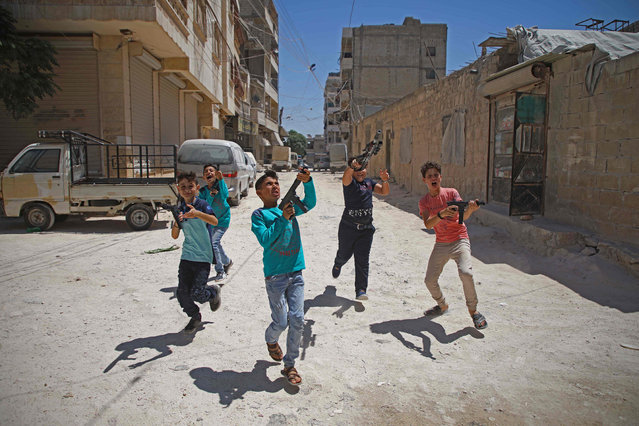
Syrian boys play with plastic guns on the first day of the Muslim religious festival of Eid al-Adha in al-Dana in Syria's rebel-controlled Idlib region, near the border with Turkey, on August 11, 2019. Muslims across the world are celebrating the first day of the Feast of Sacrifice, which marks the end of the hajj pilgrimage to Mecca and commemorates prophet Abraham's sacrifice of a lamb after God spared Ishmael, his son. (Photo by Aaref Watad/AFP Photo)

Syrian boys play with plastic guns on the first day of the Muslim religious festival of Eid al-Adha in al-Dana in Syria's rebel-controlled Idlib region, near the border with Turkey, on August 11, 2019. Muslims across the world are celebrating the first day of the Feast of Sacrifice, which marks the end of the hajj pilgrimage to Mecca and commemorates prophet Abraham's sacrifice of a lamb after God spared Ishmael, his son. (Photo by Aaref Watad/AFP Photo)
Details
13 Aug 2019 00:03:00
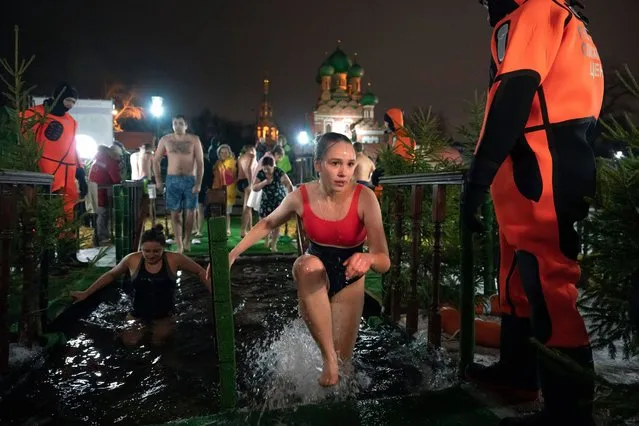
Believers bathe in the icy water during a traditional Epiphany at the Church of the Holy Trinity in Ostankino near TV Tower in Moscow, Russia, Wednesday, January 18, 2023. Across Russia, the devout and the daring are observing the Orthodox Christian feast day of Epiphany by immersing themselves in frigid water through holes cut through the ice of lakes and rivers. Epiphany celebrates the revelation of Jesus Christ as the incarnation of God through his baptism in the River Jordan. (Photo by Alexander Zemlianichenko/AP Photo)

Believers bathe in the icy water during a traditional Epiphany at the Church of the Holy Trinity in Ostankino near TV Tower in Moscow, Russia, Wednesday, January 18, 2023. Across Russia, the devout and the daring are observing the Orthodox Christian feast day of Epiphany by immersing themselves in frigid water through holes cut through the ice of lakes and rivers. Epiphany celebrates the revelation of Jesus Christ as the incarnation of God through his baptism in the River Jordan. (Photo by Alexander Zemlianichenko/AP Photo)
Details
21 Jan 2023 00:48:00


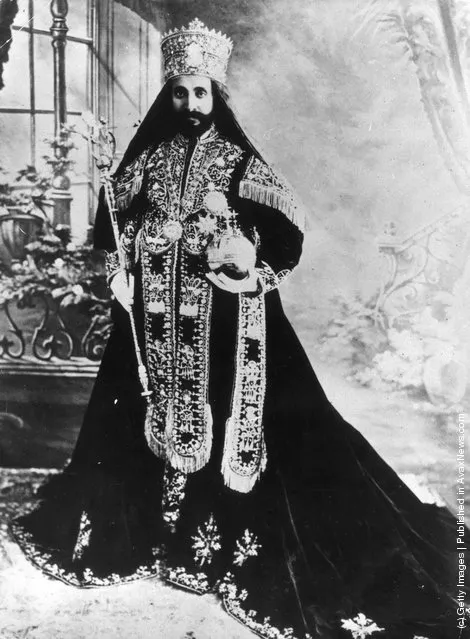
“Haile Selassie I (23 July 1892 – 27 August 1975), born Tafari Makonnen, was Ethiopia's regent from 1916 to 1930 and Emperor of Ethiopia from 1930 to 1974. The heir to a dynasty that traced its origins to the 13th century, and from there by tradition back to King Solomon and Queen Makeda, Empress of Axum, known in the Abrahamic tradition as the Queen of Sheba. Haile Selassie is a defining figure in both Ethiopian and African history.

Haile Selassie is revered as the returned Messiah of the Bible, God incarnate, among the Rastafari movement, the number of followers of which is estimated between 200,000 and 800,000. Begun in Jamaica in the 1930s, the Rastafari movement perceives Haile Selassie as a messianic figure who will lead a future golden age of eternal peace, righteousness, and prosperity. He himself remained an Ethiopian Orthodox Christian throughout his life”. – Wikipedia

Photo: Negusa Negasti, Emperor of Ethiopia Haile Selassie I, known as “Lord of Lords”, “The Conquering Lion of the tribe of Judah”, “Light of the world”, “Elect of God”, in full ceremonial regalia following his coronation. (Photo by Hulton Archive/Getty Images)

Details
21 Jun 2011 11:04:00
A devotee takes a holy bath in River Saali in Sankhu during the Swasthani Brata Katha festival in Kathmandu, Nepal, January 24, 2016. (Photo by Navesh Chitrakar/Reuters)

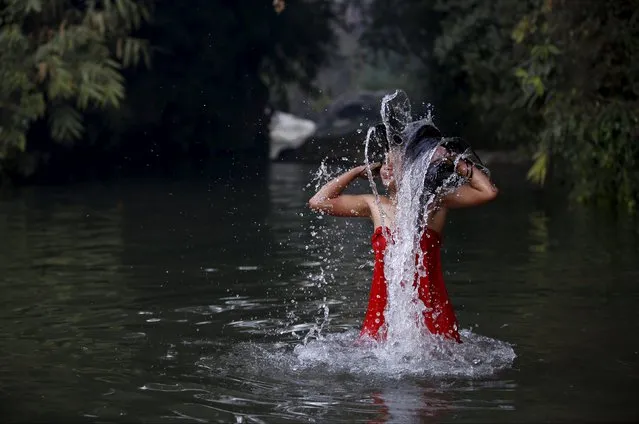
A devotee takes a holy bath in River Saali in Sankhu during the Swasthani Brata Katha festival in Kathmandu, Nepal, January 24, 2016. During the month long festival, devotees recite one chapter of a Hindu tale daily from the 31-chapter sacred Swasthani Brata Katha book that is dedicated to God Madhavnarayan and Goddess Swasthani, alongside various other gods and goddess and the miraculous feats performed by them. The devotees also go on pilgrimages to various temples, perform religious rituals, take a holy bath in the rivers and fast for a month, especially among women who believe fasting helps in their family's well-being or in getting them a good husband. (Photo by Navesh Chitrakar/Reuters)
Details
25 Jan 2016 12:05:00


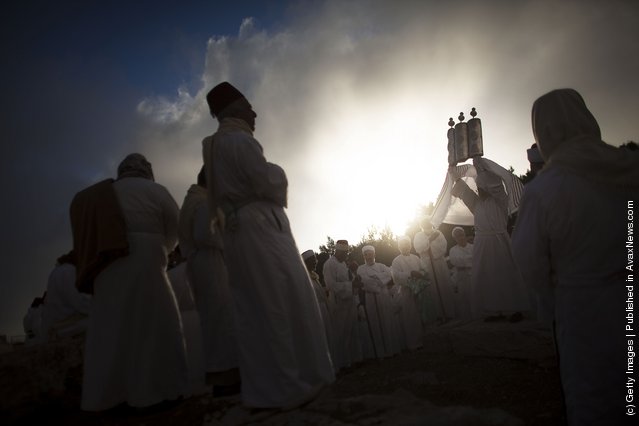
A priest of the ancient Samaritan community, wrapped in a prayer shawl, holds up a Tora scroll as worshippers pray during the holy day of Shavuot on Mount Gerizim on June 12, 2011 in Nablus, West Bank. Shavuot is a Jewish religious holiday and commemorates the anniversary of the day God is said to have given the Torah to the Israelites. (Photo by Uriel Sinai/Getty Images)
Details
13 Jun 2011 07:44:00
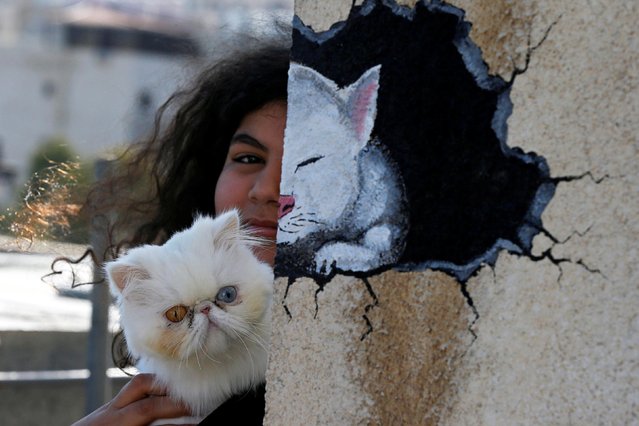
Jude Hajjaj, carries her cat near a picture of her cat painted on the wall by her father Osama Hajjaj, who teams up with his neighbours in creating works of art at their roof during the curfew imposed by the Jordanian government amid concerns over the spread of the coronavirus disease (COVID-19) in Amman, Jordan, May 10, 2020. (Photo by Muhammad Hamed/Reuters)

Jude Hajjaj, carries her cat near a picture of her cat painted on the wall by her father Osama Hajjaj, who teams up with his neighbours in creating works of art at their roof during the curfew imposed by the Jordanian government amid concerns over the spread of the coronavirus disease (COVID-19) in Amman, Jordan, May 10, 2020. (Photo by Muhammad Hamed/Reuters)
Details
23 May 2020 00:03:00
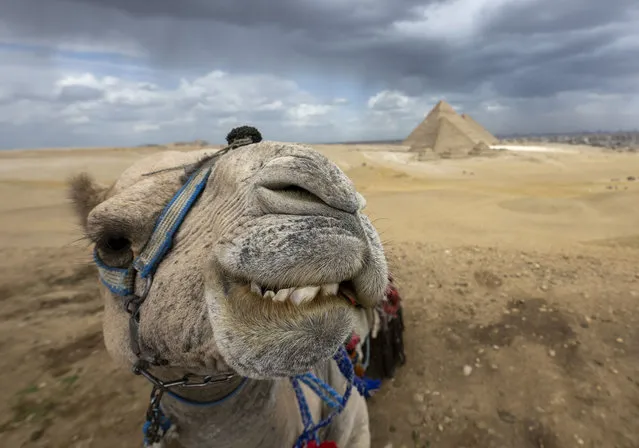
A camel is seen in front of the pyramids, which is one of the seven wonders of the world that was visited by 14.9 million tourists last year in Giza, Egypt on February 21, 2024. The pyramids were named after the tombs of fathers, sons and grandsons, including the largest pyramid Cheops (King Khufu), the middle pyramid Khafre (King Khafre) and the small pyramid Menkaure (King Menkaure). (Photo by Utku Ucrak/Anadolu via Getty Images)

A camel is seen in front of the pyramids, which is one of the seven wonders of the world that was visited by 14.9 million tourists last year in Giza, Egypt on February 21, 2024. The pyramids were named after the tombs of fathers, sons and grandsons, including the largest pyramid Cheops (King Khufu), the middle pyramid Khafre (King Khafre) and the small pyramid Menkaure (King Menkaure). (Photo by Utku Ucrak/Anadolu via Getty Images)
Details
12 Apr 2024 00:06:00


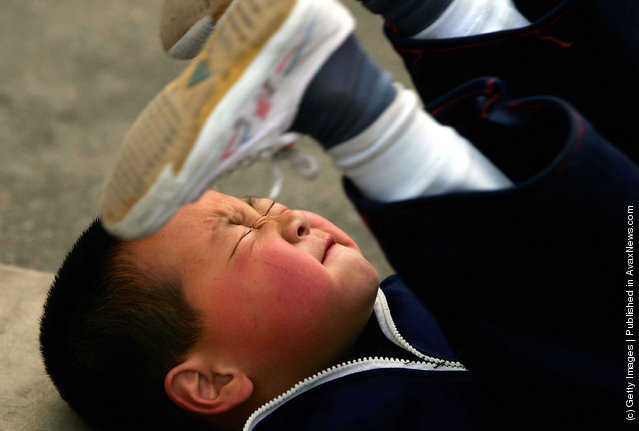
Wang Zeyu, 4, a fee-paying enthusiast of kung fu, practises during a training class at a kung fu school near the Shaolin Temple April 10, 2005 in Dengfeng, Henan Province, China. Zeyu's father sent him to the school from his home in Jiangsu Province, thousands kilometres away from Dengfeng, when he was just 3 years old. And his father must pay 9,800 yuan (US$1195) for one year's tuition at the school, a huge amount for most Chinese. There are more than 80 kung fu schools that line the road from the city of Dengfeng to the Shaolin Temple with hundreds and thousands of young kung-fu lovers from all over the country and beyond studying here. All the schools use the Shaolin name to attract students as the Shaolin Temple is the birthplace of Chinese Kung Fu. (Photo by Cancan Chu/Getty Images)
Details
06 Jul 2011 11:21:00