Loading...
Done
Demonstrators Protest Castor Nuclear Waste Transport

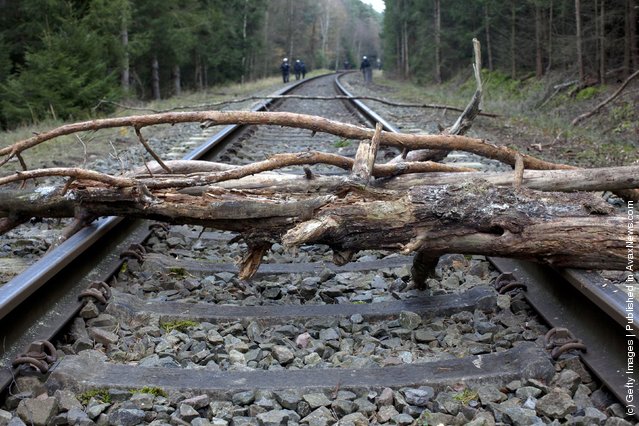
Tree trunks lie on the railtracks that will be used to transport nuclear waste on November 25, 2011 in Leitstade, near Metzingen, Germany. A train carrying the Castor containers of processed, spent nuclear fuel started from La Hague in France Wednesday for its journey to the Gorleben temporary nuclear waste storage facility in Germany, and thousands of protesters are expected to attempt to blockade the route. (Photo by Carsten Koall/Getty Images)
Details
26 Nov 2011 12:41:00
Crowds supporting the Same s*x Marriage Survey listen to politicians and advocates at Taylor Square in the heart of Sydney's gay precinct on November 15, 2017 in Sydney, Australia. (Photo by James Alcock/Getty Images)

Crowds supporting the Same Sеx Marriage Survey listen to politicians and advocates at Taylor Square in the heart of Sydney's gay precinct on November 15, 2017 in Sydney, Australia. Australians have voted for marriage laws to be changed to allow same-sеx marriage, with the Yes vote claiming 61.6% to to 38.4% for No vote. Despite the Yes victory, the outcome of Australian Marriage Law Postal Survey is not binding, and the process to change current laws will move to the Australian Parliament in Canberra. (Photo by James Alcock/Getty Images)
Details
16 Nov 2017 08:12:00


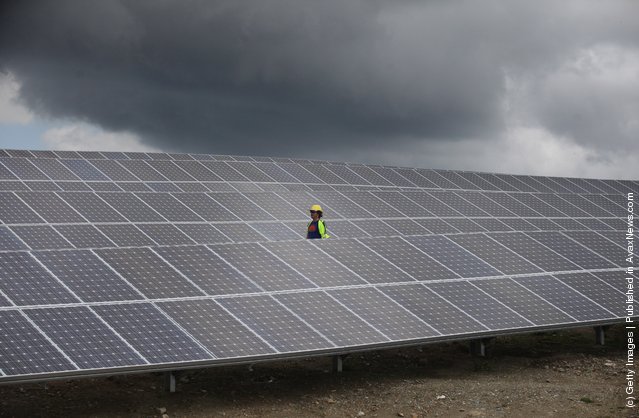
Jason Arnold, project manager from solarcentury walks between lines of solar panels erected at Weighbridge, Wheal Jane, Baldhu on July 7, 2011 near Truro, England. A ceremony was held today to mark the connection of the 1.4kw solar farm, which on a 6.2 acre plot is the first in the South West and biggest in the UK to date, using 5,680 panels. (Photo by Matt Cardy/Getty Images)
Details
08 Jul 2011 10:01:00
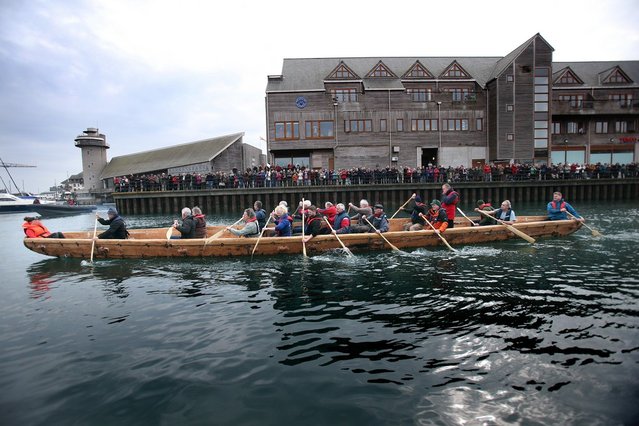
Crew in Britain's first ever full-size reconstructed sea-going Bronze Age boat, paddle out to sea near to the National Maritime Museum as it makes its maiden voyage on March 6, 2013 in Falmouth, England. With a crew of of 18, equipped with Bronze-Age-style wooden paddles, the 15 metre long experimental vessel – a replica of the sort of craft used for long-distance trade between Britain and the continent 4000 years ago – will be used to test prehistoric seafaring methods in a project in collaboration with the University of Exeter and the Falmouth-based National Maritime Museum Cornwall. (Photo by Matt Cardy)

Crew in Britain's first ever full-size reconstructed sea-going Bronze Age boat, paddle out to sea near to the National Maritime Museum as it makes its maiden voyage on March 6, 2013 in Falmouth, England. (Photo by Matt Cardy)
Details
07 Mar 2013 08:48:00
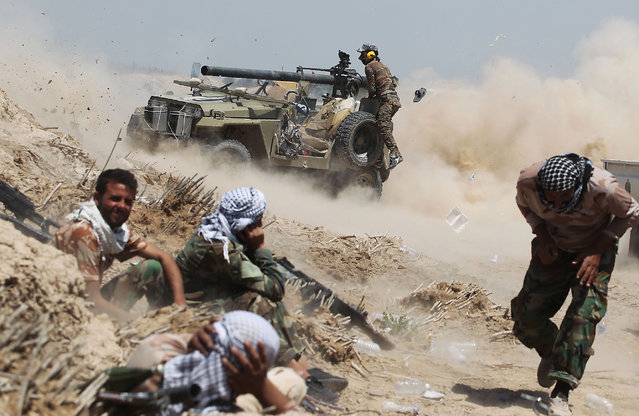
Iraqi pro-government forces fire an anti-tank cannon near al-Sejar village, north-east of Fallujah, on May 25, 2016, as they take part in a major assault to retake the city from the Islamic State (IS) group. Iraqi forces, consisting of special forces, soldiers, police, paramilitary-fighters and pro-government tribesmen, launched a major assault to retake Fallujah, the scene of deadly battles during the US occupation and one of the toughest targets yet in Baghdad's war on the Islamic State group. (Photo by Ahmad Al-Rubaye/AFP Photo)

Iraqi pro-government forces fire an anti-tank cannon near al-Sejar village, north-east of Fallujah, on May 25, 2016, as they take part in a major assault to retake the city from the Islamic State (IS) group. Iraqi forces, consisting of special forces, soldiers, police, paramilitary-fighters and pro-government tribesmen, launched a major assault to retake Fallujah, the scene of deadly battles during the US occupation and one of the toughest targets yet in Baghdad's war on the Islamic State group. (Photo by Ahmad Al-Rubaye/AFP Photo)
Details
26 May 2016 12:42:00
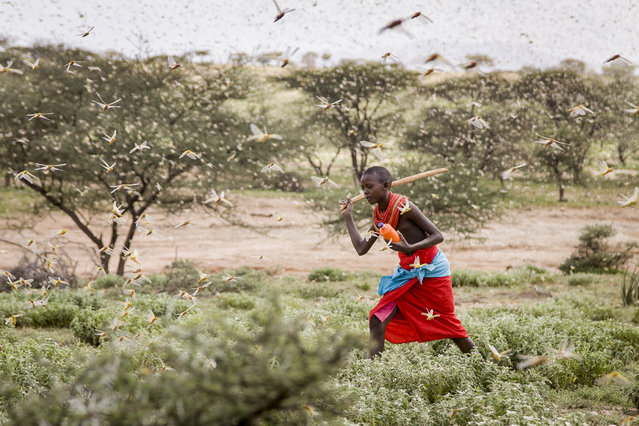
In this photo taken Thursday, January 16, 2020, a Samburu boy uses a wooden stick to try to swat a swarm of desert locusts filling the air, as he herds his camel near the village of Sissia, in Samburu county, Kenya. The most serious outbreak of desert locusts in 25 years is spreading across East Africa and posing an unprecedented threat to food security in some of the world's most vulnerable countries, authorities say, with unusual climate conditions partly to blame. (Photo by Patrick Ngugi/AP Photo)

In this photo taken Thursday, January 16, 2020, a Samburu boy uses a wooden stick to try to swat a swarm of desert locusts filling the air, as he herds his camel near the village of Sissia, in Samburu county, Kenya. The most serious outbreak of desert locusts in 25 years is spreading across East Africa and posing an unprecedented threat to food security in some of the world's most vulnerable countries, authorities say, with unusual climate conditions partly to blame. (Photo by Patrick Ngugi/AP Photo)
Details
19 Jan 2020 00:07:00
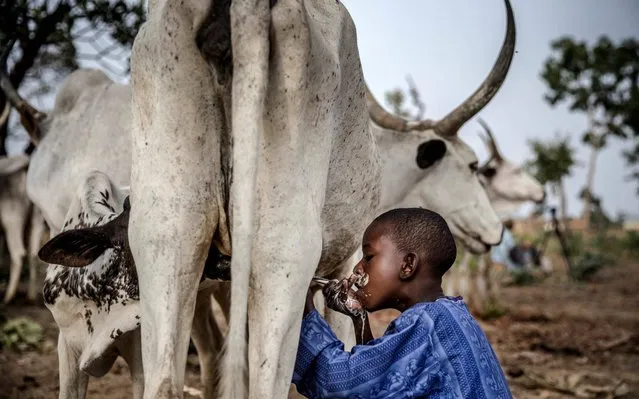
8-year-old Fulani boy Suleiman Yusuf drinks milk from a cow belonging to his father cattle near his family's house at Kachia Grazing Reserve, Kaduna State, Nigeria, on April 16, 2019. Kachia Grazing Reserve is an area set aside for the use of Fulani pastoralist and it is intended to be the foci of livestock development. The purpose for the grazing reserves is the settlement of nomadic pastoralists and inducement to sedentarisation through the provision of land for grazing and permanent water as way to avoid conflict. (Photo by Luis Tato/AFP Photo)

8-year-old Fulani boy Suleiman Yusuf drinks milk from a cow belonging to his father cattle near his family's house at Kachia Grazing Reserve, Kaduna State, Nigeria, on April 16, 2019. Kachia Grazing Reserve is an area set aside for the use of Fulani pastoralist and it is intended to be the foci of livestock development. The purpose for the grazing reserves is the settlement of nomadic pastoralists and inducement to sedentarisation through the provision of land for grazing and permanent water as way to avoid conflict. (Photo by Luis Tato/AFP Photo)
Details
10 Jul 2019 00:01:00
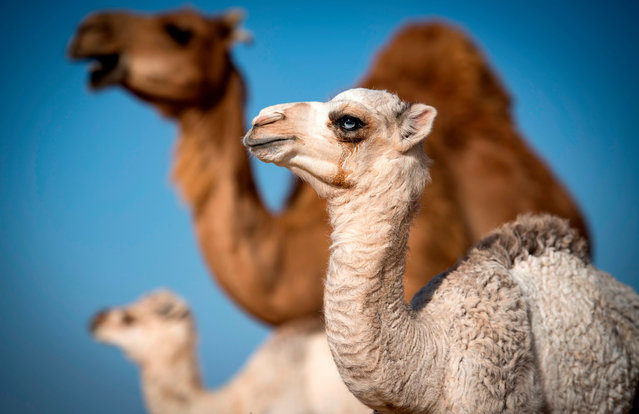
A camel calf is seen among a herd in the desert near Dakhla in Morocco-administered Western Sahara, on October 13, 2019. In the Oued Eddahab desert in Western Sahara, Habiboullah Dlimi raises dairy and racing camels just like his ancestors used to, but with a little help from modern technology. While his animals roam free and are milked traditionally, by hand, at dawn and dusk, they are watched over by hired herders and Dlimi follows GPS coordinates across the desert in a 4X4 vehicle to reach them. (Photo by Fadel Senna/AFP Photo)

A camel calf is seen among a herd in the desert near Dakhla in Morocco-administered Western Sahara, on October 13, 2019. In the Oued Eddahab desert in Western Sahara, Habiboullah Dlimi raises dairy and racing camels just like his ancestors used to, but with a little help from modern technology. While his animals roam free and are milked traditionally, by hand, at dawn and dusk, they are watched over by hired herders and Dlimi follows GPS coordinates across the desert in a 4X4 vehicle to reach them. (Photo by Fadel Senna/AFP Photo)
Details
24 Nov 2019 00:03:00