Loading...
Done
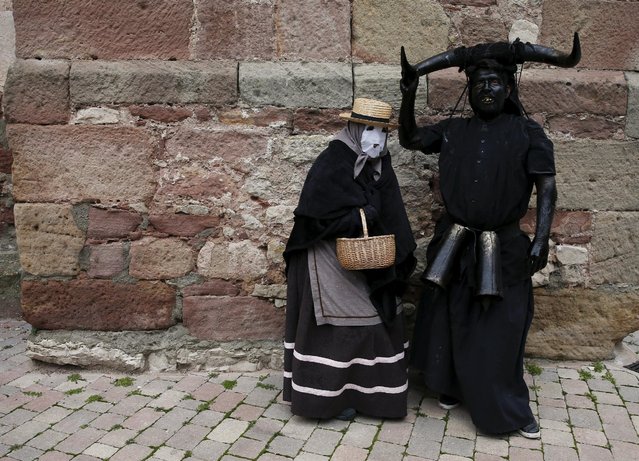
A reveller (R), dressed as “Diablos de Luzon” (Luzon Devils), stands next to a person dressed as a “Mascaritas” during carnival celebrations in the village of Luzon, Spain, February 6, 2016. (Photo by Sergio Perez/Reuters)

A reveller (R), dressed as “Diablos de Luzon” (Luzon Devils), stands next to a person dressed as a “Mascaritas” during carnival celebrations in the village of Luzon, Spain, February 6, 2016. The “Diablos” cover themselves in a mixture of soot and oil and adorn their heads with black-stained bull horns as they parade throughout the village with cowbells clanging around their waists to expel the evil spirits. (Photo by Sergio Perez/Reuters)
Details
08 Feb 2016 11:49:00
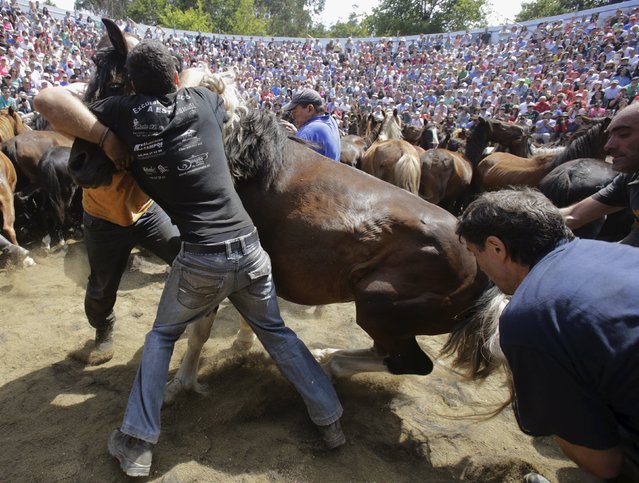
Revellers try to hold on to a wild horse during the “Rapa das Bestas” traditional event in the village of Sabucedo, northwestern Spain, July 5, 2015. (Photo by Miguel Vidal/Reuters)

Revellers try to hold on to a wild horse during the “Rapa das Bestas” traditional event in the village of Sabucedo, northwestern Spain, July 5, 2015. On the first weekend of the month of July, hundreds of wild horses are rounded up, trimmed and groomed in different villages in the Spanish northwestern region of Galicia. (Photo by Miguel Vidal/Reuters)
Details
06 Jul 2015 09:50:00
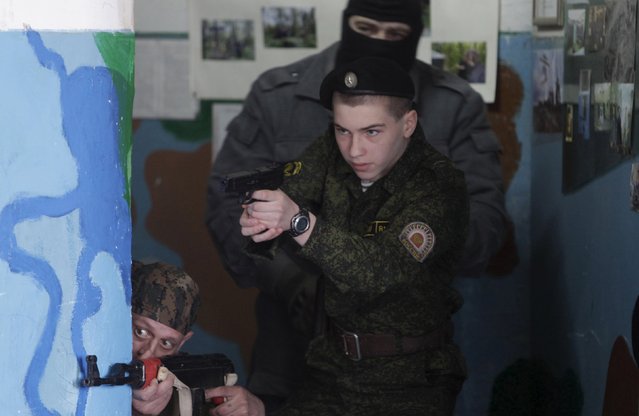
Members of the local Cossack community undergo military training at a boot camp set up by the Russkiye Vityazi (Russian Knights) military patriotic club in the village of Sengileyevskoye, south of Stavropol, March 22, 2015. (Photo by Eduard Korniyenko/Reuters)

Members of the local Cossack community undergo military training at a boot camp set up by the Russkiye Vityazi (Russian Knights) military patriotic club in the village of Sengileyevskoye, south of Stavropol, March 22, 2015. A group of cossacks from the village of Kazanskaya, who are planning a professional career at the military intelligence service, has arrived at a camp for training under the leadership of professional instructors. (Photo by Eduard Korniyenko/Reuters)
Details
23 Mar 2015 09:58:00
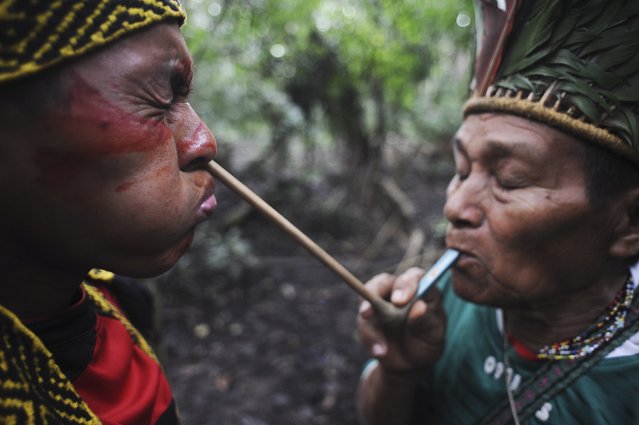
A spiritual leader (R) of the Huni Kui Indian tribe blows an herbal powder into the nose of a tribal member during a ceremony outside the village of Novo Segredo along the Envira river of Brazil's northwestern Acre state, March 9, 2014. (Photo by Lunae Parracho/Reuters)

A spiritual leader (R) of the Huni Kui Indian tribe blows an herbal powder into the nose of a tribal member during a ceremony outside the village of Novo Segredo along the Envira river of Brazil's northwestern Acre state, March 9, 2014. Many indigenous groups, including the Huni Kui, Ashaninka, and Madija, live in villages in the Brazilian rainforest near the border with Peru. (Photo by Lunae Parracho/Reuters)
Details
04 Apr 2014 08:18:00
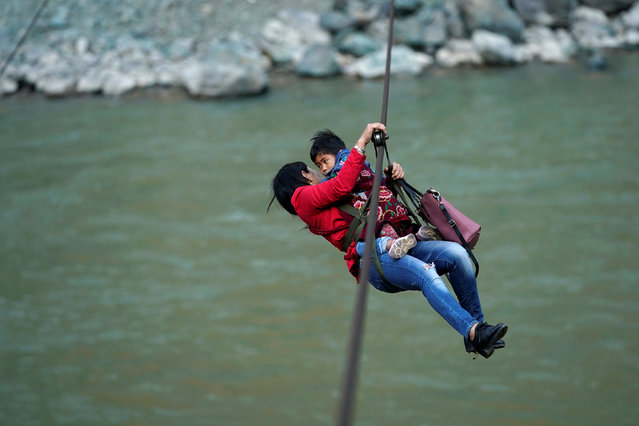
Cha Huilan, a 40-year old Lisu woman, and her daughter leave Lazimi village with a zipline across the Nu River in Nujiang Lisu Autonomous Prefecture in Yunnan province, China, March 24, 2018. (Photo by Aly Song/Reuters)

Cha Huilan, a 40-year old Lisu woman, and her daughter leave Lazimi village with a zipline across the Nu River in Nujiang Lisu Autonomous Prefecture in Yunnan province, China, March 24, 2018. Chinese mountain villagers, cut off from shops and churches by a raging river, use a zipline to cross its violent rapids and jagged rocks. (Photo by Aly Song/Reuters)
Details
28 May 2018 00:05:00
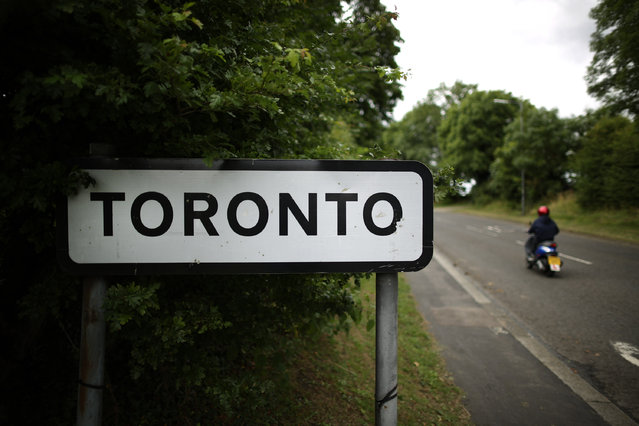
A road sign points the way on August 6, 2013 in Toronto, England. Originally called Newton Cap in the county of Durham, built for workers at the nearby colliery,  owner Henry Stobart re-named the village Toronto after visiting Canada. (Photo by Peter Macdiarmid/Getty Images)

A handful of villages in the U.K. share the same name as cities or countries from around the world, and they’re spending life in the shadows of their more famous namesakes. Photo: A road sign points the way on August 6, 2013 in Toronto, England. Originally called Newton Cap in the county of Durham, built for workers at the nearby colliery, owner Henry Stobart re-named the village Toronto after visiting Canada. (Photo by Peter Macdiarmid/Getty Images)
Details
29 Aug 2014 11:51:00
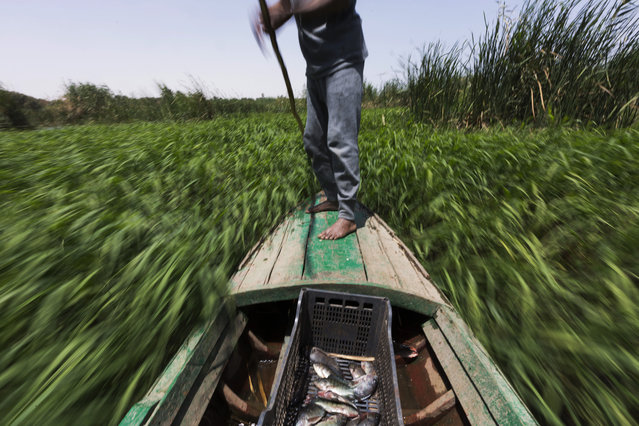
In this April 12, 2015 photo, Sayed Ahmed Abdoh poles his boat to check his fish traps in the Nile River, near Abu al-Nasr village, about 770 kilometers (480 miles) south of Cairo, Egypt. Abdoh caught some 20 fish this day and gave them to his friend, Salama Osman, a migrant worker in a Cairo apartment building, to celebrate his biannual return to their village. (Photo by Hiro Komae/AP Photo)

In this April 12, 2015 photo, Sayed Ahmed Abdoh poles his boat to check his fish traps in the Nile River, near Abu al-Nasr village, about 770 kilometers (480 miles) south of Cairo, Egypt. Abdoh caught some 20 fish this day and gave them to his friend, Salama Osman, a migrant worker in a Cairo apartment building, to celebrate his biannual return to their village. (Photo by Hiro Komae/AP Photo)
Details
06 May 2015 13:11:00
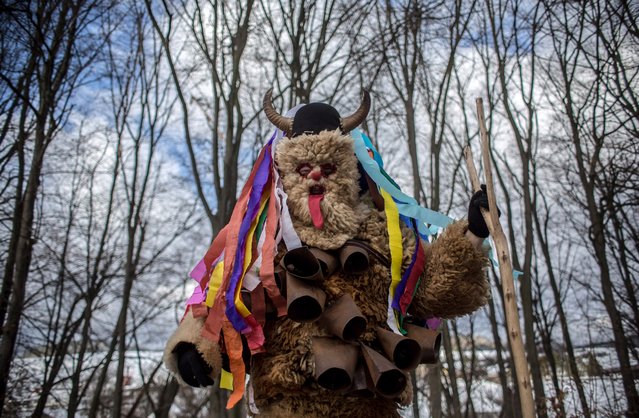
A participant dressed in a traditional devil costume walks from house to house during the traditional St. Nicholas parade on December 3, 2016 in village of Francova Lhota, Czech Republic. This type of parade is one of the most popular age-old traditions in a few villages in the Wallachia region of Eastern Czech Republic. St. Nicholas and company roam the streets going from house to house, for two or three days as St. Nicholas gives sweets and tiny gifts as a present to children and the devils get up to mischief. (Photo by Matej Divizna/Getty Images)

A participant dressed in a traditional devil costume walks from house to house during the traditional St. Nicholas parade on December 3, 2016 in village of Francova Lhota, Czech Republic. This type of parade is one of the most popular age-old traditions in a few villages in the Wallachia region of Eastern Czech Republic. St. Nicholas and company roam the streets going from house to house, for two or three days as St. Nicholas gives sweets and tiny gifts as a present to children and the devils get up to mischief. (Photo by Matej Divizna/Getty Images)
Details
05 Dec 2016 11:56:00