Loading...
Done
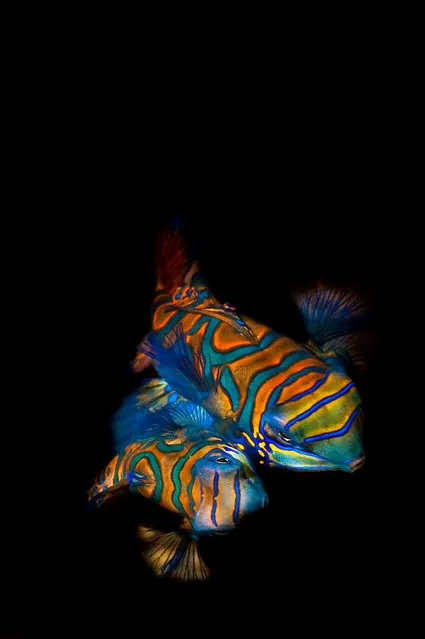
Mandarin Fish

The Mandarinfish or Mandarin dragonet (Synchiropus splendidus), is a small, brightly-colored member of the dragonet family, which is popular in the saltwater aquarium trade. The mandarinfish is native to the Pacific, ranging approximately from the Ryukyu Islands south to Australia.
Details
27 Nov 2012 10:02:00
An installation with a copy of a tank is seen at a villager's house in the village of Vits, Belarus November 8, 2016. (Photo by Vasily Fedosenko/Reuters)

An installation with a copy of a tank is seen at a villager's house in the village of Vits, Belarus November 8, 2016. (Photo by Vasily Fedosenko/Reuters)
Details
09 Nov 2016 06:32:00
Winners celebrate after the annual Lelo match in the village of Shukhuti, Georgia, May 1, 2016. (Photo by David Mdzinarishvili/Reuters)

Winners celebrate after the annual Lelo match in the village of Shukhuti, Georgia, May 1, 2016. The villagers of Zemo (upper) Shukhuti and Kvemo (lower) Shukhuti have played the game every Easter Sunday for generations, with each side trying to carry the 16-kilogram ball to their end of the neighbouring villages. (Photo by David Mdzinarishvili/Reuters)
Details
02 May 2016 11:01:00
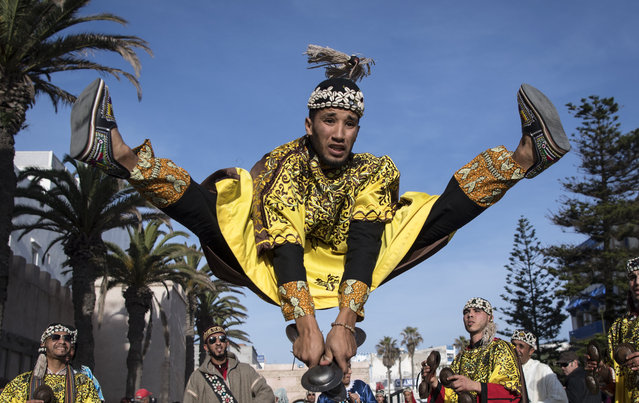
A Gnawa traditional group performs in the city of Essaouira on December 14, 2019, to celebrate the decision of adding the Gnawa culture to UNESCO's list of Intangible Cultural Heritage of Humanity. Gnawa culture, a centuries-old Moroccan practice rooted in music, African rituals and Sufi traditions, was added to UNESCO's list of Intangible Cultural Heritage of Humanity earlier in the week. Gnawa refers to a “set of musical productions, fraternal practices and therapeutic rituals where the secular mixes with the sacred”, according to the nomination submitted by Morocco. Often dressed in colourful outfits, Gnawa musicians play the guenbri, a type of lute with three strings, accompanied by steel castanets called krakebs. (Photo by Fadel Senna/AFP Photo)

A Gnawa traditional group performs in the city of Essaouira on December 14, 2019, to celebrate the decision of adding the Gnawa culture to UNESCO's list of Intangible Cultural Heritage of Humanity. Gnawa culture, a centuries-old Moroccan practice rooted in music, African rituals and Sufi traditions, was added to UNESCO's list of Intangible Cultural Heritage of Humanity earlier in the week. Gnawa refers to a “set of musical productions, fraternal practices and therapeutic rituals where the secular mixes with the sacred”, according to the nomination submitted by Morocco. Often dressed in colourful outfits, Gnawa musicians play the guenbri, a type of lute with three strings, accompanied by steel castanets called krakebs. (Photo by Fadel Senna/AFP Photo)

Details
18 Dec 2019 00:05:00
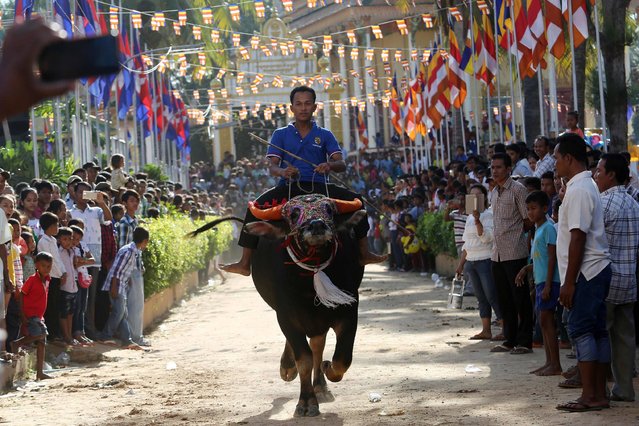
A Cambodian villager rides a buffalo during the Pchum Ben festival, the festival of death, at Vihear Suor village in Kandal province on October 1, 2016. Thousands of Cambodians descended on the small village northeast of the capital on October 1 to cheer on the annual water buffalo race that marks the end of the 15-day festival for the dead. (Photo by Chor Sokunthea/AFP Photo)

A Cambodian villager rides a buffalo during the Pchum Ben festival, the festival of death, at Vihear Suor village in Kandal province on October 1, 2016. Thousands of Cambodians descended on the small village northeast of the capital on October 1 to cheer on the annual water buffalo race that marks the end of the 15-day festival for the dead. (Photo by Chor Sokunthea/AFP Photo)
Details
03 Oct 2016 09:25:00
This picture taken on February 16, 2017 in Fangshan village in China's coastal province Fujians, shows a villager performing the “eating flowers” ritual. Villagers in eastern China have a unique way of washing away the taint of evil spirits – by bathing in a shower of scorching sparks. (Photo by Johannes Eisele/AFP Photo)

This picture taken on February 16, 2017 in Fangshan village in China's coastal province Fujians, shows a villager performing the “eating flowers” ritual. Villagers in eastern China have a unique way of washing away the taint of evil spirits – by bathing in a shower of scorching sparks. (Photo by Johannes Eisele/AFP Photo)
Details
19 Feb 2017 09:55:00
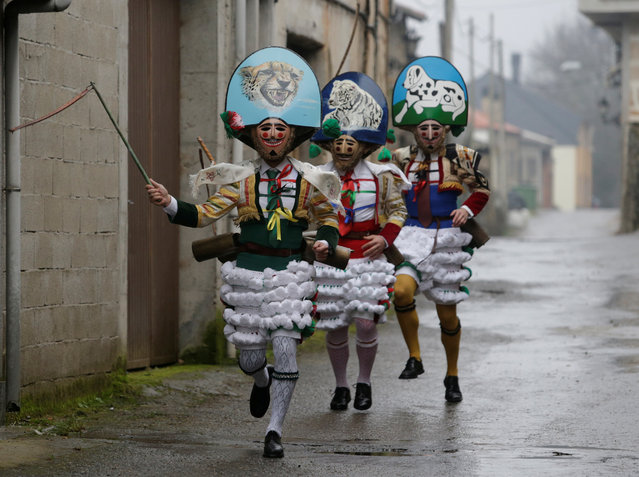
Carnival revellers dressed as “Peliqueiros” run along a street in the village of Laza, Spain February 11, 2018. “Peliqueiros”, or ancient tax collectors, pursued villagers through the streets ringing their cowbells and hitting villagers with their sticks. (Photo by Miguel Vidal/Reuters)

Carnival revellers dressed as “Peliqueiros” run along a street in the village of Laza, Spain February 11, 2018. “Peliqueiros”, or ancient tax collectors, pursued villagers through the streets ringing their cowbells and hitting villagers with their sticks. (Photo by Miguel Vidal/Reuters)
Details
12 Feb 2018 07:41:00
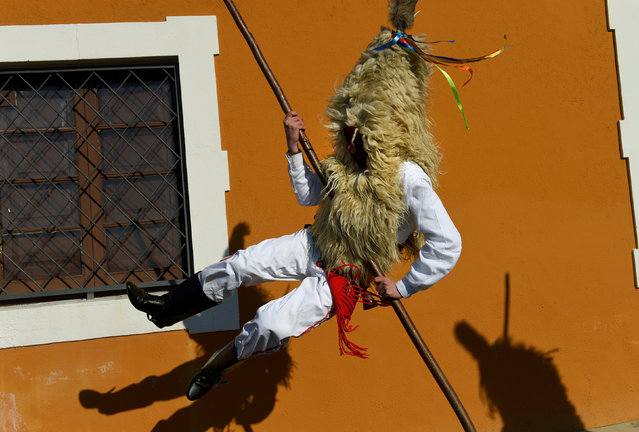
A villager jumps during “Los Sidros y Las Comedias”, a traditional festival in Spain's northern village of Valdesoto, January 8, 2017. (Photo by Eloy Alonso/Reuters)

A villager jumps during “Los Sidros y Las Comedias”, a traditional festival in Spain's northern village of Valdesoto, January 8, 2017. (Photo by Eloy Alonso/Reuters)
Details
10 Jan 2017 13:31:00