Loading...
Done
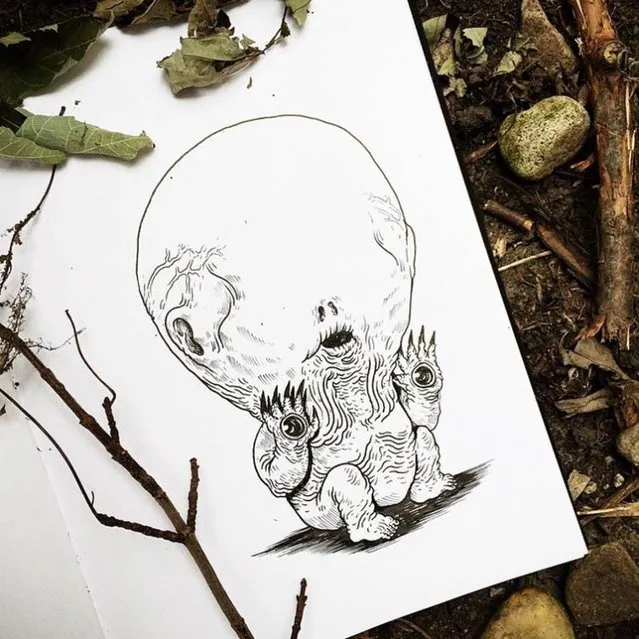
Alex Solis By Baby Terrors

Chicago-based illustrator Alex Solis created an ink drawing a day with a bizarre theme – he re-imagined what some of the most popular horror characters ever might look like as cute little (murderous) babies.
Details
21 May 2015 16:38:00
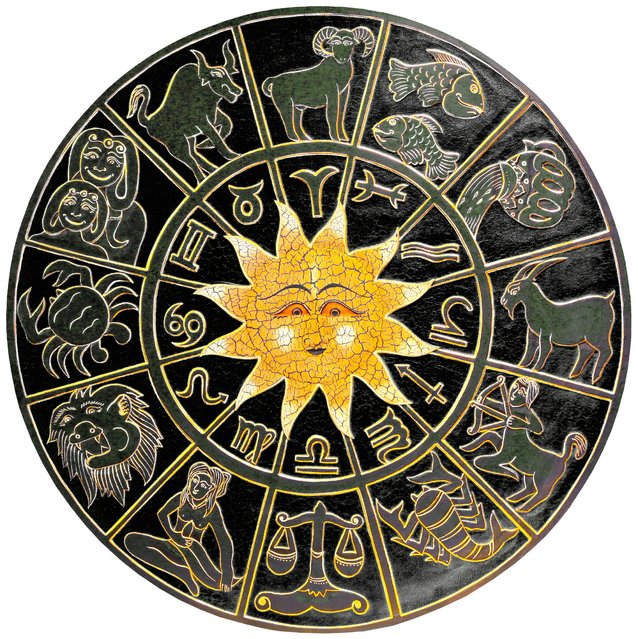
Black horoscope wheel. (Photo by Toma Petrovic)

Find out what 2014 has in store for you and your cash. Provided by Russell Grant Horoscopes. (Photo by Toma Petrovic)


Details
24 Mar 2014 08:58:00
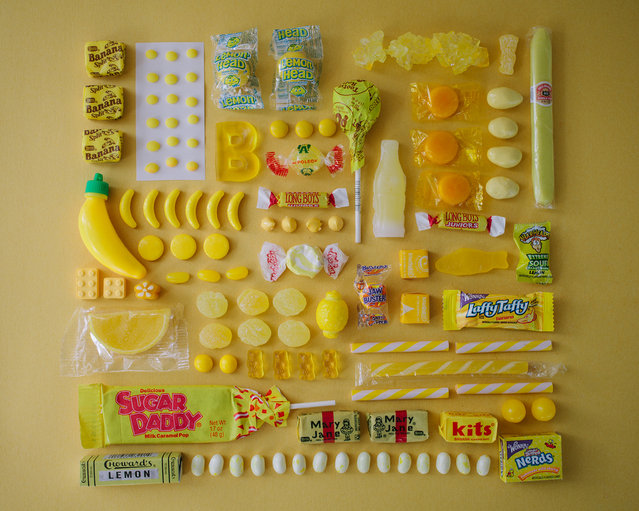
Sugar Series By Emily Blincoe

Emily Blincoe is an artist from Austin, Texas. Apparently, she likes to collect and classify things. This is cute, what a sugar overdose.
Details
06 Dec 2013 12:00:00
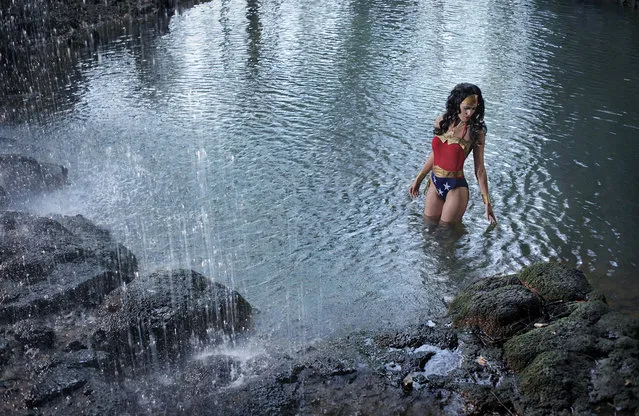
Lonely Superheroes By Benoit Lapray

What do superheroes do when they’re not busy fighting bad guys and saving the world from destruction? Perhaps they’re drawing strength alone in the peace and quiet of the great outdoors. That’s the premise of French photographer Benoit Lapray‘s photo-manipulation series “The Quest for the Absolute.”
Details
23 Sep 2014 10:50:00
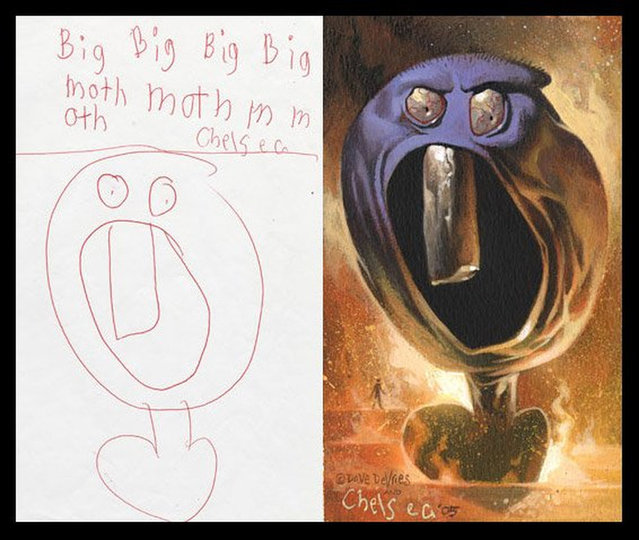
Children’s Drawings Transformed by Dave Devries

Dave Devries applied his skills to transform children’s drawings to what they might try to express.
Details
19 Sep 2012 12:53:00
This Thursday, January 22, 2015 photo made with a long exposure shows the glow from a Noctiluca scintillans algal bloom along the seashore in Hong Kong. The luminescence, also called Sea Sparkle, is triggered by farm pollution that can be devastating to marine life and local fisheries, according to University of Georgia oceanographer Samantha Joye. (Photo by Kin Cheung/AP Photo)

This Thursday, January 22, 2015 photo made with a long exposure shows the glow from a Noctiluca scintillans algal bloom along the seashore in Hong Kong. The luminescence, also called Sea Sparkle, is triggered by farm pollution that can be devastating to marine life and local fisheries, according to University of Georgia oceanographer Samantha Joye. Noctiluca itself does not produce neurotoxins like other similar organisms do. But its role as both prey and predator tends can eventually magnify the accumulation of toxins in the food chain, according to R. Eugene Turner at Louisiana State University. (Photo by Kin Cheung/AP Photo)
Details
23 Jan 2015 13:12:00
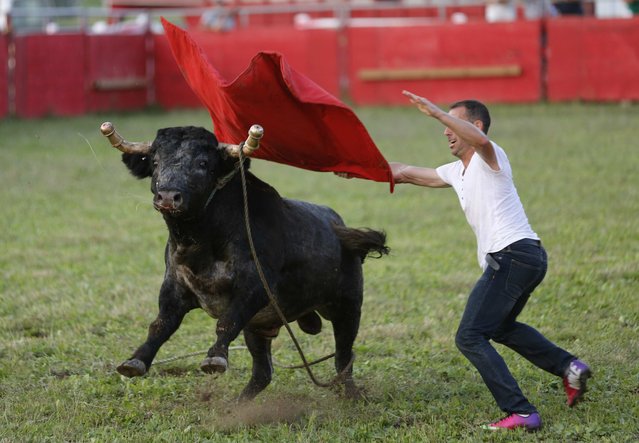
Matador Marco Espinola, who emigrated from the Azores two years ago, challenges a bull during an Azorean “tourada a corda” (bullfight by rope) in Brampton, Ontario August 15, 2015. (Photo by Chris Helgren/Reuters)

Matador Marco Espinola, who emigrated from the Azores two years ago, challenges a bull during an Azorean “tourada a corda” (bullfight by rope) in Brampton, Ontario August 15, 2015. Bulls in a tourada a corda are held by a rope controlled by a team of men to make sure the animal does not cause injury. Bulls are never killed, in contrast with bullfighting in Spain. The Portuguese population in Canada, numbering 429,000 in the 2011 census, mainly centers around Toronto with immigrants from the nine islands of the mid-Atlantic Azores archipelago. (Photo by Chris Helgren/Reuters)
Details
18 Aug 2015 13:39:00
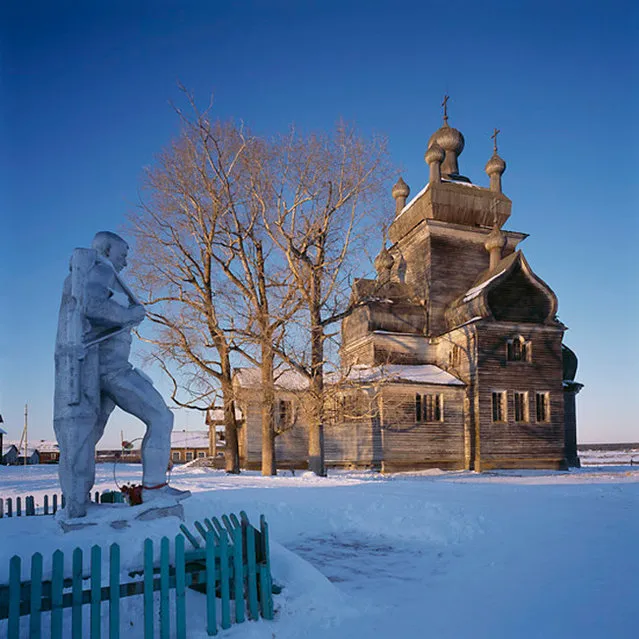
Wooden Churches - Travelling In The Russian North By Richard Davies Part 2

While communism, collectivism, worms, dry rot and casual looting failed to destroy the majestic wooden churches of Russia, it may be ordinary neglect that finally does them in. Dwindled now to several hundred remaining examples, these glories of vernacular architecture lie scattered amid the vastness of the world’s largest country. Just over a decade ago, Richard Davies, a British architectural photographer, struck out on a mission to record the fragile and poetic structures. Austerely beautiful and haunting, “Wooden Churches: Traveling in the Russian North” (White Sea Publishing; $132) is the result. Covering thousands of miles, Mr. Davies described how he and the writer Matilda Moreton tracked down the survivors from among the thousands of onion-domed structures built after Prince Vladimir converted to Christianity in 988.

See also: Wooden Churches Part1

Details
28 Nov 2013 12:13:00