Loading...
Done
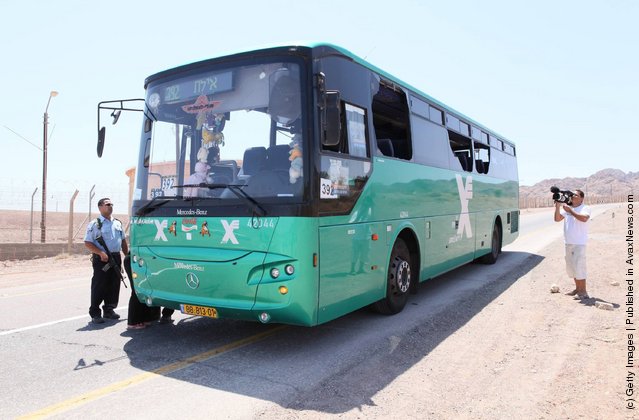
Several Killed In Attacks Near Egyptian Border

Bus 392 stands on the highway running from Beersheva to Eilat, with windows broken following a gun attack on August 18, 2011 near the Israel - Egypt border, Israel. A series of coordinated gun and roadside bomb attacks against miltary and civilian targets near the Israeli - Egyptian border, including an ambush on the bus travellling 20km north of Eilat, are reported to have left 5 dead and many injured. (Photo by Yehuada Ben Itah/Getty Images)
Details
19 Aug 2011 09:08:00
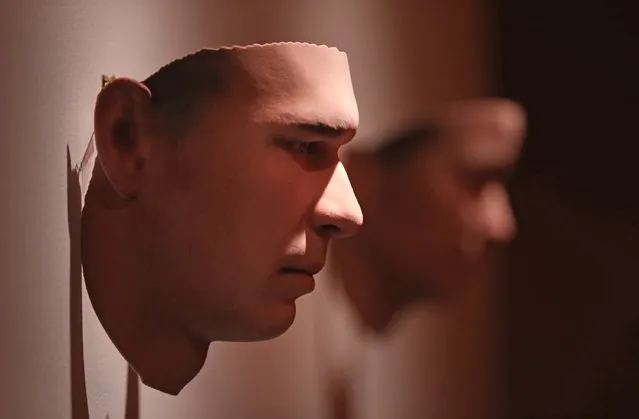
Artist Heather Dewey-Hagborg's 'Stranger Visions', comprising of 3D printed faces extracted from DNA taken from discarded cigarette butts and chewing gum, is displayed at the Big Bang Data exhibition at Somerset House on December 2, 2015 in London, England. (Photo by Peter Macdiarmid/Getty Images for Somerset House)

Artist Heather Dewey-Hagborg's 'Stranger Visions', comprising of 3D printed faces extracted from DNA taken from discarded cigarette butts and chewing gum, is displayed at the Big Bang Data exhibition at Somerset House on December 2, 2015 in London, England. The show highlights the data explosion that's radically transforming our lives. It opens on December 3, 2015 and runs until February 28, 2016 at Somerset House. (Photo by Peter Macdiarmid/Getty Images for Somerset House)
Details
04 Dec 2015 08:03:00


“The Portuguese Water Dog is a breed of working dog as classified by the American Kennel Club. Portuguese Water Dogs are originally from the Portuguese region of the Algarve, from where the breed expanded to all around Portugal's coast, where they were taught to herd fish into fishermen's nets, to retrieve lost tackle or broken nets, and to act as couriers from ship to ship, or ship to shore. Portuguese Water Dogs rode in bobbing fishing trawlers as they worked their way from the warm Atlantic waters of Portugal to the frigid fishing waters off the coast of Iceland where the fleets caught cod to bring home. Portuguese Water Dogs were often taken with sailors during the Portuguese discoveries”. – Wikipedia

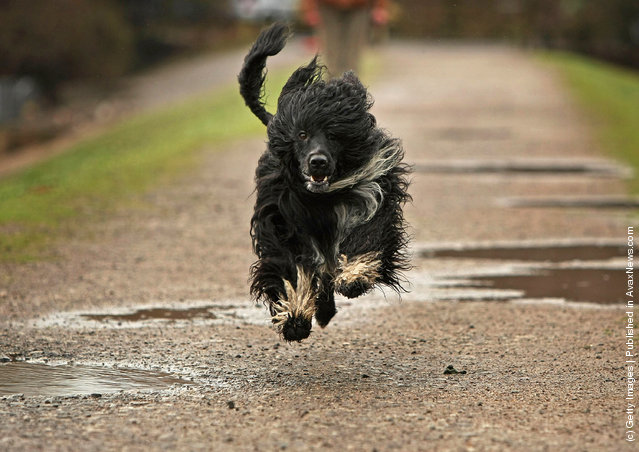
Photo: Kix, a Portuguese Water Dog , enjoys a walk around the muddy fields near his home before the grooming and preparation starts for this years Crufts on March 3, 2009 in Telford, England. (Photo by Christopher Furlong/Getty Images)
Details
26 Jul 2011 11:27:00


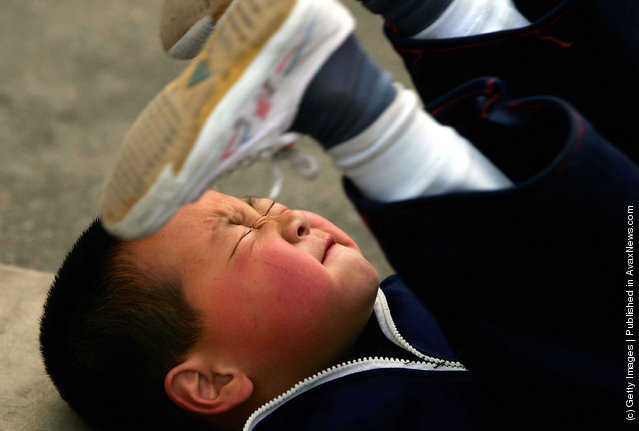
Wang Zeyu, 4, a fee-paying enthusiast of kung fu, practises during a training class at a kung fu school near the Shaolin Temple April 10, 2005 in Dengfeng, Henan Province, China. Zeyu's father sent him to the school from his home in Jiangsu Province, thousands kilometres away from Dengfeng, when he was just 3 years old. And his father must pay 9,800 yuan (US$1195) for one year's tuition at the school, a huge amount for most Chinese. There are more than 80 kung fu schools that line the road from the city of Dengfeng to the Shaolin Temple with hundreds and thousands of young kung-fu lovers from all over the country and beyond studying here. All the schools use the Shaolin name to attract students as the Shaolin Temple is the birthplace of Chinese Kung Fu. (Photo by Cancan Chu/Getty Images)
Details
06 Jul 2011 11:21:00
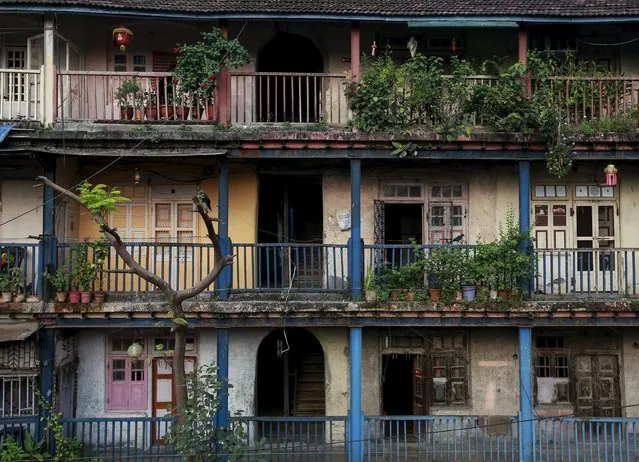
Windows and doors of an old residential building are pictured in central Mumbai October 10, 2014. The cost for buying a residential apartment in Mumbai close to the city centre ranges from 12,000 Indian rupees ($ 200) per square feet to 112,552 Indian rupees ($ 1800) per square feet. (Photo by Danish Siddiqui/Reuters)

In Mumbai, the windows of new high-rise apartment blocks, old low-rise residential buildings and shantytown shacks portray the disparity in living conditions and incomes in the Indian city. Rents for a place to live range from more than $2,000 to less than $5 a month. Here: Windows and doors of an old residential building are pictured in central Mumbai October 10, 2014. The cost for buying a residential apartment in Mumbai close to the city centre ranges from 12,000 Indian rupees ($ 200) per square feet to 112,552 Indian rupees ($ 1800) per square feet. (Photo by Danish Siddiqui/Reuters)
Details
23 Apr 2015 12:29:00


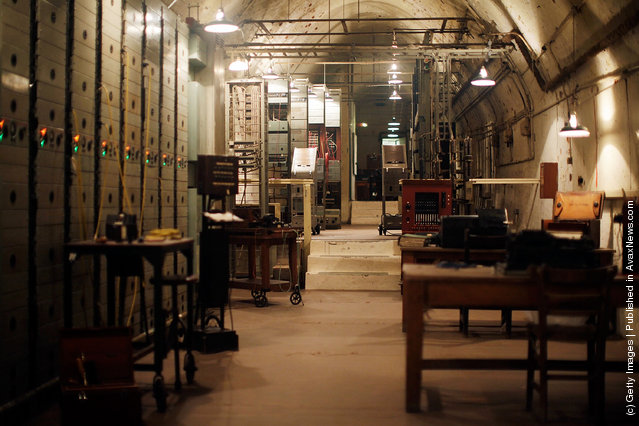
“Dover Castle is a medieval castle in the town of the same name in the English county of Kent. It was founded in the 12th century and has been described as the “Key to England” due to its defensive significance throughout history. It is the largest castle in England.

The outbreak of the Second World War in 1939 saw the tunnels converted first into an air-raid shelter and then later into a military command centre and underground hospital. In May 1940, Admiral Sir Bertram Ramsey directed the evacuation of French and British soldiers from Dunkirk, code-named Operation Dynamo, from his headquarters in the cliff tunnels”. – Wikipedia

Photo: The Repeater Station in the subterranean tunnels underneath Dover Castle, which has been restored by English Heritage for a public exhibition on June 3, 2011 in Dover, England. The evacuation of allied soldiers from Dunkirk was masterminded and co-ordinated from the secret command and control centre in the tunnels deep below the castle. (Photo by Matthew Lloyd/Getty Images)
Details
07 Jun 2011 09:26:00


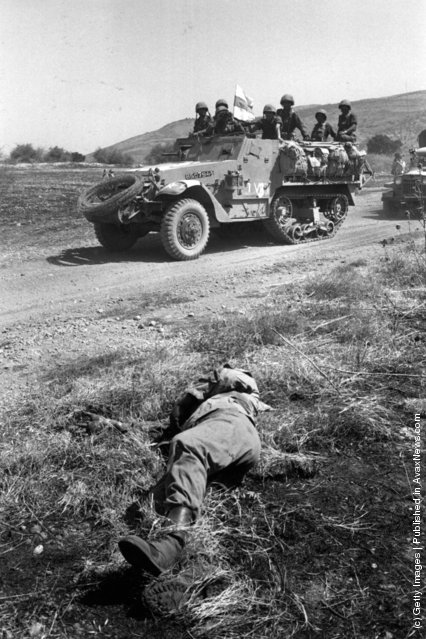
“The Six-Day War or June War, also known as the 1967 Arab-Israeli War or the Third Arab-Israeli War, was fought between June 5 and June 10, 1967, by Israel and the neighboring states of Egypt (known then as the United Arab Republic [UAR]), Jordan, and Syria. The war began with a large-scale surprise air strike by Israel on Egypt. The outcome was a swift and decisive Israeli victory. Israel took effective control of the Gaza Strip and the Sinai Peninsula from Egypt, the West Bank and East Jerusalem from Jordan, and the Golan Heights from Syria. Opinions are divided on whether Israel's attack was an act of aggression or a preemptive strike of a defensive nature”. – Wikipedia

Photo: The corpse of a soldier lying on the line of the Israeli advance into Syria during the Six-Day War. (Photo by Terry Fincher/Getty Images). 1967
Details
21 May 2011 08:29:00
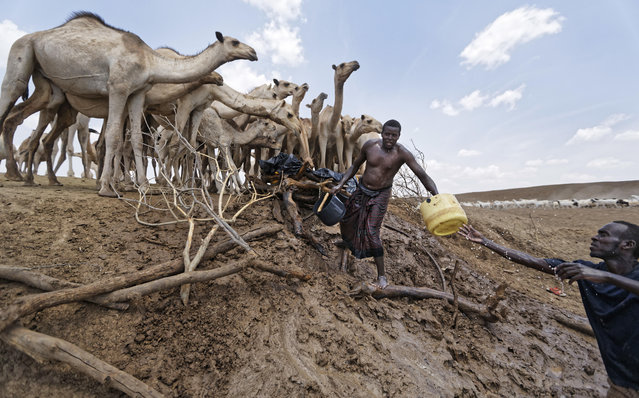
Camel herders scoop up water in plastic buckets from one of the few watering holes in the area, to water their animals near the drought-affected village of Bandarero, near Moyale town on the Ethiopian border, in northern Kenya, Friday, March 3, 2017. The U.N. humanitarian chief, Stephen O'Brien, toured Bandarero village on Friday and called on the international community to act to “avert the very worst of the effects of drought and to avert a famine to make sure we don't go from what is deep suffering to a catastrophe”. (Photo by Ben Curtis/AP Photo)

Camel herders scoop up water in plastic buckets from one of the few watering holes in the area, to water their animals near the drought-affected village of Bandarero, near Moyale town on the Ethiopian border, in northern Kenya, Friday, March 3, 2017. The U.N. humanitarian chief, Stephen O'Brien, toured Bandarero village on Friday and called on the international community to act to “avert the very worst of the effects of drought and to avert a famine to make sure we don't go from what is deep suffering to a catastrophe”. (Photo by Ben Curtis/AP Photo)
Details
05 Mar 2017 00:03:00