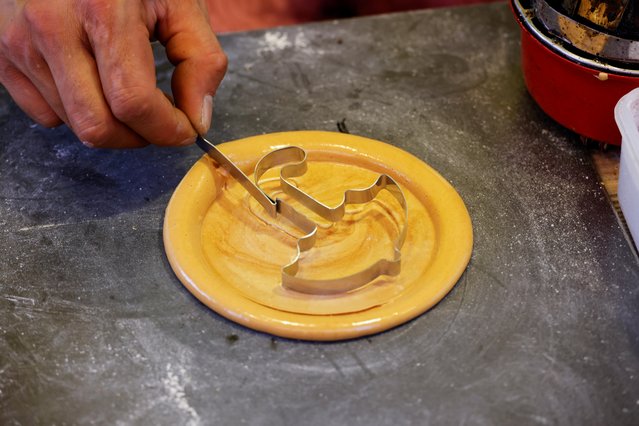
A street vendor sells Dalgona candy from the Korean Netflix series “Squid Game” at a Dalgona shop in Seoul, South Korea, October 1, 2021. (Photo by Heo Ran/Reuters)
Festival-goers enjoy a fairground ride at Reading Festival in Reading, west of London, on August 27, 2021. As coronavirus covid-19 infection levels rise across the country, vaccines will be offered to revellers throughout the weekend. The organiser of Reading and Leeds Festivals has said such events are arguably “safer places to be” because attendees have been tested for covid-19. The festivals are returning this year with headliners including Stormzy, after being cancelled last year due to the pandemic. (Photo by Daniel Leal-Olivas/AFP Photo)
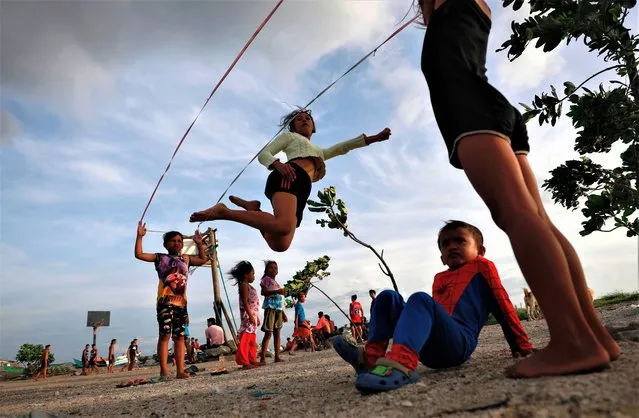
Filipino children play at a fishing village along the coast of Manila Bay, Philippines, 30 May 2023. As a precaution of approaching Typhoon Mawar, Philippine government authorities have evacuated thousands of residents, imposed a no-sail ban, suspended school classes, and shutdown offices in the northern part of Luzon island, the country's largest and most populous island. (Photo by Francis R. Malasig/EPA/EFE/Rex Features/Shutterstock)
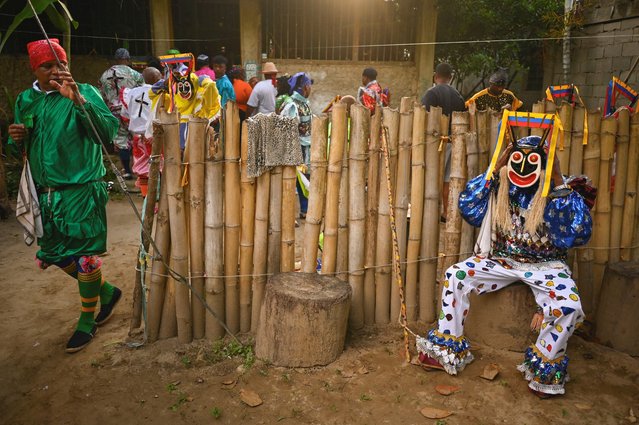
A member of the Brotherhood of the Diablos Danzantes de Chuao (Dancing Devils of Chuao) arranges his mask during the Corpus Christi festival in the town of Chuao, Aragua state, Venezuela on June 18, 2025. (Photo by Maxwell Briceno/Reuters)
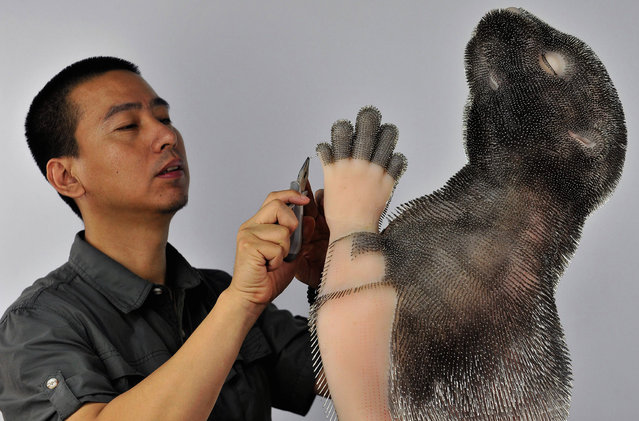
Professor Xie Yong works on an art installation of a beaver, which is made out of plastic and around 300,000 needles, in Shenyang, Liaoning province, July 23, 2013. The needles, according to Xie, represent the pain felt by animals when their fur is taken off to produce clothing. (Photo by Reuters/Stringer)
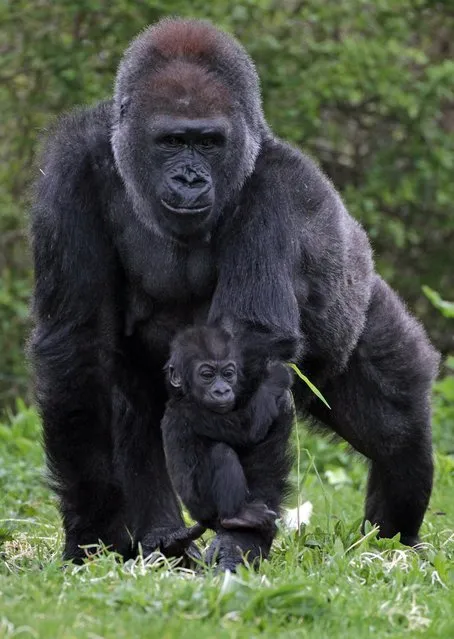
Bristol Zoo's baby gorilla Kukena holds onto his mother's arm as he ventures out of his enclosure at Bristol Zoo's Gorilla Island on May 4, 2012 in Bristol, England. The seven-month-old western lowland gorilla is starting to find his feet as he learns to walk having been born at the zoo in September. Kukena joins a family of gorillas at the zoo that are part of an international conservation breeding programme for the western lowland gorilla, which is a critically endangered species. (Photo by Matt Cardy)
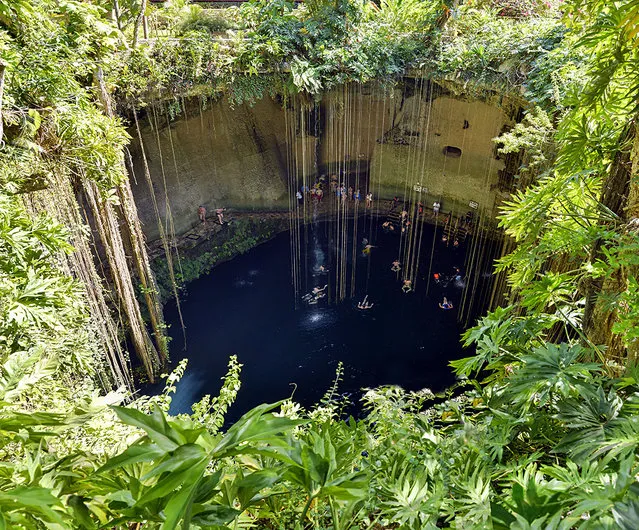
A cenote is a natural phenomenon, a sinkhole in the Earth’s surface. The Yucatan Peninsula in Mexico has an estimated 7,000 cenotes because it is primarily made up of porous limestone. For millions of years, rainfall slowly ate away at the limestone and a huge system of underground caves and caverns was formed. Many filled with water from rain or from the underground water table. When the roof of a water filled cave collapses, a cenote is born. The water found in a cenote may be fresh water, salt water, or both. Structurally it may be completely open, like a lake, almost completely closed with just a small opening at the top, or somewhere in between.