Loading...
Done
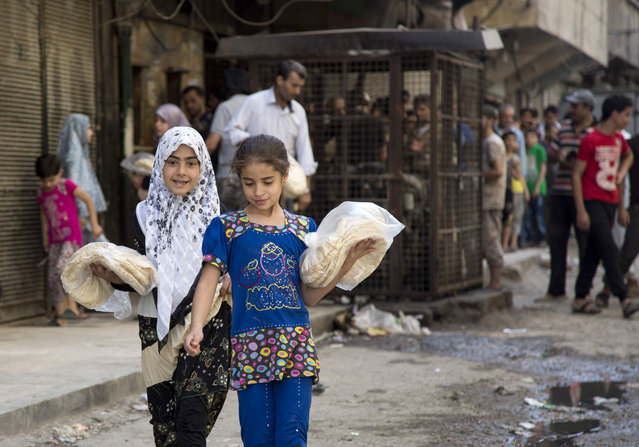
Syrian girls carry bags with bread as people queue up outisde a bakery in a rebel held neighbourhood in the northern city of Aleppo on July 12, 2016. Since mid-2012, Aleppo has been roughly divided between government control in the west and rebel control in the east, and has suffered enormous destruction in the war that has killed more than 280,000 people nationwide. Last week, a government advance brought regime troops within firing range of the Castello Road, the only remaining supply route into the opposition-held east, effectively severing rebel neighbourhoods from the outside world. With their route to the outside world cut, there is no new flour coming to the city's bakeries, and fuel to light their ovens is also now hard to find. (Photo by Karam Al-Masri/AFP Photo)

Syrian girls carry bags with bread as people queue up outisde a bakery in a rebel held neighbourhood in the northern city of Aleppo on July 12, 2016. Since mid-2012, Aleppo has been roughly divided between government control in the west and rebel control in the east, and has suffered enormous destruction in the war that has killed more than 280,000 people nationwide. Last week, a government advance brought regime troops within firing range of the Castello Road, the only remaining supply route into the opposition-held east, effectively severing rebel neighbourhoods from the outside world. With their route to the outside world cut, there is no new flour coming to the city's bakeries, and fuel to light their ovens is also now hard to find. (Photo by Karam Al-Masri/AFP Photo)
Details
08 Aug 2016 10:02:00
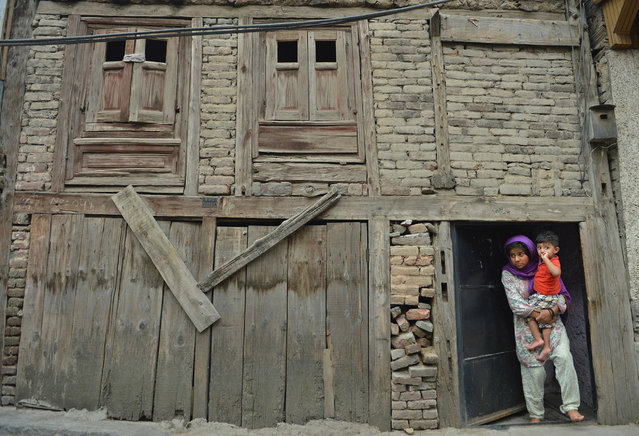
A Kashmiri girl holds her brother in the doorway of their home while watching protesters shout pro-freedom and anti-Indian slogans during  mourning and protests held in downtown Srinagar on August 22, 2016, following the killing of teenager Irfan Ahmed by security forces. Teenager Irfan Ahmed was killed after he was hit in the chest by a teargas canister fired by Indian security forces to quell pro-freedom protests in the Kashmiri capital on August 21. More than 60 civilians have been killed in clashes between protesters and security forces, and thousands more injured in the worst violence to hit the Himalayan region since 201. Indian-administered Kashmir has been in the grip of almost daily anti-India protests and rolling curfews sparked by the killing on July 8 of a popular rebel leader, Burhan Wani, in a gunfight with government forces. (Photo by Tauseef Mustafa/AFP Photo)

A Kashmiri girl holds her brother in the doorway of their home while watching protesters shout pro-freedom and anti-Indian slogans during mourning and protests held in downtown Srinagar on August 22, 2016, following the killing of teenager Irfan Ahmed by security forces. Teenager Irfan Ahmed was killed after he was hit in the chest by a teargas canister fired by Indian security forces to quell pro-freedom protests in the Kashmiri capital on August 21. More than 60 civilians have been killed in clashes between protesters and security forces, and thousands more injured in the worst violence to hit the Himalayan region since 201. Indian-administered Kashmir has been in the grip of almost daily anti-India protests and rolling curfews sparked by the killing on July 8 of a popular rebel leader, Burhan Wani, in a gunfight with government forces. (Photo by Tauseef Mustafa/AFP Photo)
Details
25 Aug 2016 09:48:00
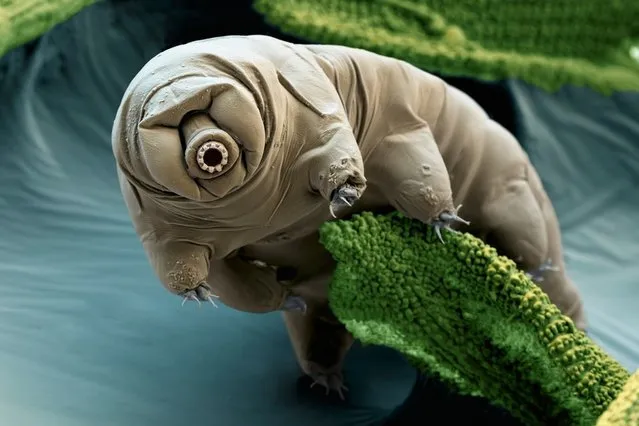
Tardigrades (commonly known as waterbears or moss piglets). (Photo by SPL/East News)

“Tardigrades (commonly known as waterbears or moss piglets) are small, water-dwelling, segmented animals with eight legs. Tardigrades were first discovered in 1773 by Johann August Ephraim Goeze, who called them kleiner Wasserbär, meaning “little water bear” in German. The name Tardigrada means “slow walker” and was given by Lazzaro Spallanzani in 1777. The name water bear comes from the way they walk, reminiscent of a bear's gait. The biggest adults may reach a body length of 1.5 millimetres (0.059 in), the smallest below 0.1 mm. Freshly hatched tardigrades may be smaller than 0.05 mm”. – Wikipedia. Photo: Tardigrades. (Photo by SPL/East News)
Details
26 Sep 2012 09:55:00
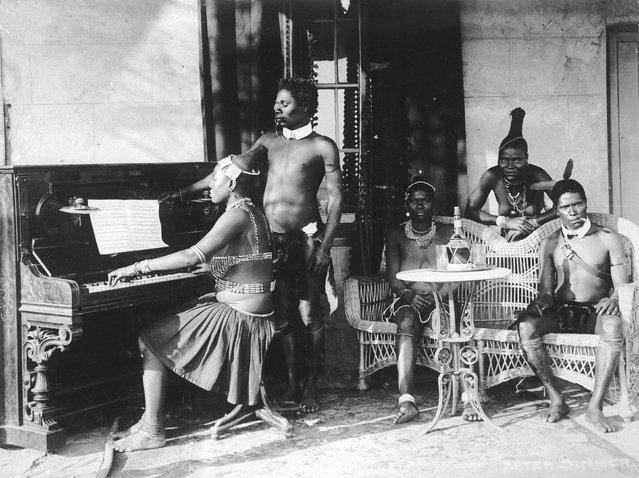
circa 1925:  A Zulu woman playing the piano while a group of others sit and listen.  (Photo by General Photographic Agency/Getty Images)

“The Zulu are the largest South African ethnic group, with an estimated 10–11 million people living mainly in the province of KwaZulu-Natal. Small numbers also live in Zimbabwe, Zambia, and Mozambique. Their language, Zulu, is a Bantu language; more specifically, part of the Nguni subgroup. The Zulu Kingdom played a major role in South African history during the 19th and 20th centuries. Under apartheid, Zulu people were classed as third-class citizens and suffered from state-sanctioned discrimination. They remain today the most numerous ethnic group in South Africa, and now have equal rights along with all other citizens”. – Wikipedia.

Photo: A Zulu woman playing the piano while a group of others sit and listen (to put it briefly, Englishmen scoff over Zulu). South Africa, circa 1925. (Photo by General Photographic Agency)

Details
03 Feb 2014 09:40:00
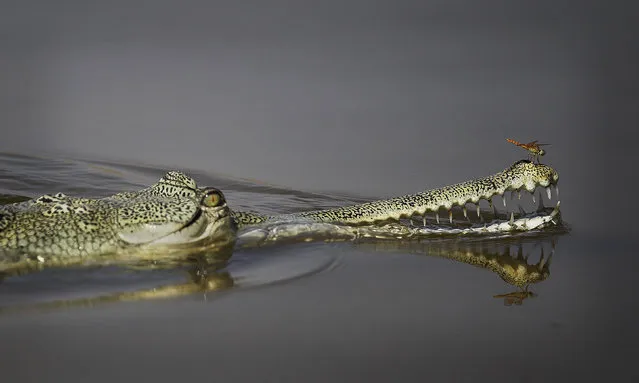
In this photo taken Wednesday, April 30, 2014, a dragonfly sits on the nose of a Gharial, rare crocodile-like creatures, in the River Chambal near Bhopepura village in the northern Indian state of Uttar Pradesh. The narrow 250-mile stretch of the Chambal is a place of crocodiles and jackals, of river dolphins and the occasional wolf. Hundreds of species of birds, storks, geese, babblers, larks, falcons and so many more, nest along the river. (Photo by Altaf Qadri/AP Photo)

In this photo taken Wednesday, April 30, 2014, a dragonfly sits on the nose of a Gharial, rare crocodile-like creatures, in the River Chambal near Bhopepura village in the northern Indian state of Uttar Pradesh. The narrow 250-mile stretch of the Chambal is a place of crocodiles and jackals, of river dolphins and the occasional wolf. Hundreds of species of birds, storks, geese, babblers, larks, falcons and so many more, nest along the river. Endangered birds lay small speckled eggs in tiny pits they dig in the sandbars. Gharials, rare crocodile-like creatures that look like they swaggered out of the Mesozoic Era, are commonplace here and nowhere else. (Photo by Altaf Qadri/AP Photo)
Details
23 Feb 2015 12:55:00
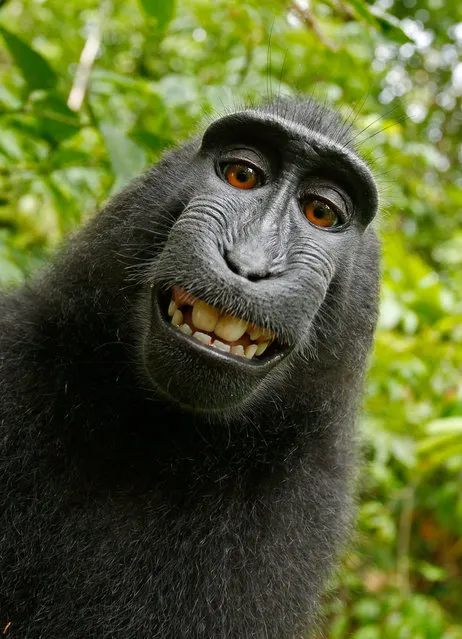
These are the chimp-ly marvellous images captured by a cheeky monkey after turning the tables on a photographer who left his camera unmanned. (Photo by David Slater)

These are the chimp-ly marvellous images captured by a cheeky monkey after turning the tables on a photographer who left his camera unmanned. The inquisitive scamp playfully went to investigate the equipment before becoming fascinated with his own reflection in the lens. And it wasnt long before the crested black macaque hijacked the camera and started snapping away sending award-winning photographer David Slater bananas. David, from Coleford, Gloucestershire, was on a trip to a small national park north of the Indonesian island of Sulawesi when he met the incredibly friendly bunch. (Photo by David Slater/Caters News)
Details
10 Aug 2014 11:04:00
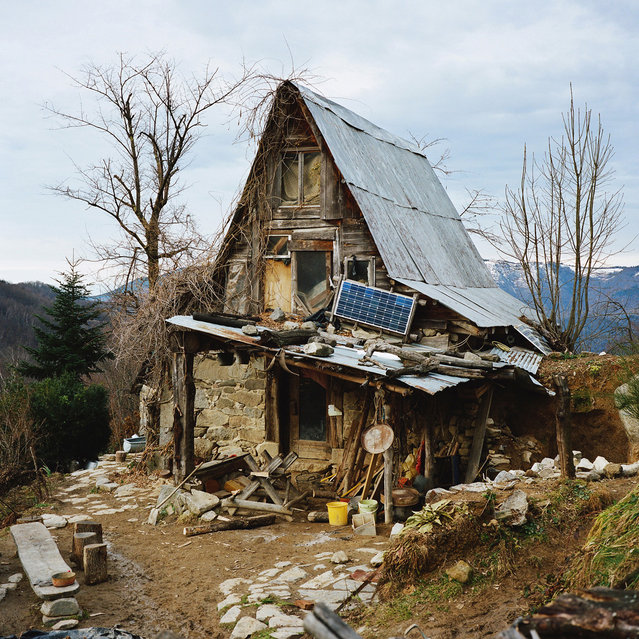
This property in the French Pyrenees is owned by a German man, who moved with his family here 25 years ago. He has since renovated the shack to be a completely self-sufficient house. There are no electrical appliances, but the solar panel powers small lights in the house. (Photo by Antoine Bruy)

Back in 2010, French photographer Antoine Bruy began hitchhiking around Europe without any fixed route. Along his travels, he met people who had entirely abandoned city life in favour of an isolated country existence they found more fulfilling. Bruy began seeking out people who lived off-the-grid. After three years on the road, staying in makeshift houses and on community farms, he has released Scrublands, a documentation of the lifestyle. While each living situation is different, Bruy found that all the people he met shared a common desire to escape the rat race and achieve a quieter life in harmony with nature. (Photo by Antoine Bruy)
Details
13 Aug 2014 09:45:00
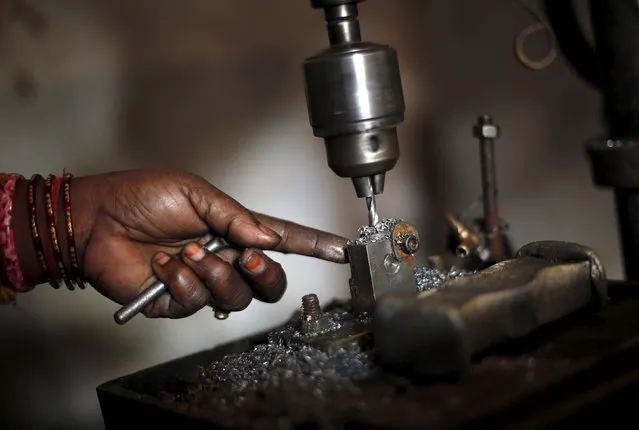
A worker makes auto parts on a machine inside a workshop in Faridabad, India, December 24, 2015. (Photo by Adnan Abidi/Reuters)

A worker makes auto parts on a machine inside a workshop in Faridabad, India, December 24, 2015. Car makers such as Maruti Suzuki India and Hyundai Motor see huge growth in India, set to become the world's third-largest auto market by 2020 as millions buy their first new car. Price tags can be as low as $3,000 for a new Tata Motors Nano mini-car. India is also becoming a low-cost export hub for global car makers such as General Motors and Ford Motor. As the sector expands, some of the work is sub-contracted out to small factories operating on paper-thin margins, where poor contract workers often have little or no access to safety equipment or health benefits. (Photo by Adnan Abidi/Reuters)
Details
23 Jan 2016 13:31:00