Loading...
Done
Crime Tatoo  Part 2

Tattoos are commonly used among criminals to show gang membership and record the wearer's personal history—such as his or her skills, specialties, accomplishments and convictions. They are also used as a means of personal expression. Certain designs have developed recognized coded meanings. The code systems can be quite complex and because of the nature of what they encode, the tattoo designs are not widely recognized.
Details
24 Apr 2013 09:49:00
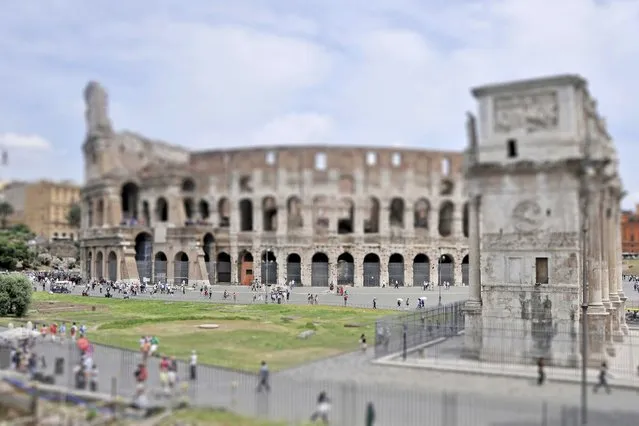
Coliseum, Rome. (Photo by Richard Silver)

Richard Silver's photographs show us the world's biggest sights like Machu Picchu in Peru or Copacabana in Brazil. His photos, however, are not simply depictions of the landmarks but planned, artistic visual constructions that, with their playful combinations of sharpness and blur, create new worlds of experience. Photo: Coliseum, Rome. (Photo by Richard Silver)
Details
04 May 2013 11:19:00
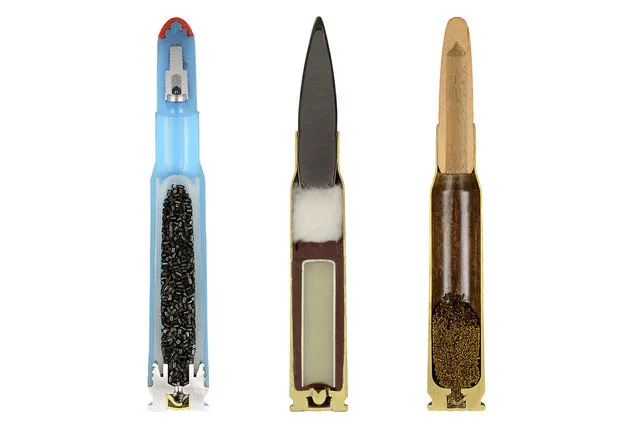
Cross Sections Of Bullets By Sabine Pearlman

Sabine Pearlman‘s photographs find beauty in the destructive engineering of ammunition with this series of cross-sections of bullets cartridges from a Swiss bunker. They reveal the complexity inside each case. This series, which consists of 900 specimens, was photographed inside a WWII bunker in Switzerland. Pearlman says that she is intrigued by the beautiful complexity of the ammo set against its destructive purpose, at once showing off humanity’s ability to create and destroy.
Details
27 Jun 2013 12:42:00
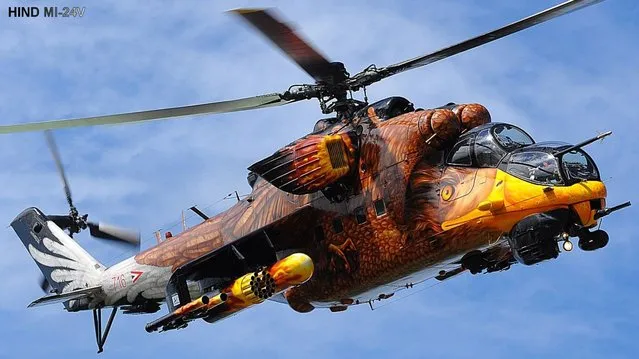
Painted Mil Mi-24 Hind

The pictures are not of an American helicopter, but of a Russian MI-24 "Hind" assault helicopter. It was used extensively by the Soviets in Afghanistan but this paint-job does not appear to be for combat. We suspect it is for purposes of promotion or public performance. There are some pictures of it on display at an air show at Szentkirályszabadja, Hungary. Whether there are others like it, we don't know, the the only pictures of this paint scheme are all on the same helicopter designated number 117.
Details
30 Jun 2013 11:04:00
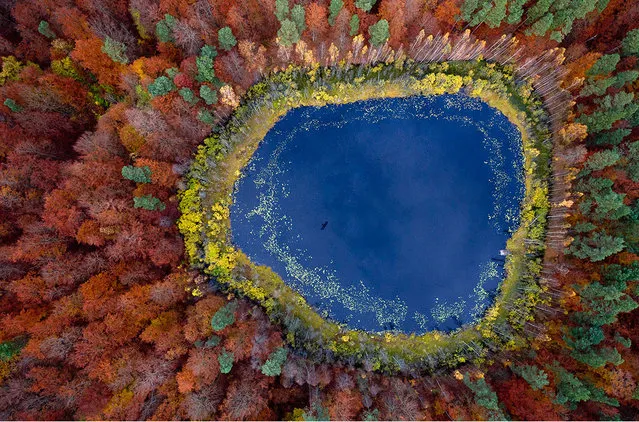
Photos By Kacper Kowalski

Kacper Kowalski was born in 1977. With a degree in architecture, he focuses on aerial photography. Both a pilot and a photographer, he has unique control over each shot. As a result he captures previously unseen natural environments and ordinarily inaccessible cityscapes. In this way unreal, almost graphic pictures come into being. They show patterns, symmetries and asymmetries created by humans and the nature.
Details
04 Jul 2013 11:31:00
Lego Anatomy by Jason Freeny

Jason Freeny is pretty well known for his dissection illustrations and toys, showing the inner workings of just about every pop culture icon or toy out there. His latest drool-worthy work is a trio of 18″ anatomical Lego men figures. You can see Jason’s entire creation process of these little masterpieces via his Facebook.
Details
10 Aug 2013 07:04:00
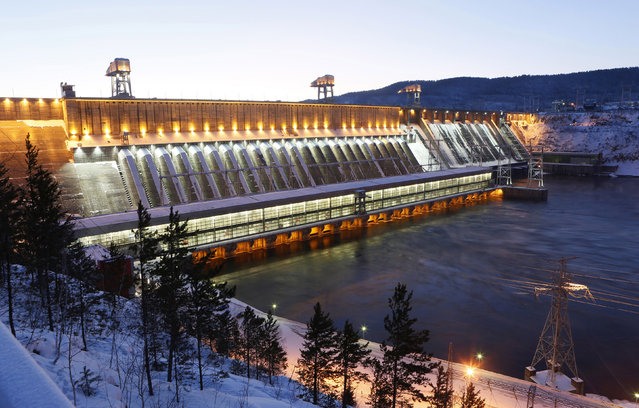
A general view shows the Krasnoyarsk hydro-electric power station on the Yenisei River near the Siberian city of Krasnoyarsk, Russia, January 13, 2016. The power plant, owned by EuroSibEnergo company, part of En+ Group, with a generating capacity of 6,000 megawatt (MW), has a ferro-concrete dam 124-metres high and 1065-metres long and is the second largest Russian hydroelectric power station. About 85% of the energy generated is intended for the Rusal Krasnoyarsk aluminium smelter, according to representatives of the power station. (Photo by Ilya Naymushin/Reuters)

A general view shows the Krasnoyarsk hydro-electric power station on the Yenisei River near the Siberian city of Krasnoyarsk, Russia, January 13, 2016. The power plant, owned by EuroSibEnergo company, part of En+ Group, with a generating capacity of 6,000 megawatt (MW), has a ferro-concrete dam 124-metres high and 1065-metres long and is the second largest Russian hydroelectric power station. About 85% of the energy generated is intended for the Rusal Krasnoyarsk aluminium smelter, according to representatives of the power station. (Photo by Ilya Naymushin/Reuters)
Details
16 Jan 2016 08:03:00
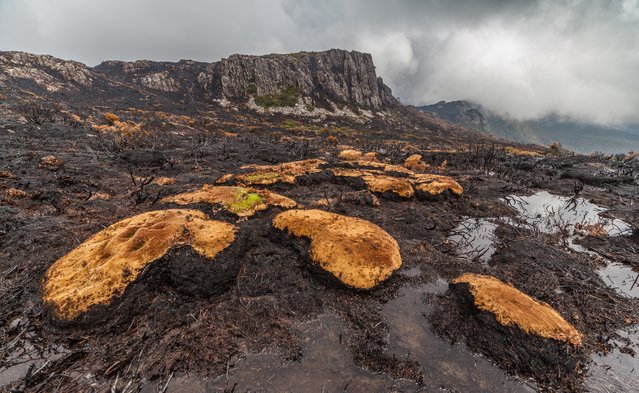
Pictures from Tasmania’s central plateau, shot by wilderness photographer Dan Broun, show the extraordinary damage wrought by more than a week of bushfires following lightning strikes in Australia’s southernmost state on January 13. 2016. The world heritage area was home to a range of unique alpine flora including pencil pines, king billy pines and cushion plants, some more than 1,000 years old. (Photo by Dan Broun)

Pictures from Tasmania’s central plateau, shot by wilderness photographer Dan Broun, show the extraordinary damage wrought by more than a week of bushfires following lightning strikes in Australia’s southernmost state on January 13. 2016. The world heritage area was home to a range of unique alpine flora including pencil pines, king billy pines and cushion plants, some more than 1,000 years old. Now more than 10,000ha of land has been incinerated, and ecologist say that, unlike eucalyptus trees, the ancient flora will not recover. (Photo by Dan Broun)
Details
02 Feb 2016 13:56:00