A Christian worshipper reacts as she takes part in the Christian Orthodox Holy Fire ceremony at the Church of the Holy Sepulchre in Jerusalem's Old City, April 30, 2016. (Photo by Amir Cohen/Reuters)
Students exercise in body training at Bishan Vocational Education Center in Chongqing, southwest China, January 13, 2016. These students were trained to be stewardesses of the high-speed train. (Photo by Xie Jie/Xinhua)
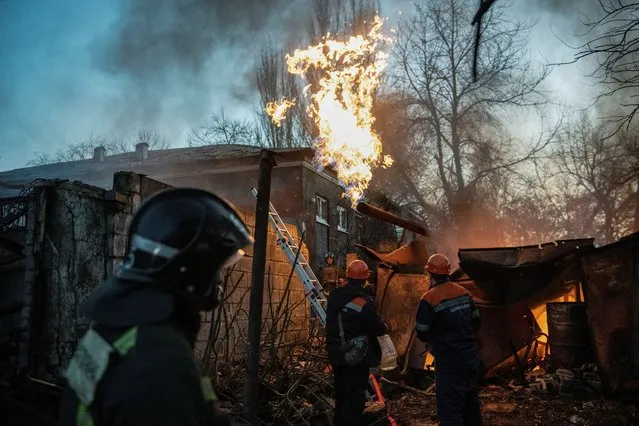
Rescuers work to put out fire outside a damaged residential building hit by recent shelling in the course of Russia-Ukraine conflict in Donetsk, Russian-controlled Ukraine on November 7, 2023. (Photo by Reuters/Stringer)
A wounded Palestinian boy reacts at the site of an Israeli strike on a house, amid the ongoing conflict between Israel and the Palestinian Islamist group Hamas, in Rafah, in the southern Gaza Strip on May 1, 2024. (Photo by Hatem Khaled/Reuters)
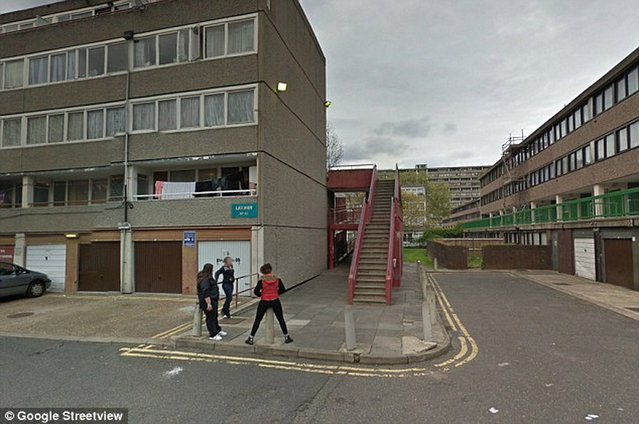
Take a walk on the wild side around some of the most down right dangerous places in the world - and all without leaving your desk, courtesy of Google Street View. Since 2007, Google's amazing technology has given people the chance to visit the Eiffel Tower, peer out over San Francisco's Golden Gate Bridge or walk along a beach in the Bahamas. But as well as mapping the tourist-friendly hotspots, Google also ventured into places you really wouldn't want to find yourself. Here is a collection of some the most notorious areas captured by the infamous roaming camera cars from around the UK and the world.
Jorge (2nd R), 31, who is among members of lesbian, gay, bisexual and transgender (LGBT) community and his brother Paulo, 28, (R) laugh at Arouche Square in downtown Sao Paulo, Brazil, November 20, 2016. (Photo by Nacho Doce/Reuters)
Inger Utke, left, takes a selfie with Edwin Galarza, dressed as a “Star Wars” themed dinosaur, during Preview Night at Comic-Con International held at the San Diego Convention Center, Wednesday, July 20, 2016, in San Diego. (Photo by Denis Poroy/Invision/AP Photo)
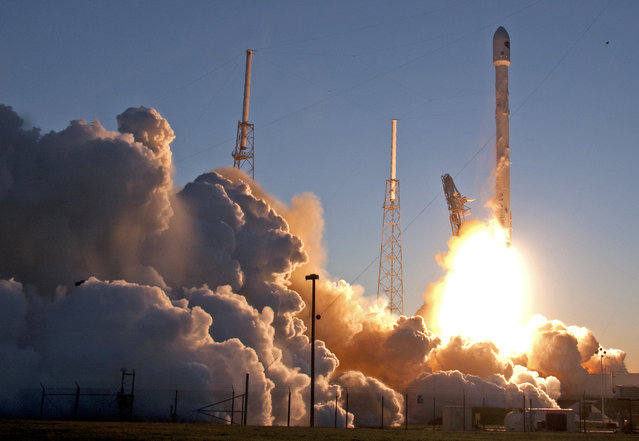
An unmanned Falcon 9 SpaceX rocket lifts off from launch complex 40 at the Cape Canaveral Air Force Station, Wednesday, February 11, 2015, in Cape Canaveral, Fla. On board is the Deep Space Climate Observatory, which will head toward a solar-storm lookout point a million miles away. (Photo by John Raoux/AP Photo)