Loading...
Done
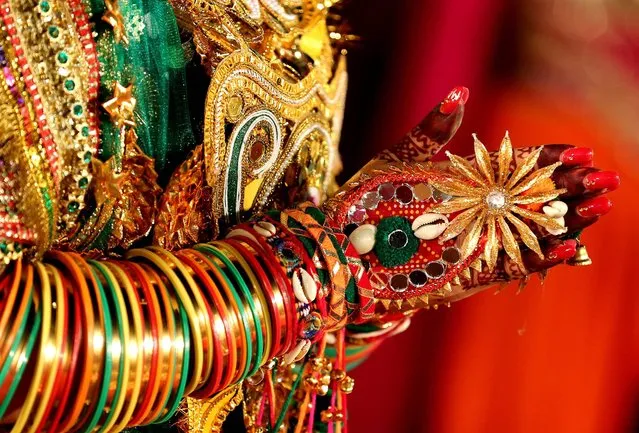
A photograph made available on 02 October 2016 showing Indian people dressed in traditional attire performing the Garba dance, a ritual performed to appease Goddess Durga, in a religious event named, “Abhivyakti 2016” during the nine-day long Navratri festival in Bhopal, India, 01 October 2016 Celebrated twice a year during the spring and the fall season, the Navratri festival is dedicated to the Hindu Goddess Durga. (Photo by Sanjeev Gupta/EPA)

A photograph made available on 02 October 2016 showing Indian people dressed in traditional attire performing the Garba dance, a ritual performed to appease Goddess Durga, in a religious event named, “Abhivyakti 2016” during the nine-day long Navratri festival in Bhopal, India, 01 October 2016 Celebrated twice a year during the spring and the fall season, the Navratri festival is dedicated to the Hindu Goddess Durga. (Photo by Sanjeev Gupta/EPA)
Details
07 Oct 2016 09:02:00
Lu Wei-ming (L), priest of the Wei-ming temple, and a worshipper burn a Taoist paper amulet during a prayer ritual at the temple in New Taipei city January 8, 2015. The shrine, down a narrow alleyway in a bustling district of the city, is dedicated to a deity who has watched over homosexuals for four centuries. (Photo by Pichi Chuang/Reuters)

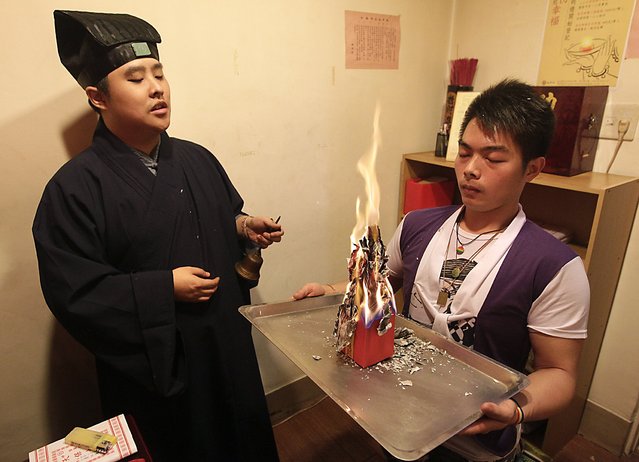
Lu Wei-ming (L), priest of the Wei-ming temple, and a worshipper burn a Taoist paper amulet during a prayer ritual at the temple in New Taipei city January 8, 2015. The shrine, down a narrow alleyway in a bustling district of the city, is dedicated to a deity who has watched over homosexuals for four centuries. Priest Lu founded the temple in 2006, at a time gays were excluded from most religious ceremonies. (Photo by Pichi Chuang/Reuters)
Details
21 Jan 2015 13:06:00
A Waura Indian woman watches the activities of this year's “quarup”, a ritual held over several days to honour in death a person of great importance to them, in Xingu National Park, Mato Grosso State, August 24, 2013. This year the Waura tribe is honouring their late cacique (chief) Atamai, who died in 2012 and helped created the Xingu Park, and his important contribution in facilitating communication between white Brazilians and Indians. (Photo by Ueslei Marcelino/Reuters)

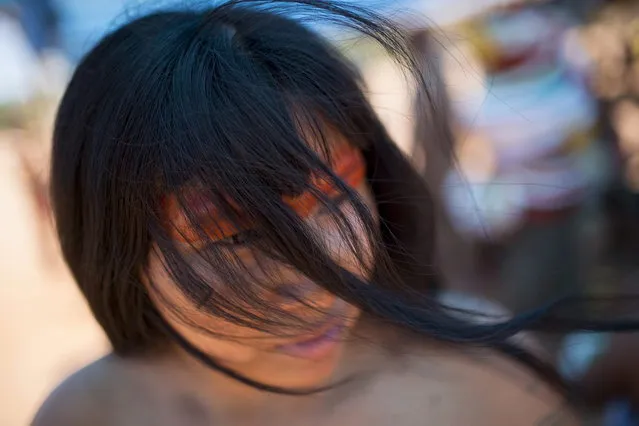
A Waura Indian woman watches the activities of this year's “quarup”, a ritual held over several days to honour in death a person of great importance to them, in Xingu National Park, Mato Grosso State, August 24, 2013. This year the Waura tribe is honouring their late cacique (chief) Atamai, who died in 2012 and helped created the Xingu Park, and his important contribution in facilitating communication between white Brazilians and Indians. (Photo by Ueslei Marcelino/Reuters)
Details
04 Sep 2013 08:48:00
“Centuries ago, Inuit hunted the bowhead whale. At that time, whale hunting undoubtedly was part of a complex and very important ritual, if only because of the size of the catch. The position that the ancestors of today's Inuit occupied in the living world involved a relationship with the spirit that inhabited each animal but also their species”. (Photo by Robert Frechette/2014 Sony World Photography Awards)

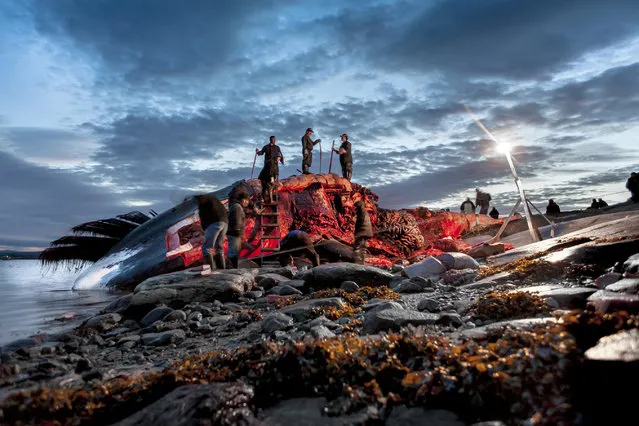
“Centuries ago, Inuit hunted the bowhead whale. At that time, whale hunting undoubtedly was part of a complex and very important ritual, if only because of the size of the catch. The position that the ancestors of today's Inuit occupied in the living world involved a relationship with the spirit that inhabited each animal but also their species”. (Photo by Robert Frechette/2014 Sony World Photography Awards)
Details
16 Mar 2014 08:01:00
A Pasola rider reacts after throwing his spear during the Pasola war festival at Ratenggaro village on March 22, 2014 in Sumba Island, Indonesia. The Pasola Festival is an important annual event to welcome the new harvest season, which coincides with the arrival of  “Nyale” sea worms during February or March each year. Pasola, an ancient ritual fighting game, involves two teams of men on horseback charging towards each other while trying to hit their rivals with “pasol” javelins and avoid being hit themselves. (Photo by Ulet Ifansasti/Getty Images)

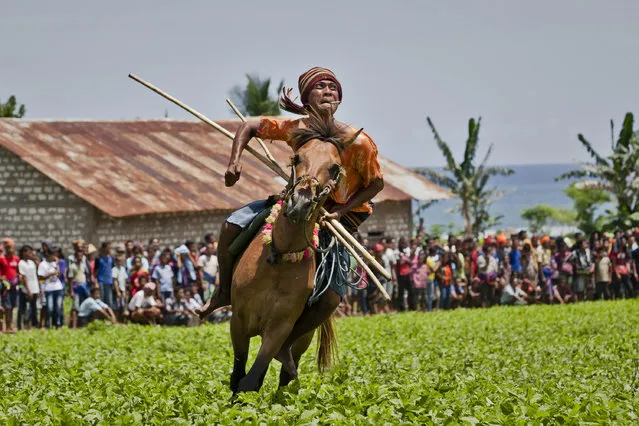
A Pasola rider reacts after throwing his spear during the Pasola war festival at Ratenggaro village on March 22, 2014 in Sumba Island, Indonesia. The Pasola Festival is an important annual event to welcome the new harvest season, which coincides with the arrival of “Nyale” sea worms during February or March each year. Pasola, an ancient ritual fighting game, involves two teams of men on horseback charging towards each other while trying to hit their rivals with “pasol” javelins and avoid being hit themselves. (Photo by Ulet Ifansasti/Getty Images)
Details
25 Mar 2014 07:54:00
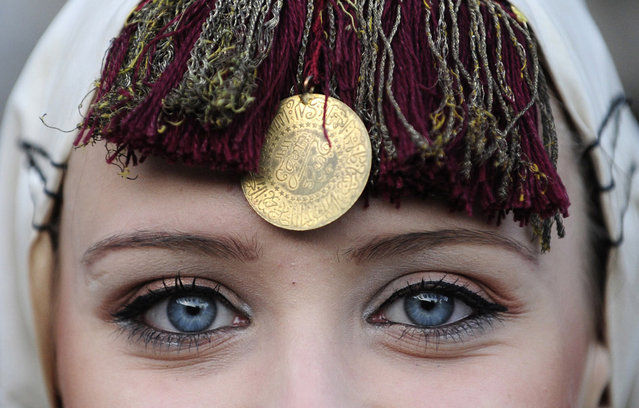
Women dressed in folk costumes take part in a traditional wedding ceremony in the village of Galicnik, west of Macedonia's capital Skopje, July 12, 2014. The Galicnik Wedding, a three-day traditional Macedonian wedding celebration held each “Petrovden” or St. Peter's Day, involves traditional customs, costumes, and rituals and dances that have been passed down over the centuries. (Photo by Ognen Teofilovski/Reuters)

Women dressed in folk costumes take part in a traditional wedding ceremony in the village of Galicnik, west of Macedonia's capital Skopje, July 12, 2014. The Galicnik Wedding, a three-day traditional Macedonian wedding celebration held each “Petrovden” or St. Peter's Day, involves traditional customs, costumes, and rituals and dances that have been passed down over the centuries. (Photo by Ognen Teofilovski/Reuters)
Details
19 Jul 2014 10:11:00
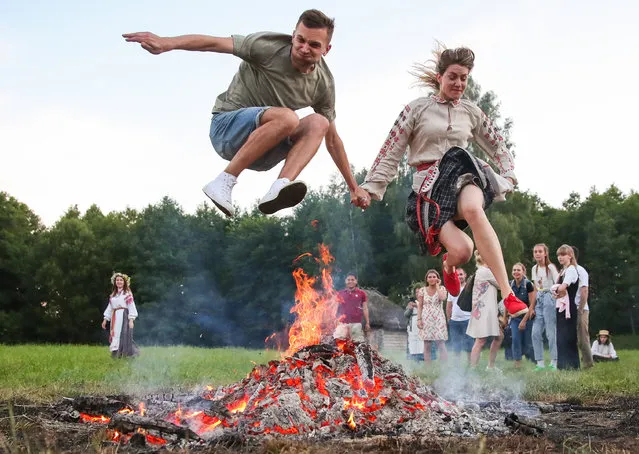
A man and a woman jump over a bonfire during Ivan Kupala Day celebrations held by the Belarusian State Museum of Folk Architecture and Rural Lifestyle in the village of Ozertso near Minsk, Belarus on July 4, 2020. Ivan Kupala Day, also known as Ivana-Kupala or Kupala Night, is a traditional pagan holiday celebrated in eastern Slavic cultures. Various rituals are traditionally performed on Kupala Night, including making flower wreaths, fortune-telling, jumping over bonfires, and burning a wheel-like effigy symbolizing the sun. (Photo by Natalia Fedosenko/TASS)

A man and a woman jump over a bonfire during Ivan Kupala Day celebrations held by the Belarusian State Museum of Folk Architecture and Rural Lifestyle in the village of Ozertso near Minsk, Belarus on July 4, 2020. Ivan Kupala Day, also known as Ivana-Kupala or Kupala Night, is a traditional pagan holiday celebrated in eastern Slavic cultures. Various rituals are traditionally performed on Kupala Night, including making flower wreaths, fortune-telling, jumping over bonfires, and burning a wheel-like effigy symbolizing the sun. (Photo by Natalia Fedosenko/TASS)
Details
07 Jul 2020 00:07:00
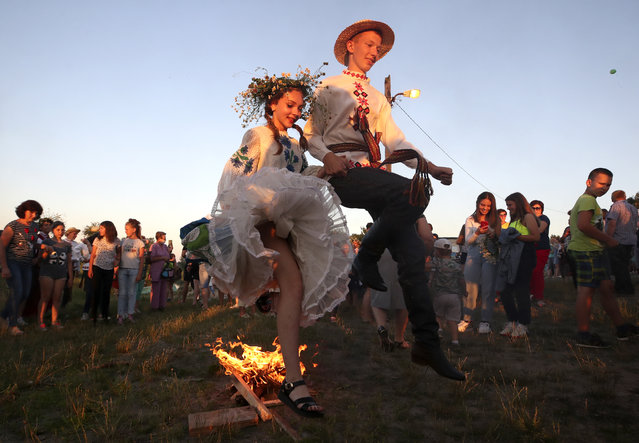
People in ethnic costumes jump over a bonfire during Ivan Kupala Day celebrations held by the Pripyat River in the town of Turauin Gomel Region, Belarus on July 6, 2020. Ivan Kupala Day, also known as Ivana-Kupala or Kupala Night, is a traditional pagan holiday celebrated in eastern Slavic cultures. Various rituals are traditionally performed on Kupala Night, including making flower wreaths, fortune-telling, jumping over bonfires, and burning a wheel-like effigy symbolizing the sun. (Photo by Natalia Fedosenko/TASS)

People in ethnic costumes jump over a bonfire during Ivan Kupala Day celebrations held by the Pripyat River in the town of Turauin Gomel Region, Belarus on July 6, 2020. Ivan Kupala Day, also known as Ivana-Kupala or Kupala Night, is a traditional pagan holiday celebrated in eastern Slavic cultures. Various rituals are traditionally performed on Kupala Night, including making flower wreaths, fortune-telling, jumping over bonfires, and burning a wheel-like effigy symbolizing the sun. (Photo by Natalia Fedosenko/TASS)
Details
19 Jul 2020 00:01:00