Loading...
Done
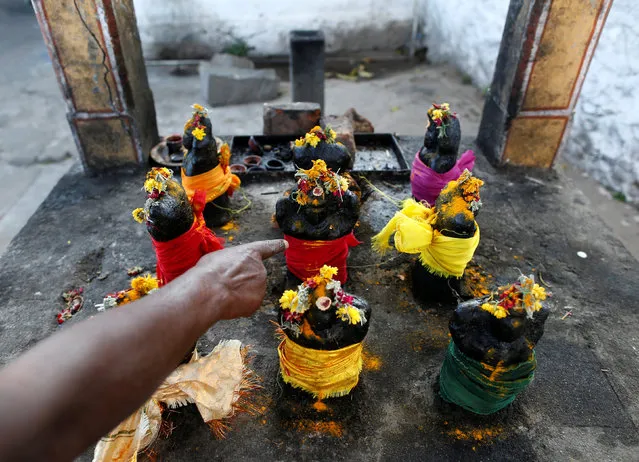
Paramasivan points to the statue of sun god Surya at a temple outside the Kodaikanal Solar Observatory, India, February 5, 2017. (Photo by Danish Siddiqui/Reuters)

Paramasivan points to the statue of sun god Surya at a temple outside the Kodaikanal Solar Observatory, India, February 5, 2017. In the early morning darkness, Devendran P. walks up a hill to a solar observatory in India's southern hill town of Kodaikanal, trudging the same path his father and grandfather walked in a century-old family tradition of studying the sun. (Photo by Danish Siddiqui/Reuters)
Details
24 Feb 2017 00:03:00
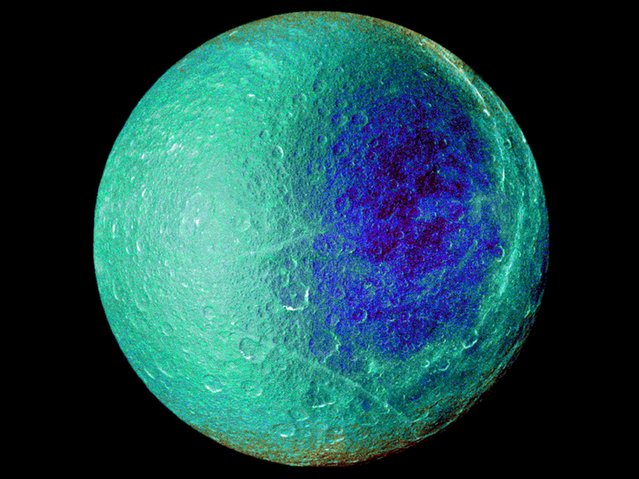
Hemispheric color differences on Saturn's moon Rhea are apparent in this false-color view from NASA's Cassini spacecraft in this March 2, 2010 file photo. (Photo by Reuters/NASA/JPL/SSI)

Hemispheric color differences on Saturn's moon Rhea are apparent in this false-color view from NASA's Cassini spacecraft in this March 2, 2010 file photo. (Photo by Reuters/NASA/JPL/SSI)
Details
16 Nov 2015 08:14:00
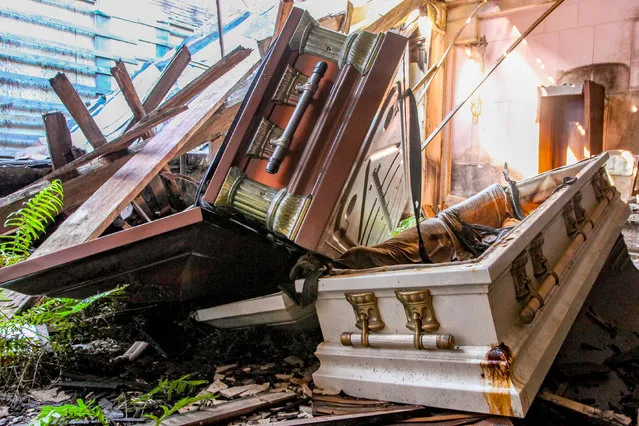
Urban Explorer Abandoned Southeast: “The place is pretty amazing, but I think my favorite part would be the upstairs storage area, where dozens of photos and books from the early 20th century were left behind”. (Photo by Abandoned Southeast/Caters News Agency)

The abandoned Moulton and Kyle Funeral Home in Jacksonville, Fla., which is more than 150 years old, was left to rot, with the premises eerily strewn with open caskets, a hearse and embalming chemicals. Much like the corpses that were laid to rest, the remains of this building too are slowly decomposing and decaying. Black mold has engulfed the walls, and chipped tiles from the collapsed ceilings cover many of the floors. (Photo by Abandoned Southeast/Caters News Agency)
Details
03 Apr 2018 00:03:00
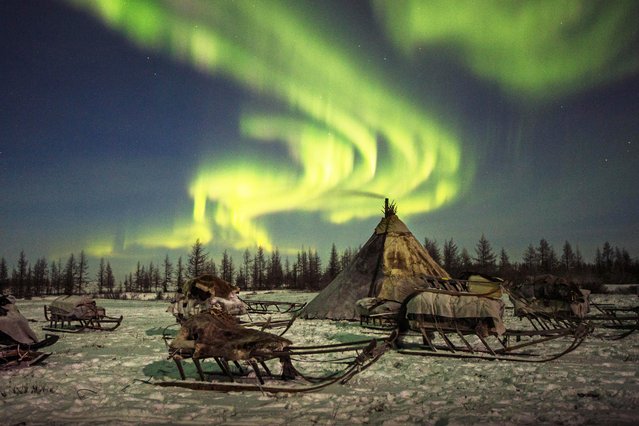
An empty camp is shown beneath a colourful sky in Siberia, December 2016. (Photo by Timothy Allen/Barcroft Productions)

A British photographer has captured life at the “edge of the world”. Timothy Allen, best known for his work on BBC's Human Planet, trekked through the freezing Siberian wilderness for 16 days as he joined part of an 800km migration of reindeer in the Yamal-Nenets region – a name that roughly translates to “edge of the world”. The stunning pictures feature the nomadic Nenets tribe, who drink blood to survive in -45°C temperatures. Timothy's epic journey, which will be revealed in an eight-minute documentary on Animal Planet USA, saw him travel across the bleak terrain of the frozen Ob River with the Nenets people in December last year. Here: An empty camp is shown beneath a colourful sky in Siberia, December 2016. (Photo by Timothy Allen/Barcroft Productions)
Details
19 Sep 2017 07:48:00
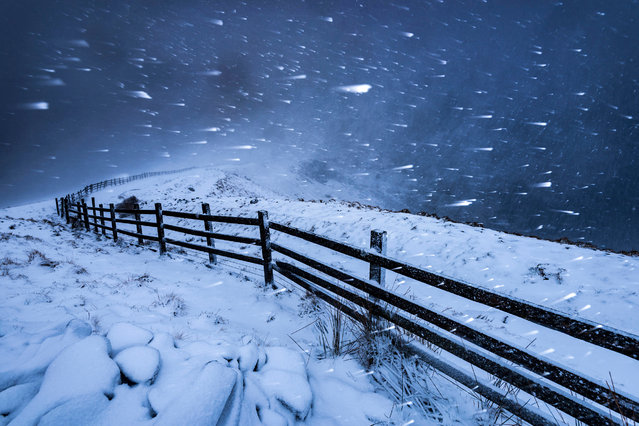
Blizzard in the High Peak, Derbyshire, by John Finney: “After a difficult journey in the snow, I made my way from Mam Tor down onto the Great Ridge. As the clouds got darker, I placed the tripod and camera at just the right angle to avoid snow getting onto the lens, and used a flash gun and a relatively slow shutter speed to highlight the fast motion of the blizzard”. Classic view, adult class – winner. (Photo by John Finney/Landscape Photographer of the Year)

Blizzard in the High Peak, Derbyshire, by John Finney: “After a difficult journey in the snow, I made my way from Mam Tor down onto the Great Ridge. As the clouds got darker, I placed the tripod and camera at just the right angle to avoid snow getting onto the lens, and used a flash gun and a relatively slow shutter speed to highlight the fast motion of the blizzard”. Classic view, adult class – winner. (Photo by John Finney/Landscape Photographer of the Year)
Details
22 Oct 2018 00:01:00
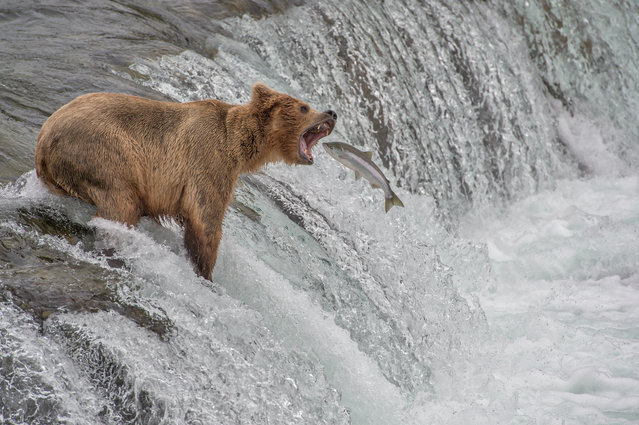
“Catch of the Decade”. Can you guess what happened next? Photo location: Katmai National Park, Alaska, USA. (Photo and caption by Aaron Baggenstos/National Geographic Photo Contest)

“Catch of the Decade”. Can you guess what happened next? Photo location: Katmai National Park, Alaska, USA. (Photo and caption by Aaron Baggenstos/National Geographic Photo Contest)
Details
30 Sep 2014 08:47:00
NASA

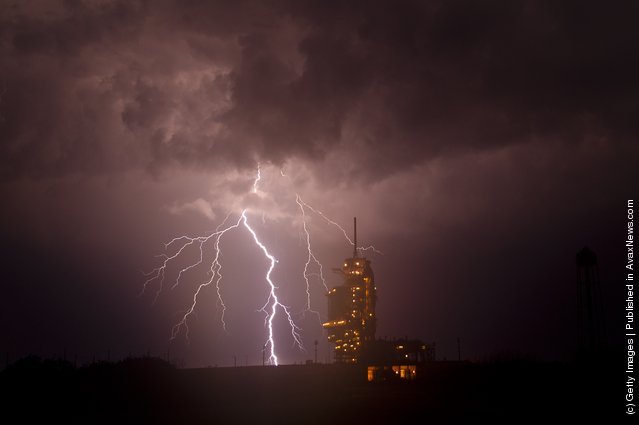
In this handout image provided by NASA, the space shuttle Endeavour is seen on launch pad 39a as a storm passes by prior to the rollback of the Rotating Service Structure (RSS) April 28, 2011, at Kennedy Space Center in Cape Canaveral, Florida. During the 14-day mission, Endeavour and the STS-134 crew will deliver the Alpha Magnetic Spectrometer (AMS) and spare parts, including two S-band communications antennas, a high-pressure gas tank and additional spare parts for Dextre. Launch is targeted for April 29 at 3:47 p.m. EDT.
Details
30 Apr 2011 08:18:00
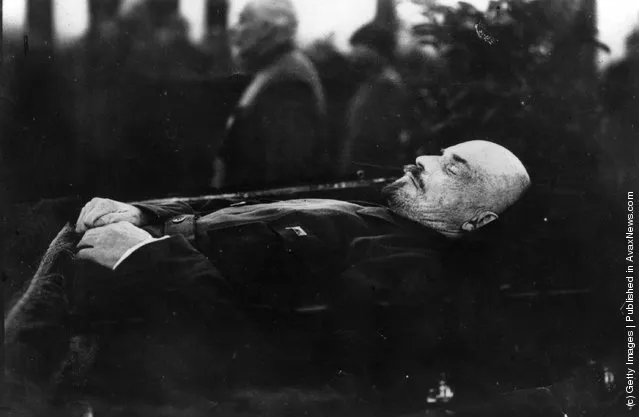
1924:  Vladimir Ilyich Lenin lying in state in the Kremlin

Photo: Vladimir Ilyich Lenin (1870 – 1924) lying in state in the Kremlin. (Photo by Hulton Archive/Getty Images). 1924

Important! For the same article in Russian language click here.

Something quite intriguing is happening within Russian-speaking internet during the last few – should you type a fully academic inquiry (at least, according to Russian academic requirements) in national search engines for "Lenin's mausoleum" – the first thing you get (even in top 10 searches) is website pages talking about black magic and occult. Website authors view this construction differently, but unconditionally agree on one thing: the mausoleum of the "leader of the world proletariat” – the essence of a magical artifact, a sort of “energy vampire”. It was built with a certain purpose: to drain the energy out of miserable Soviet citizens on one hand; and to poison the anthroposphere of one-sixth part of the earth with its vibes (the exact territory that was occupied by the former Soviet Union), depriving the Russian people of will to resist on the other hand. Complete nonsense? No doubt. Nevertheless, an intriguing one. Well, probably because some oddities do exist in mausoleum's history. These oddities are the thing we are going to discuss this time. First, let me refresh you memory on the subject.
Details
16 Oct 2011 11:27:00