Loading...
Done
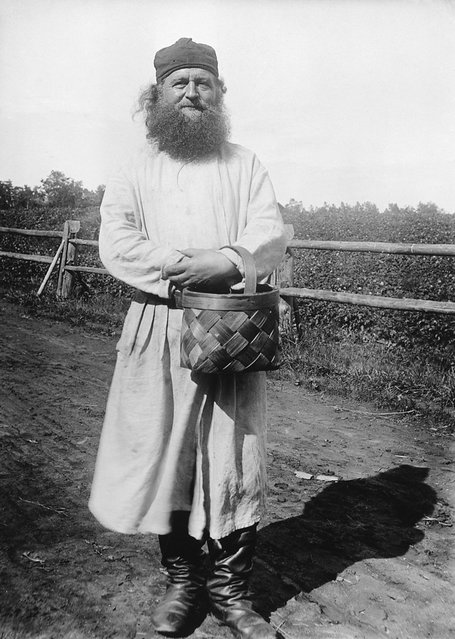
Priest, Valamo Monastery, Karelia, Russia (then Finland), 1930s. Father Venerius with a birchbark basket. (Photo by Einar Erici)

“Einar Erici (1885–1965) was a physician by profession, working at a tuberculosis hospital in Stockholm, even running a private medical practice. He was by then the most renowned Swedish expert of church organs and organ builders, and his archival collection is today held by the Swedish National Heritage Board. This archive includes mostly writings, such as letters and manuscripts for published articles and essays, but also more than 2 000 black and white photos – original prints, glass plates and film negatives”. – Swedish National Heritage Board

Photo: Priest, Valamo Monastery, Karelia, Russia (then Finland), 1930s. Father Venerius with a birchbark basket. (Photo by Einar Erici)
Details
09 Dec 2012 11:41:00
Alonso Mateo – Baby Fashion Icon Part 2

Baby fashion blogs as well as baby bloggers became a big thing during the last couple of years. A lot of attention is devoted to celebrity kids that are in step with their star parents and from day to day keep demonstrating us chic and utterly trendy looks. However, in this article we want to talk about a usual kid that fully deserves a title of a style icon. Alonso Mateo is only five years old but he is already a popular fashion blogger, whose manner of dressing is favored by 2,500 Instagram followers. He uses Instagram as a platform for demonstrating his chic looks.


See Also:Baby Fashion Icon Part 1
Details
17 Dec 2013 12:59:00
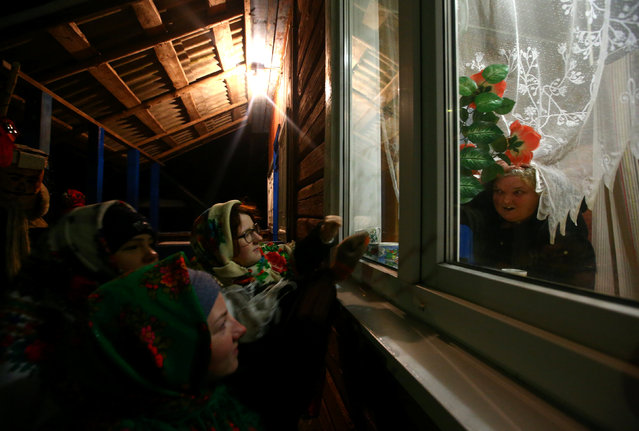
People celebrate the pagan rite called “Kolyadki” and mark the New Year, according to the Julian calendar on January 13, in the village of Vosava, Belarus January 13, 2017. (Photo by Vasily Fedosenko/Reuters)

People celebrate the pagan rite called “Kolyadki” and mark the New Year, according to the Julian calendar on January 13, in the village of Vosava, Belarus January 13, 2017. (Photo by Vasily Fedosenko/Reuters)
Details
15 Jan 2017 10:23:00
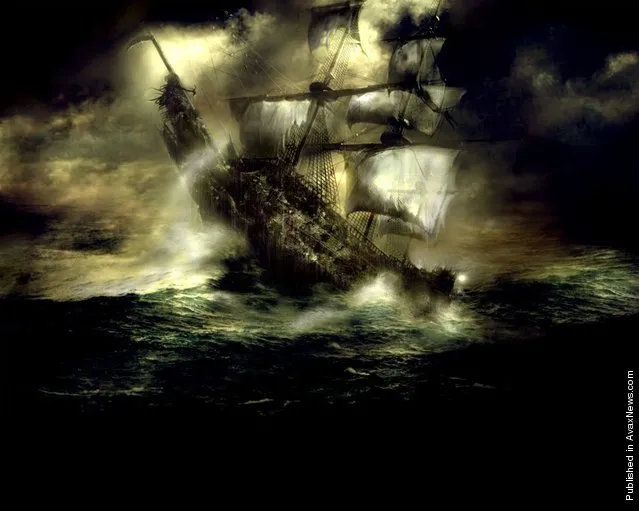
Ocean voyage

Do you think that history is a science? Well, not exactly. First, and foremost, history is the state's “legend of wars”, it’s official regalia. Of course, public historians are not interested in scientific truth – quite the opposite. In this respect, any attempt to present a state’s history as altruistic and benevolent as possible is welcomed and encouraged – as opposed to any revisionism attempts that may be more accurate. In this matter, Chinese have surpassed us all – they revised in highly creative manner (but rather shamelessly) the technology already invented by Europeans, a process that resulted in oldest state on the planet. Here is an interesting paradox: ask any sinologist about the Middle Kingdom during second century B.C., and he will describe it to you in such a vivid manner as if he has been living there all his life – but as soon as you will ask him to describe Chinese history in the 19-20th centuries… let's say, his eagerness will be greatly diminished. However, we will discuss China in a different article, and in the meantime we will try to understand how exactly historic “legend of wars” is formed and functions – based on a specific and well-known example. A great example is Ferdinand Magellan's first voyage around the world.
Details
14 Nov 2011 09:11:00
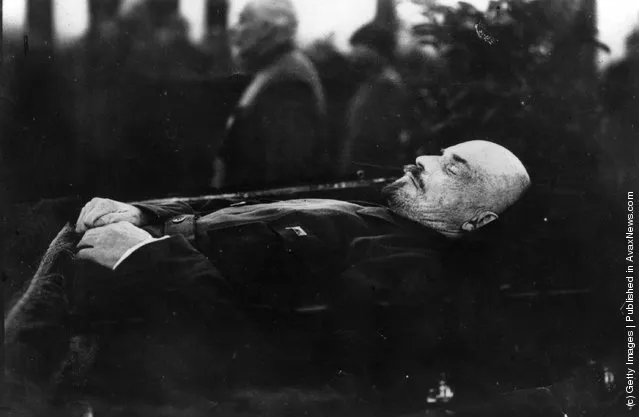
1924:  Vladimir Ilyich Lenin lying in state in the Kremlin

Photo: Vladimir Ilyich Lenin (1870 – 1924) lying in state in the Kremlin. (Photo by Hulton Archive/Getty Images). 1924

Important! For the same article in Russian language click here.

Something quite intriguing is happening within Russian-speaking internet during the last few – should you type a fully academic inquiry (at least, according to Russian academic requirements) in national search engines for "Lenin's mausoleum" – the first thing you get (even in top 10 searches) is website pages talking about black magic and occult. Website authors view this construction differently, but unconditionally agree on one thing: the mausoleum of the "leader of the world proletariat” – the essence of a magical artifact, a sort of “energy vampire”. It was built with a certain purpose: to drain the energy out of miserable Soviet citizens on one hand; and to poison the anthroposphere of one-sixth part of the earth with its vibes (the exact territory that was occupied by the former Soviet Union), depriving the Russian people of will to resist on the other hand. Complete nonsense? No doubt. Nevertheless, an intriguing one. Well, probably because some oddities do exist in mausoleum's history. These oddities are the thing we are going to discuss this time. First, let me refresh you memory on the subject.
Details
16 Oct 2011 11:27:00
A motorcyclist dodges in the annual water-splashing festival to mark the New Year of the Dai minority in Menglian, Yunnan province April 13, 2015. Picture taken April 13, 2015. (Photo by Wong Campion/Reuters)

A motorcyclist dodges in the annual water-splashing festival to mark the New Year of the Dai minority in Menglian, Yunnan province April 13, 2015. (Photo by Wong Campion/Reuters)
Details
15 Apr 2015 13:03:00
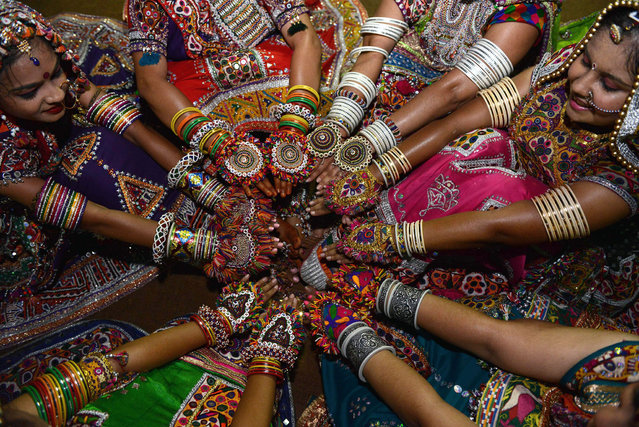
Indian folk dancers display ornaments during a break while participating in the first night of Navratri in Gandhinagar, some 30 km from Ahmedabad, on October 13, 2015. Navratri festivities, or Dance Festival of Nine Nights, takes place between October 13-21. (Photo by Sam Panthaky/AFP Photo)

Indian folk dancers display ornaments during a break while participating in the first night of Navratri in Gandhinagar, some 30 km from Ahmedabad, on October 13, 2015. Navratri festivities, or Dance Festival of Nine Nights, takes place between October 13-21. (Photo by Sam Panthaky/AFP Photo)
Details
23 Oct 2015 08:04:00
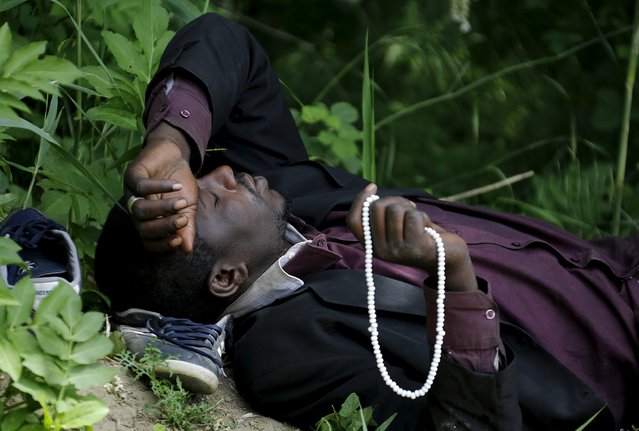
An  immigrant from Mali rests at the Greek-Macedonian border before an attempt to flee to Macedonia  May 13, 2015 village of Idomeni in Kilkis prefecture May 13, 2015. (Photo by Yannis Behrakis/Reuters)

An immigrant from Mali rests at the Greek-Macedonian border before an attempt to flee to Macedonia May 13, 2015 village of Idomeni in Kilkis prefecture May 13, 2015. Hundreds of mostly Afghan, Syrian, and African immigrants cross daily from Greece into Macedonia on their way to northern European countries; most of them are turned back by Macedonian border guards. (Photo by Yannis Behrakis/Reuters)
Details
17 May 2015 11:50:00