Loading...
Done
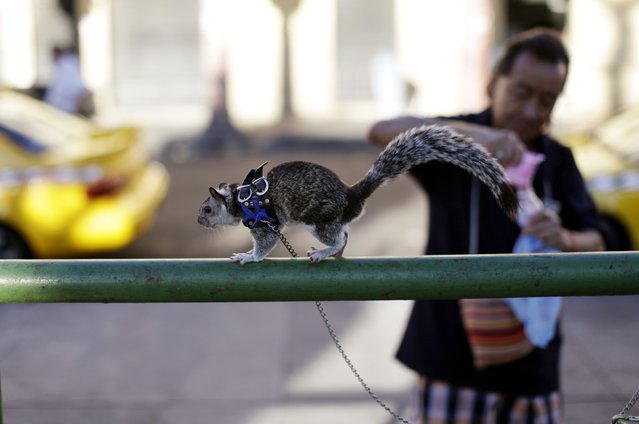
Carlos Melendez prepares to feed his pet squirrel “Colita” in downtown San Salvador January 29, 2015. (Photo by Jose Cabezas/Reuters)

Carlos Melendez prepares to feed his pet squirrel “Colita” in downtown San Salvador January 29, 2015. (Photo by Jose Cabezas/Reuters)
Details
31 Jan 2015 13:35:00
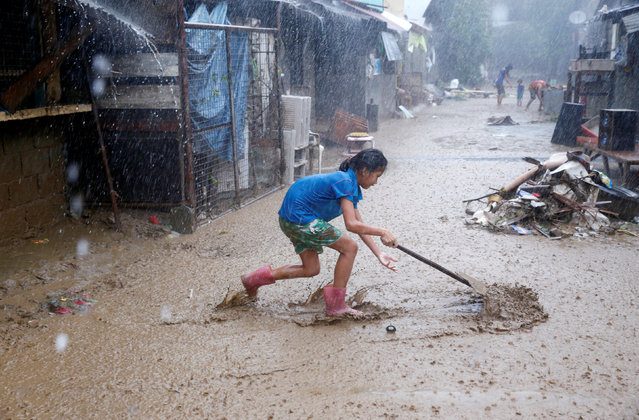
A resident removes mud on a street brought by monsoon rains in San Mateo, Rizal, Philippines, August 14, 2016. (Photo by Erik De Castro/Reuters)

A resident removes mud on a street brought by monsoon rains in San Mateo, Rizal, Philippines, August 14, 2016. (Photo by Erik De Castro/Reuters)
Details
16 Aug 2016 09:58:00
A reveller takes part in the Gay Pride Parade in San Salvador, on June 24, 2017. (Photo by Marvin Recinos/AFP Photo)

A reveller takes part in the Gay Pride Parade in San Salvador, on June 24, 2017. (Photo by Marvin Recinos/AFP Photo)
Details
26 Jun 2017 09:20:00
Cosplayers attend Comic-Con International in San Diego, California on July 27, 2024. (Photo by Sandy Huffaker/Reuters)

Cosplayers attend Comic-Con International in San Diego, California on July 27, 2024. (Photo by Sandy Huffaker/Reuters)
Details
08 Nov 2025 04:26:00
An African migrant stranded in Costa Rica bathes at a makeshift camp at the border between Costa Rica and Nicaragua, in Penas Blancas, Costa Rica, July 14, 2016. (Photo by Juan Carlos Ulate/Reuters)

An African migrant stranded in Costa Rica bathes at a makeshift camp at the border between Costa Rica and Nicaragua, in Penas Blancas, Costa Rica, July 14, 2016. Thousands of African migrants are currently stranded in Costa Rica after they were denied entry into neighbouring Nicaragua, which they have been using as a crossing point in order to reach the United States. According to the Costa Rican Red Cross, most of these people from Africa, Asia and Haiti. It has been reported that many of them paid smugglers to reach Central America. However, when they arrived at the border gates, they were denied entry and were left with nowhere to go. (Photo by Juan Carlos Ulate/Reuters)
Details
16 Jul 2016 08:17:00
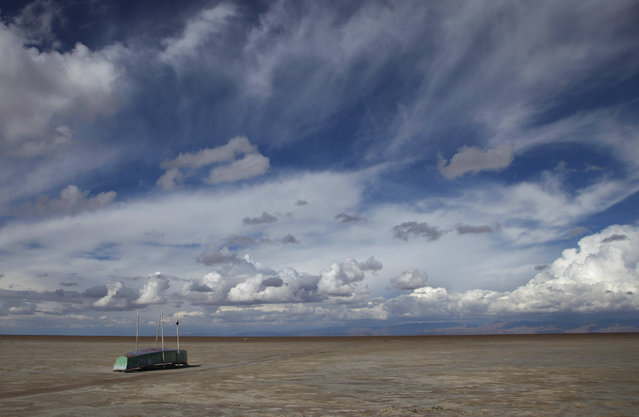
In this January 12, 2016 photo, an abandoned boat lies on the dried up lake bed of Lake Poopo, on the outskirts of Untavi, Bolivia. Drought caused by the recurrent El Nino meteorological phenomenon is considered the main driver of the lake's demise. Along with glacial melting, authorities say another factor is the diversion of water from Poopo's tributaries, mostly for mining but also for agriculture. (Photo by Juan Karita/AP Photo)

In this January 12, 2016 photo, an abandoned boat lies on the dried up lake bed of Lake Poopo, on the outskirts of Untavi, Bolivia. Drought caused by the recurrent El Nino meteorological phenomenon is considered the main driver of the lake's demise. Along with glacial melting, authorities say another factor is the diversion of water from Poopo's tributaries, mostly for mining but also for agriculture. (Photo by Juan Karita/AP Photo)
Details
21 Jan 2016 12:33:00
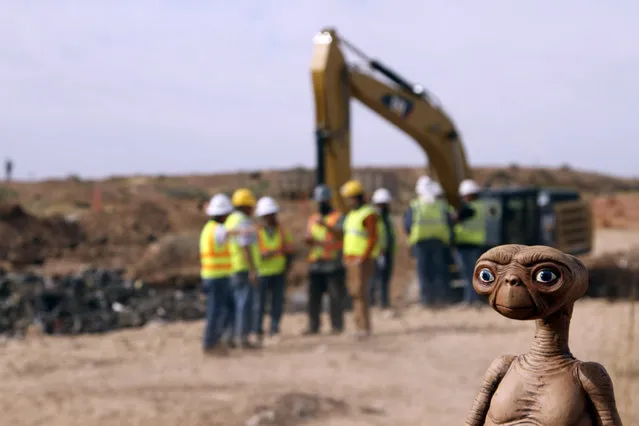
An E.T. doll is seen while construction workers prepare to dig into a landfill in Alamogordo, N.M., Saturday, April 26, 2014. Producers of a documentary are digging in the landfill in search of millions of cartridges of the Atari “E.T. The Extra-Terrestrial” game that has been called the worst game in the history of videogaming. A New York Times article from 1983 reported that Atari cartridges of “E.T. The Extraterrestrial” were dumped in the landfill in Alamogordo. (Photo by Juan Carlos Llorca/AP Photo)

An E.T. doll is seen while construction workers prepare to dig into a landfill in Alamogordo, N.M., Saturday, April 26, 2014. Producers of a documentary are digging in the landfill in search of millions of cartridges of the Atari “E.T. The Extra-Terrestrial” game that has been called the worst game in the history of videogaming. A New York Times article from 1983 reported that Atari cartridges of “E.T. The Extraterrestrial” were dumped in the landfill in Alamogordo. (Photo by Juan Carlos Llorca/AP Photo)
Details
28 Apr 2014 12:45:00
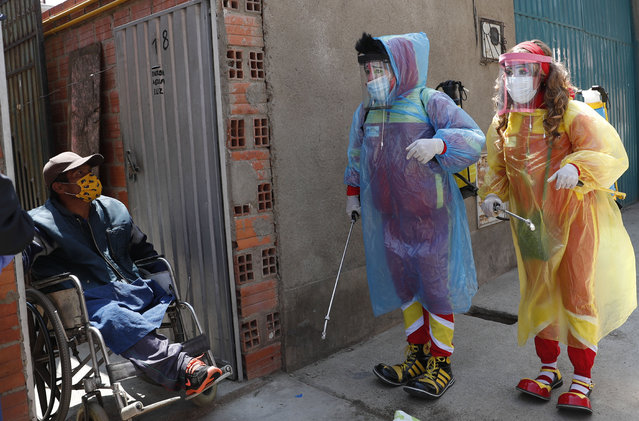
Clowns Perlita and Tapetito, wearing protective gear amid the new coronavirus pandemic, speak with resident Enrique Zeballos as they arrive to disinfect his home free of charge, in El Alto, Bolivia, Friday, September 11, 2020. The lack of traditional employment for the clowns due to the pandemic has led them towards other avenues of making money. But for people with limited income they provide their disinfection services free of charge. (Photo by Juan Karita/AP Photo)

Clowns Perlita and Tapetito, wearing protective gear amid the new coronavirus pandemic, speak with resident Enrique Zeballos as they arrive to disinfect his home free of charge, in El Alto, Bolivia, Friday, September 11, 2020. The lack of traditional employment for the clowns due to the pandemic has led them towards other avenues of making money. But for people with limited income they provide their disinfection services free of charge. (Photo by Juan Karita/AP Photo)
Details
13 Sep 2020 00:07:00