Loading...
Done
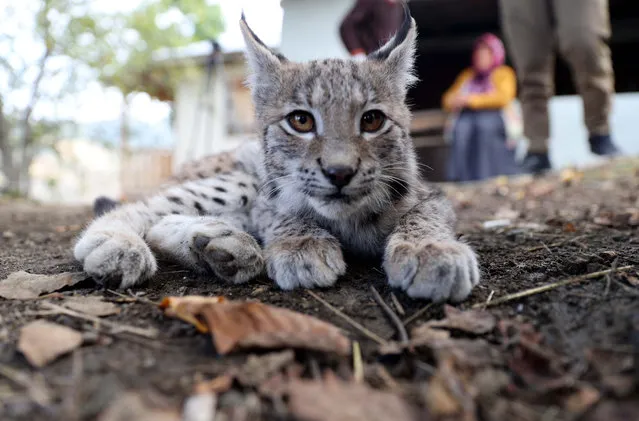
A lynx cub that followed a villager in the forest, is fed by a mother and her son for 2 days at the Koyulhisar district of Sivas, Turkiye on October 4, 2023. After 2 days, the lynx cub was taken under protection by the Sivas Department of Nature Conservation and National Parks teams. (Photo by Serhat Zafer/Anadolu Agency via Getty Images)

A lynx cub that followed a villager in the forest, is fed by a mother and her son for 2 days at the Koyulhisar district of Sivas, Turkiye on October 4, 2023. After 2 days, the lynx cub was taken under protection by the Sivas Department of Nature Conservation and National Parks teams. (Photo by Serhat Zafer/Anadolu Agency via Getty Images)
Details
22 Oct 2023 00:55:00
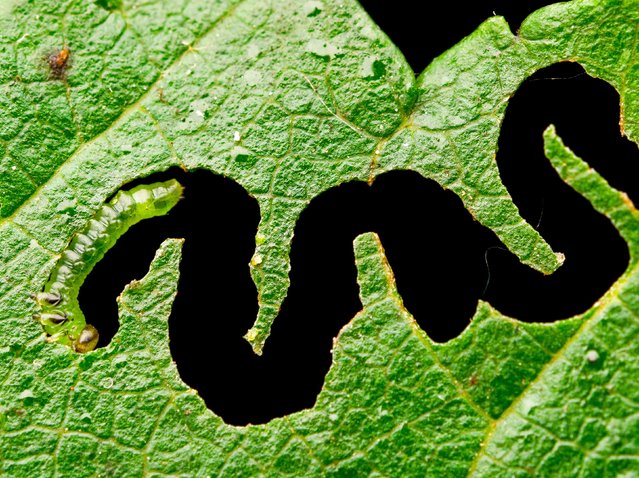
Miniscule larvae carve winding tunnels as they eat through small leaves in a small forest near the town of Velbert in western Germany in July 2022. The hungry green sawfly larvae measure just three millimetres in length and are difficult to spot on the leaves of the beech tree unless up close. (Photo by Christian Brockes/Solent News)

Miniscule larvae carve winding tunnels as they eat through small leaves in a small forest near the town of Velbert in western Germany in July 2022. The hungry green sawfly larvae measure just three millimetres in length and are difficult to spot on the leaves of the beech tree unless up close. (Photo by Christian Brockes/Solent News)
Details
24 Dec 2022 04:05:00
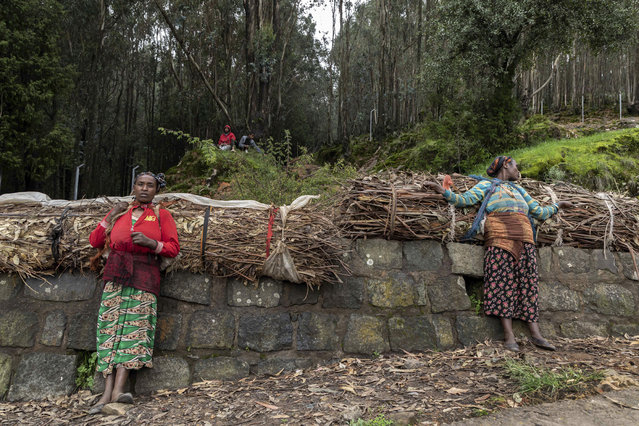
Mare Sorie, left, and her friend Tsehaynesh Golja, right, take a rest as they carry bundles of firewood from the forest around Entoto mountain near Addis Ababa, Ethiopia Friday, July 17, 2020. (Photo by Mulugeta Ayene/AP Photo)

Mare Sorie, left, and her friend Tsehaynesh Golja, right, take a rest as they carry bundles of firewood from the forest around Entoto mountain near Addis Ababa, Ethiopia Friday, July 17, 2020. (Photo by Mulugeta Ayene/AP Photo)
Details
03 Aug 2020 00:03:00
A climate activist wears an oxygen mask to demonstrate the possibility of pumping oxygen from a tree in a bottle in the future, during a protest against the government's deforestation practices of Sri Lanka's main wildlife forests for developments in Colombo, Sri Lanka on March 22, 2021. (Photo by Dinuka Liyanawatte/Reuters)

A climate activist wears an oxygen mask to demonstrate the possibility of pumping oxygen from a tree in a bottle in the future, during a protest against the government's deforestation practices of Sri Lanka's main wildlife forests for developments in Colombo, Sri Lanka on March 22, 2021. (Photo by Dinuka Liyanawatte/Reuters)
Details
23 Mar 2021 09:22:00
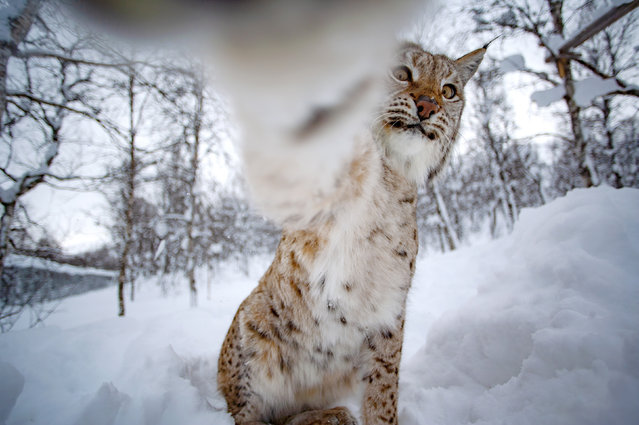
A lynx in a wintry forest investigates a remote camera in the last decade of January 2025. Four lynx were recently illegally released into the Cairngorms, in the Scottish Highlands, and were rescued by the Royal Zoological Society of Scotland, although one subsequently died. (Photo by Brian Matthews/Solent News)

A lynx in a wintry forest investigates a remote camera in the last decade of January 2025. Four lynx were recently illegally released into the Cairngorms, in the Scottish Highlands, and were rescued by the Royal Zoological Society of Scotland, although one subsequently died. (Photo by Brian Matthews/Solent News)
Details
02 Feb 2025 04:11:00
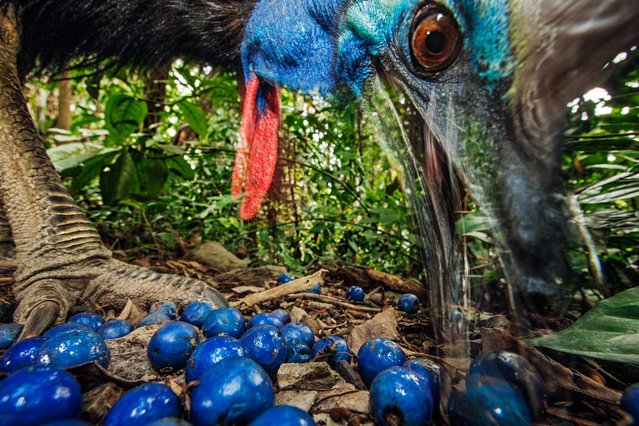
“Cassowaries are large, flightless birds related to emus and (more distantly) to ostriches, rheas, and kiwis”, writes Olivia Judson in the September issue of National Geographic magazine. (Photo by Christian Ziegler/National Geographic)

“Cassowaries are large, flightless birds related to emus and (more distantly) to ostriches, rheas, and kiwis”, writes Olivia Judson in the September issue of National Geographic magazine. How large? People-size: Adult males stand well over five foot five and top 110 pounds. Females are even taller, and can weigh more than 160 pounds. Dangerous when roused, they’re shy and peaceable when left alone. But even birds this big and tough are prey to habitat loss. The dense New Guinea and Australia rain forests where they live have dwindled. Today cassowaries might number 1,500 to 2,000. And because they help shape those same forests – by moving seeds from one place to another – “if they vanish”, Judson writes, “the structure of the forest would gradually change” too. (Photo by Christian Ziegler/National Geographic)

Details
06 Jan 2014 12:21:00
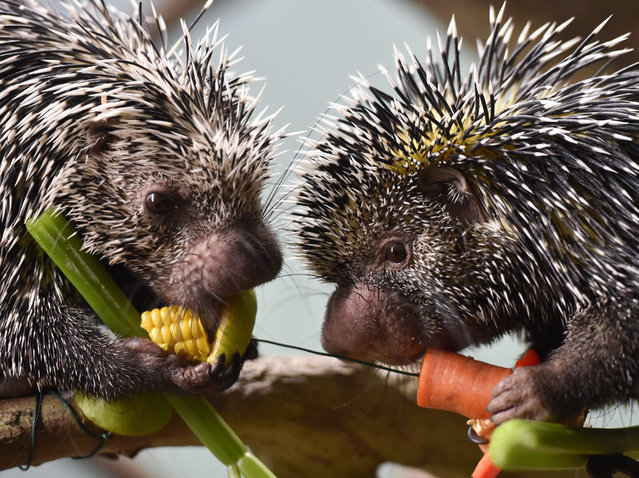
The coendou porcupine couple 'Joppi' (L) and 'Fletcher' nibble at a vegetables in their enclosure at the zoo in Frankfurt am Main, Germany, 03 December 2015. Coendou porcupines are nocturnal rodents related to porcupines and guinea pigs and native to the rain forests of Central and South America as well as Trinidad. (Photo by Arne Dedert/EPA)

The coendou porcupine couple 'Joppi' (L) and 'Fletcher' nibble at a vegetables in their enclosure at the zoo in Frankfurt am Main, Germany, 03 December 2015. Coendou porcupines are nocturnal rodents related to porcupines and guinea pigs and native to the rain forests of Central and South America as well as Trinidad. (Photo by Arne Dedert/EPA)
Details
05 Dec 2015 08:03:00
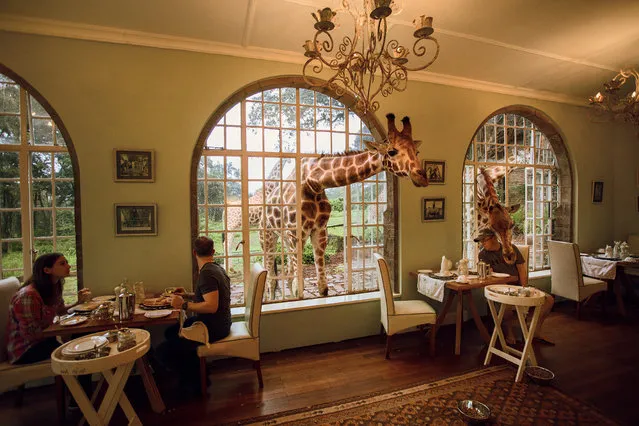
The giraffes visit twice a day searching for food, before returning to the forest. Although still wild animals, they have become accustomed to receiving treats from residents and guests. (Photo by Klaus Thymann)

Situated 10km outside Nairobi city centre, this private giraffe sanctuary is centred around a colonial manor house named Giraffe Manor. Living within the grounds is a herd of rare Rothschild giraffe. The giraffes visit twice a day searching for food, before returning to the forest. Although still wild animals, they have become accustomed to receiving treats from residents and guests. (Photo by Klaus Thymann)
Details
28 Jan 2016 12:36:00